Essential Industrial Communication: PIC Microcontroller Baud Rate Conversion Solutions (Including Special Baud Rates + Anti-Interference Circuit)
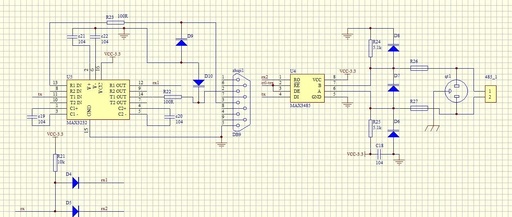
Essential Industrial Communication: PIC Microcontroller Baud Rate Conversion Solutions (Including Special Baud Rates + Anti-Interference Circuit)

In industrial control environments, the inconsistency of baud rates among different devices’ serial ports (such as RS485 and RS232) is a common headache. To unify control of these devices by the main control board or PLC, it is essential to ensure consistent baud rates. However, some devices allow manual baud rate settings, while others are … Read more

Understanding MODBUS-RTU Protocol: Mastering Industrial Communication with Four Core Function Codes (01/03/05/06)

Understanding MODBUS-RTU Protocol: Mastering Industrial Communication with Four Core Function Codes (01/03/05/06)

In the field of industrial control, MODBUS-RTU is one of the most universal and time-tested communication protocols. It acts like the “Mandarin” among devices, allowing instruments, PLCs, and controllers from different manufacturers to communicate smoothly. Today, I will set aside complex theories and directly guide you through the four most commonly used function codes:01, 03, … Read more

Angular Timer from the Perspective of PIC Microcontrollers

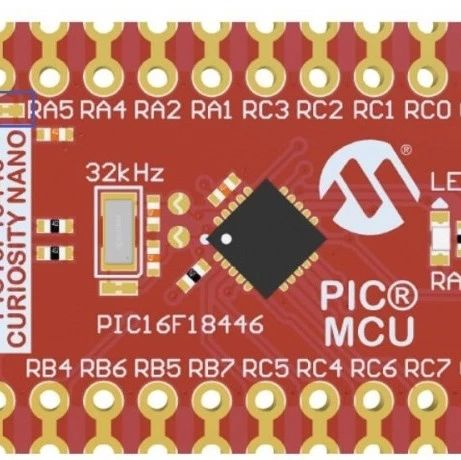
Angular Timer (AngTMR_Angular Timer) is also known as an angular interval counter. It is a peripheral independent of the core, configured in some specialized, relatively high-end MCUs, such as PIC16F161X. The Angular Timer can divide periodic signals into smaller time intervals and convert time-based signals into angle/phase-based signals. For example, the hour, minute, and second … Read more

PIC Microcontroller: Step-by-Step Guide to Achieving Low Power Design (Part 1)

PIC Microcontroller: Step-by-Step Guide to Achieving Low Power Design (Part 1)

Before learning about low power consumption in PIC microcontrollers, let’s briefly go over some basic knowledge and concepts related to low power consumption. Power (Watts) = U (Volts) * I (Amperes) Energy (Joules) = U (Volts) * I (Amperes) * t (Seconds) Charge (Coulombs) = I (Amperes) * t (Seconds) Power consumption can be divided … Read more