5 Types of Contaminants That Chip Manufacturers Fear! A 0.1μm Particle Can Render Chips Useless: The ‘Three Lines of Defense’ in Semiconductor Contamination Control

In semiconductor factories, there is a “counterintuitive” truth: a 0.1μm particle (600 times thinner than a human hair) can cause an entire batch of chips to be scrapped, and 10ppm of alkali metal ions can shift the threshold voltage of MOS transistors by 0.1V, leading to direct “failure”. Even more astonishing is that personnel are … Read more
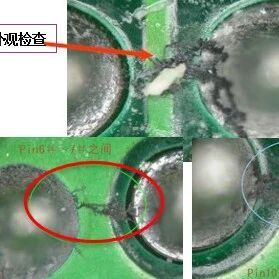
Only 5 Metal Atoms per Square Centimeter! The “Cleanliness” Standards of Semiconductor Cleaning Hide the Secrets to Chip Yield

In semiconductor factories, the cleaning process has a set of “extremely strict” standards: since 2013, the number of metal atoms on the surface of each square centimeter of a wafer cannot exceed 0.5×10¹⁰ (equivalent to allowing only 5 soccer balls on a soccer field), the diameter of particles on the back must be less than … Read more

Classification and Treatment Methods of Surface Contamination in PCBA

Classification and Treatment Methods of Surface Contamination in PCBA

Introduction FIRST During the PCBA production process, residues from solder paste and flux can contain organic acids and ionic substances. The former can corrode the PCBA, while the latter can cause short circuits between pads. In recent years, users have become increasingly stringent about product cleanliness, leading to a growing emphasis on PCBA cleaning processes … Read more

Design of Pressure Differential Gradient in Semiconductor Cleanrooms: Core Strategies for Achieving ‘Zero Contamination Infiltration’

Design of Pressure Differential Gradient in Semiconductor Cleanrooms: Core Strategies for Achieving 'Zero Contamination Infiltration'

In semiconductor manufacturing, the design of pressure differential gradients in electronic cleanrooms serves as a “physical firewall” to block the spread of contamination. By scientifically planning airflow direction and pressure differences, it ensures that air flows unidirectionally from higher cleanliness areas to lower cleanliness areas, achieving “zero contamination infiltration.” Here are five core strategies: 1.Gradient … Read more