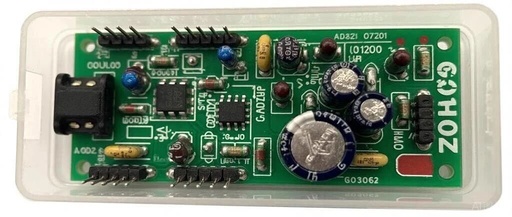
Comparison of NXP’s SCTimer and TIM1 from ST
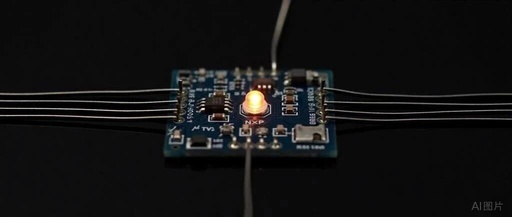
Comparison of NXP's SCTimer and TIM1 from ST

NXP Corporation’s SCTimer (State Configurable Timer) is highly powerful and can compete with TIM1 from the STM8 microcontroller. However, they differ in hardware design philosophy and application focus. The following is a comparison from multiple aspects. First, it should be noted that both powerful timers are unique to their respective designs. Their main features are … Read more

Introduction to CAN Bus

Introduction to CAN Bus

1. What is CAN Bus CAN Bus (Controller Area Network) is a widely used communication system in vehicles and industrial equipment, designed for reliable data transmission between various Electronic Control Units (ECUs). For example, in automobiles, the CAN Bus enables quick and secure information exchange between the braking system and the engine management system. A … Read more

Comparative Analysis of C++ and C# in Embedded Development

Comparative Analysis of C++ and C# in Embedded Development

C++ and C#C++ and C# are widely used programming languages, but they have different design goals and application scenarios. C++ is a low-level, high-performance system programming language that emphasizes manual memory management and multi-paradigm support; C#, on the other hand, is a high-level, object-oriented language developed by Microsoft, primarily used for application development within the … Read more

Running GUI on ESP32-S3 with Rust

Running GUI on ESP32-S3 with Rust

Hello, it has been a while since I shared some insights on Rust in embedded systems. Below is a demonstration of the GUI effect of Rust on the ESP32-S3.The project uses: esp-hal latest version esp-hal = { version = "1.0.0-beta.1", features = [ "esp32s3", "psram", "unstable", "log-04",] } The GUI library used is Slint, version … Read more

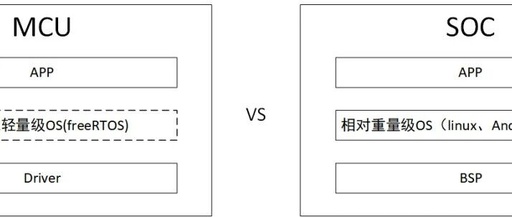
What is the Difference Between MCU and SOC?

What is the Difference Between MCU and SOC?

The most commonly used main chips in automotive controllers are MCUs and SOCs. Traditional vehicles primarily use MCUs, while smart vehicles, due to the increasing number of functions, gradually start to use SOCs. For example, the architecture commonly used in domain controllers is MCU + SOC. So, what exactly is the difference between MCU and … Read more

nanopb: The Tool for Embedded Systems to Master Protocol Buffers

nanopb: The Tool for Embedded Systems to Master Protocol Buffers

What is nanopb?nanopb is a Protocol Buffers implementation specifically designed for resource-constrained devices (such as microcontrollers and IoT chips). It is written entirely in ANSI C, with a code size of just a few KB, consuming almost no memory, and boasts excellent compiler compatibility. Want to efficiently transfer structured data between an MCU and a … Read more

Building an Embedded Modbus Protocol Stack with 2000 Lines of Code!

Building an Embedded Modbus Protocol Stack with 2000 Lines of Code!

Follow our official account to keep receiving embedded knowledge! Introduction In the development of industrial automation and IoT devices, the Modbus protocol has become the preferred choice for embedded system communication due to its simplicity and reliability. However, traditional Modbus protocol stacks are often large, with tens of thousands of lines of code, making them … Read more

Protocol Compatibility Issues During Upgrades in Embedded Systems

Protocol Compatibility Issues During Upgrades in Embedded Systems

Hello everyone, I am the Mixed Content Guy. More and more hardware products are not just integrated on a single board, but consist of multiple control boards working together. At this point, communication between multiple boards (wired/wireless communication) comes into play, which involves communication protocols. Often, we define some custom protocols. Previously, we shared a … Read more