Two Methods to Change Argument Variables in C++ Function Calls: Pointers and References

Two Methods to Change Argument Variables in C++ Function Calls: Pointers and References

In the previous chapter, the examples of custom function calls I provided all belong to value-based function calls. The characteristic of this type of call is that the actual parameter values are passed sequentially to the formal parameters in the called function’s parameter list. The number of actual parameters must match the number of formal … Read more
Determining Complex Variable Names in C Language

Determining Complex Variable Names in C Language

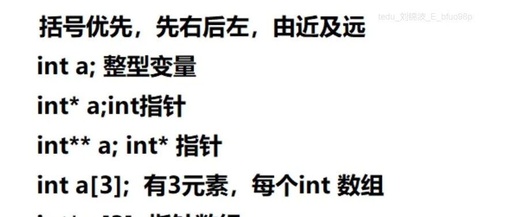
This is a method taught by one of my instructors during training, which I find very useful and would like to share.“Prioritize parentheses, evaluate from right to left, and from near to far”Prioritize parentheses: Variables are combined with the operator closest to the parentheses first.Evaluate from right to left: Variables first combine with the operator … Read more

Understanding Function Parameters in C Language

Understanding Function Parameters in C Language

Differences Between Pointer Parameters and Regular Parameters In C language, there are mainly two ways to pass function parameters: pass by value (regular parameters) and pass by pointer (pointer parameters). Pass by Value (Regular Parameters) The function receives a copy of the actual parameter Modifications to the parameter do not affect the original data Suitable … Read more

Discussing C Programming: The Relationship Between C Language and Memory

Discussing C Programming: The Relationship Between C Language and Memory

The association between memory and data types is the core logic of the underlying design of the C language, and their relationship can be summarized as: Memory provides physical storage space, while data types are the logical abstraction and access rules for that storage space. The following analysis will unfold from three dimensions: memory characteristics, … Read more

Essential Knowledge Points for C Language Beginners: Summary of One-Dimensional Array Usage Techniques

Essential Knowledge Points for C Language Beginners: Summary of One-Dimensional Array Usage Techniques

“From today on, study hard and make progress every day” Repetition is the best method for memory; spend one minute each day to remember the basics of C language. “Series of 100 Essential Knowledge Points for C Language Beginners“ The following notes finally enter the practical series, which is also the most important and difficult … Read more

Essential C++ Knowledge for AI Deployment – Must-Know for Interviews (Part 1)

Essential C++ Knowledge for AI Deployment - Must-Know for Interviews (Part 1)

AI Deployment – Essential C++ Knowledge – Must-Know for Interviews (Part 1), organized for easy reference and review. 1. <span><span>#include</span></span>: Double Quotes <span><span>" "</span></span> vs. Angle Brackets <span><span>< ></span></span> Conclusion First Header files within the project: Prefer using <span>"…"</span> System/installed third-party library header files: Use <span><…></span> Search Order (General Approach) <span>#include "name"</span> First, search in … Read more

Discussing C Programming – Address Manipulation and Byte Control in C Language

Discussing C Programming - Address Manipulation and Byte Control in C Language

1. Basics of Address Manipulation 1. Nature of Pointer Variables A pointer is a variable that stores a memory address, and its core function is to enable direct access to any memory unit. Unlike ordinary variables, the value of a pointer is a memory address rather than data. int num =100; int* ptr =&num; // … Read more

Understanding Array Decay to Pointers in C Language (Part 1)

Understanding Array Decay to Pointers in C Language (Part 1)

Array Decay Rules:In most cases, the name of an array is implicitly converted (or referred to as “decay”) to a pointer to its first element. This behavior is specified by the language standard.★ 1. Cases Where Arrays Convert to Pointers 1.1 Array Name as Function Parameter When an array is passed as a function parameter, … Read more

Method for Converting Decimal to Octal and Hexadecimal in C Language

Method for Converting Decimal to Octal and Hexadecimal in C Language

Through the program, we can quickly calculate the representation of a decimal number in other bases. This article provides C language code for converting decimal to octal and hexadecimal.C language code. SinceC language conversion to binary is relatively complex, we will write about it at another time. #define _CRT_SECURE_NO_WARNINGS#include <stdio.h> int main() { int a; … Read more