Understanding the C++ ‘maybe_unused’ Specifier
Understanding the C++ 'maybe_unused' Specifier

For unused function parameters or unused local variables, the compiler will issue a corresponding warning. Generally, if you want to avoid seeing this warning, you can disable it using preprocessor directives, although the syntax for these directives varies slightly between different compilers and needs to be adapted. However, starting from C++17, a new attribute specifier … Read more


The Role of Asterisk (*) in Python Function Parameter Lists

In Python’s function parameter lists, a standalone <span>*</span> is a special syntax that indicates the start of mandatory keyword-only arguments. Detailed Explanation When you see a standalone <span>*</span> in a function definition, it means: All parameters defined after <span>*</span> must be passed using keyword arguments and cannot be passed as positional arguments. Example Illustration For … Read more

Understanding the Differences Between Pointer and Reference Passing in C++

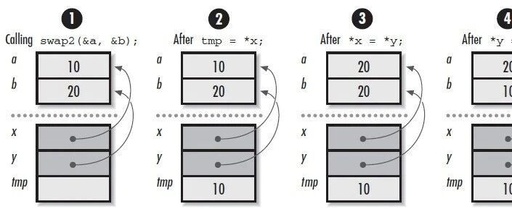
In C/C++ programming, function parameter passing is the core method for data interaction between the caller and the callee. Among them, pointer passing and reference passing are key means to “modify external variables through functions,” but there are significant differences in syntax characteristics, memory mechanisms, and usage scenarios. This article will start from the definition … Read more

Understanding C Language: Using Pointers as Function Parameters

Understanding C Language: Using Pointers as Function Parameters

This is the 22nd article in the C language introductory series. Most of the programs we have written so far only contain a main function. However, in larger programs, there are usually multiple functions, and the main function contains statements that call other functions. 1 Structure of C Programs C programs are designed using a … Read more

Understanding Function Parameters in C Language

Understanding Function Parameters in C Language

Differences Between Pointer Parameters and Regular Parameters In C language, there are mainly two ways to pass function parameters: pass by value (regular parameters) and pass by pointer (pointer parameters). Pass by Value (Regular Parameters) The function receives a copy of the actual parameter Modifications to the parameter do not affect the original data Suitable … Read more

Understanding Array Decay to Pointers in C Language (Part 1)

Understanding Array Decay to Pointers in C Language (Part 1)

Array Decay Rules:In most cases, the name of an array is implicitly converted (or referred to as “decay”) to a pointer to its first element. This behavior is specified by the language standard.★ 1. Cases Where Arrays Convert to Pointers 1.1 Array Name as Function Parameter When an array is passed as a function parameter, … Read more

Illustration of C Language Pointer Variables

Illustration of C Language Pointer Variables

1 Basic Operations of Pointer Variables int a,*iptr,*jptr,*kptr;iptr = &a;jptr = iptr;*jptr = 100;kptr = NULL; Illustration: 1.1 Address and Memory Space A pointer variable is also a variable that corresponds to a block of memory space and an address in memory; the name of the pointer is the address. How large is this empty … Read more

C++ Programming Guidelines – Functions

C++ Programming Guidelines - Functions

01 .1 Inline Functions Inline functions (inline function) should be less than 10 lines Description: Inline functions have the characteristics of regular functions, but differ in how function calls are handled. When a regular function is called, control is transferred to the called function and then returns to the calling function; whereas, in an inline … Read more

Do Function Parameters and Arguments in C Use the Same Memory Unit? Verification Method Included

Do Function Parameters and Arguments in C Use the Same Memory Unit? Verification Method Included

Regarding the function parameters and arguments in C language, there has been a detailed introduction in previous articles (C language function parameters and arguments), so I will not elaborate on that here. Instead, we will explore whether the function parameters and arguments use the same memory unit.What is a memory unit?This is merely a paraphrase … Read more

Learning Python – Positional Arguments

Learning Python - Positional Arguments

Positional Arguments are the most basic and simplest type of parameters in Python functions, matched and passed based on positional order. 1. Basic Concepts Positional arguments refer to: Parameters passed in the order defined during the function call The value of the parameter is determined by its position in the parameter list Must be passed … Read more