The Significant Role of Small Resistors in CAN Bus

The Significant Role of Small Resistors in CAN Bus

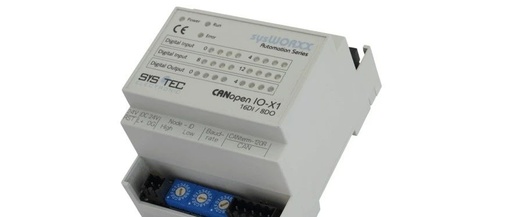
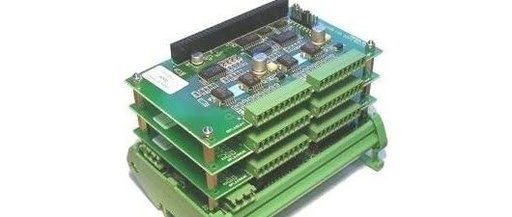
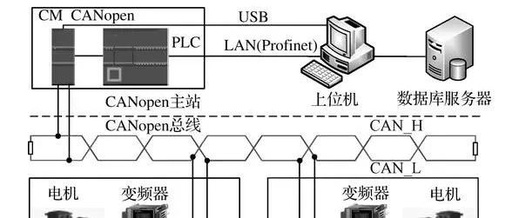
The CAN bus terminal resistor, as the name suggests, is the resistor added at the end of the bus. Although small, this resistor plays a very important role in CAN bus communication. The Role of Terminal Resistors There are two main roles of the CAN bus terminal resistor: 1. Improve anti-interference capability, ensuring the bus … Read more

UART-485 Communication Guide: Wireless Dialogue Between MCU and PLC

UART-485 Communication Guide: Wireless Dialogue Between MCU and PLC

Hello everyone, I am Da Yi! Today we will talk about a very practical topic: UART-485 communication. This technology allows microcontrollers and PLCs to communicate wirelessly, just like two people conveniently chatting via video call on their phones. Have you ever wondered how mobile phones achieve wireless communication? Let’s start with an example from our … Read more

Understanding SPI Interface in Simple Terms

Understanding SPI Interface in Simple Terms

This is an SPI Flash chip: The pin definitions in its datasheet are as follows: The circuit schematic of this SPI Flash chip: It connects to the SPI interface on the main control chip: The SPI interface is very common, and below I will try to explain what the SPI interface is in simple terms. … Read more

In-Depth Guide to STM32 SPI Master-Slave Communication

In-Depth Guide to STM32 SPI Master-Slave Communication

In-Depth Guide to STM32 SPI Master-Slave Communication SPI, as one of the commonly used communication interfaces for microcontrollers, is frequently utilized for high-speed data exchange with various peripherals. This article will take you deep into the STM32 SPI master-slave communication, mastering this practical skill. 1. Basic Concepts of SPI SPI (Serial Peripheral Interface) is a … Read more

SPI Bus Communication Technology

SPI Bus Communication Technology

Click the Blue Text Follow Us 1. What is SPI SPI stands for Serial Peripheral Interface, which is a serial interface for peripheral devices. SPI is a high-speed, full-duplex, synchronous communication bus with a master-slave structure, occupying only four lines on the chip pins, saving pin space and providing convenience for PCB layout. Due to … Read more

Principles and Explanation of SPI Interface

Principles and Explanation of SPI Interface

👇Click to follow for daily technical insights!👇 1 Introduction SPI: Serial Peripheral Interface, a serial peripheral interface. SPI was developed by Motorola around 1985 and is a synchronous serial interface suitable for short-distance, device-to-device communication. Since then, this interface has become a de facto standard adopted by many semiconductor manufacturers, especially microcontrollers (MCUs) and microprocessors … Read more

Microcontroller SPI-I2C Bus Communication

Microcontroller SPI-I2C Bus Communication

Hello everyone, I am Daji Zong, and today I will talk about two commonly used communication buses on microcontrollers: SPI and I2C. As the names suggest, SPI stands for Serial Peripheral Interface, while I2C stands for Inter-Integrated Circuit Bus. Both are common methods for chip-to-chip communication. Introduction to SPI The SPI bus consists of four … Read more

What Is the Role of Pull-Up Resistors in I2C and How to Determine Their Values?

What Is the Role of Pull-Up Resistors in I2C and How to Determine Their Values?

A pull-up resistor connects a signal line to a fixed high level VCC, keeping the signal line in a high state when idle, which is known as a pull-up resistor. The pull-up resistors on a bus have different roles; for example, the pull-up resistors for I2C are determined by the internal structure of the I2C … Read more

Introduction To Papers | Multi-Agent Framework Based On LLMs

Introduction To Papers | Multi-Agent Framework Based On LLMs

Theme of This Issue With the rapid development of LLMs and their demonstrated application potential in various fields, research on LLM-based agents has garnered widespread attention from scholars. However, single-agent systems often exhibit drawbacks such as lengthy context and poor interpretability in reasoning processes in complex task scenarios. Meanwhile, research on multi-agent systems has recently … Read more

Introduction to Memory Management in Armv8/Armv9

Introduction to Memory Management in Armv8/Armv9

Click the blue "Arm Selection" in the upper left corner and choose "Set as Star" 1 Overview This article introduces memory translation in Armv8-A, which is key to memory management. It explains how virtual addresses are converted to physical addresses, the format of translation tables, and how software manages Translation Lookaside Buffers (TLB). This is … Read more