Introduction
Edge computing is a distributed open platform that provides edge intelligence services near the source of objects or data by integrating network, computing, storage, and application core capabilities at the network edge. In simple terms, edge computing analyzes the data collected from terminals directly on local devices or networks close to where the data is generated, without needing to transmit the data to a cloud data processing center.
01
Why Do We Need Edge Computing?
The rapid development of IoT technology has enabled more and more ordinary objects with independent functions to achieve interconnectivity, realizing the Internet of Everything. Thanks to the characteristics of IoT, various industries are quickly utilizing IoT technology for digital transformation, connecting more and more terminal devices through networks.
However, as a vast and complex system, IoT has different application scenarios across various industries. According to third-party analysis agencies, by 2025, there will be over 100 billion connected terminal devices, and the terminal data volume will reach 300ZB. Such a massive amount of data, using traditional data processing methods, requires all data to be sent to the cloud computing platform for analysis, which presents challenges such as high network latency, massive device access, vast data processing difficulties, insufficient bandwidth, and excessive power consumption.
To address the drawbacks of high latency and lack of real-time data analysis capabilities in traditional data processing methods, edge computing technology has emerged. Edge computing technology provides edge intelligence services near the source of objects or data by integrating network, computing, storage, and application core capabilities at the network edge. In simple terms, edge computing analyzes the data collected from terminals directly on local devices or networks close to where the data is generated, without needing to transmit the data to a cloud data processing center.
02
Edge Computing vs Cloud Computing
The concept of edge computing is relative to cloud computing, where the processing method of cloud computing is to upload all data to centralized cloud data centers or servers for processing, and any request for that information must be sent to the cloud for processing.
Therefore, cloud computing faces the drawbacks that gradually become apparent in the era of explosive IoT data volume:
-
Cloud computing cannot meet the explosive demand for massive data processing.
With the integration of the internet and various industries, especially after the popularization of IoT technology, the demand for computing has exploded, and traditional cloud computing architectures cannot meet such a huge computing demand.
-
Cloud computing cannot meet the demand for real-time data processing.
In the traditional cloud computing model, IoT data collected by terminals must first be transmitted to the cloud computing center, then computed through cluster computing, and results returned. This inevitably leads to longer response times, but some emerging application scenarios such as autonomous driving and smart mining have extremely high requirements for response times, making reliance on cloud computing unrealistic.
The emergence of edge computing can address some of the issues faced by cloud computing. As shown in the figure below, the data generated by IoT terminal devices does not need to be transmitted to distant cloud data centers for processing; instead, data analysis and processing are completed nearby at the network edge, making it more efficient and secure compared to cloud computing.
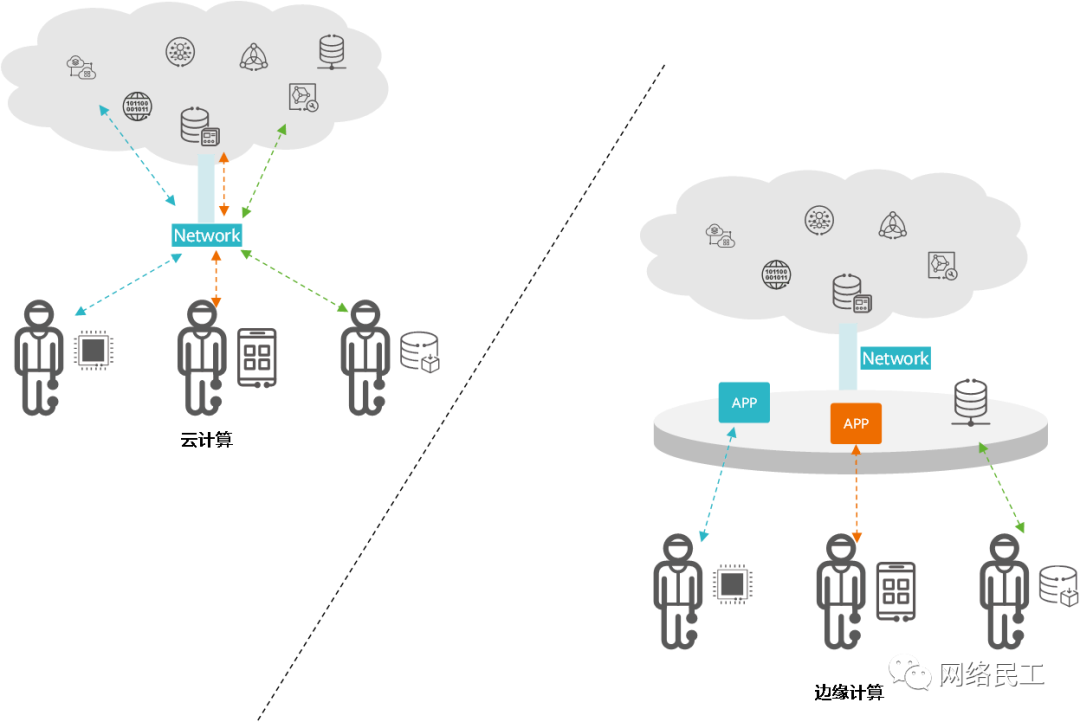
Edge Computing vs Cloud Computing
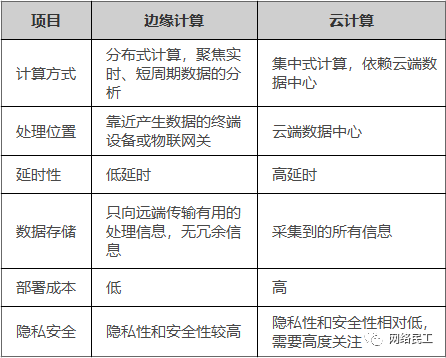
Table 1-1 Differences Between Edge Computing and Cloud Computing
03
How Does Edge Computing Work?
The edge computing architecture is shown in the figure below, which processes data as close to the terminal nodes as possible, moving data, applications, and computing capabilities away from centralized cloud computing centers.
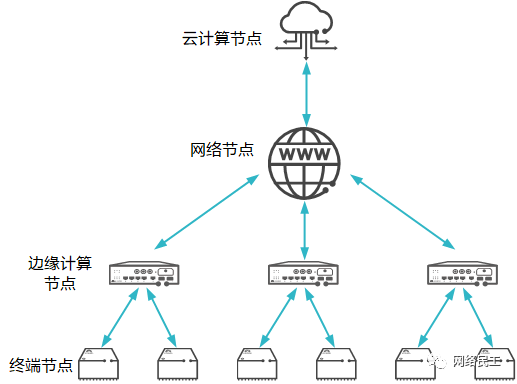
Edge Computing Architecture
-
Terminal Nodes:
Composed of various IoT devices (such as sensors, RFID tags, cameras, smartphones, etc.), primarily responsible for collecting raw data and reporting it. In the terminal layer, only the sensing capabilities of various IoT devices are needed, without requiring computing capabilities.
-
Edge Computing Nodes:
Edge computing nodes achieve basic service responses by reasonably deploying and allocating the computing and storage capabilities of network edge nodes.
-
Network Nodes:
Responsible for uploading useful data processed by edge computing nodes to cloud computing nodes for analysis and processing.
-
Cloud Computing Nodes:
The reported data from the edge computing layer will be permanently stored in cloud computing nodes, while analysis tasks that edge computing nodes cannot handle and tasks that require integration of global information still need to be completed in cloud computing nodes. Additionally, cloud computing nodes can dynamically adjust the deployment strategies and algorithms of the edge computing layer based on the distribution of network resources.
04
Typical Applications of Edge Computing
Based on the capability and characteristics of processing data in real-time and faster response times, edge computing is very suitable for application in the IoT field. Through IoT gateways with edge computing capabilities, it provides device management and control services nearby (at network edge nodes), solving the “last mile” problem of IoT communication and ultimately achieving intelligent connections and efficient management of IoT devices.
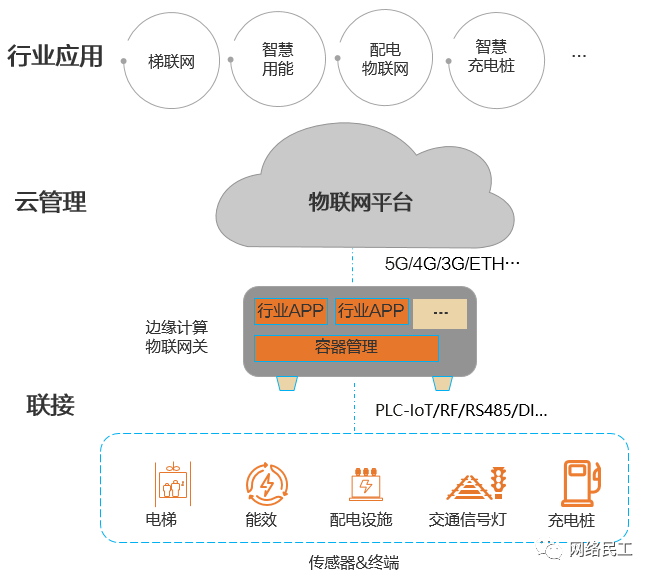
The edge computing network architecture is shown in the figure below, focusing on the industrial IoT field. It not only supports a rich set of industrial protocols and IoT interfaces, adapting to various industry device connection scenarios but also quickly meets the edge intelligent data processing needs of different industries through open edge computing capabilities and cloud management architecture:
-
Connectivity:
Enables massive terminal devices to connect to the IoT network, primarily through various IoT interfaces (IP-based PLC/RF/RS485/RS232, etc.) supported by edge computing gateways to connect various sensors and terminals, achieving terminal device access.
-
Cloud Management:
Through the IoT platform and cloud computing technology, it achieves unified cloud management of edge IoT devices (such as networks, devices, containers, and applications), while supporting flexible docking with other industry application systems.
-
Industry Applications:
The IoT platform provides standard open interfaces to connect with different partners’ industry application systems, building extensive industry adaptability and allowing for the development of more tailored IoT industry applications that fit various industry scenarios.
-END-

关注【中科院计算所培训中心】
阅读更多精彩内容
▽▽▽
点分享


点点赞


点在看