Nowadays, large-screen smartphones are becoming increasingly popular.
The tragedy of cracked screens is happening more frequently.
“Ah! My screen is cracked! Replacing it will probably cost thousands! Maybe I should just get a new phone!”
But!
Is the screen really as simple as you think?


Actually, the touchscreen of a smartphone can be divided into two layers: one layer inside the screen is responsible for displaying images, while the other layer outside the screen is responsible for receiving our touch signals. We can temporarily refer to them as the inner screen and outer screen.
The two layers are bonded together in two different ways: older screens have a slight gap between the inner and outer screens due to technical reasons, which makes them appear gray when viewed in sunlight (as shown in the picture below). We call them: non-full lamination screens.
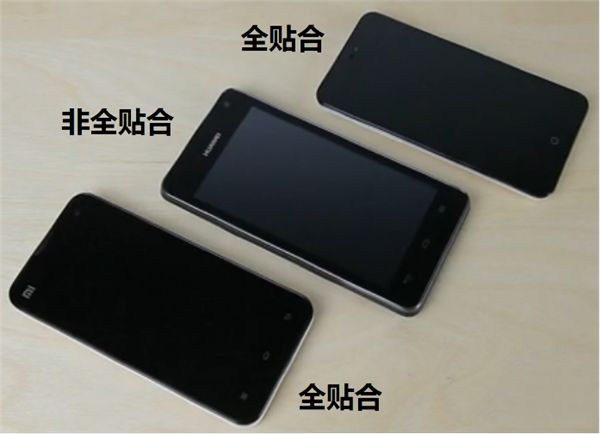
Of course, if there are non-full lamination screens, then there must be full lamination screens. Full lamination screens use special optical glue to fill the gap between the inner and outer screens, making them less prone to dust and better at displaying the colors of the inner screen.
If most cracked screens can still display images without turning into colorful pixel dots, then it should only be the outer screen that is cracked. Simply put, the outer screen is a relatively expensive piece of glass that determines the touch location based on the current generated by the human finger touching it. If it’s a non-full lamination screen, the cost of the outer screen may not even exceed that of a tempered film, and it can be replaced with skilled manual operation.
However, full lamination screens are different. Their bonding of the inner and outer screens requires professional optical glue and significant pressure to achieve complete adhesion (you have never seen bubbles inside a full lamination screen, right?). This requires specialized equipment and skilled operation, and because of the complete bonding of the inner and outer screens, a cracked outer glass may directly damage the expensive inner screen structure.
Therefore, general repairs involve replacing the entire screen, and the vendor will send the unbroken inner screen of a cracked screen back to the manufacturer for recycling. In other words, you give the vendor the intact expensive inner screen along with the cracked cheap outer screen, and the vendor sends it to the manufacturer with specialized equipment to separate the screens and replace the outer screen, which is then sold back to the vendor and finally returned to you.
But what does this have to do with me?
It won’t help me save money!
Let’s talk about a recent piece of news.
According to online sources,
in 2018, Apple may launch three new models based on the iPhone X,
one of which, a budget version of the iPhone X, will switch to an LCD screen.
Hmm?
What is that?
I’ve only heard of LED screens.
Let me introduce two types of screens to everyone.
LCD Screen
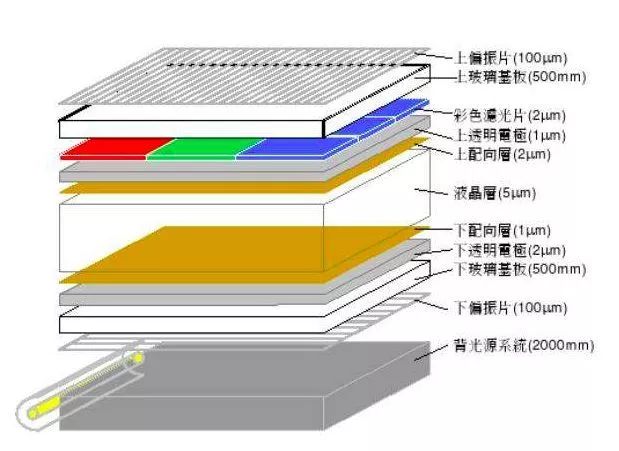
LCD displays, also known as liquid crystal displays, have a structure that places liquid crystals between two parallel glass sheets. There are many fine vertical and horizontal wires in between, controlling the direction of the rod-like crystal molecules to refract light and produce images.
OLED Screen
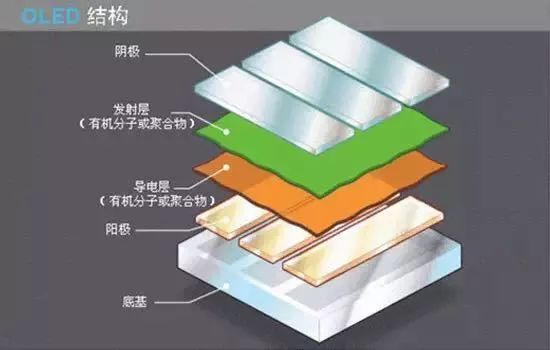
OLED displays are made using organic electroluminescent diodes. Due to their self-emissive properties, they do not require a backlight, have high contrast, are thin, have a wide viewing angle, fast response times, can be used for flexible panels, have a wide temperature range, and simpler construction and production processes, they are regarded as the next generation of emerging display technologies.
OLED Screen
VS
LCD Screen
In simple terms, the LCD screen is a backlight panel that emits white light at the bottom, adjusting the refraction of light through electric currents to display colors, while OLED is a thin organic semiconductor film that emits colored light to display colors.
Compared to LCDs, OLEDs can achieve thinner screens and wider color gamuts because they do not need liquid crystals to refract light. At the same time, due to their self-emissive nature, OLED screens can be bent (LG Group released a fully bendable OLED screen in 2016), have full screens, and wider viewing angles. Since LCD screens achieve black by blocking light, while OLED screens adjust the light source to achieve black, OLED screens are more energy-efficient under normal use, can achieve higher contrast, and can change colors more quickly (one adjusts light while the other rotates liquid crystals).
However, despite their high performance, OLED screens still need improvements in yield rates, large sizes, high resolutions, lifespan, and manufacturing costs.
Of course, determining the quality of a smartphone screen is not only about the screen itself; many other factors, such as color temperature adjustment, gesture operations, and other auxiliary functions of the phone, need to be compared and referenced.
After reading this article,
you won’t be fooled by the store just by the performance and appearance when buying a phone, right?
1
END
1
Some images and text are sourced from the internet.
Editor: Yan Yufeng
Editor-in-Chief: Shang Baojie, Sheng Shiyun, Lin Zihan

Digital Growth, More Wonderful With You