In the era of artificial intelligence, we often hear terms like CPU, GPU, and NPU. They are all chips that process data, but their design philosophies and areas of expertise are vastly different. Understanding their differences is akin to understanding the different roles in an efficient team: the commander, the strongman, and the expert.
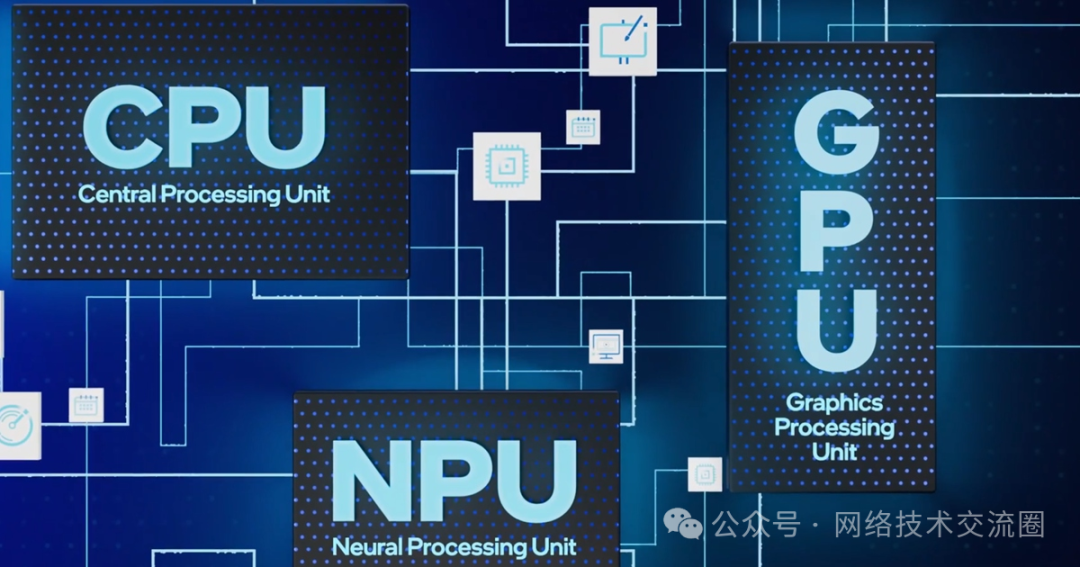
1. Core Introduction: Each with Their Own Role
1. CPU – Central Processing Unit: The Versatile Commander
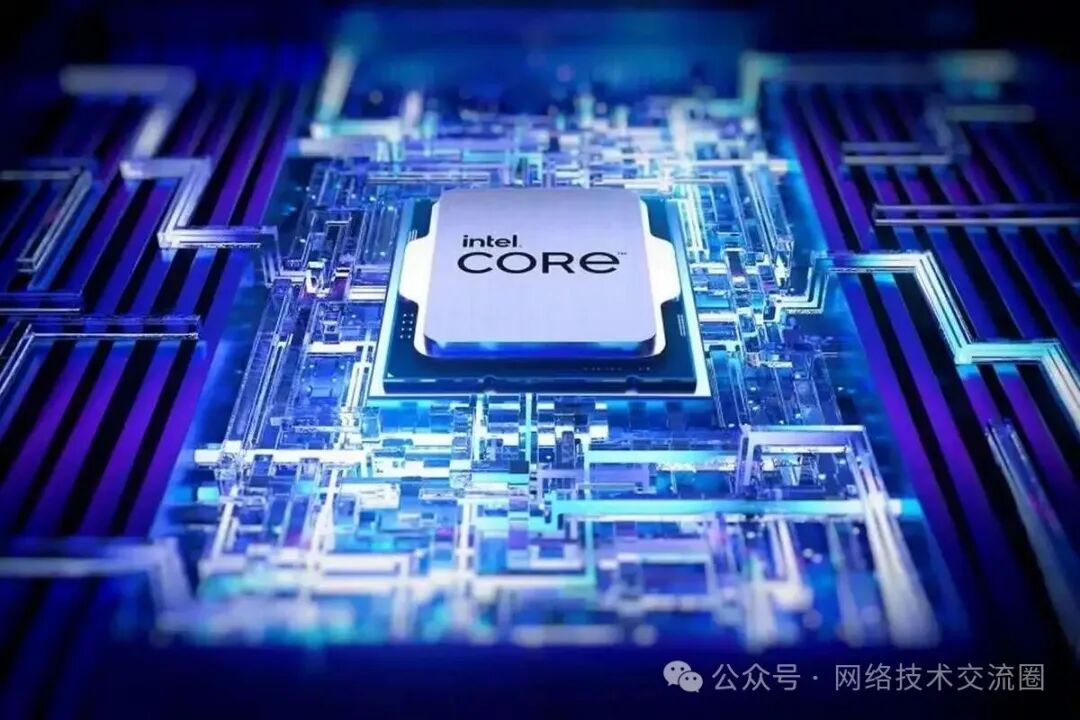
- Role Positioning: The “brain” and “control center” of the computer system. It is responsible for executing various instructions from the operating system and applications, managing the coordination of the entire system.
- Design Features: Pursues versatility and low latency. The CPU has fewer cores (usually a few to dozens), but each core is very powerful, adept at quickly and continuously processing complex, serial computational tasks. It is like a knowledgeable PhD who can tackle any problem but can only focus on one or two tasks at a time.
- Typical Applications: Running operating systems, office software, web browsing, program logic control, and almost all general computing tasks.
2. GPU – Graphics Processing Unit: The Parallel Computing Strongman
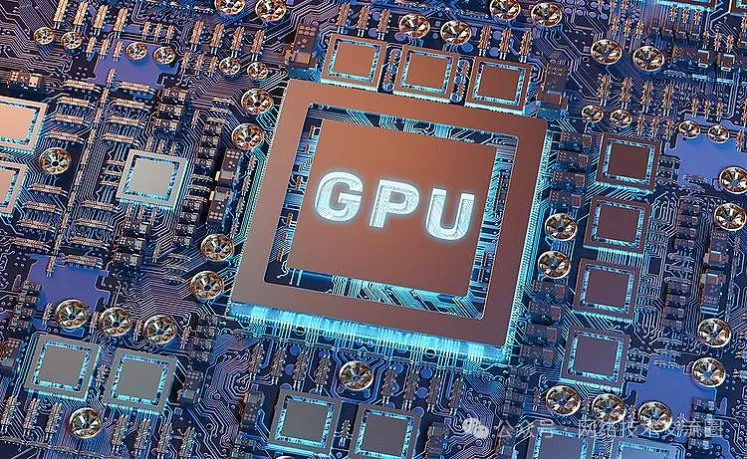
- Role Positioning: Originally designed for image rendering, it has now become the king of massive parallel computing.
- Design Features: Pursues high throughput. The GPU consists of thousands of small, efficient cores designed to process a large number of simple, repetitive computational tasks simultaneously. It is like a team of thousands of students, each solving a simple arithmetic problem, but collectively completing an entire exam in an instant.
- Typical Applications:
- Original Uses: Video games, 3D graphics rendering, video editing.
- Modern Uses: Training and inference of AI models, scientific simulations, cryptocurrency mining, deep learning.
3. NPU – Neural Processing Unit: The AI Specialist
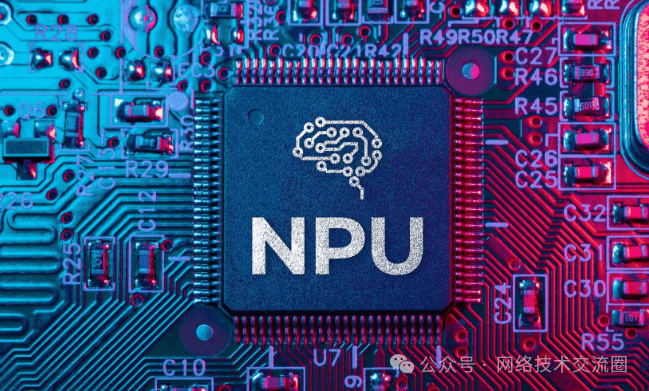
- Role Positioning: A type of application-specific integrated circuit designed specifically to accelerate neural networks and machine learning algorithms.
- Design Features: Pursues extreme energy efficiency. The NPU employs innovative architectures such as in-memory computing to minimize data movement between memory and computation units, efficiently executing core AI operations like matrix multiplication and convolution at very low power consumption. It is like a specially trained mathematical genius who can perform mental calculations at unmatched speed and with minimal effort for specific problems.
- Typical Applications: Photo optimization on smartphones, voice assistants, facial recognition, background blurring, and real-time object detection in autonomous vehicles, among other device-side AI applications.
2. Comparison of Differences: Understanding Through a Table
| Feature | CPU | GPU | NPU |
|---|---|---|---|
| Full Name | Central Processing Unit | Graphics Processing Unit | Neural Processing Unit |
| Core Goals | Versatility, low latency | High throughput, parallel computing | High energy efficiency, AI inference |
| Core Architecture | Fewpowerful cores | Manysimple cores | Customizedcores for AI computation |
| Working Method | Serial processing of complex tasks | Parallel processing of many simple tasks | Efficient execution of specific AI tasks |
| Expertise | Operating systems, program logic, diverse computations | Graphics rendering, large-scale parallel computing (e.g., AI training) | Neural network inference (e.g., image recognition, speech processing) |
| Energy Efficiency | Low (relatively) | Medium (high computational throughput) | Extremely high (optimized for AI tasks) |
| Analogy | Knowledgeable PhD | **Army of thousands of students | Mental math genius |
3. Collaborative Operation: The Norm in Modern Devices
In modern computing, especially in smart devices, these three are not mutually exclusive but rather work collaboratively, leveraging their strengths to form an efficient heterogeneous computing architecture.
A typical example is taking and processing a portrait photo with a smartphone:
- CPU (the commander): Responsible for overall control, launching the camera app, and coordinating the work of the GPU and NPU.
- GPU (the strongman): Likely responsible for the initial rendering, composition, and color adjustments of the image.
- NPU (the expert): The core role is activated, specifically responsible for face recognition, background blurring (cutting out), beauty optimization, and other AI computations.
- CPU: Finally, it saves the processed results and displays them on the screen.
In this process, the NPU efficiently completes the most energy-consuming AI tasks, significantly reducing power consumption and increasing speed. If the CPU were to handle all these AI computations alone, it would be very slow and cause the phone to overheat.
Conclusion
- CPU is the foundation, an essential general brain responsible for management and coordination.
- GPU is the accelerator, shouldering the burden of AI training and graphics processing with its powerful parallel capabilities.
- NPU is the special forces, born for device-side AI applications, making AI ubiquitous with its extremely high energy efficiency.
From PCs to smartphones to autonomous vehicles, it is the division of labor and collaboration among these three that drives the rapid development of today’s smart technology.
Add the Editor’s WeChat
Note Source: Position + Nickname (e.g., Network Engineer + Zhu Bajie)

Why should customer switches use sub-interfaces instead of VLANIF for efficient networking?
2025-08-29
Is the dedicated line bandwidth too expensive to increase? Learn this trick to save money while keeping core business running smoothly!
2025-08-28
Do you think stacking is complicated? Actually, it’s simpler than configuring VLANs!
2025-08-27
A very comprehensive and practical collection of commonly used Kubernetes (k8s) commands
2025-08-26
What are the strengths of a network firewall and a web gateway?
2025-08-25