Currently, the global construction of 5G networks is in full swing. According to statistics, as of August 2020, there are already 92 commercial 5G networks worldwide, covering 38 countries and regions.These 5G networks mainly adopt the TDD standard.As you may know, 4G LTE networks are divided into FDD LTE and TDD LTE.FDD and TDD refer to Frequency Division Duplex and Time Division Duplex, respectively.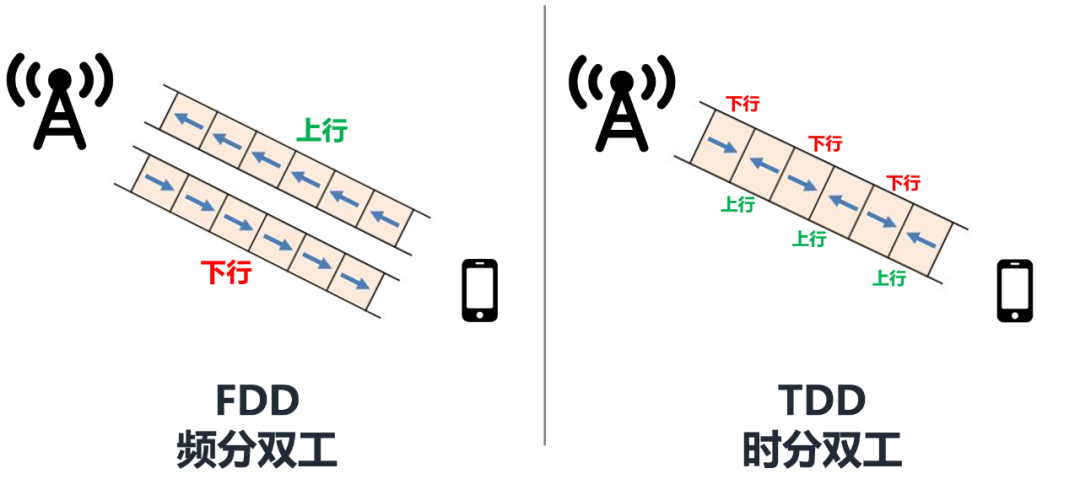 FDD Frequency Division Duplex uses two different frequency bands, one for the uplink from the phone to the base station, and the other for the downlink from the base station to the phone.TDD Time Division Duplex, on the other hand, uses the same frequency band for both uplink and downlink transmission, differentiating them by different time slots.Clearly, compared to FDD’s exclusive ‘lane’ approach, TDD has to consider uplink and downlink time slot allocation and interference suppression, making its technical implementation more complex.However, the spectrum resource utilization of FDD is not as good as that of TDD.Mobile communication services exhibit an imbalance in uplink and downlink data flow. For example, when watching videos, the downlink data volume is large, but the uplink is small. If FDD is used, resource allocation is not flexible, and the frequency band occupied by the uplink is basically idle.In contrast, TDD supports flexible allocation of uplink and downlink time slots, allowing for more downlink time slots in scenarios with heavy downlink traffic, and vice versa.
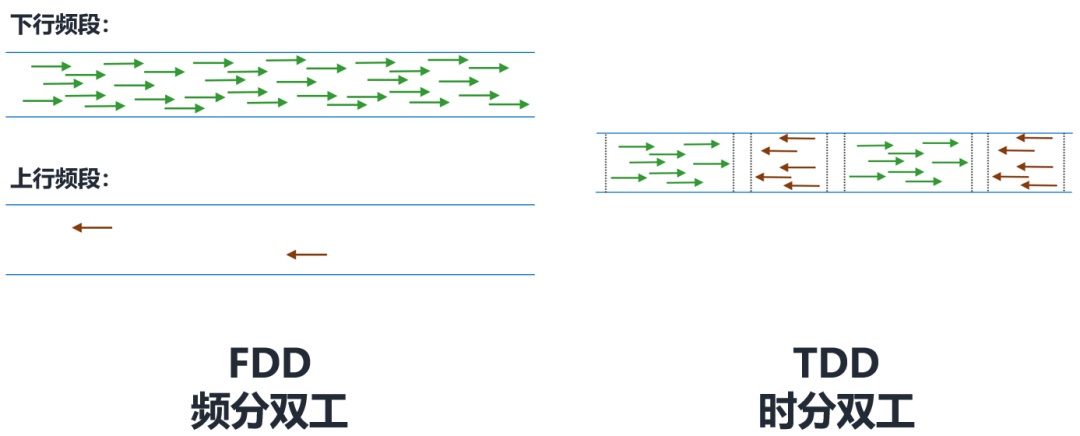 In the 4G era, the number of FDD LTE networks globally was greater than that of TDD LTE.However, the situation changed in the 5G era.5G requires higher speeds and larger frequency bandwidth. In high frequency bands, it is very difficult to find two large symmetrical frequency bands for FDD like before. The lower frequency resource utilization of FDD is completely unacceptable.Moreover, for the massive antenna technology (Massive MIMO) adopted by 5G, TDD has better signal reciprocity and is easier to design.Thus, considering various factors, major operators have turned to TDD for their 5G network deployments. This confirms the old saying: ‘Thirty years east of the river, thirty years west of the river.’
▊ What is High and Low Frequency Networking?
Does the story end here? Of course not.The adoption of TDD high frequency in 5G means it must face a tricky problem—insufficient network coverage capability.Insufficient network coverage is mainly due to inadequate uplink capability.For downlink, from the base station to the phone, there are generally no issues because the base station has a higher transmission power, supported by technologies like beamforming.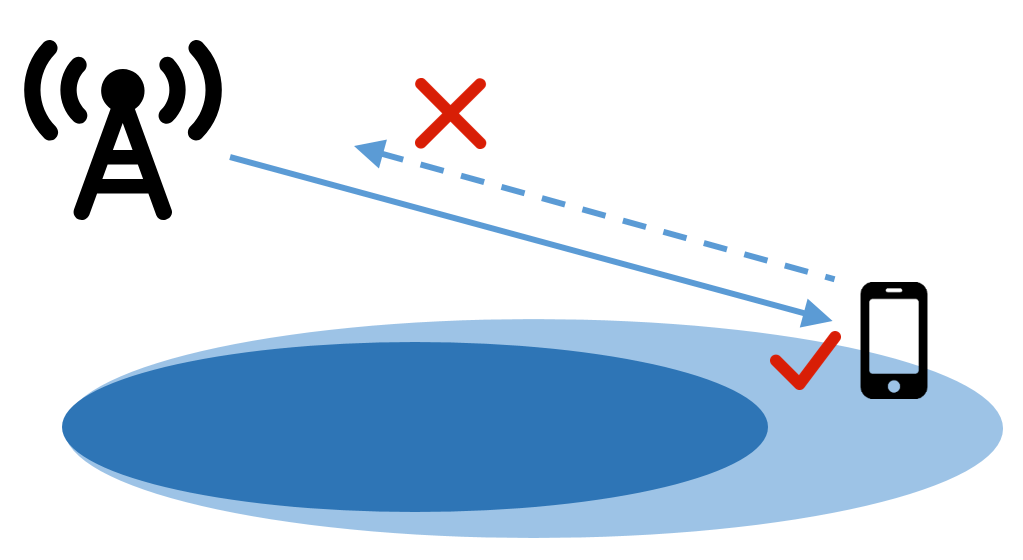 For uplink, from the phone to the base station, the phone’s antenna power is very low, making it naturally have a shorter signal propagation distance, which limits the communication distance between the phone and the base station (i.e., limits the coverage range of the base station).Currently, 5G uses frequency bands that are higher than 4G, such as 3.5GHz and 4.9GHz, which have greater penetration loss and faster signal attenuation. The impact of TDD on coverage capability is even more pronounced.So how can we solve this problem?Experts have considered decoupling uplink and downlink using SUL (Supplementary Uplink) technology.The idea behind this technology is very simple: since high frequency uplink is insufficient, we can ‘borrow’ frequency band resources from mid-low frequency as an uplink channel!
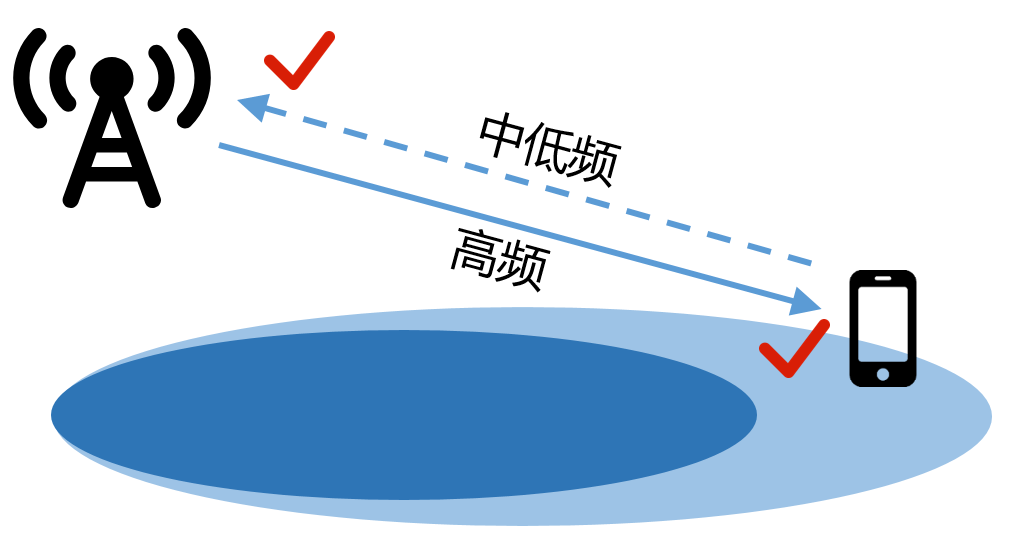 Mid-low frequency has smaller penetration loss and longer propagation distance, which can effectively help 5G improve coverage.Although mid-low frequency has a smaller bandwidth and cannot meet the Gbps high bandwidth service requirements, it can fully handle most scenarios, including mobile communication.Continuing to think, which mid-low frequency band resources are suitable for ‘borrowing’?Taking 2.1GHz as an example, currently, Unicom and Telecom have 25MHz and 20MHz of spectrum resources in this band, respectively. These resources are temporarily occupied by 4G LTE networks but are the first choice for frequency band reallocation.
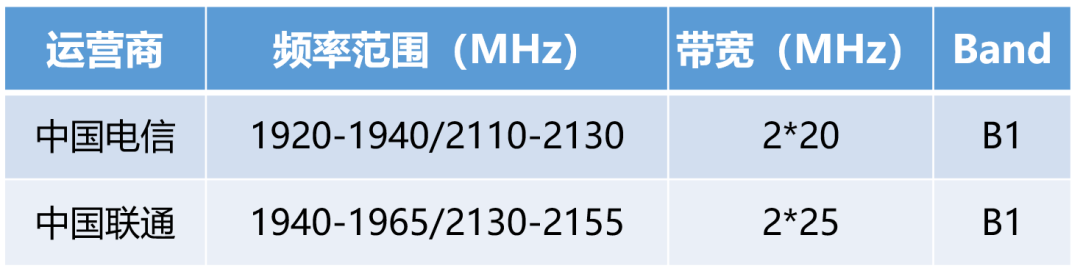 Telecom and Unicom 2.1GHz frequency rangeWe cannot adopt a one-size-fits-all approach and directly use these resources for 5G NR, as it would affect the user experience of current 4G network users. However, through Dynamic Spectrum Sharing (DSS) technology, we can allow 4G/5G networks to share this spectrum resource.
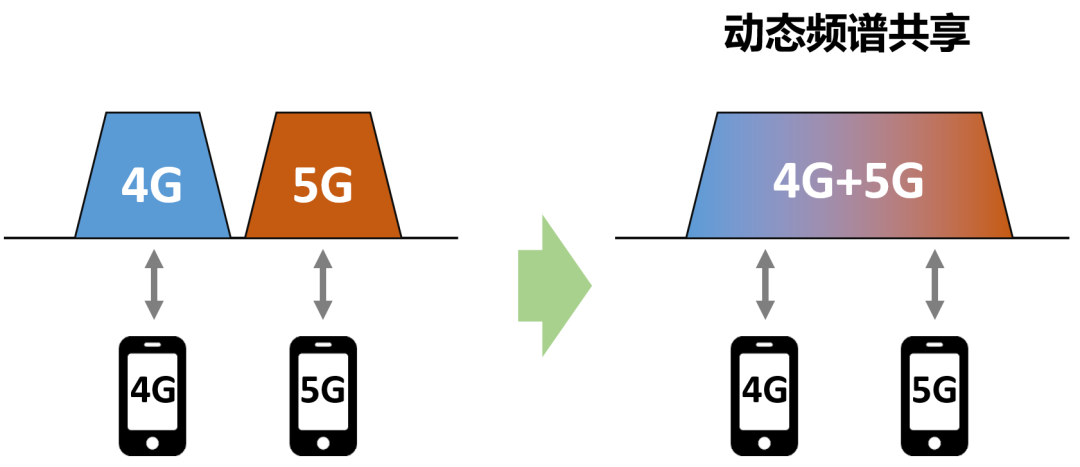 In this way, we form a “Mid-low Frequency FDD NR + High Frequency TDD NR” networking method, which can be called “High and Low Frequency Networking”.Traditional SUL auxiliary uplink uses 3.5GHz for uplink and downlink at mid-range distances, and when the distance becomes too far for 3.5GHz uplink to reach, SUL is activated, replacing 3.5GHz with 2.1GHz for uplink.
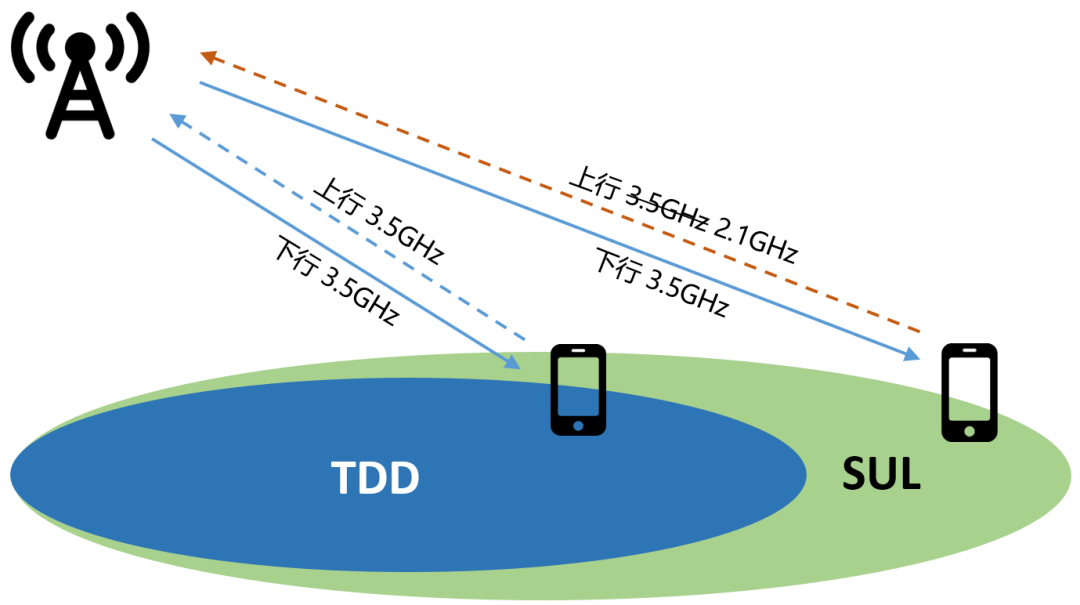 Traditional SUL auxiliary uplinkThus, this means that for most of the time (at mid-range distances down), the auxiliary uplink is idle.Therefore, Huawei proposed the “Super Uplink”. This means that even at mid-range distances, auxiliary uplink resources are used in conjunction with the TDD main carrier to transmit uplink data in turns, enhancing uplink capacity.
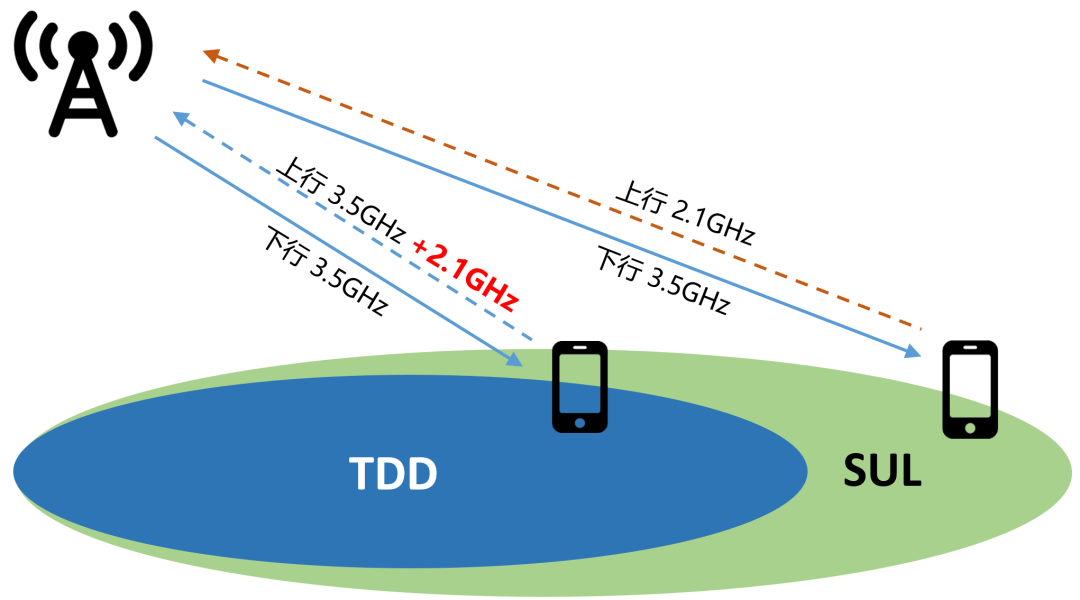 Super UplinkThis is undoubtedly a very practical idea, breaking the restriction that carrier aggregation must ‘bundle’ spectrum.In addition, Huawei has also innovatively introduced FDD 5G broadcast channel narrow beam technology and TDD 5G broadcast channel intelligent optimization technology.FDD 5G broadcast channel narrow beam technology differs from the traditional wide beam broadcast, using two narrow beam broadcasts in polling to increase coverage by 3dB, enhancing the depth and breadth of VoNR service coverage.
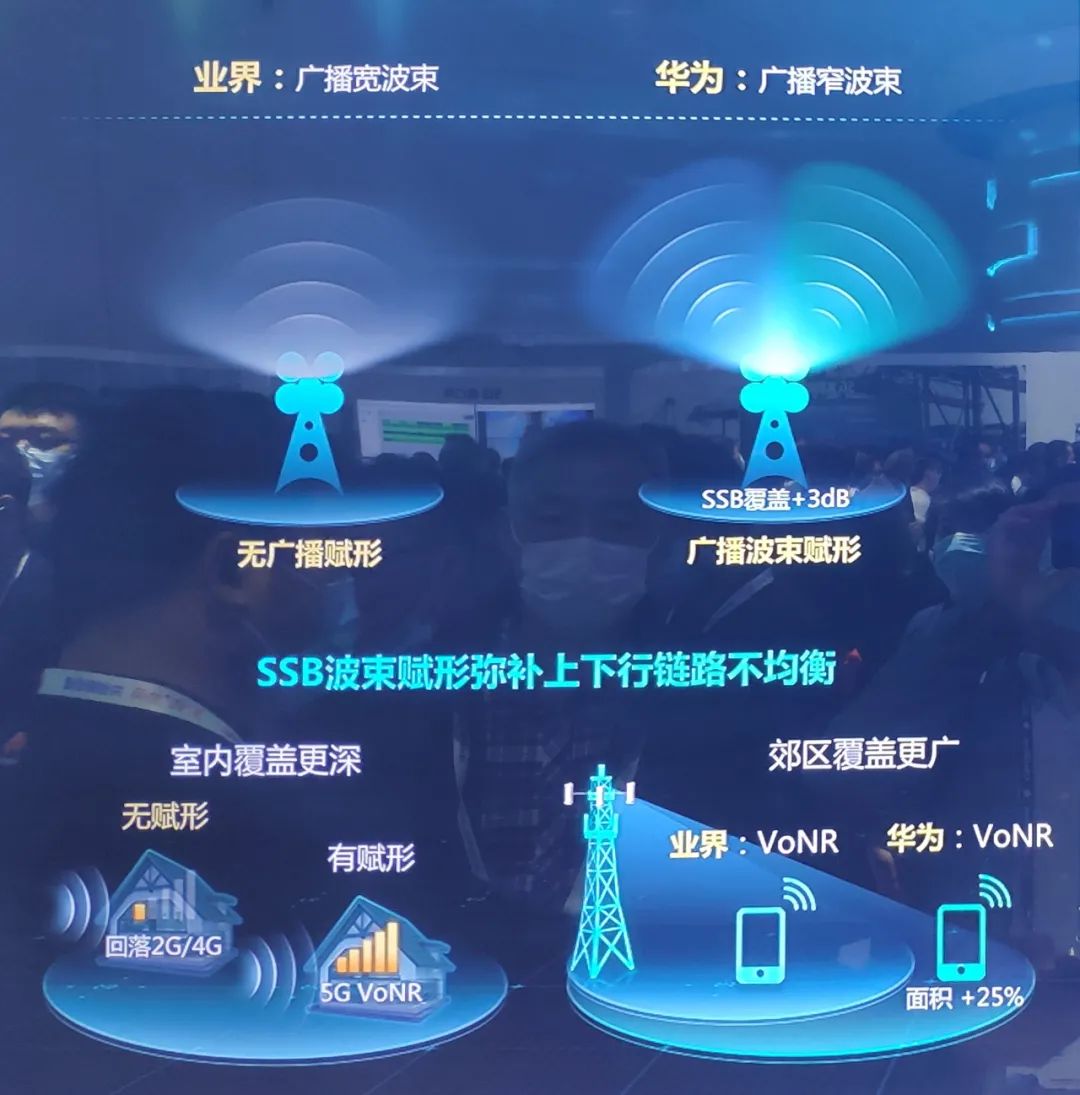 Broadcast channel narrow beam technologyTDD system broadcast channel intelligent optimization mainly involves shaping the broadcast channel beams, polling and scanning, and using AI to intelligently recognize coverage scenarios and user distribution, providing multiple beam combinations for intelligent matching, optimizing user experience and spectrum efficiency.
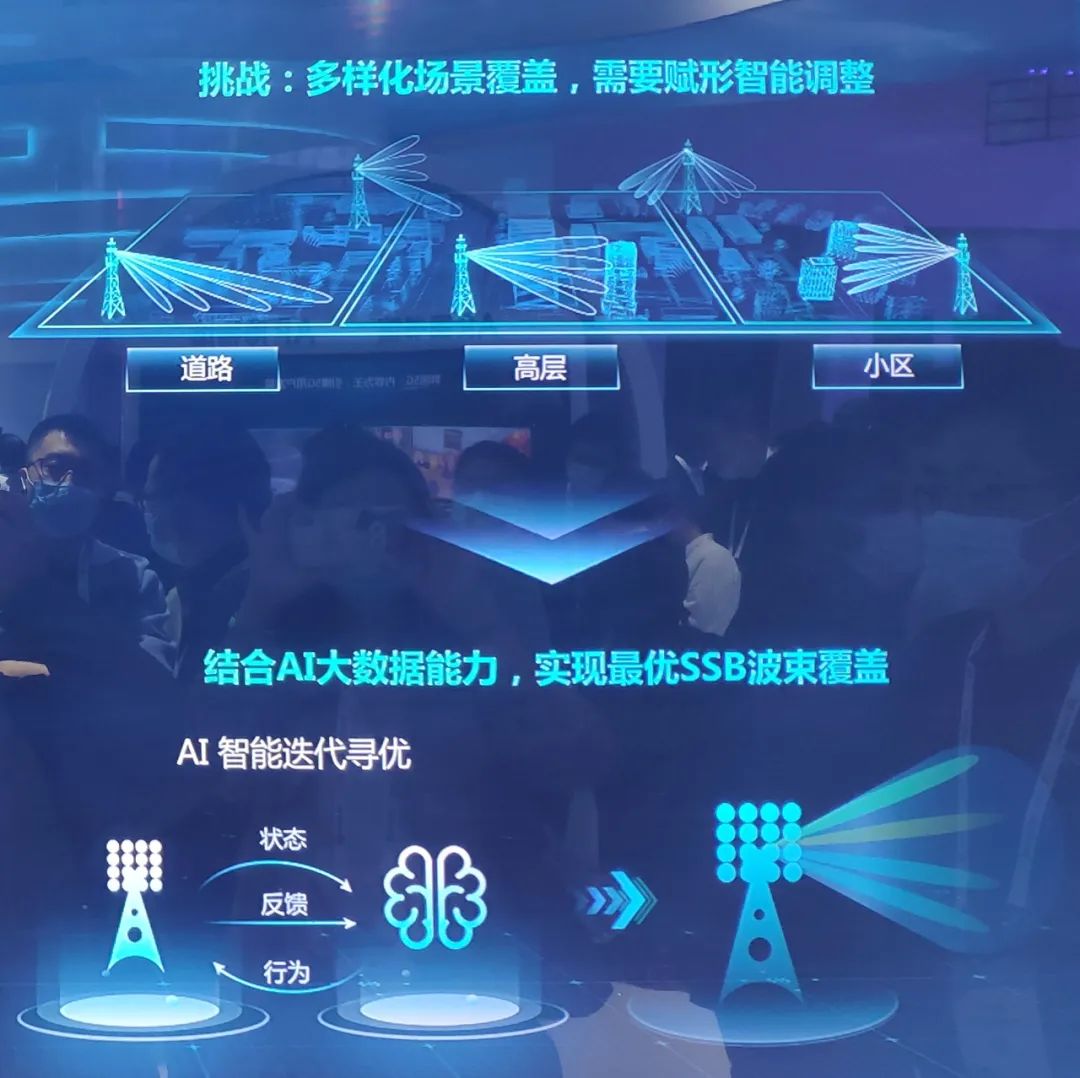
Broadcast channel intelligent optimization technology
▊ Standardization and Terminal Support
Whether the ‘Mid-low Frequency FDD NR + High Frequency TDD NR’ networking method can be implemented depends on whether the standards allow it and whether the terminals support it.Although TDD NR has always been the priority option for operators and equipment manufacturers, FDD NR has not been forgotten by standard setters.On July 3, 2020, the 3GPP R16 version standard was frozen. This version comprehensively enhances the 5G 2C and 2B scenarios, including enhancements to FDD NR.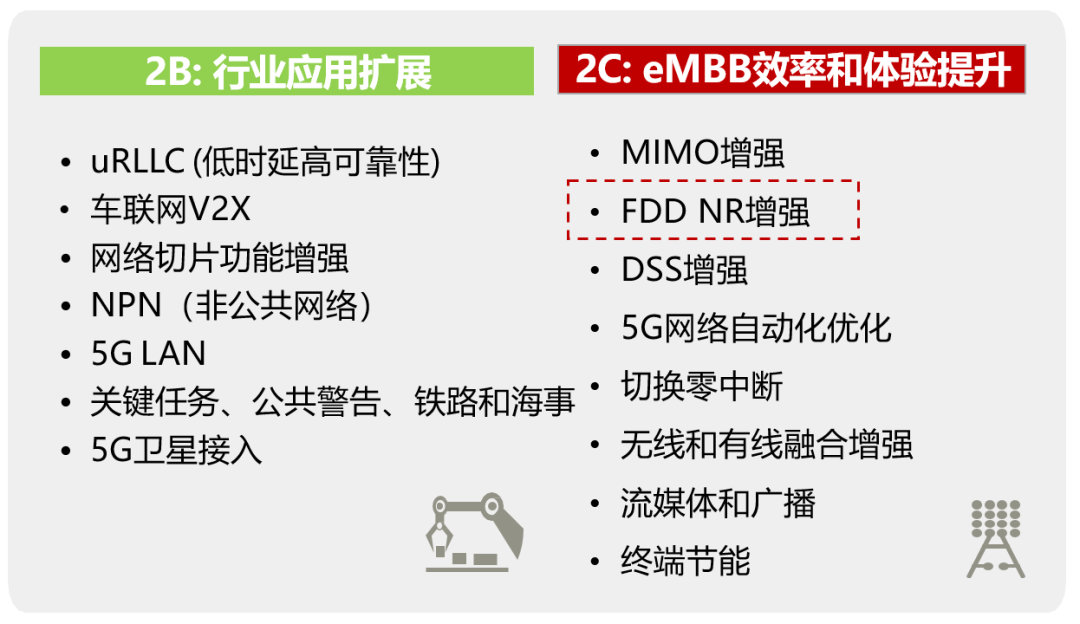 Currently, the standardization work for NR/DSS FDD large bandwidth has been completed, including 2.1GHz NR FDD and 700MHz NR FDD.In addition, the projects for FDD large bandwidth downlink carrier aggregation (CA) and supplementary uplink (SUL) are currently underway and being actively promoted.On the terminal side, mainstream chips, including those from Huawei and Qualcomm, fully support 3.5G/2.6G/2.1G/1.8G NR, with partial support for 700MHz NR. By 2021, 5G chips will also support large bandwidth FDD NR and large bandwidth SUL.
▊ The Role of High and Low Frequency Networking
In the future, for different demand scenarios such as urban areas and suburban counties, the most reasonable deployment method for 5G networks is to use TDD NR for large bandwidth and FDD NR for supplementary coverage and uplink enhancement.5G FDD NR not only compensates for the uplink shortcomings of TDD NR and enhances coverage in rural areas but also strengthens deep coverage in urban areas.In urban macro stations, combining high and low frequencies can improve outdoor coverage. The stronger penetration ability can help cover indoor areas and save investment in 5G indoor distribution systems.Furthermore, through collaborative operation and maintenance, it is possible to achieve energy-saving goals by putting parts of the network to sleep during nighttime or times of low load, while ensuring stable network KPIs.
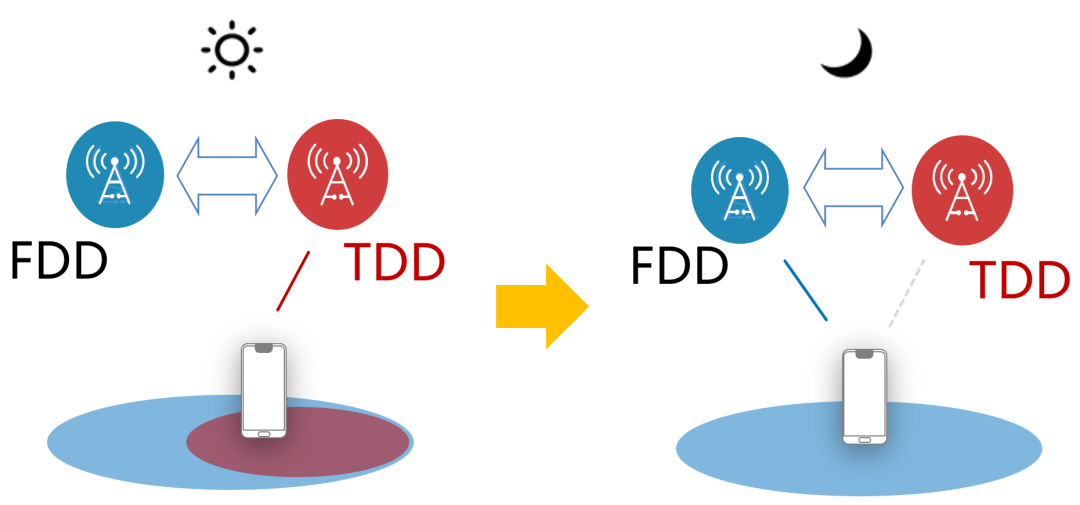
In summary, high and low frequency networking fully combines the advantages of TDD large bandwidth and FDD long coverage, making it a very practical 5G networking strategy.Source: Fresh Date Classroom