From starting a business in a makeshift shed to becoming the second largest global supplier, this Tsinghua University graduate has spent 20 years carving out a path for domestic alternatives in the chip industry dominated by foreign giants.

Author|Jian Yan
Editor|Chun Yu

Starting from a Makeshift Shed
In 2003, during the nascent stage of China’s semiconductor industry, Zhao Lixin returned to China to start a business, armed with rich experience and technical insights gained from international semiconductor companies. He chose a humble shed within the Shanghai Zhangjiang Semiconductor Manufacturing International (SMIC) campus for his company, as it was closest to the production line, allowing for immediate resolution of technical issues.
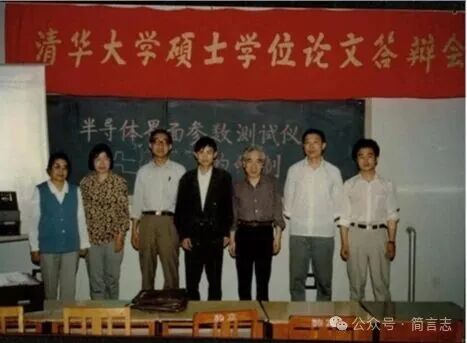
In the early days of the startup, the team faced challenges of inadequate equipment and tight funding. Every morning, they had to clear ants from the shed before starting circuit design work on a makeshift workbench. It was this harsh environment that forged the team’s unyielding spirit.
After more than 40 MPW (Multi-Project Wafer) trials, Geke Microelectronics became the only company among many partners of SMIC to successfully achieve mass production, securing its first million-level order and laying a solid foundation for future development.

Turning the Tide
In the fierce market competition, Geke Microelectronics’ unique COM packaging technology became the key to success. This technology not only significantly reduced production costs but also improved product performance stability, allowing the company to quickly capture over 50% of the global low-end image sensor market.

By 2014, Geke Microelectronics’ CMOS sensor shipments reached an astonishing 940 million units, securing the second position in global market share; by 2020, it surged to become the largest supplier globally with a 29.7% market share.
However, Zhao Lixin remained clear-headed, knowing that profits in the low-end market were slim and that for long-term development, the company must move into the high-end market. In 2021, Geke Microelectronics successfully went public on the STAR Market, raising 6.96 billion yuan to stockpile sufficient “ammunition” for entering the high-end CIS chip market.

High-End Assault
Faced with the technological monopoly of international giants like Sony and Samsung in the high-end market, Geke Microelectronics chose a differentiated technical route—self-developed single-chip high-pixel integration technology. This innovative technology achieves high pixel counts through a single chip, reducing noise issues caused by heat from logic chips compared to traditional stacked architectures, while significantly improving wafer utilization.

In 2023, with the official production of the 12-inch wafer fab in Lingang, Geke Microelectronics achieved a strategic transformation from a Fabless to a Fab-Lite model. This modern wafer fab, equipped with the most advanced production equipment, provides strong support for the mass production of 50-megapixel products, enabling Geke Microelectronics to successfully enter the mainstream mobile phone supply chains of Samsung, OPPO, and others, achieving a significant breakthrough in the high-end market.

Ecological Layout
While consolidating its position in the mobile phone CIS market, Geke Microelectronics is actively laying out emerging fields such as automotive electronics, AI glasses, and security monitoring. In 2024, the company completed the R&D of its first automotive front-mounted image sensor, with product performance fully meeting automotive-grade requirements; by 2025, the 5-megapixel CIS will achieve mass production in the AI glasses project, with module sizes reduced by 10% compared to traditional solutions, providing new possibilities for the development of wearable devices.
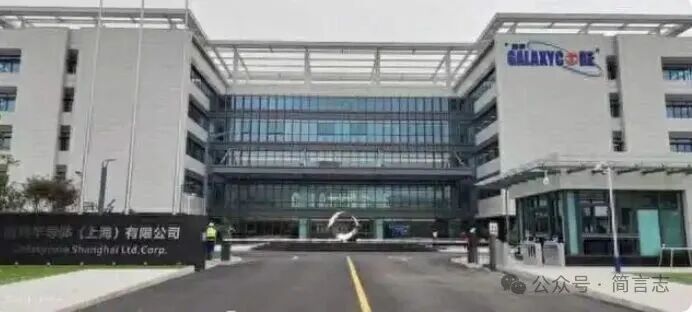
At the same time, the display driver chip business has also made significant progress, with products covering resolutions from QQVGA to FHD+, and AMOLED driver chips expected to be introduced to mobile phones by 2026. These layouts not only expand the company’s business boundaries but also build a diversified product ecosystem.

Climbing the Path
As the company’s strategy deepens, Zhao Lixin has set a new target of achieving $3 billion in revenue. Although there was a brief loss in the first quarter of 2025 due to a surge in R&D investment, the breakthroughs achieved in the high-end product line are encouraging: revenue from products with 13 million pixels and above is expected to triple year-on-year in 2024, surpassing 1.5 billion yuan.

In terms of continuous innovation, Geke Microelectronics invests more than 15% of its revenue in R&D each year, establishing a research team of over 800 people and accumulating more than 500 domestic and international patent authorizations. These investments are translating into market competitive advantages, steadily advancing the company on the path to high-end development.
From ants in a shed to a modern wafer fab in Lingang, from 300,000 pixels to a breakthrough of 50 million pixels, Geke Microelectronics’ 20-year development journey is a microcosm of the ups and downs of China’s semiconductor industry.
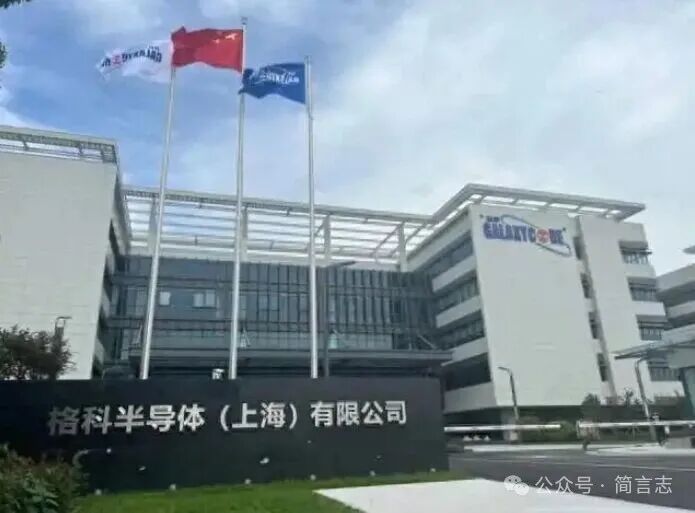
There are no shortcuts on this road; only by continuously cultivating every inch of the battlefield in technology, pixels, and ecology can “Chinese chips” truly stand firm on the global stage. With the arrival of a new round of technological revolution, Geke Microelectronics is writing a new chapter in China’s semiconductor industry with innovation as its pen and hard work as its ink.
Disclaimer
The descriptions and images in this article are sourced from the internet, and the article aims to promote positive social energy without any vulgar or negative guidance. If there are any copyright or personal infringement issues, please contact us promptly, and we will delete the content immediately!
If there are any disputed parts of the events, please contact us for immediate deletion or modification.
This article concludes here. Please feel free to comment, like, and share below. Your every share is a support to the author, and we are very grateful!