Recently, the news regarding whether the United States will approve the sale of NVIDIA’s H200 chip to China has attracted widespread attention. This issue stems from comments made by NVIDIA CEO Jensen Huang, who stated that the current scale of China’s AI chip market has reached $50 billion and is expected to grow to $200 billion by 2030. In this context, NVIDIA is eager to re-enter the Chinese market. However, despite strong domestic interest in the Chinese market, there remains significant uncertainty regarding whether the Trump administration will approve this transaction, and China’s stance on this matter has become crucial.
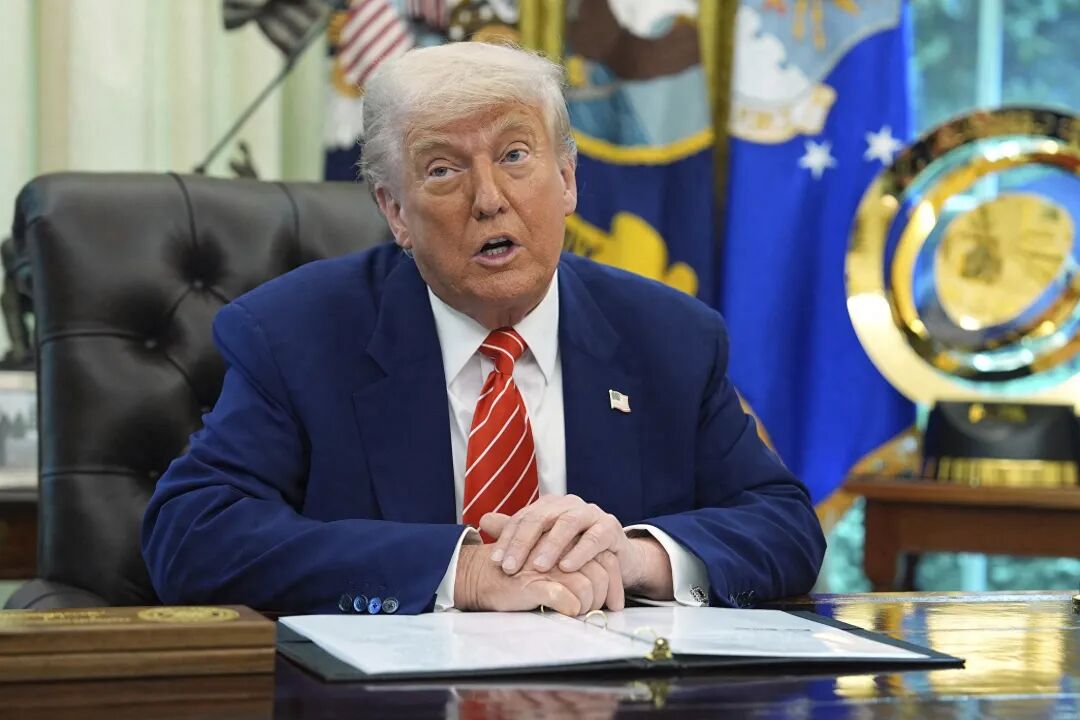
Regarding the Trump administration’s decision on whether to approve the export of the H200 chip, foreign media reports indicate that this decision will be based on changes in Sino-U.S. relations. Reuters and Bloomberg have both reported that the Trump administration is considering this issue, noting that some U.S. officials hold differing opinions on whether to approve it. Especially in light of certain signs of easing in Sino-U.S. relations, the Department of Commerce is reviewing whether to modify relevant policies. However, some opposing voices argue that approving this transaction would make the U.S. appear too lenient in its policy towards China, particularly in the context of the upcoming U.S. midterm elections.
In essence, the Trump administration’s position on this issue reflects its typical “dual strategy” in foreign policy. The U.S. does not want to give up the vast Chinese market while also wanting to maintain a technological advantage in certain key areas. In this game, the H200 chip has become a delicate balancing point—it is advanced enough to meet NVIDIA’s desire to re-enter the Chinese market, yet it does not completely breach U.S. restrictions on high-end technology exports. Although this chip does not perform as well as the latest Blackwell architecture, it strikes a compromise between performance and export restrictions.
However, this compromise may not be as favorable to the U.S. as it hopes. If the H200 chip enters the Chinese market, it could lead to serious technological dependency issues. Although it is not as advanced as the Blackwell architecture, it still possesses strong processing capabilities, and if used in China’s AI technology development, it could pose a potential threat to China’s domestic chip industry. In this regard, China’s position is very clear: any decision to import foreign chips must consider its impact on the domestic industry.
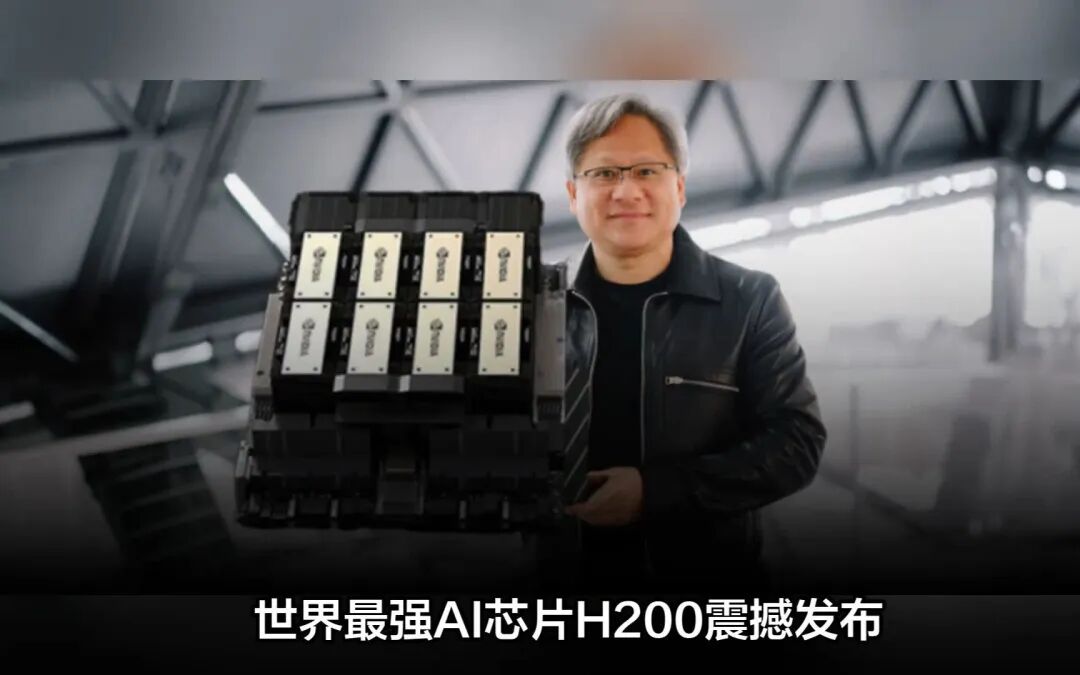
China’s chip self-sufficiency has entered a rapid development stage, especially in the AI chip field. In recent years, China has made significant progress in breakthroughs and innovations in semiconductor technology, and domestic chip companies have already developed the capability to replace imported products in many technological areas. China’s gradual reduction of external dependence has also made U.S. strategies regarding chip exports more challenging.
In fact, China’s demand for U.S. chips is no longer as urgent as it once was. Although companies like NVIDIA hold significant positions in the global market, China has gradually nurtured a group of competitive domestic chip companies. Whether it is Huawei’s Kunpeng series, Cambricon’s AI chips, or Alibaba’s T-head chips, these domestic chips are gradually filling the gaps in the high-end chip sector.
For the U.S., in addition to market demand and technological competition, the issue of chip security is also a factor that cannot be ignored. In the past, the U.S. government has restricted certain technology exports due to concerns about potential data security issues arising from China’s use of imported chips. The Trump administration had approved NVIDIA to resume sales of the H20 chip to China, but shortly thereafter, it was revealed that this chip had serious security vulnerabilities, which attracted widespread attention.
When facing U.S. chips, especially regarding advanced technologies, China is increasingly focusing on “chip security.” If the security of the H200 chip cannot be guaranteed, China has every reason to refuse its entry into the market. In the current technological competition landscape, protecting the security of key technologies has become an important component of national security. Therefore, the Chinese government must not only consider whether to introduce external technology but also the potential hidden risks behind the introduction of such technology.
If the Trump administration genuinely hopes to restore chip trade with China, it must face the reality of China’s strategic planning in terms of independent innovation and industrial security. The export of the H200 chip may seem like an economic compromise, but in reality, it is a “poison pill” set by the U.S. in the Chinese high-end chip market. Although the performance of this chip is not on par with the most advanced technologies, it is still sufficient to impact the development of China’s domestic chip technology and weaken the competitiveness of China’s independent technology.
In this context, even if the Trump administration ultimately approves the sale of the H200 chip to China, China has every reason to refuse this chip. First, security issues have always been at the core of Sino-U.S. technological friction. Second, the rapid rise of China’s chip industry means that China has developed sufficient capabilities to create domestic chips similar to the H200 and is gradually breaking free from dependence on foreign high-end chips.
No matter what decision the U.S. government makes, China’s steps towards chip self-sufficiency are irreversible. In recent years, China’s continuous investment in chip research and development has not only strengthened the innovation capabilities of domestic enterprises but also enhanced the country’s voice in global technological competition.In the future, China will undoubtedly occupy a place in the global semiconductor industry and become one of the leaders in technological innovation.
Overall, the Trump administration’s considerations regarding whether to approve the export of the H200 chip reflect the complex mindset of the U.S. towards the Chinese market in the high-end technology sector. Although U.S. companies are eager to re-enter the Chinese market, the strategic vision of the Chinese government has far surpassed short-term economic interests.China will continue to adhere to its path of technological independence, ensuring national security and long-term economic development, and this will inevitably require any foreign technology to undergo careful scrutiny before entering the market.