The Tianjin CTF Finance Center is a landmark supertall building in the Tianjin Binhai New Area, designed by the American architectural firm SOM. It integrates office, hotel, apartment, and commercial spaces, reaching a total height of 530 meters, making it the tallest building in Northern China and the fourth tallest in China overall. By 2025, it will be the eighth tallest building globally (excluding television towers and unfinished projects).
Basic Information and Positioning
Geographical Location
Located at the intersection of First Avenue and New Town West Road in the Tianjin Economic-Technological Development Area, it sits in the core area of the Binhai New Area’s Modern Service Industry District (MSD), facing the Yujiapu Financial Center across the river, and is an important part of Tianjin’s “Financial Bund” planning.
Scale and Function
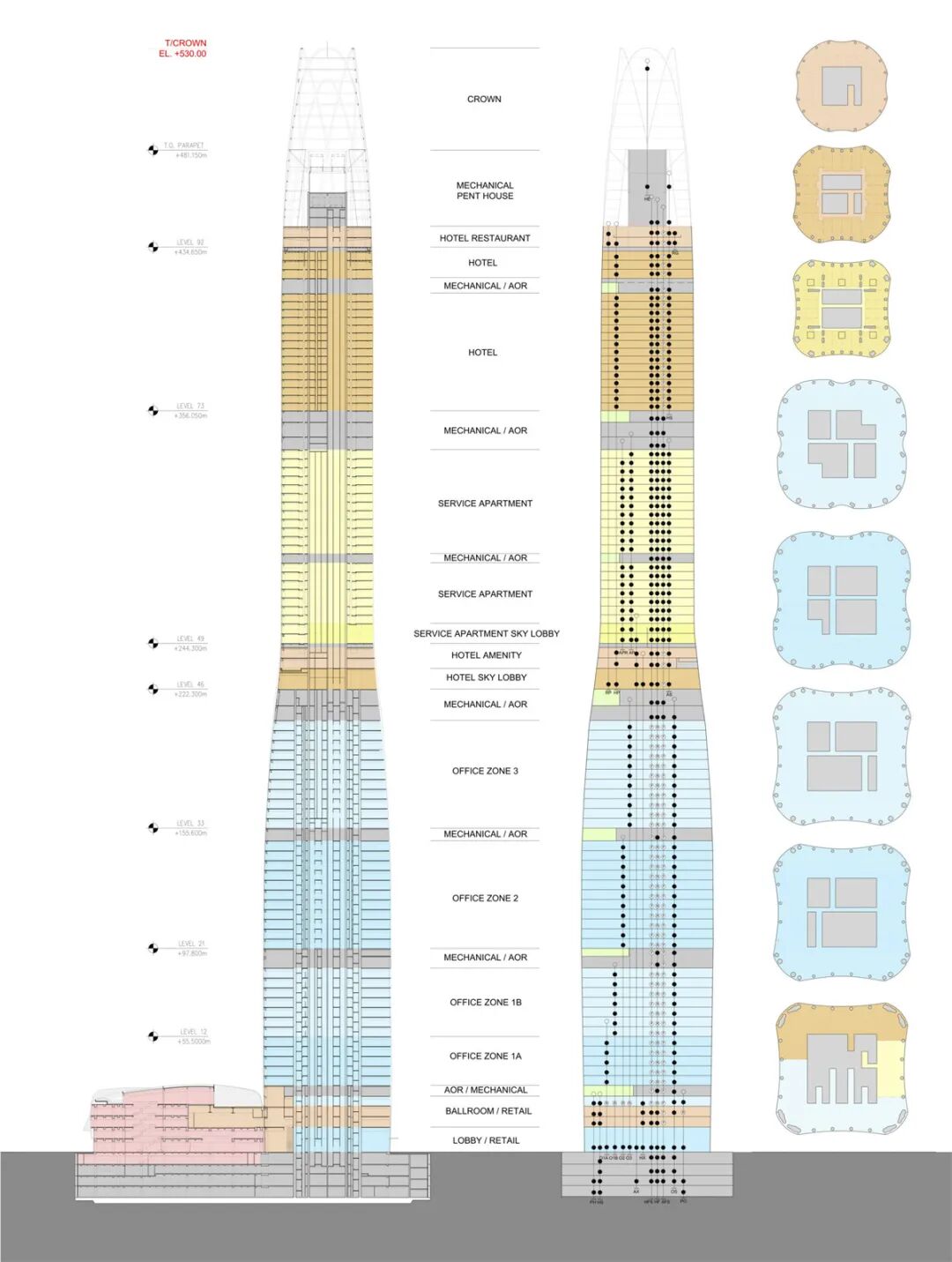
The total land area is approximately 28,000 square meters, with a total construction area of 390,000 square meters, comprising 97 above-ground floors (some sources state 100 or 103 floors) and 4 underground levels.
Functional Zones:
Office: Floors 7-43 are K11 ATELIER Grade A office spaces, housing multinational financial institutions and technology companies.
Hotel: Floors 73-93 feature a five-star hotel, including a presidential suite and a sky bar.
Apartment: Floors 49-70 are serviced apartments.
Commercial: The podium from floors 1-5 is the K11 Select shopping art center, blending art, culture, and retail.
Height Certification
In 2021, it was certified by CTBUH as the “tallest building in Northern China and the seventh tallest in the world.” In 2024, due to the completion of the Merdeka 118 tower in Kuala Lumpur (678.9 meters), its ranking will drop to eighth globally.
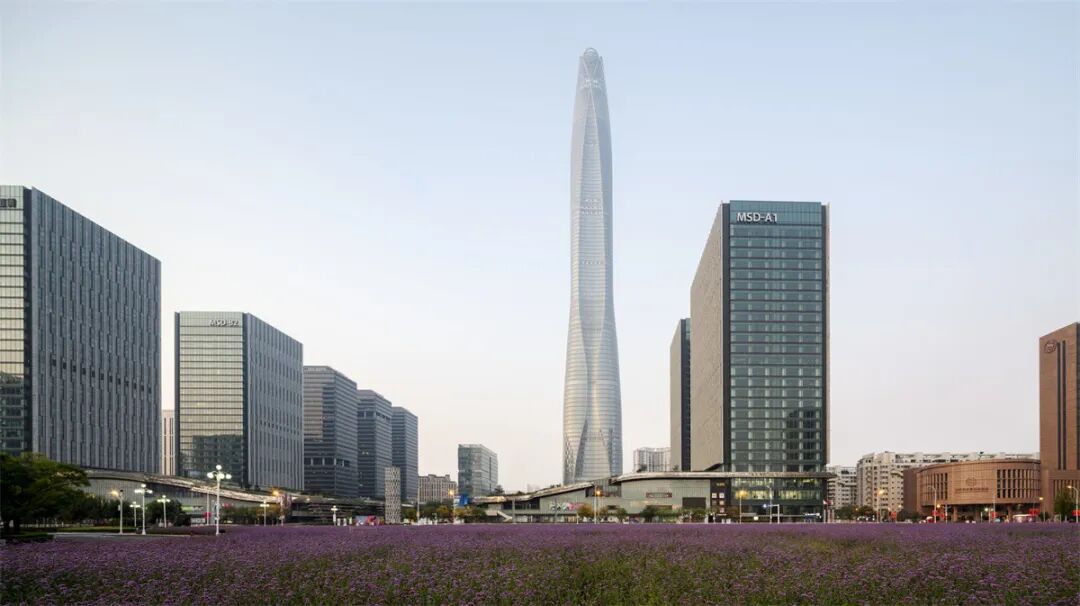
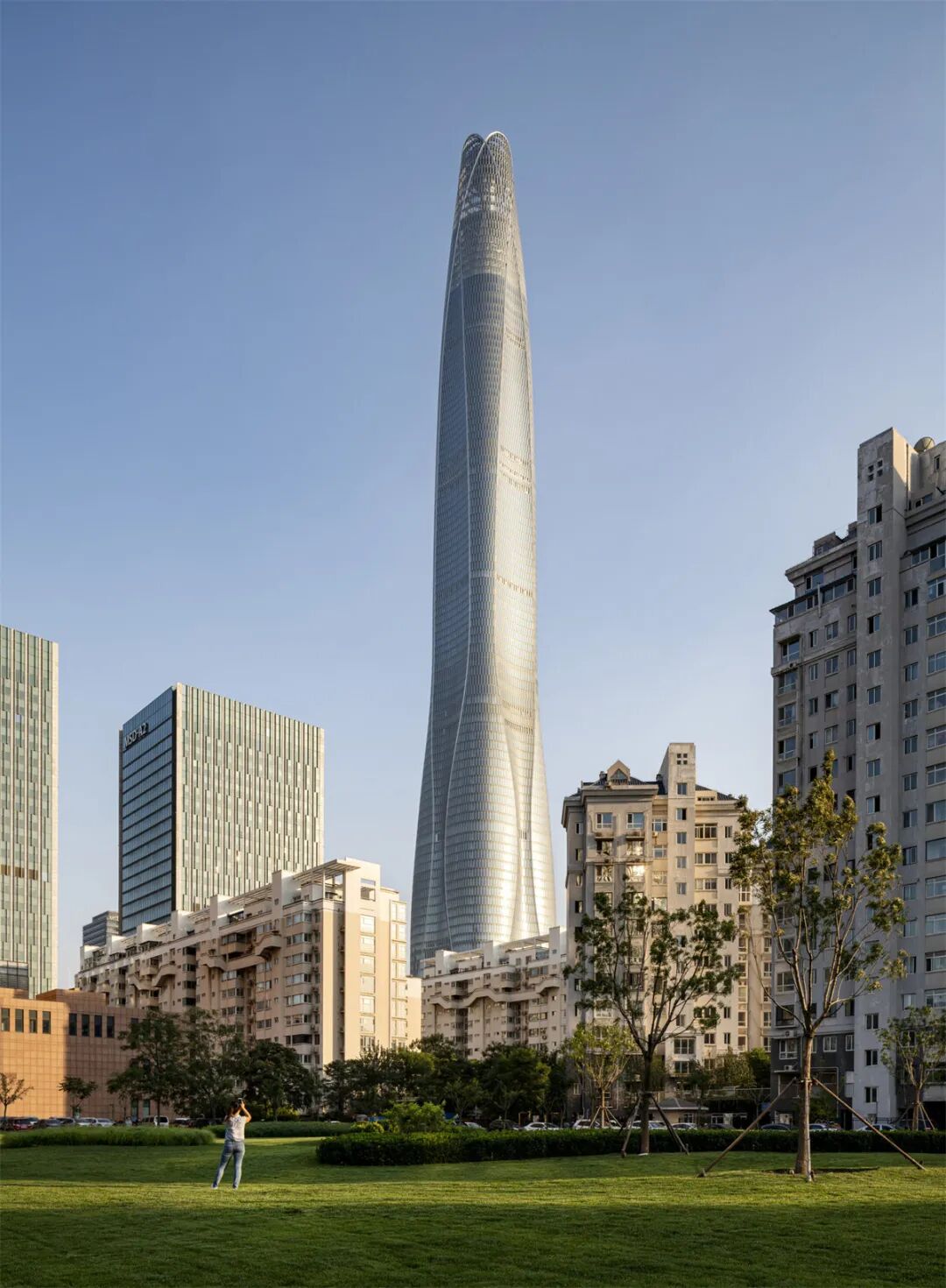
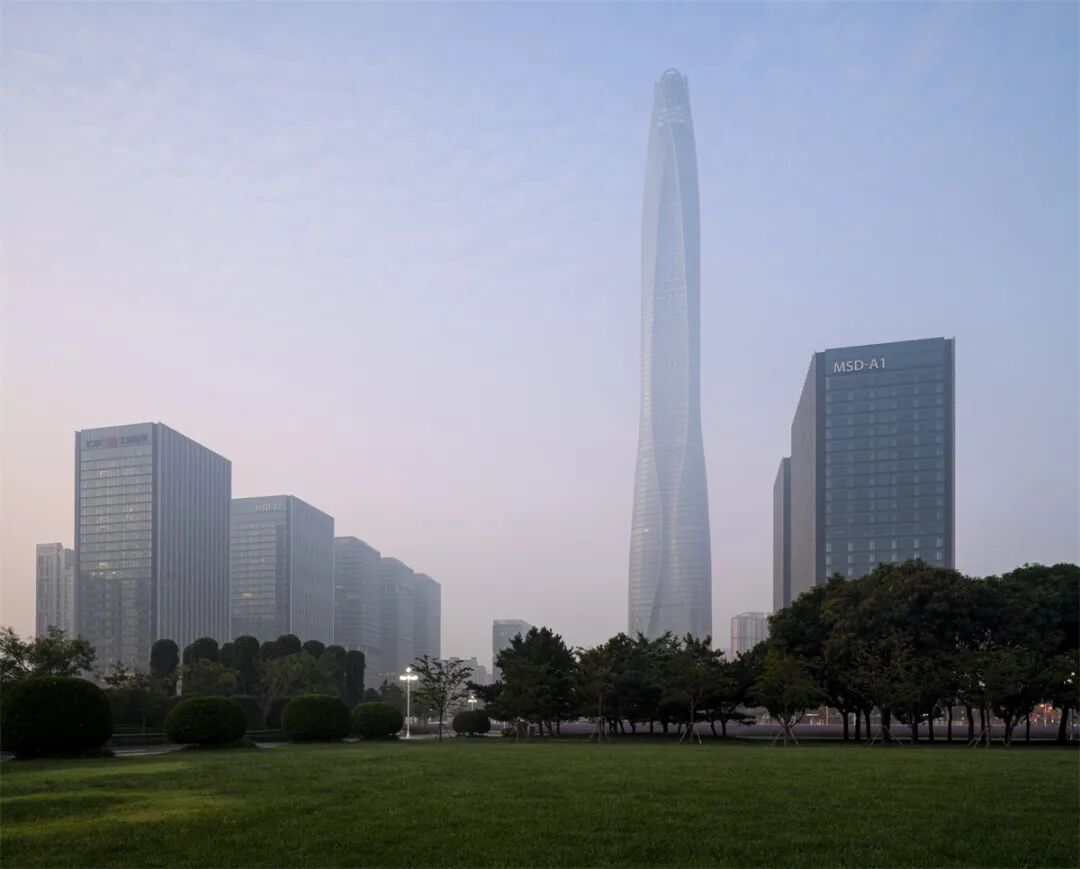
The design of the Tianjin CTF Finance Center features elegant aerodynamic curves, presenting an extraordinary image on the skyline while cleverly reflecting the three functional spaces of the building—office, residential, and hotel.
A groundbreaking model of material and structural efficiency, this skyscraper unites complex programmatic elements and is enclosed by a sophisticated facade that conveys a graceful interplay of light and structure.
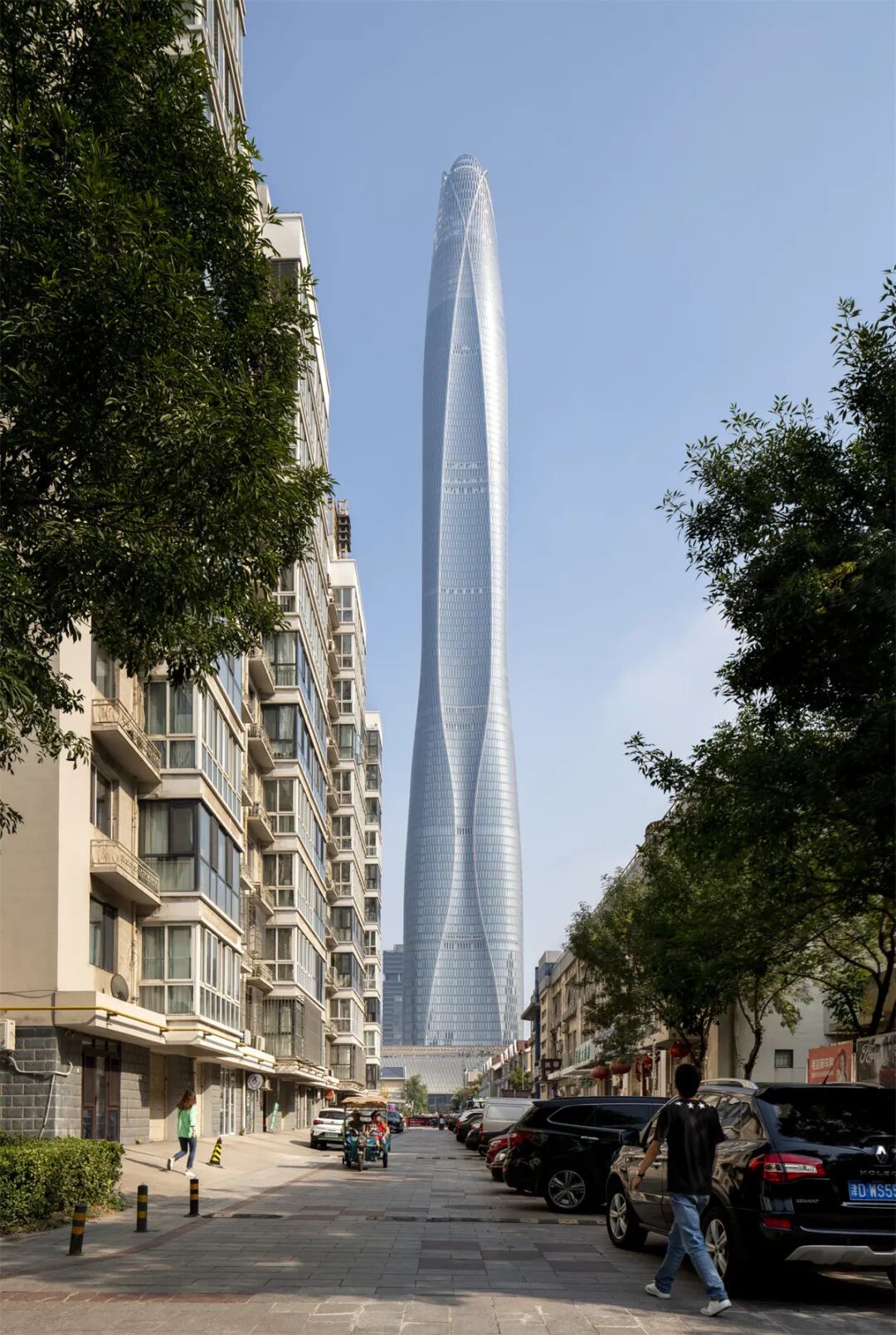
As the tallest building in Tianjin, this 530-meter skyscraper will become a striking new landmark in the Tianjin Economic-Technological Development Area (TEDA). The project consolidates dense office, hotel, commercial, and residential functions within a supertall tower, aligning the skyscraper, commercial buildings, government center, and local transit station along the same axis, making it a key project in TEDA. The 97-story skyscraper includes Class-A office spaces for domestic and international enterprises, 300 serviced apartments, and a five-star hotel with 350 rooms.
The 530-meter-tall skyscraper is a striking new landmark in the Tianjin Economic-Technological Development Area (TEDA). The project supports the TEDA masterplan by anchoring the office, hotel, retail, and housing district with a supertall tower and retail structure, on the axis of the government center and local transit station. The 97-story skyscraper houses Class-A offices, 300 luxury serviced apartments, and a five-star, 350-room Rosewood hotel.
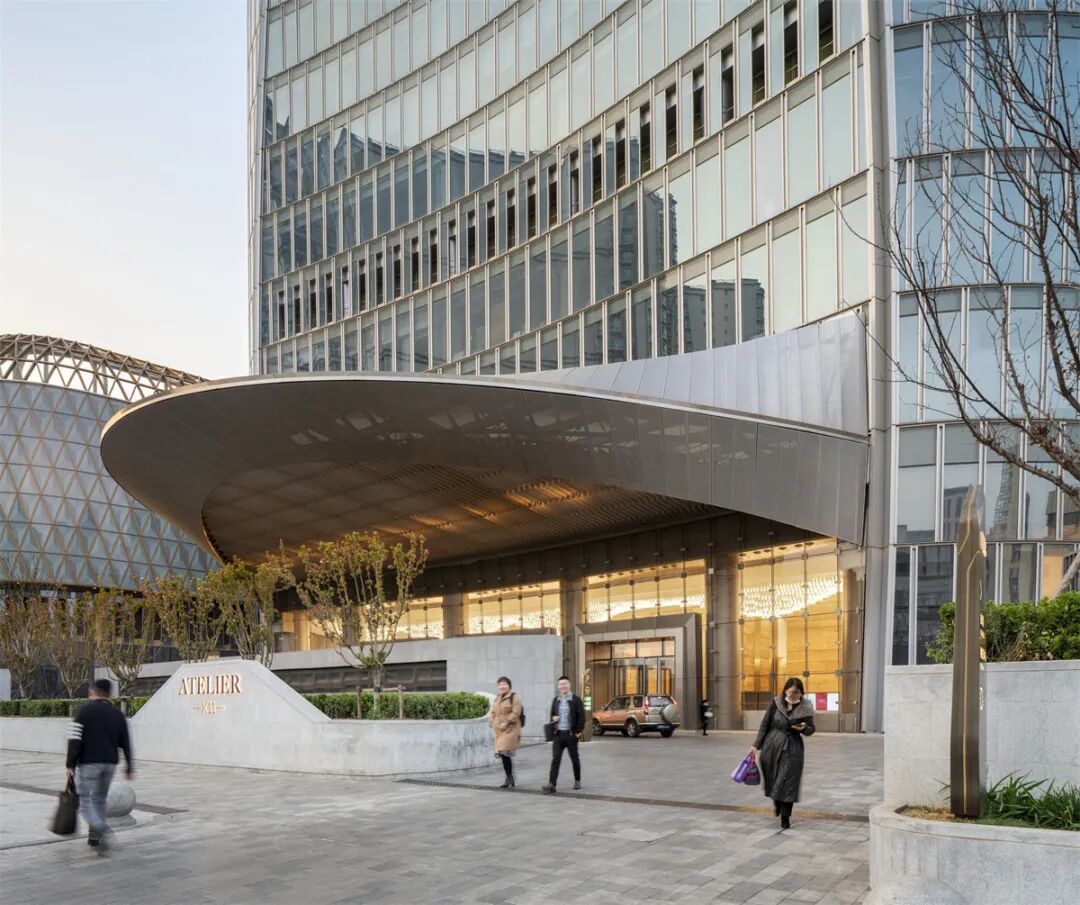
The tower’s curved facade is a result of structural optimization technology. Its crystalline glass curtain wall extends from the lobby to the top, powerfully showcasing the unity of the architectural design language.
The tower’s design synthesizes architectural, structural, and functional requirements. Its crystalline glass panels stretch from the lobby to the crown to give the building’s integrated design a bold monolithic expression.
The office space is organized in a clear, consistent configuration from the core to the exterior wall, and access is efficient, with a square central bank of local elevators serving three zones of 36 office floors. The apartments have private elevators, with access from shuttles to a sky lobby, and the generous floor plates enable flexible room layouts. The hotel, accessed from its own sky lobby, is best suited to the smaller floor plates, with corners for panoramic views.
The office space is organized in a clear, consistent configuration from the core to the exterior wall, and access is efficient, with a square central bank of local elevators serving three zones of 36 office floors. The apartments have private elevators, with access from shuttles to a sky lobby, and the generous floor plates enable flexible room layouts. The hotel, accessed from its own sky lobby, is best suited to the smaller floor plates, with corners for panoramic views.
At ground level, three landscaped vehicle drop-offs provide access to the tower’s respective uses, and sleek glass-and-steel canopies extend to shelter visitors. A five-story luxury retail mall covers nearly half the site and provides interior links to the office tower and hotel lobbies.
At ground level, three landscaped vehicle drop-offs provide access to the tower’s respective uses, and sleek glass-and-steel canopies extend to shelter visitors. A five-story luxury retail mall covers nearly half the site and provides interior links to the office tower and hotel lobbies.
A model for structural efficiency
A model for structural efficiency
The composite structural system of the Tianjin CTF is designed to complement and coordinate with the architectural massing while balancing the ductility and stiffness required for the tower’s location in a high seismic zone.
The Tianjin CTF’s composite structural system is shaped to complement and coordinate with the architectural massing while balancing the ductility and stiffness required for the tower’s location in a high seismic zone.
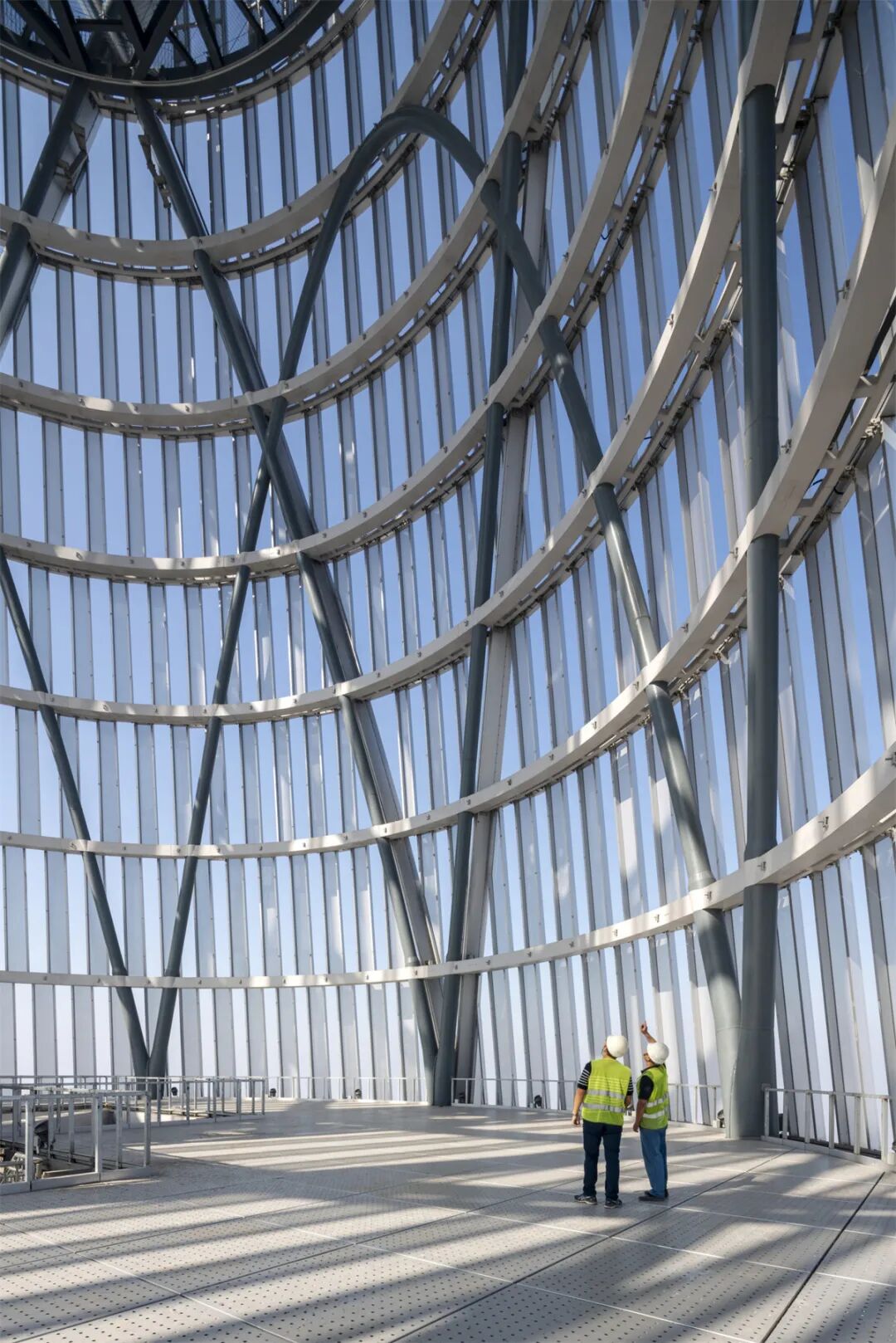
The tapering building shape, along with a porous crown and multiple wind vents, significantly improves building performance and acts as a brace system. The diagonalized zones allow for increased stiffness at the base of the building to meet stringent Chinese dual-system code requirements, while the vertical zones create regions of high ductility to dissipate seismic energy and mitigate earthquake forces. These elements also channel gravity loads to counteract lateral loads, effectively using the building’s own weight to resist seismic and wind forces.
The tapering building shape, along with a porous crown and multiple wind vents, significantly improves building performance and acts as a brace system. The diagonalized zones allow for increased stiffness at the base of the building to meet stringent Chinese dual-system code requirements, while the vertical zones create regions of high ductility to dissipate seismic energy and mitigate earthquake forces. These elements also channel gravity loads to counteract lateral loads, effectively using the building’s own weight to resist seismic and wind forces.
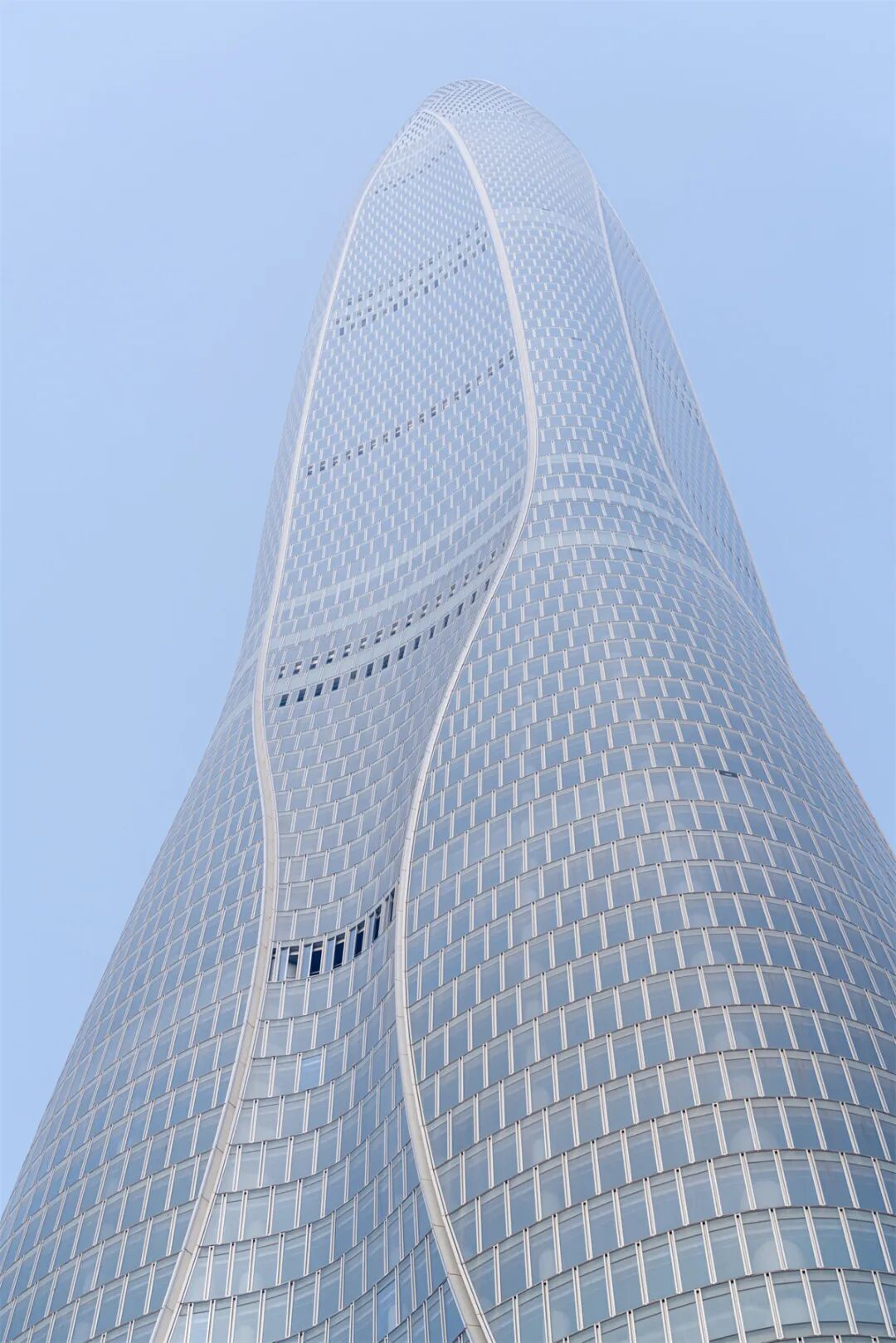
By optimizing and fine-tuning the structural design, SOM’s integrated architecture and engineering team dramatically reduced the steel quantities required for construction. These material savings further reduced seismic forces due to decreased mass, eliminated the need for a damping system, and considerably reduced construction time and cost.
By optimizing and fine-tuning the structural design, SOM’s integrated architecture and engineering team dramatically reduced the steel quantities required for construction. These material savings further reduced seismic forces due to decreased mass, eliminated the need for a damping system, and considerably reduced construction time and cost.
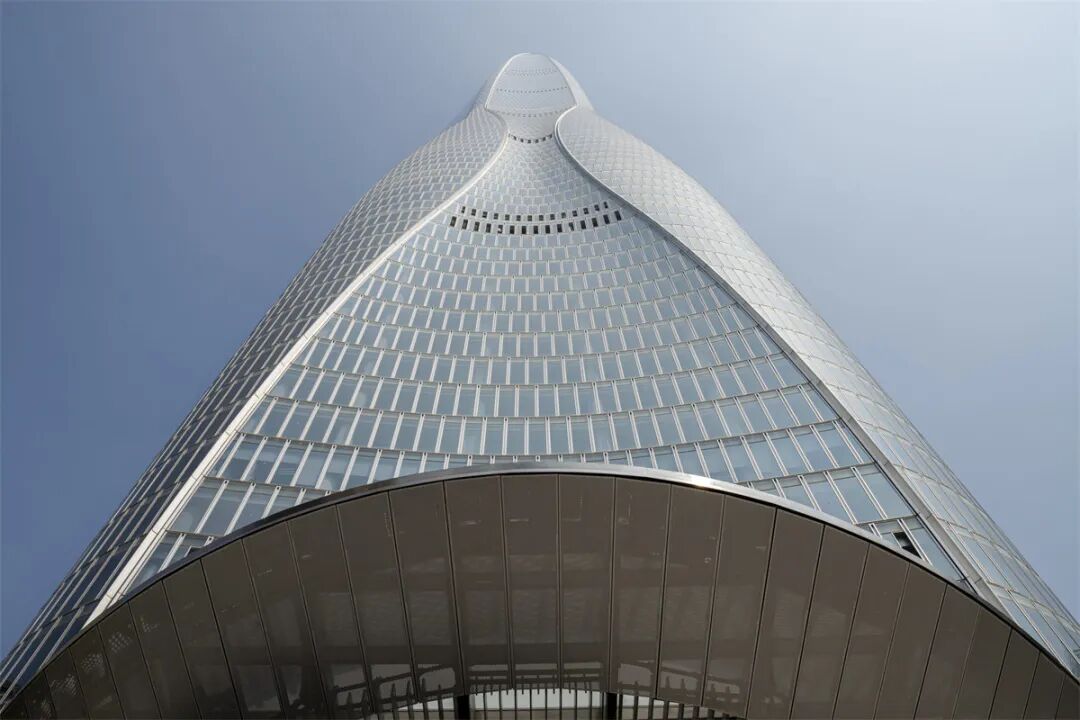
The Tianjin CTF tower is a striking fusion of structural and architectural expression, utilizing an innovative structural system and creative detailing to deliver a strong, efficient, high-performing, and cost-effective design.
The Tianjin CTF tower is a striking fusion of structural and architectural expression, utilizing an innovative structural system and creative detailing to deliver a strong, efficient, high-performing, and cost-effective design.
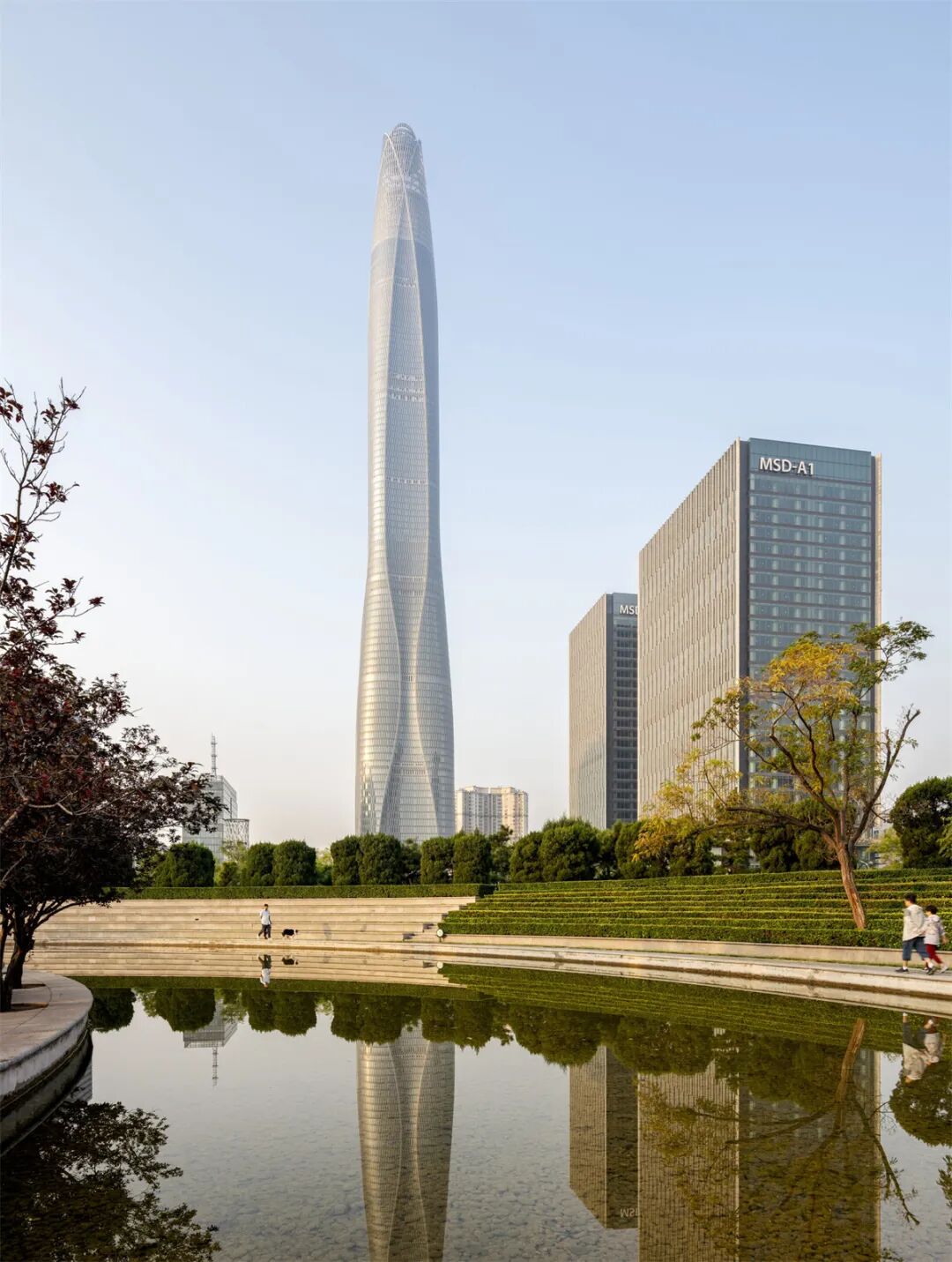
The future of supertalls
The future of supertalls
The Tianjin CTF has been designed to LEED Gold standards, with a range of sustainable strategies, including a high-performance envelope, optimized daylighting, and green landscaping. The tower breaks norms with its rigorous integration of engineering and architectural development to achieve the highest efficiencies in material performance.
Tianjin CTF has been designed to LEED Gold standards, with a range of sustainable strategies, including a high-performance envelope, optimized daylighting, and green landscaping. The tower breaks norms with its rigorous integration of engineering and architectural development to achieve the highest efficiencies in material performance.
As Chinese cities continue to grow and evolve, the rational and efficient use of the environment and its resources become more urgent. The success of the multi-program supertall tower—an effective building block of high density and iconic marker for the vitality of the city center—demands a continued evolution of integrated architectural and engineering strategies. A science-based and creative inside-out approach to designing and engineering mixed-use supertalls is a crucial step in shaping sustainable urbanization—not only in China, but in growing cities around the world.
As Chinese cities continue to grow and evolve, the rational and efficient use of the environment and its resources become more urgent. The success of the multi-program supertall tower—an effective building block of high density and iconic marker for the vitality of the city center—demands a continued evolution of integrated architectural and engineering strategies. A science-based and creative inside-out approach to designing and engineering mixed-use supertalls is a crucial step in shaping sustainable urbanization—not only in China, but in growing cities around the world.
Design Features and Innovations
Fluid Geometric Shape
Inspiration: The theme of “Art and Nature” combines fluid geometry with a vase-like silhouette, tapering the tower body and featuring a circular crown, earning it the nicknames “Diamond of the North” or “Jinju Stick”.
Aerodynamic Optimization: The curved design of the tower body reduces wind loads, while eight inclined braces enhance structural stiffness, perfectly integrating with the building’s facade.
Innovative Structural System
Non-protruding frame-core tube composite structure: Steep braces are set along the building’s outer contour, winding from the four corners at the base to the top of the tower, forming a crown support system that avoids traditional cantilever trusses occupying internal space.
Seismic Design: The core tube employs a combination of embedded steel plates and section steel shear walls, with corner columns connected by steel plates to enhance lateral force performance, meeting the requirements for seismic fortification of level 8.
Curtain Wall and Materials
The exterior wall features low-emissivity (Low-E) glass curtain walls, paired with crescent-shaped aluminum frames, creating dynamic light and shadow effects.
The podium commercial area utilizes artificial stone GRG curved surface technology, achieving precise construction of complex curves through BIM technology.
Construction Process and Technical Breakthroughs
Key Milestones
Groundbreaking in 2009, construction began in 2012, completed in 2019, partial operations commenced in 2020, and height certification was completed in 2021.
Construction Highlights:
Foundation Construction: A pile raft foundation was used, with pile end depths of 97.5 meters and single pile bearing capacity reaching 12,700 kN, setting a record for the deepest foundation pit in China.
Crown Installation: The 48-meter-high, 650-ton steel crown was completed through segmented hoisting, with precision controlled to the millimeter level.
Sustainable Design
LEED Gold certification achieved, utilizing BIM technology to optimize energy consumption, with over 60,000 energy monitoring points for intelligent operation and maintenance.
Green roofing on the podium, optimized natural lighting, and rainwater recycling systems reduce carbon emissions.
Awards and Honors
The project has received nearly 200 international and national awards, including:
Global Engineering Excellence Award (2019)
CTBUH Best Tall Building Award (400 meters and above, 2019)
China Steel Structure Gold Award for Outstanding Engineering
National Project Management Achievement Award
Autodesk Global BIM Award (2019)
SOM’s Design Contributions
As the lead designer, SOM’s core innovations are reflected in:
Integration of Form and Function: Fluid shapes integrate office, hotel, and apartment functions, optimizing structural spans and spatial efficiency.
Structural Technical Breakthroughs: The pioneering “steep brace-frame-core tube” system balances aesthetics and safety.
Integration of Regional Culture: The design echoes the marine elements of the Binhai New Area while incorporating Tianjin’s local industrial history, forming a “sculptural” landmark.
Conclusion
The Tianjin CTF Finance Center is not only a milestone in supertall building technology but also a model of SOM’s fluid aesthetics and structural innovation. Its design balances functionality, sustainability, and cultural expression, symbolizing the modernization process of the Tianjin Binhai New Area. In the future, as the regional economy upgrades, this project will further enhance its radiating effect as a “Financial + Art + Technology” complex.
Client: New World Development Co., Ltd.
Site Area: 27,772.35 square meters
Building Height: 530 meters
Number of Stories: 96
Building Gross Area: 389,661 square meters
Sustainability Certifications: LEED BD+C NC (New Construction) Gold
Collaborators: East China Architectural Design Institute (ECADI), Pb, Campbell Shillinglaw Lau Ltd., Isometrix Lighting + Design, Ltd., Rider Levett Bucknall, AECOM – Arlington, Rockwell Group, Arup Group Limited, Laguardalow, Rlp, Ihd, BPI Group, Ab Concept, Make, Ckpi, BMT Defense Services, Ltd.