The Shanghai Jin Mao Tower is an iconic building in the Lujiazui financial district of Shanghai, designed by the American architectural firm SOM (Skidmore, Owings & Merrill), with Adrian Smith as the lead designer.
Design Background and Concept
Historical Mission and Bidding
In 1993, China launched an international design competition for the Jin Mao Tower, aiming to create a super-tall building symbolizing the reform and opening-up policy. SOM stood out due to its experience in global super-tall buildings (such as the Sears Tower in Chicago and the Burj Khalifa in Dubai) and became the design firm.
Cultural Integration and the Digital “8”
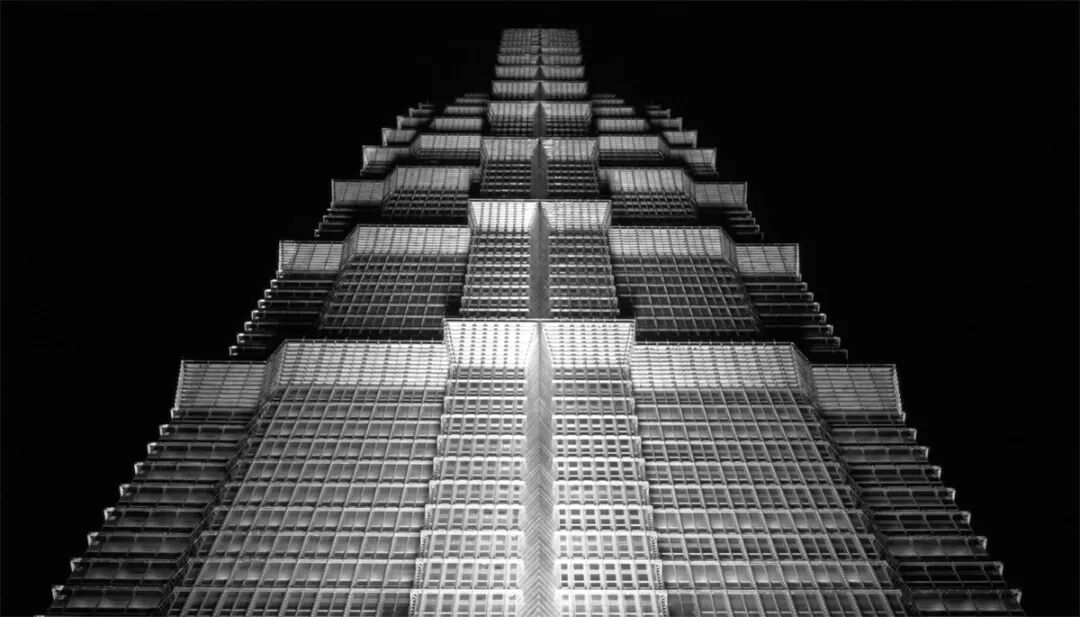
Pagoda Shape: The design inspiration comes from the tiered, receding form of ancient Chinese pagodas, combined with a modern streamlined appearance, creating a visual effect akin to a “time-space tunnel”.
The auspicious number “8”: The building has 88 floors, a height of 420.5 meters (including 8 modular segments), and is located at 88 Century Avenue, all reflecting auspicious meanings in traditional Chinese culture.
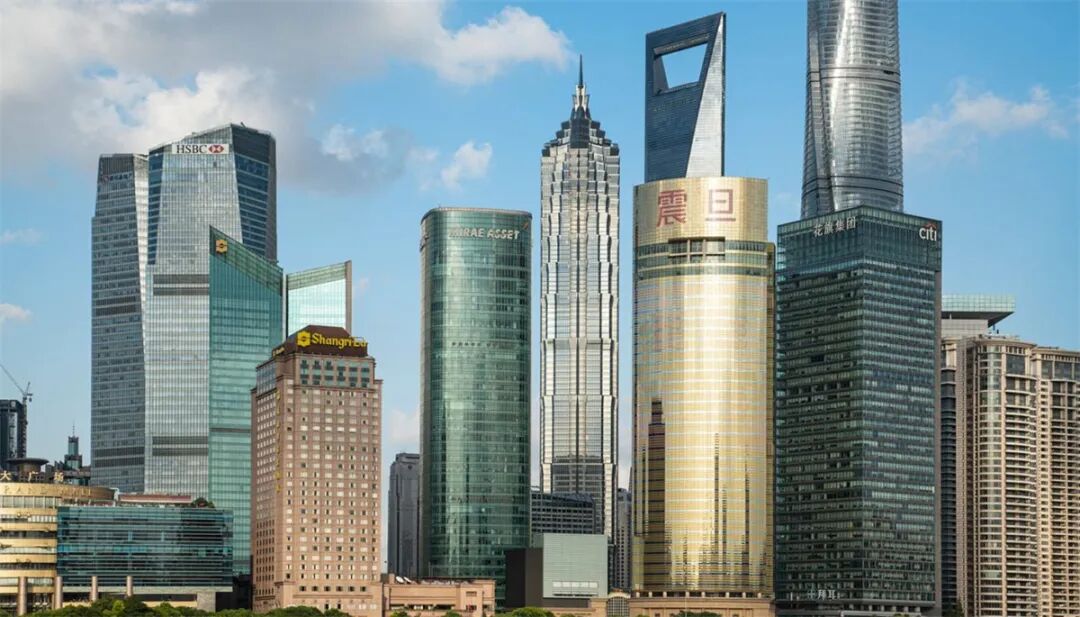
The 420-meter-high Jin Mao Tower was the tallest building in China at the time of its completion and remains one of the most iconic super-tall buildings in the world. The design of this 88-story tower is inspired by ancient Chinese pagodas, with a recessed structure that creates a sense of rhythm, making it a model for skyscraper design in China.
The 420-meter-high Jin Mao Tower was China’s tallest building at the time of its completion and today remains its most iconic. Recalling historic pagoda forms, with setbacks that create a rhythmic pattern, the 88-story tower has become a model for skyscraper design throughout the country.
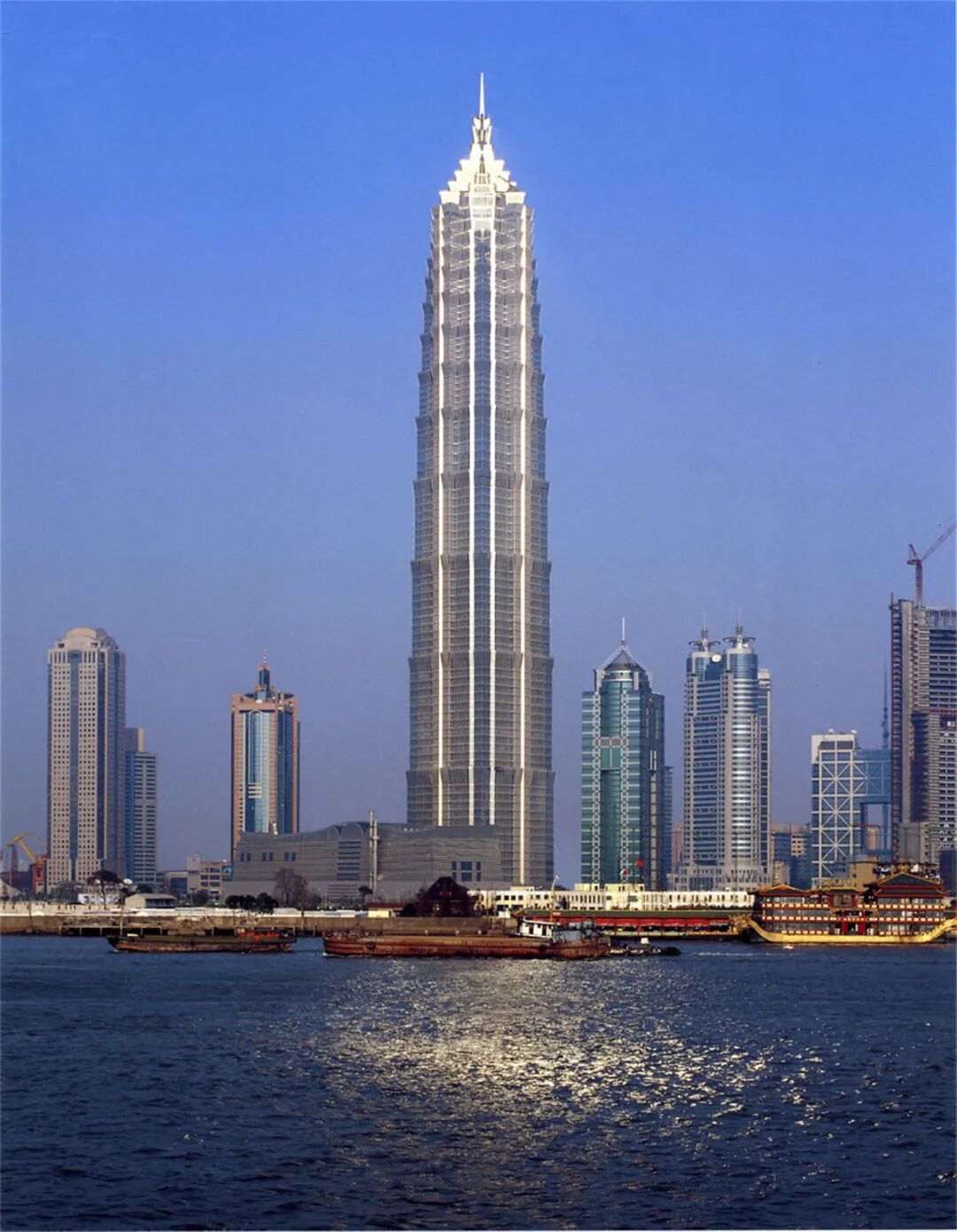
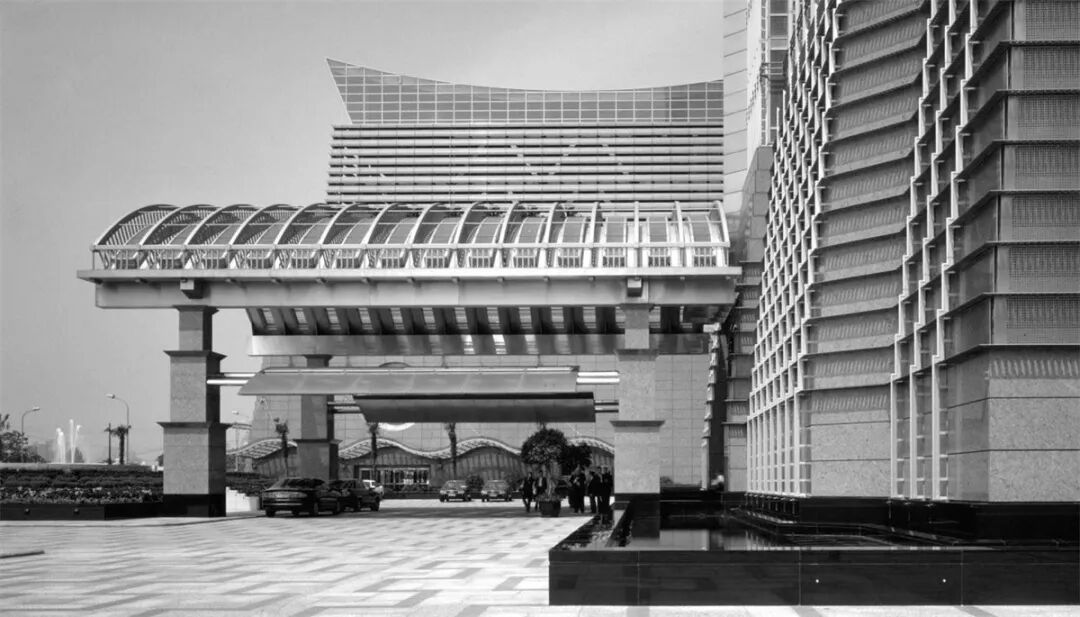
The Grand Hyatt Hotel, with 555 rooms, occupies the top 38 floors of the tower, offering stunning views of the city and surrounding areas, while the lower 50 floors are dedicated to office space. The six-story podium includes a conference center, a cinema, and 20,000 square meters of retail space. A landscaped courtyard with seating and a reflective pool surrounds the base of the tower, providing a tranquil escape from the hustle and bustle of the city.
A 555-room Grand Hyatt Hotel, offering impressive views of the city and surrounding terrain, occupies the top 38 floors, while offices make up the lower 50. A six-story podium contains a conference and exhibition center, a cinema, and 20,000 square meters of retail space. A landscaped courtyard with seating and a reflective pool encircles the tower’s base, offering visitors peaceful respite from Shanghai’s busy streets.
Technological Innovation and Structural Design
Structural System
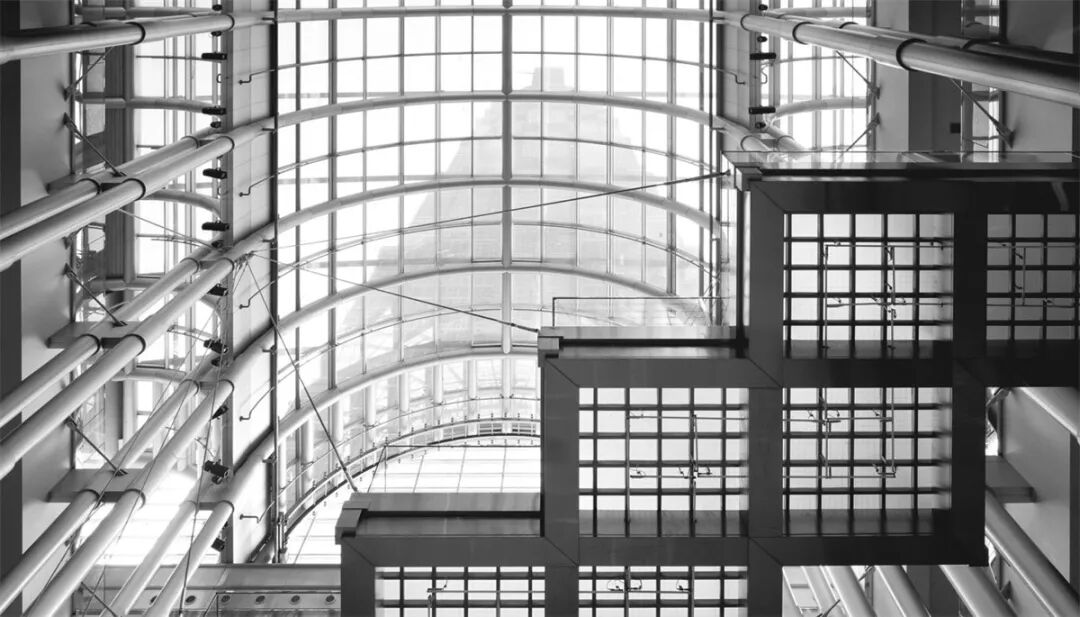
Tubular structure: The core tube is octagonal, made of cast-in-place reinforced concrete, with giant rigid reinforced concrete columns on four sides, enhanced by three external trusses to resist lateral forces.
Seismic and Wind Resistance: The building can withstand winds of up to 12 on the Beaufort scale and earthquakes of up to 7 on the Richter scale, with a vertical deviation of only 2 centimeters, ensuring stability.
Foundation and Construction Challenges
The pile foundation reaches a depth of 83 meters, penetrating the soft soil layer of Shanghai to the bedrock, using a 4-meter-thick mat foundation and an artificial drainage system.
The installation of the tower’s spire utilized a “double-base lifting” technique to address the challenges of high-altitude work.
Architectural Achievements and Functional Layout
Height and Scale
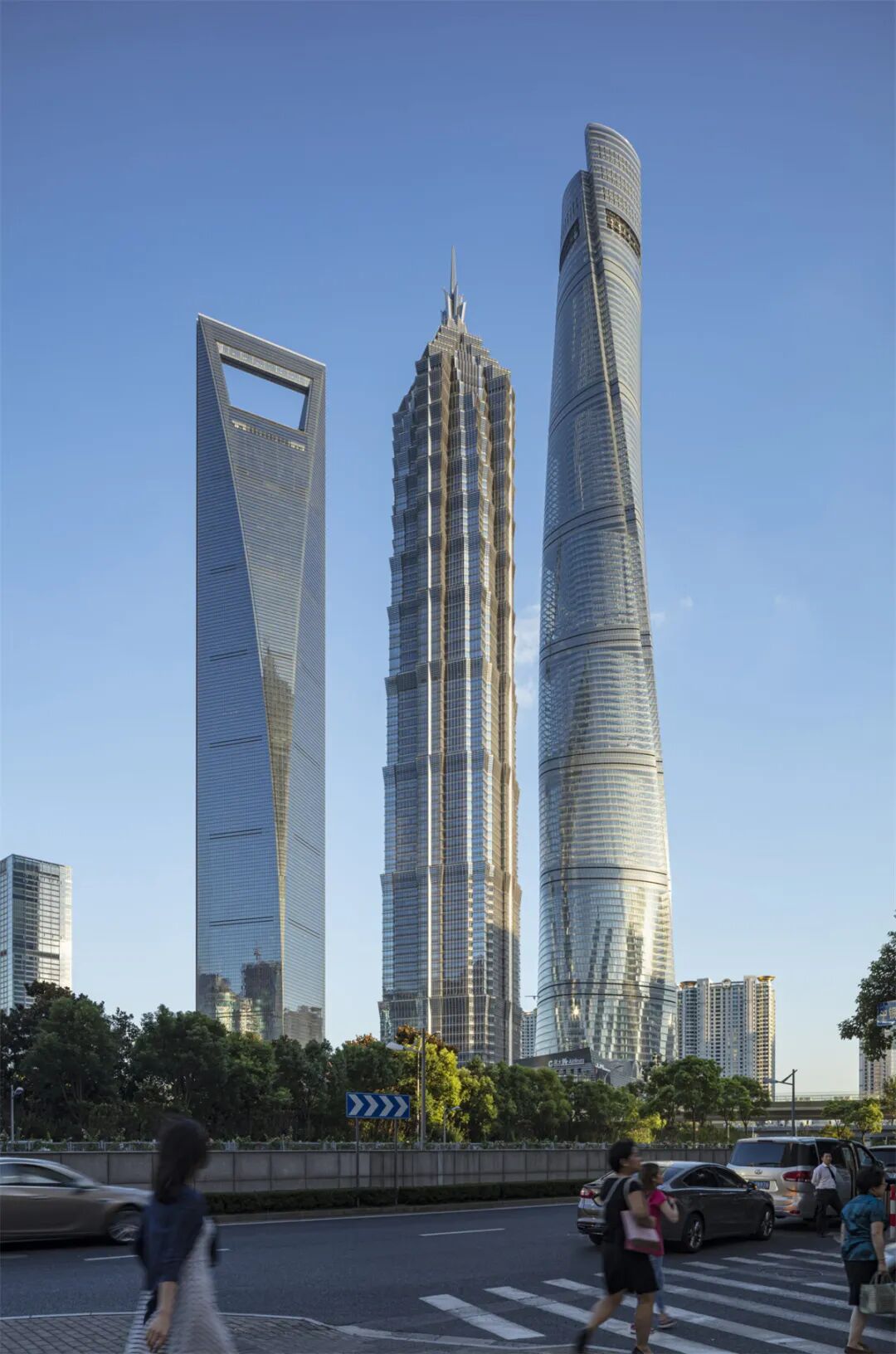
Total height of 420.5 meters, with 88 above-ground floors and a total construction area of 290,000 square meters. It was the tallest building in China (1999) and the second tallest in Asia, and is now one of Shanghai’s “Three Towers” (the other two being the Shanghai World Financial Center and the Shanghai Tower).
Functional Complexity
Offices: Floors 3-52 feature column-free, Class A office space with a height of 4.5 meters and individual floor areas exceeding 2,000 square meters.
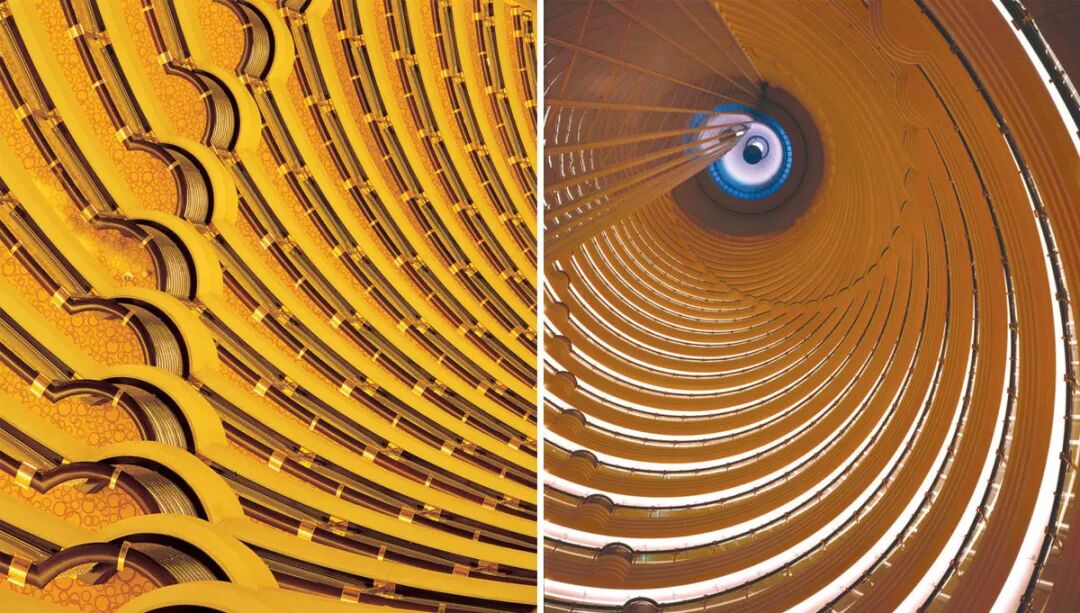
Hotel: Floors 53-87 house the Grand Hyatt Hotel, which was once the world’s tallest hotel, featuring an indoor pool, fitness center, and a grand ballroom for over a thousand guests.
Observation: The observation hall on the 88th floor (340.1 meters high) and the “Sky Walk” transparent walkway attract over a million visitors annually.
Advanced structural engineering techniques ensure the building can withstand the common typhoons and earthquake threats in the area. The building’s metal and glass curtain wall reflects the ever-changing sky of the city, and at sunset, the entire tower and its crown shine brightly in the night.
Advanced structural engineering techniques protect the building from the typhoons and earthquakes typical of the area. The structure’s metal-and-glass curtain wall reflects the city’s constantly changing skies, while at night the tower shaft and crown are illuminated.
SOM’s Contribution and Global Impact
Design Philosophy
SOM combines modern architectural technology with traditional Chinese culture, conveying the philosophical concept of “harmony between heaven and humanity” through its “tower form” structure, marking a milestone in architecture across centuries.
Industry Benchmark
Awards: Received the Best Structural Award from the Illinois Structural Engineers Association in 1998 and the Gold Award for Shanghai’s Top Ten Classic Buildings for the 50th Anniversary of New China.
Green Certification: In 2013, it received LEED-EB Gold certification, reducing carbon emissions by over 5,000 tons annually, making it one of China’s first green super-tall buildings.
Social Significance and Economic Value
Urban Landmark
The Jin Mao Tower reshaped Shanghai’s skyline, transforming Lujiazui from a “muddy crossing” into an international financial center, attracting over 30 Fortune 500 companies.
Technological Heritage
Its design experience has provided a reference for subsequent super-tall buildings (such as the Zifeng Tower in Nanjing and the Pearl River City Tower in Guangzhou), laying the technical foundation for super-tall buildings in China.
Conclusion
The Shanghai Jin Mao Tower is SOM’s representative work in China, with its design philosophy that integrates tradition and modernity, and groundbreaking engineering technology, not only becoming the “urban cover” of Shanghai but also marking the transition of China’s super-tall buildings from “catching up” to “leading”.
Land Area: 23,257 square meters
Building Height: 421 meters
Number of Floors: 88
Total Building Area: 287,000 square meters