CRT (Baidu Baike):
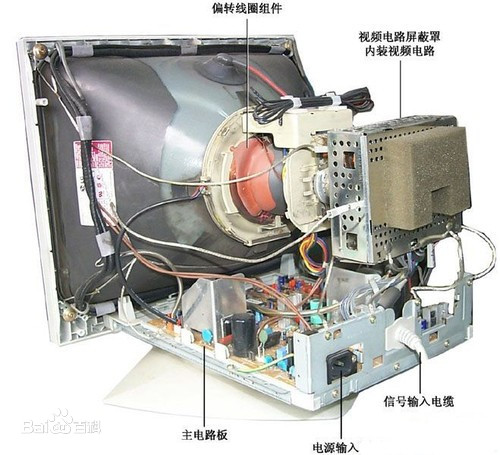
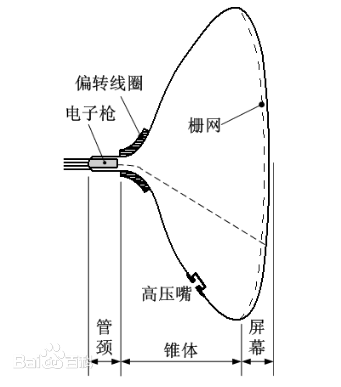
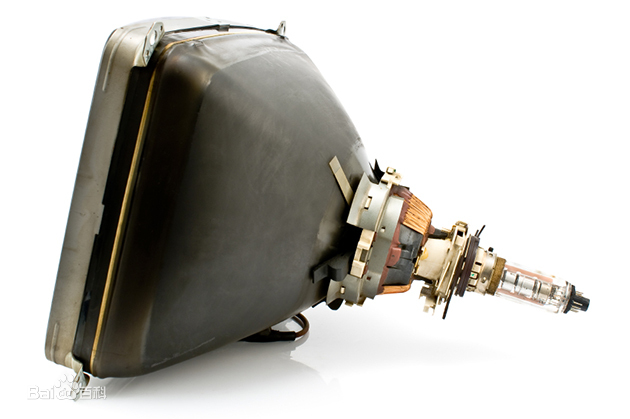
The monitor, scientifically known as the “Cathode Ray Tube,” is a type of display that uses a cathode ray tube. It mainly consists of five parts: Electron Gun, Deflection Coils, Shadow Mask, High Voltage Graphite Electrode, and Phosphor Coating along with a Glass Shell.
(1)
I held a 15-inch Lenovo CRT color monitor while standing on an electronic scale I had just dragged from the second-floor cafeteria to the third floor, which displayed the number: 79.1. At that moment, I didn’t have a clear concept and held a preconceived notion that CRT monitors are “heavy.” Now, I hope that the heavier it is, the lighter my weight will be, which is exactly what I desire. So, I dropped the monitor and weighed myself again, showing 67.8 kg. My mind raced to find some items—shoes, phone, clothes, pendant, bracelet—there must be several kilograms of weight! Cao Chong weighed an elephant, and I weighed a monitor; I am not an elephant.
The weight of this 15-inch AOC CRT monitor is 79.1 – 67.8 = 11.3 kg. I couldn’t think of a very vivid object to compare it to, for example, a standard 15L bucket of mineral water weighs 15 kg. Coincidentally, there was also a 17-inch DELL flat CRT monitor nearby, and the result of weighing it again was 83.5 – 67.8 = 15.7 kg, roughly the weight of a bucket of water, but its larger size makes it harder to embrace.
The scale in the corner of the second-floor cafeteria has always been defined by everyone as “inaccurate,” and it is said to weigh heavier than the scales at home. With this “excuse,” it becomes a positive signal for those who enter the cafeteria to eat. If this scale were “inaccurate” in the other direction and weighed lighter, it would be even more of an excuse to eat. Want to eat? What reason do we need? We are not CRT monitors.
Around the year 2000, I often bear-hugged this clunky and heavy monitor up the stairs. At that time, personal computers were becoming popular, and one could access the internet via ADSL dial-up through telephone lines or play offline games. Gradually, my friends were willing to spend “big money” to assemble desktop computers, and naturally, the monitors were CRTs. I took on the task of helping friends set up computers, tying the large, heavy CRT monitors along with the CPU, keyboard, mouse, and multimedia speakers onto a Tianjin 100cc motorcycle, running through most corners of Tongxiang. What I remember most vividly is carrying the monitors up to the second, third, or fourth floor; it truly left me breathless.
(2)
CRT monitors were once one of the standard devices for personal computers, but they have long been swept into the historical dust of the PC industry. Industries such as computers, the internet, and semiconductors have rapidly advanced like Moore’s Law, and looking back at many hardware during the development of personal computers, some once dominated, some were fleeting, and others were just temporary internet celebrities. Examples include: Modem, 3.5-inch floppy disks, DDR333 memory, DVD-RW burners, Quantum hard drives, gaming-grade graphics cards, and of course, the protagonist we are discussing today, CRT monitors.
CRT monitors are large, heavy, have low safety, require a high working environment, and have high power consumption. The development of technology has reached its peak, and there is very limited space for further advancement. Because of these shortcomings, LCD monitors solved these issues, allowing LCD to replace CRT monitors as the absolute mainstream in the market, gradually phasing CRT out of the personal computer historical stage.
However, CRTs have their own absolute advantages. Currently, the highest standard of flat monitors has a large viewing angle, no dead pixels, high color reproduction, uniform color, adjustable multi-resolution modes, and extremely short response times—advantages that LCD monitors find difficult to surpass. In industries that require high color reproduction, such as medical and metallurgy, CRT monitors are still needed for operations. Truly, heroes always have their place to shine.
As I wrote this, I turned to browse jd.com (JD Mall) and searched for “CRT monitor”. Among the 10 pages of products that came up, there were no real results. Then I went to taobao.com (Taobao) and searched for “CRT monitor”, where I found several interesting product listings on the first page. For example, a brand-new flat CRT monitor was available for 980 yuan. A special price for original antique Lenovo 15-inch and 17-inch drawing, monitoring, and gaming CRT flat monitors was 150 yuan. I also checked the “Xianyu APP” and found a large number of used monitors for sale, ranging from 20 yuan to over 100 yuan.
(3)
Next, let’s take a look at CRT monitors from a technical perspective, understand their working principles, and compare several common performance parameters. Excerpted from: Electronic Enthusiast Network, December 28, 2009, “Working Principle of CRT”
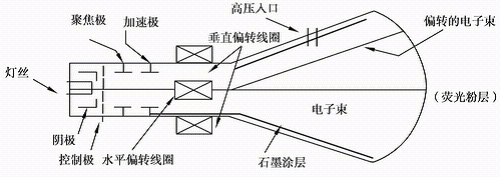
The core component of a CRT monitor is the CRT tube, whose working principle is basically the same as that of the CRT tube in (previous) televisions at home, and we can regard it as a more refined version of a television. The classic CRT tube uses an electron gun to emit high-speed electrons, which are controlled by vertical and horizontal deflection coils to adjust the angle of deflection. Finally, high-speed electrons strike the phosphor material on the screen, causing it to emit light. By adjusting the voltage, the power of the electron beam is regulated, forming various patterns and text on the screen with different brightness.
Each pixel on the color CRT screen is composed of red, green, and blue paint mixtures. Three electron beams activate these three colors of phosphor paint, and by adjusting the brightness of the three colors with different intensities of electron beams, the desired color can be obtained, which is very similar to the process of mixing colors in painting. If the electron beam is not aimed precisely, it may hit the adjacent phosphor coating, resulting in incorrect colors or slight ghosting; hence, more precise control of the electron beam is necessary.
The classic solution is to install a shadow mask on the inner side of the CRT tube. This shadow mask is just a layer of metal sheet with many small holes (generally made from a type of steel plate with a very low thermal expansion rate). Only the correctly aimed electron beams can pass through the corresponding shielding holes of each phosphor layer, and the shadow mask blocks any stray electron beams to prevent them from hitting the wrong phosphor layer; this is the shadow mask CRT.
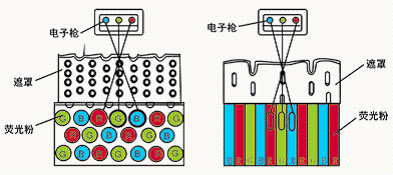
Conversely, some companies developed aperture grille CRTs, which do not distribute phosphor materials as points but coat them in vertical lines, adding very fine metal wires in front of the phosphor coating to replace the shadow mask. The metal wires block stray electron beams, and the principle is the same as that of the shadow mask; this is known as the aperture grille CRT.
Both the shadow mask and aperture grille technologies have their pros and cons. Generally speaking, shadow mask CRTs produce sharper images and text but have slightly lower brightness, while aperture grille CRTs are more vibrant but have horizontal damping line shadows across the screen at the 1/3 and 2/3 points (the damping lines are used to reduce the vibration of the grille shadow mask).
Currently, the mainstream flat CRT monitors on the market mainly include LG’s “Future Window,” Samsung’s “Danna Tube,” Sony’s “Trinitron,” and Taiwan’s “China Tube,” among others. Each manufacturer’s flat CRT has its unique technical features and performance characteristics.
Below are seven important parameters of CRT monitors for a brief understanding. Reference: He Jian, “Analysis of CRT Technology for Monitors” Dot Pitch: This mainly refers to the hole-type shadow mask and is the distance between two fluorescent points of the same color on the screen. It is usually measured in millimeters (mm); the smaller the dot pitch, the finer the image and smoother the edges. The dot pitch for 15/17-inch monitors must be less than 0.28; otherwise, the displayed image will be blurry. Dot pitch is an important indicator of CRTs and cannot be changed by software.
Vertical Scan Frequency: This refers to the refresh frequency of the screen, indicating how many times the screen refreshes per second, usually measured in Hertz (Hz). For example, with an 85Hz refresh rate, the displayed image refreshes 85 times per second. The combination of line frequency and field frequency determines the resolution. The higher the field frequency, the less noticeable the flickering effect, and the less fatigue on the eyes. In the new standard, the maximum resolution at a field frequency of 85Hz is the true maximum resolution.
Horizontal Scan Frequency: This refers to the number of horizontal lines scanned by the electron gun on the screen per second, equal to “number of lines × field frequency.” It is a comprehensive parameter of resolution and field frequency; the larger it is, the higher the resolution the monitor can provide and the better its stability. Taking an example of a resolution of 800×600 and a field frequency of 85Hz, the monitor’s horizontal frequency should be at least “600×85=51kHz”. (Note that the unit of horizontal frequency is kHz)
Video Bandwidth: Video bandwidth refers to the total number of pixels scanned by the electron gun per second, equal to “horizontal resolution × vertical resolution × field frequency.” Compared to horizontal frequency, bandwidth is more comprehensive and directly reflects monitor performance.
Resolution: Resolution is the density of the screen image, which you can think of as a large chessboard. The number of points on each horizontal line multiplied by the number of vertical lines. For a screen resolution of 640×480, this means there are 640 pixels or points on each line, and there are a total of 480 lines, meaning there are 640 columns and 480 rows. The higher the resolution, the finer the image that can be presented on the screen. Resolution is not only related to display size but also affected by factors such as the dot pitch of the CRT and video bandwidth. The standard refresh rate should be 75Hz or higher. Generally, the resolution of CRTs can be adjusted, but due to the limitations of CRT bandwidth, there is an upper limit for each refresh rate. If this limit is exceeded, the refresh rate must be lowered, which will affect the display quality. Especially when the human eye has adapted to a refresh rate of 75MHz, once it drops below this refresh rate, the eyes will feel very uncomfortable. CRTs will have a setting for the optimal resolution, which is usually derived based on a refresh rate of 75MHz, and it is best not to exceed this resolution.
Maximum Viewable Area: This is the maximum range on the screen that can display an image, which is the diagonal length of the screen. Since the CRT is installed in a plastic shell and due to the black frame around the four edges of the screen, the viewable area is slightly smaller than the CRT size. Generally, a 15-inch monitor has an actual display size of about 12 inches.
Interlaced and Progressive Scanning: Interlaced scanning is a type of scanning method where the electron gun first scans all odd lines and then scans even lines, completing an image update through two scans, which usually causes significant flickering. Progressive scanning is another scanning method where the electron gun scans the entire image in one go, resulting in less flickering compared to the former. Monitors of 15 inches or larger are progressive scanning.
(4)
The famous two tubes of the CRT era are SONY’s Trinitron and MITSUBISHI’s Diamondtron. If you have been in contact with computer hardware for a long time or have DIYed your own assembled machine, you must have heard of either Trinitron or Diamondtron monitors. Below, we will take Trinitron as an example to review its past glory.
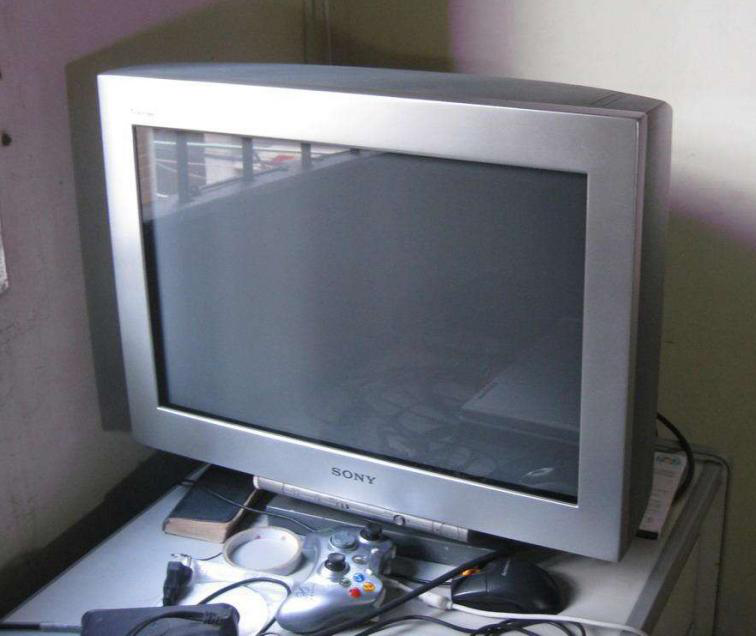
Trinitron, a registered trademark of SONY, is a type of cathode ray tube technology developed for televisions and CRT monitors. It uses a single-gun three-beam tube, and its picture quality is more vibrant and sharper than ordinary monitors of other brands (technologies) of the same era. The company holds long-term patent rights for this technology, and after the patent expired, many monitor manufacturers began to use this technology and named their products ending with “tron.” At one time, monitors labeled with Trinitron became synonymous with SONY monitors, and Trinitron became a synonym for high-end monitors.
In its heyday, SONY’s E230 and G220 were once very popular in the CRT monitor market. The original price of the E230 Trinitron flat monitor was 2699 yuan, while the G220 was 3699 yuan. SONY gradually stopped producing and supplying 17/19-inch flat Trinitron (FD Trinitron) tubes in 2002, and models like E230 and G220 became increasingly rare, with the highly regarded G420 nearly extinct by 2003.
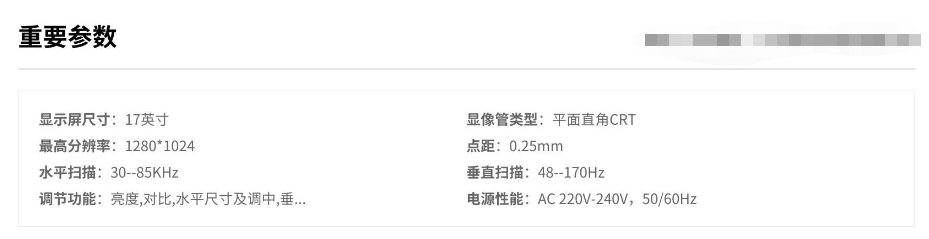
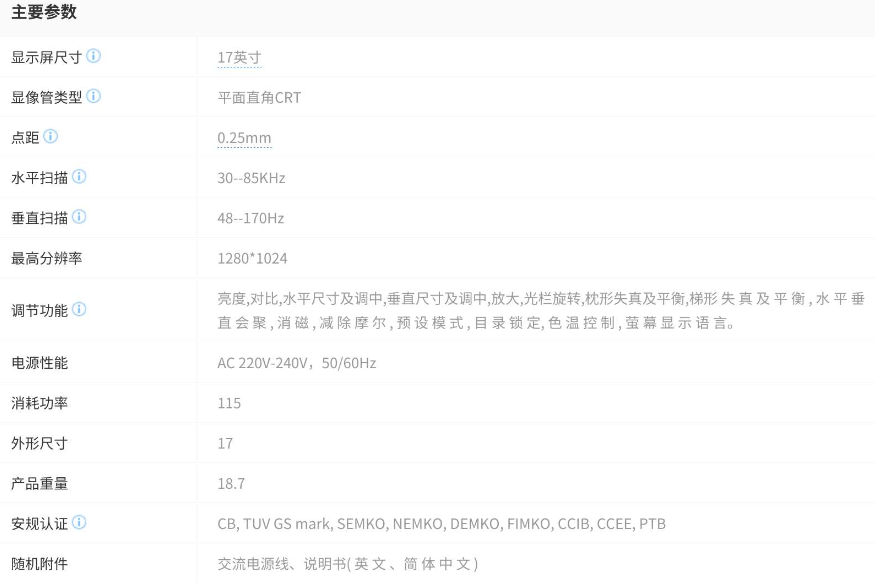
SONY’s E230 is a mid-to-high-end CRT monitor aimed at home users, featuring a single-gun three-beam Trinitron flat tube, with delicate and clear picture quality; vivid and rich colors; and transparent and bright images. Below are two images to explore its various parameters.
Now let’s take a look at the so-called “King of CRTs”, the world’s top 24-inch flat Trinitron CRT SONY GDM-FW900. The original price of this brand-new factory product was 2300 USD, and in 2006, the second-hand price in the Zhongguancun market remained at 2500 to 4000 yuan, still loved by gaming enthusiasts and professional graphic designers.
Monitor Model: SONY (索尼) GDM-FW900, Tube Type: 24-inch Flat Trinitron Tube, Manufacturer: SONY-Japan, Maximum Horizontal Frequency: 121KHz, Maximum Bandwidth: Over 360MHz, Optimal Resolution: 1600×1000/1920×1200.
At a refresh rate of 85Hz, it can achieve a resolution of 1920×1200, which was already remarkable in the era when CRTs were mainstream.
(5)
The 15-inch Lenovo CRT monitor mentioned at the beginning of this article is an old antique retired from the school many years ago, along with another 17-inch flat CRT, which I regard as “treasures” and have collected, intending to make them a part of an “Old Object Exhibition Hall” in the future. To write the “Computer Old Object Series Part Three: ‘CRT Monitors'”, I dissected this 15-inch monitor. Below, I will briefly share this with everyone in a pictorial manner.
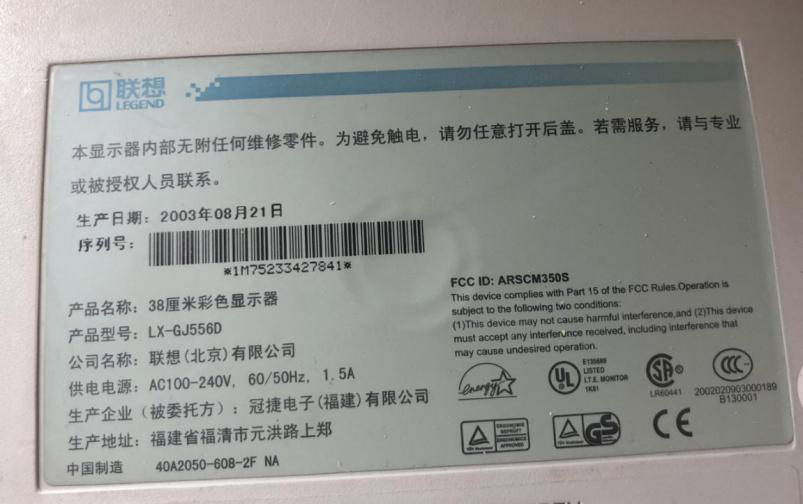
1. The 38 cm (15-inch) color monitor produced by AOC (冠捷电子) on August 21, 2003. I tried searching for this model’s relevant parameters or performance on Baidu, but unfortunately, I only found some fragmented discussions about repairing it in professional forums.
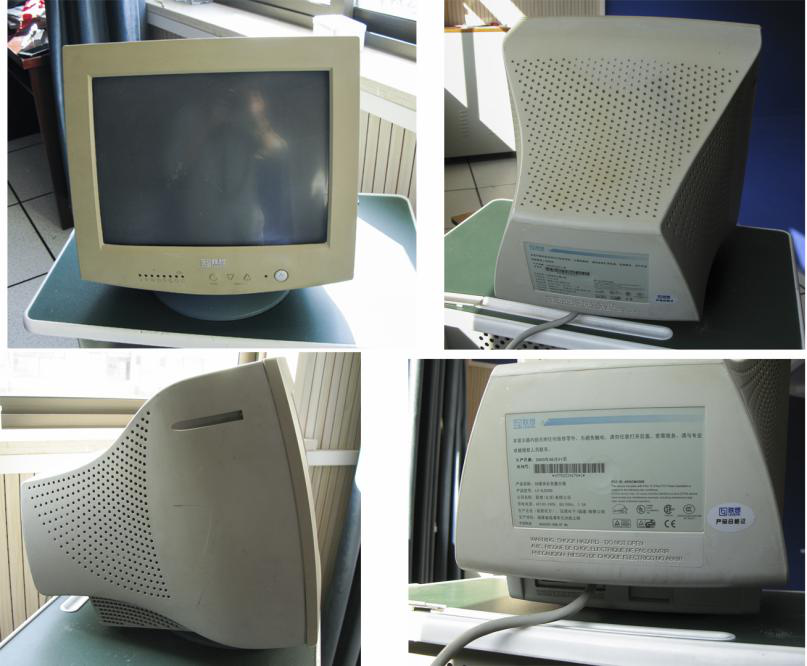
2. After removing the outer plastic shell, I saw the tube, circuit board, etc. Due to the high temperature and static electricity during the operation of CRT monitors, a thick layer of black dust accumulated on the surface of the tube, resembling the soot on the back of a cast-iron pot.
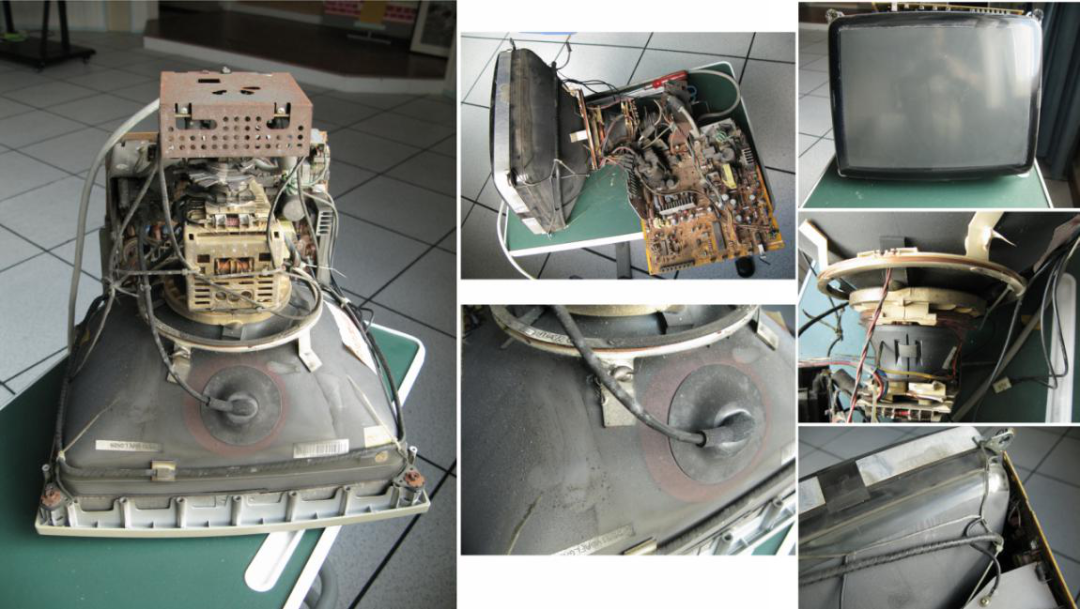
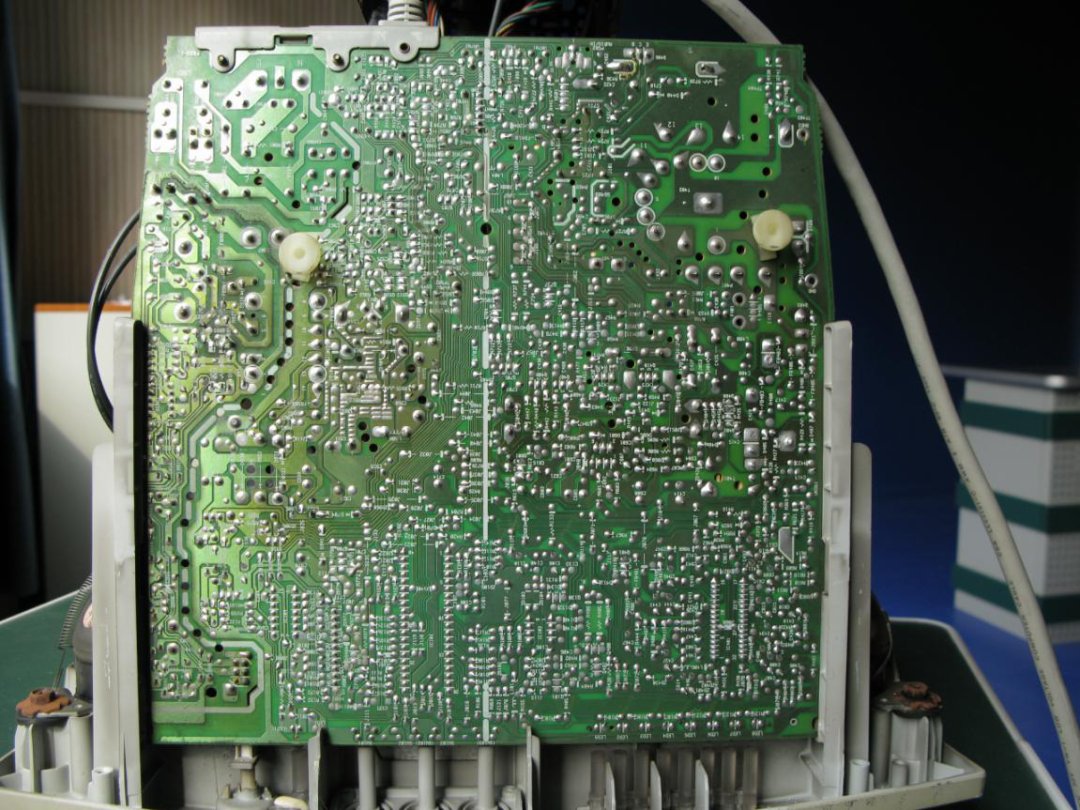
3. The circuit board contains capacitors, diodes, and the soldering points behind the panel.
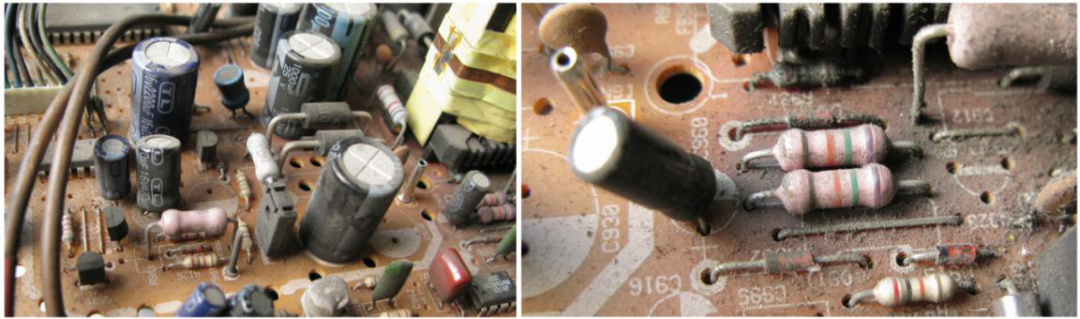
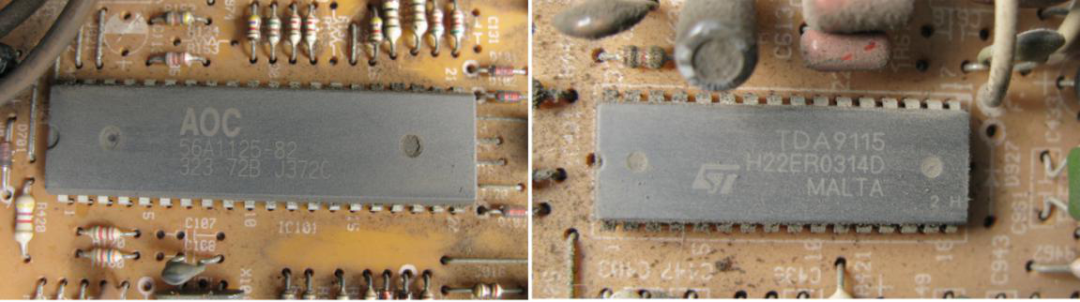
4. The only two integrated circuits on the circuit board. One is the main chip for the AOC monitor, and the other is the TDA9115 horizontal and vertical oscillation IC chip.
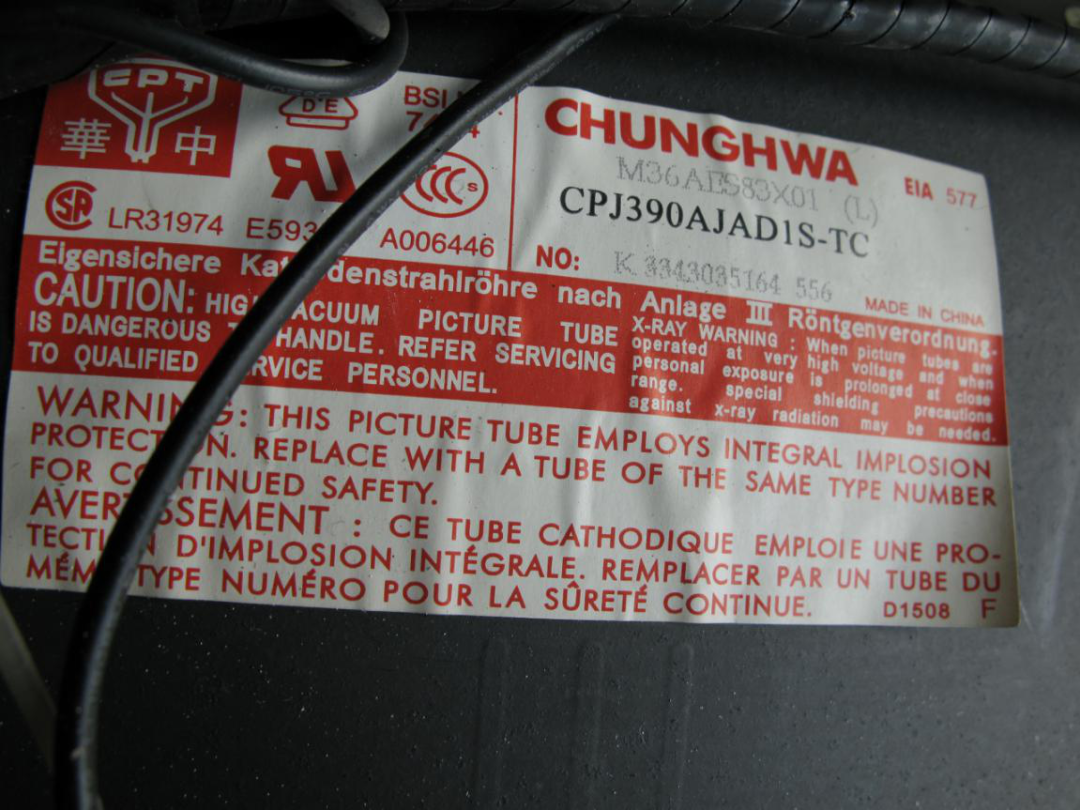
5. The CRT produced by China Taiwan’s Chunghwa Picture Tubes, Ltd. This company was founded in 1971 and announced bankruptcy on November 21, 2019. It was an important manufacturer of key components for video products in Taiwan, and its monitor production was once among the top three in the world. The following image shows the paper label attached to the CRT.
(6)
CRT monitors have become a thing of the past. In a post on Baidu Tieba’s “Tuna Ding Bar,” I specifically excerpted a thread to reminisce with netizens. The post was from September 23, 2019.
Original poster: I wonder if there are still people interested in CRT here. I found an IBM C220p on a local second-hand site; it’s a tough one but a bit expensive. 22 inches is really too big, and I don’t know where to put it if I buy it.
Reply 1: It’s too big; now housing space is at a premium, and the colors won’t be much better than new professional monitors.
Reply 2: I have a 17-inch that’s been 15 years old; I took it out recently, and the effect is still pretty good.
Reply 3: If you’re still using CRTs, don’t consider anything but the FW900.
Reply 4: CRTs should be heavy; buying one would be a great workout.
Reply 5: I got an HP ZR24W at home; it’s quite a heavy old item.
Reply 6: I picked up a Samsung 988MB from a second-hand site; the display effect isn’t as stunning as the one above, but it’s pretty good for watching old TV shows; the aspect ratio is just right, and it even has physical anti-aliasing.
Note: “Certain Fish” refers to “Xianyu”.


Calligraphy and Ink of Beigang
—END—
Text and Images: Xie Yuefeng
Editor: Wang Lingli
Reviewer: Zhu Haifeng
Supervisor: Wang Yaoli