Renesas Electronics, as a global leader in microcontrollers, analog power devices, and SoC product suppliers, recently showcased its products and solutions in intelligent gateways, domain controllers, ADAS autonomous driving, smart cockpits, as well as microcontrollers and sensors at the Munich Electronics Fair, which was held almost simultaneously around the world. During the Munich exhibition in South China, Mr. Zhao Mingyu, Vice President of Renesas’ Global Automotive Electronics Division, elaborated on Renesas’ industrial strategy and its understanding and outlook on the global automotive electronics market, including the Chinese market.
The vigorous development of new energy electric vehicles stands out particularly in the context of global economic uncertainty and a general downturn in the semiconductor industry. China has proposed a new strategic goal of “electrification, connectivity, intelligence, and sharing” in the automotive sector. The semiconductor industry is undoubtedly deeply involved in this new strategy. Chinese electric vehicles have become one of the leading fields and the main market globally, and major semiconductor companies have launched automotive electronics strategies and related industrial strategies targeting both the global and Chinese markets.
Renesas Electronics, as a global leader in microcontrollers, analog power devices, and SoC product suppliers, recently showcased its products and solutions in intelligent gateways, domain controllers, ADAS autonomous driving, smart cockpits, as well as microcontrollers and sensors at the Munich Electronics Fair, which was held almost simultaneously around the world. During the Munich exhibition in South China, Mr. Zhao Mingyu, Vice President of Renesas’ Global Automotive Electronics Division, elaborated on Renesas’ industrial strategy and its understanding and outlook on the global automotive electronics market, including the Chinese market.
Comparison Between Renesas’ Automotive “Four Modernizations” and China’s “New Four Modernizations”
“This is today’s material that we are synchronizing with Munich, which mainly introduces Renesas’ vision in the global automotive electronics field, as well as the outlook and basic strategies for the entire automotive industry.”
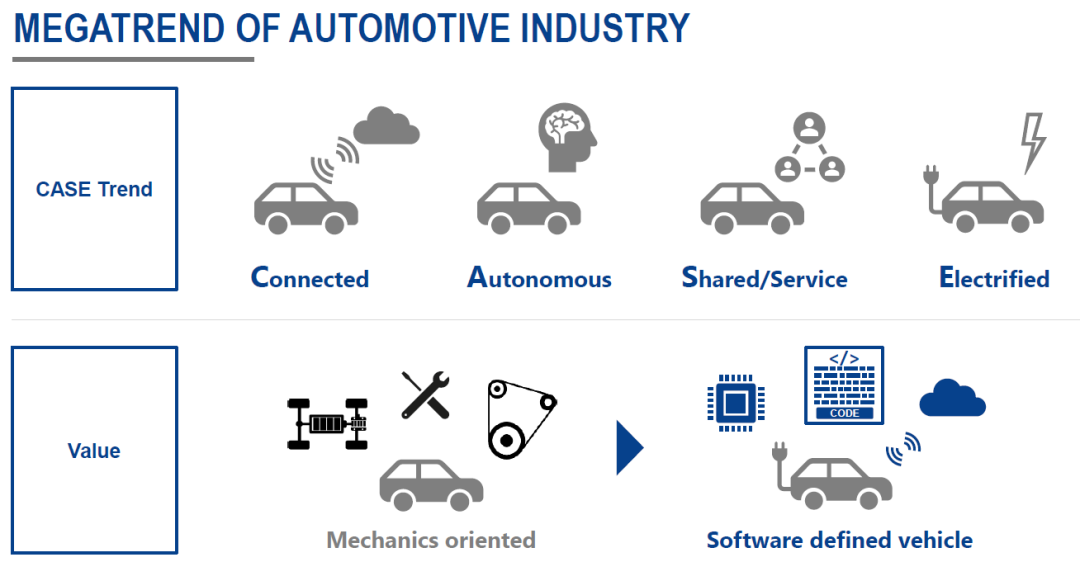 Renesas’ automotive “Four Modernizations” route: Connectivity – Intelligence – Sharing – Electrification
Value: Transition from traditional power to software-defined vehicles
After displaying the above materials, Zhao Mingyu elaborated: “This is Renesas’ focus on the future development of the entire automotive electronics industry globally. We believe that the automotive industry will increasingly converge towards these four industrial directions, including connectivity, autonomous driving (which is intelligence), sharing, and electrification. These four directions align perfectly with our domestic ‘New Four Modernizations’ (electrification, connectivity, intelligence, sharing), just in a different order. When we talk about ‘New Four Modernizations’ domestically, we generally mention electrification first because China’s automotive electronics are essentially the new energy market, and we (Renesas) have now far surpassed other regions globally.”
He continued to explain the similarities between Renesas’ automotive Four Modernizations strategy and the domestic automotive “New Four Modernizations” strategy: “After electrification (in China), we will mention intelligence, connectivity, and sharing. The order is different, but our thinking is the same. As the automotive electronics technology continues to extend, the value definition of traditional vehicles has changed. Previously, the main value of a vehicle came from traditional components and hardware, like engines and transmissions. However, we are increasingly hearing a new concept in the market, which is the software-defined vehicle. This concept also originates from Renesas’ new ideas and evolution in the entire electronic architecture of vehicles.”
Software-Defined Vehicles
The changes in automotive electronic architecture are now focusing more on domain control and central computing units. In fact, the changes brought about by domain control and automotive central computing units have been continuously mentioned by OEMs over the past decade. However, the real change has occurred in recent years in the domestic market, driven by the rapid development of our automotive electrification industry.
E/E architecture transformation: From distributed automotive architecture to domain control/Zonal
Previously, vehicles had a distributed electronic architecture with many small ECUs scattered throughout the car. High-end vehicles might have hundreds of small ECUs, which posed significant challenges for the development, maintenance, and effective cost optimization of the entire vehicle’s electronic devices.
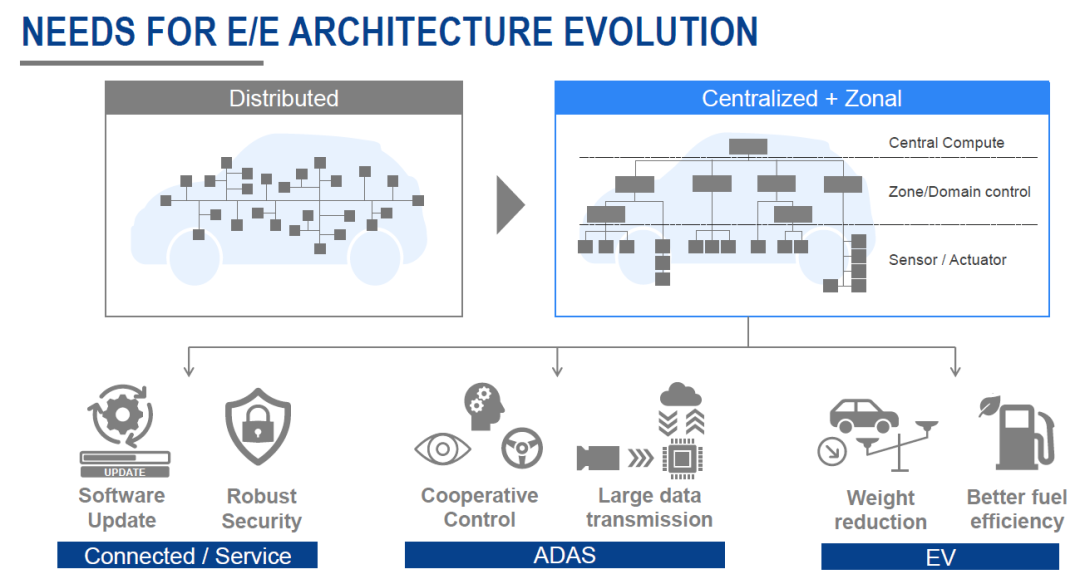
Now, the development is shifting towards domain control, and there is also a concept called Zonal that aligns with domain control. Domain control is application-based, such as body domain and chassis domain, while Zonal is location-based, such as front domain and rear domain. Their ideas are similar; both use domain controllers to centralize relatively dispersed functions into a large control unit, leaving only some small microcontrollers or controllers for executing actuators at the far end.
This transformation in the domestic market has been rapidly led by new car-making forces to traditional OEMs. They have applied the new architecture in new energy vehicle products. The reason is that new energy vehicles represent a new industry without much historical burden, making the definition of a new electronic architecture more valuable. Therefore, as new car-making forces introduce this new electronic architecture, it, in turn, influences traditional OEMs in the domestic market, not only in electric vehicles but also in traditional vehicles, as more and more OEMs begin to adopt domain control-based electronic architecture development.
Of course, these new electronic architectures have also led to new application areas, including enabling cloud-based ECU software updates (OTA applications), which brings about the need for high data security.
In terms of autonomous driving or assisted driving, it has created a demand for large data transmission.
At the same time, new energy vehicles have created a demand for range, while traditional fuel vehicles have seen a demand for vehicle lightweighting, etc. All these demands, in turn, stimulate the rapid development of new electronic architectures.
This forms a positive cycle of rapid development in new automotive electronic architectures.
“In the rapid development of the new electronic architecture, Renesas’ products can perfectly cover the needs of different levels of new electronic architectures, including central computing units, high-performance SoCs, etc.; in terms of domain control, we have a new generation of 28nm microcontroller products that can be said to be born for domains. This product can perfectly meet the needs and challenges of both application-based domain definitions and location-based domain definitions. At the same time, Renesas also has low-end 16-bit and 8-bit microcontrollers that have been continuously iterated and developed over decades, constituting the small, intelligent terminal subjects of remote actuators.” After explaining the trends in the transformation and development of the new electronic architecture, Zhao Mingyu introduced,
“Therefore, across Renesas’ entire product line, we can perfectly adapt to all the needs of today’s and the next generation of new E/E electronic architectures. Of course, on this E/E electronic architecture, our hardware platforms will gradually tend towards standardization, which will bring a significant challenge, namely the high reusability of software or IP. Only through such high software reusability or scalability can we effectively reduce the development costs and shorten the time from R&D to mass production.”
How does Renesas achieve this?
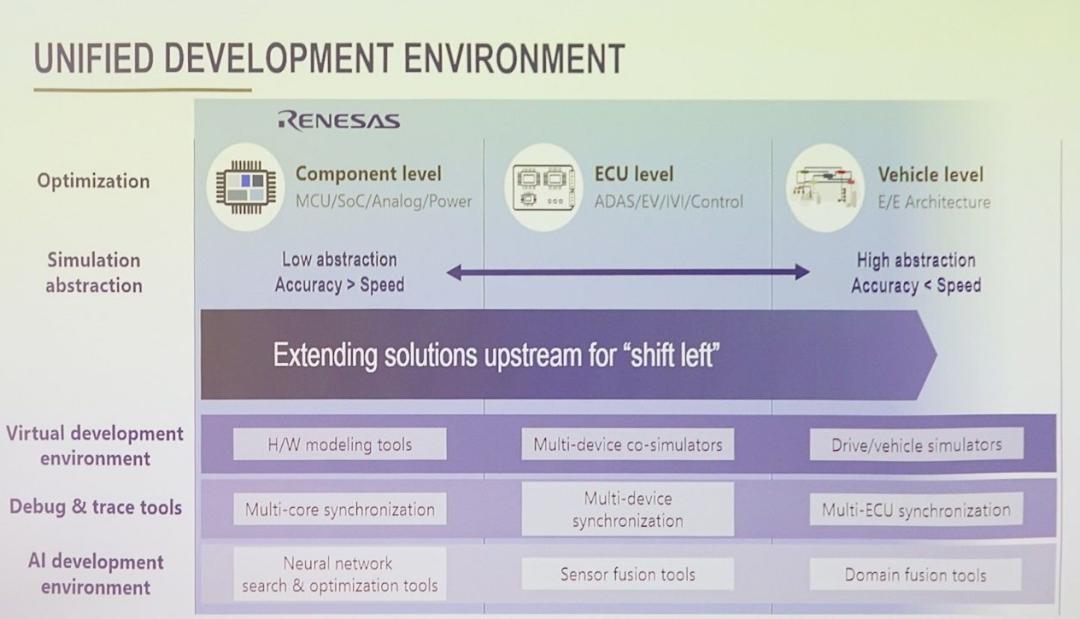
Unified Development Environment/Integrated Simulation Development Environment
In the past, semiconductor companies defined development environments for automobiles, whether compilers, simulators, or debugging, were device-oriented rather than system-oriented.
I learned that Renesas has developed a highly integrated software development environment to better address the demands of current and next-generation automotive electronics development, where compilers, simulators, and debugging run in an integrated environment. It can support not only the development of single devices but also simulate and support multi-system product development and definition.
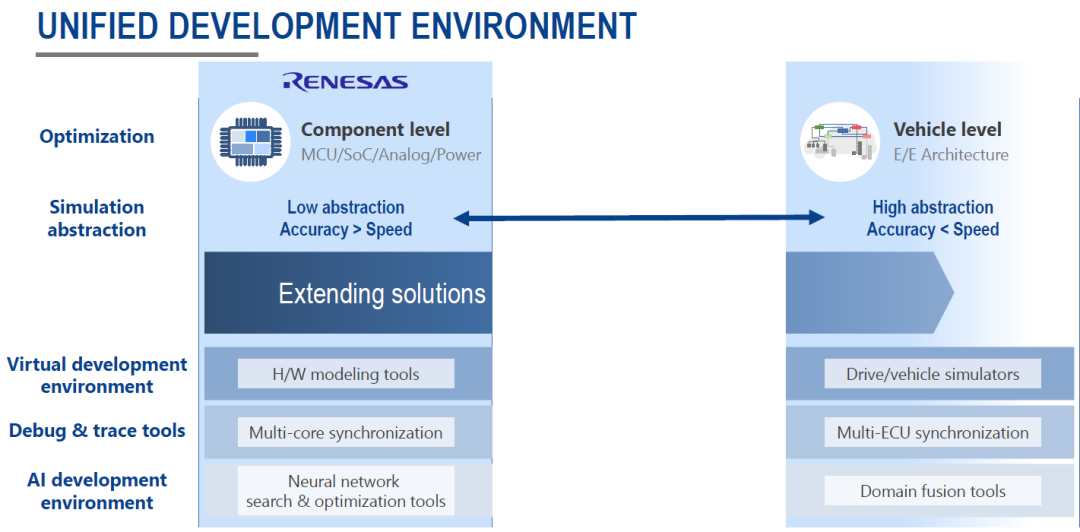
An automotive software team may have dozens or even hundreds of development engineers, and it is unrealistic to equip each person with a complete hardware system, which would also be very costly. At this time, Renesas provides a relatively low-cost software simulation environment for development. Engineers can use the simulation environment not only to develop a single device but also to place all peripheral devices required for the development of an ECU in a virtual form on their development board. By using internal simulated signal excitation or connecting to external real signal excitation via PC, they can test the overall system’s operational effectiveness.
Advantages of the Integrated Simulation Development Environment
“Therefore, in this case, our products are not only used for our direct customers but also allow our Tier 1 partners to develop systems more conveniently and with less hassle,” Zhao Mingyu explained the advantages of the integrated simulation development environment.
Increase Software and IP Reusability
A domain controller covers a large number of terminal applications, and there are many possibilities for reusing basic software and middleware between different application domains and location domains. If the hardware does not support software reuse, end customers will need to invest a lot of resources to accommodate hardware changes. High reusability or scalability brings the benefit of allowing products to enter the market quickly. This is an inevitable trend in the development of software-defined vehicles.
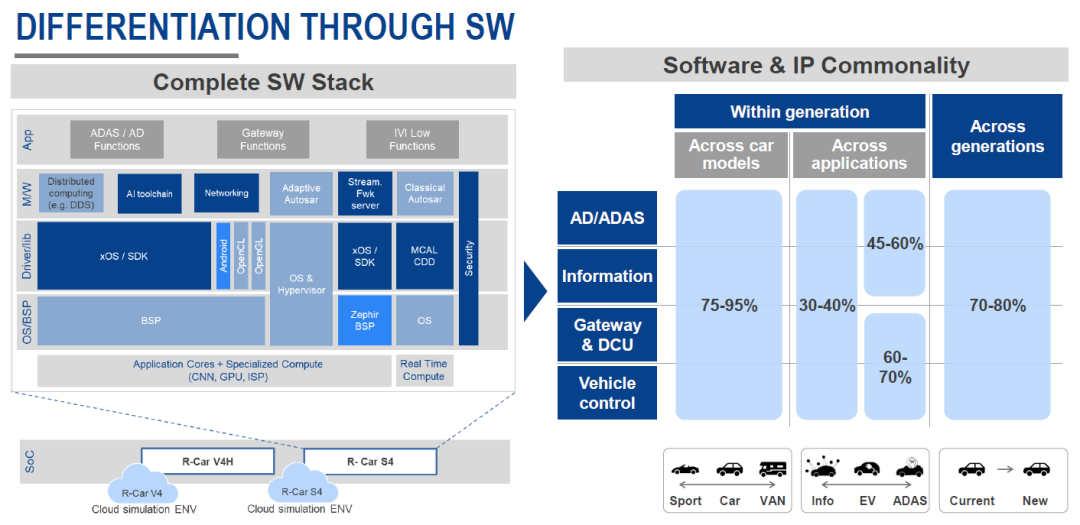
The premise for achieving high reusability of software or IP is to provide customers with enough software protocol stations.
The above diagram uses an R-Car product as an example. Based on the R-Car product, Renesas not only provides basic driver software but also offers a large amount of middleware to support customer development needs.
Different Levels, Different Applications, Different Reusability
Between different vehicle models, a vehicle manufacturer may have SUVs and sedans, and sedans may be classified into A0, B, and C levels. In these different application scenarios, Renesas’ software reusability is very high: it only needs to make some detailed adjustments on the application side based on the different configurations of electronic requirements in the vehicle. The underlying software and middleware remain largely unchanged, so its reusability can exceed 90%.
Different applications have differences, such as autonomous driving and cockpit systems, which are all based on Renesas’ R-Car products, so many underlying components can remain consistent. Therefore, between them, there may be a 50%-60% reusability.
However, in traditional control areas, such as gateways or vehicle control units, the IP reusability can reach 60%-70%.
However, considering the rapid iteration of products in the future, for example, from the current cockpit to the next generation cockpit, the current cockpit may use Renesas’ R-Car M3 product, and if it iterates to the H3 product (M stands for middle, a mid-level product, H represents high-end products), the software IP reusability can reach 70%-80%.
Through this concept, technology can achieve various typical applications, including automatic ADAS, Infortainment, smart cockpits, domain control, or smart gateways, as well as the entire controller. Throughout the development process, it allows customers to maximize the reduction of development costs and inputs, accelerate development progress, and achieve rapid mass production.
Meeting the Uniqueness of the Chinese Market
“This is very important for the global market, especially for the Chinese market, because in the Chinese market, the iteration cycle and speed of our automotive electronics products are far higher than those of the global market,” Zhao Mingyu said. “For example, in the case of smart cockpit applications, in countries with more developed automotive electronics like Europe and Japan, the iteration cycle for cockpits is generally 4-5 years, while in China, it is generally 2 years or 2.5 years. Our iteration speed is very fast. If during this process the software reusability is very low, requiring each platform to be developed from scratch, the costs would be very high. Therefore, utilizing Renesas’ high software reusability concept, we can bring great convenience to our customers’ new product development.”
ECU Virtualization Platform
In April 2022, Renesas launched an integrated automotive ECU virtualization platform—RH850/U2x MCU and ETAS’ RTA-HVR software, enabling automotive electronic system designers to integrate multiple applications into a single ECU (Electronic Control Unit), ensuring safety and reliability while avoiding mutual interference.
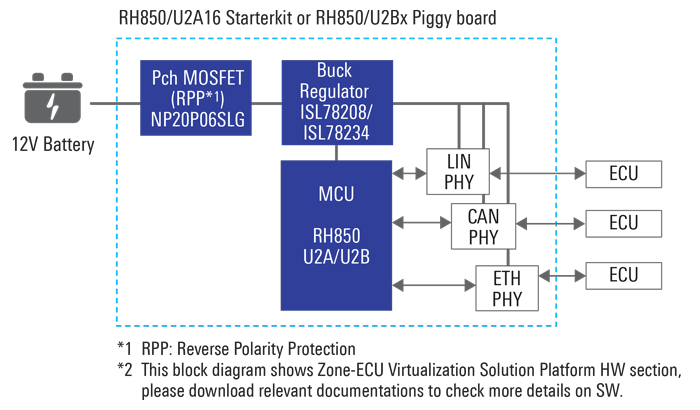
This solution allows users to adopt the new electronic/electrical architecture (E/E architecture), using MCU-based regional ECUs to support multiple logical ECUs on a single physical ECU. Transitioning to a new platform maximizes the reuse of existing technologies, reduces development workload, and achieves lower power consumption, while reducing the weight and complexity of wiring harnesses in vehicles.
When I mentioned the role of the ECU virtualization platform, Zhao Kun, Senior Manager of Renesas Electronics’ Automotive Electronics Technology Department in China, explained: “Renesas is currently promoting something called Shift Left, which means we want to expand the direction of solutions and develop this technology earlier. This is a software modeling approach. In the past, when we did hardware development, everyone was accustomed to doing it based on existing chips or existing solutions. Now we propose to do it through software virtualization.”
In the era of software-defined vehicles, the workload for software will be enormous, with possibly only a few hardware engineers, but hundreds of software engineers. In this case, software engineers cannot wait for hardware development or for each person to have a development board. Utilizing the ECU virtualization platform allows many software developers to work in parallel with minimal additional hardware investment, improving efficiency and shortening the timeline.
Moreover, as the complexity of designs such as domain control increases, it becomes more challenging for application engineers and chip design engineers to develop. When facing new demands, it is necessary to evaluate the hardware chips. If the ECU virtualization platform can be used to assess risks and feasibility early on, it can help avoid pitfalls.
At the same time, in cases of localized COVID-19 outbreaks or other situations requiring remote work, this virtual software approach can enable remote collaboration.
Therefore, ECU virtualization simulates hardware through a virtual software platform to collaborate.
How to Approach the Intelligent Track?
Renesas Automotive Electronics’ Four Modernizations focus on the same points as the domestic “New Four Modernizations”, in addition to the new E/E electronic architecture, including the autonomous driving field, which is the intelligence aspect of the “Four Modernizations”.
Autonomous driving typically consists of three major subfields: perception systems, computation-based judgment systems, and execution systems.
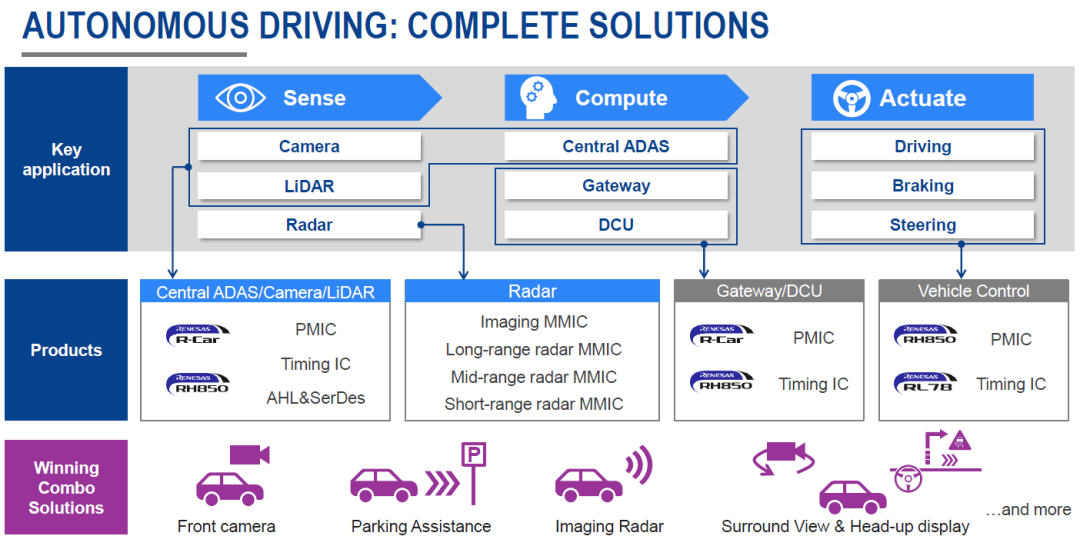
Perception includes visual perception through cameras, as well as radar systems such as LiDAR and millimeter-wave radar.
The judgment system processes inputs from signals, perceives, analyzes, judges, and performs logical processing on useful signals, as well as data correspondence processing.
The third is the execution system, which executes the commands from the autonomous driving brain based on perception and judgment.
These three directions constitute the complete process of autonomous driving.
“Renesas has complete product lines corresponding to all three different fields, including digital products, analog and power products. Previously, Renesas’ main solution was based on vision, but today, through acquisition and integration, we have a complete radar solution that can effectively provide module partners with millimeter-wave radar modules, whether for long or short distances, to be integrated into our entire autonomous driving solutions,” Zhao Mingyu stated.
Based on these products, Renesas has formed various solutions for different levels of autonomous driving, including solutions based on front cameras, lane departure warning or collision avoidance systems, assisted parking systems, image radar systems, surround view systems, and HUD systems. These subsystems can be combined organically to form different levels of autonomous driving, such as level 2, level 2+, and level 2++.
If more complex algorithms are implemented, effectively linking and coordinating these subsystems can also create more complex systems, such as those approaching full autonomous driving (Level 4 and above).
When Will L3+/L4 Arrive, and How Will Renesas Respond?
Regarding the current status and trends in the development of autonomous driving levels, I mentioned that the mainstream in autonomous driving is L2+ and L3. However, with the rapid development of global new energy vehicles, the progress towards higher levels of autonomous driving is accelerating. When will L3+ or even L4 officially hit the road? Are Renesas’ products and solutions technically prepared for this?
Mr. Cao Jiangwei, Manager of Renesas Electronics’ Automotive Electronics Marketing Department in China, answered this question: “The timeline for L3+/L4 depends on the overall situation in society and the automotive industry. In addition to the basic chip and computing performance, all supporting aspects, including related responsibilities and insurance, need to have a complete system before we can move towards L3+/L4. We can also see that some countries, like Germany and China, are still perfecting some laws and regulations or infrastructure, so there is no clear timeline in the near future.”
“However, from a hardware perspective, many chip manufacturers, including Renesas, are planning more powerful and specialized chips to support Tier 1 and vehicle manufacturers in advancing towards higher technical directions. I believe the main focus will still be on enhancing user experience and ensuring passenger safety. We can already see that L2+ systems have greatly improved driving and passenger safety.”
“So, I think in the next few years or in the near future, we will continue to develop L2, while L3 will still exist. In some regional areas, such as closed parks, ports, or testing zones, L4 and L5 may be present. That’s my current view.”
Completing the Radar Product Line
In the past, Renesas provided customers with products primarily based on visual solutions, including central ADAS domain control, combined with camera-based overall solutions. This includes SoCs, power management chips, MCUs, and clocks.
On October 17, Renesas officially announced the completion of its acquisition of Steradian, a company specializing in radar product solutions.
Steradian is an Indian company with many years of experience in millimeter-wave radar products and has accumulated a wealth of products. Through the acquisition of this company, Renesas will integrate its products into Renesas’ entire roadmap. In the future, Renesas will be able to provide more ADAS solutions to customers in both the Chinese and global markets.
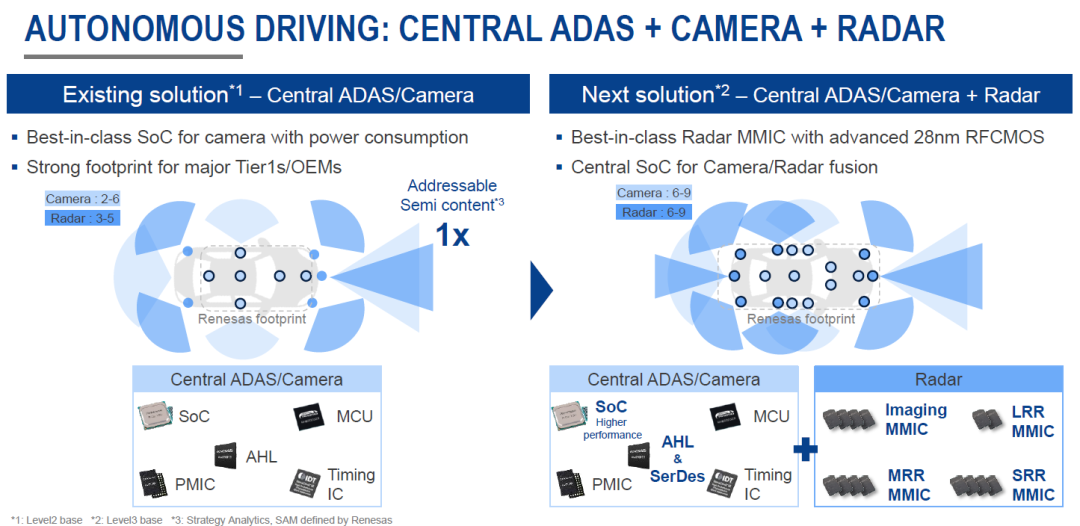
As Renesas’ product line continues to expand and extend, it will be able to provide customers with solutions not only based on vision but also based on radar. Therefore, it can offer better solution combinations to customers.
How to Approach the New Energy Track?
The new energy track generally comes from three typical applications, namely the three electric applications: electric motors, batteries, and electronic controls. In the development of new energy vehicles, whether in the Chinese market or the global market, the main direction is the high integration of devices.
For example, the main drive motor system is increasingly being integrated into three-in-one, four-in-one, five-in-one, or even eight-in-one systems, achieving the goals of high integration, lighter weight, and greater power output to better match the performance improvement of the entire vehicle.
For example, skateboard chassis applications gradually integrate many separate applications like ESP and EPS into a single chassis system, with the battery also gradually merging with the chassis instead of being a separate battery pack. This way, the chassis forms a relatively independent system, allowing OEMs to use a single chassis platform to match different vehicle models, significantly reducing redundancy in development.
“What new technologies and solutions does Renesas offer in the new energy track? One is our Battery Management System (BMS). Previously, Renesas could only provide some microcontroller systems or edge management chips for BMS applications, but with our acquisition of Intersil in the US, Renesas’ entire BMS solution has greatly expanded. Intersil has a long-standing accumulation in analog products for BMS,” Zhao Mingyu introduced.
“We provide our customers not only with hardware systems but also develop a complete set of BMS reference design solutions based on our hardware packaging solutions, especially to meet the rapid development needs of domestic customers.”
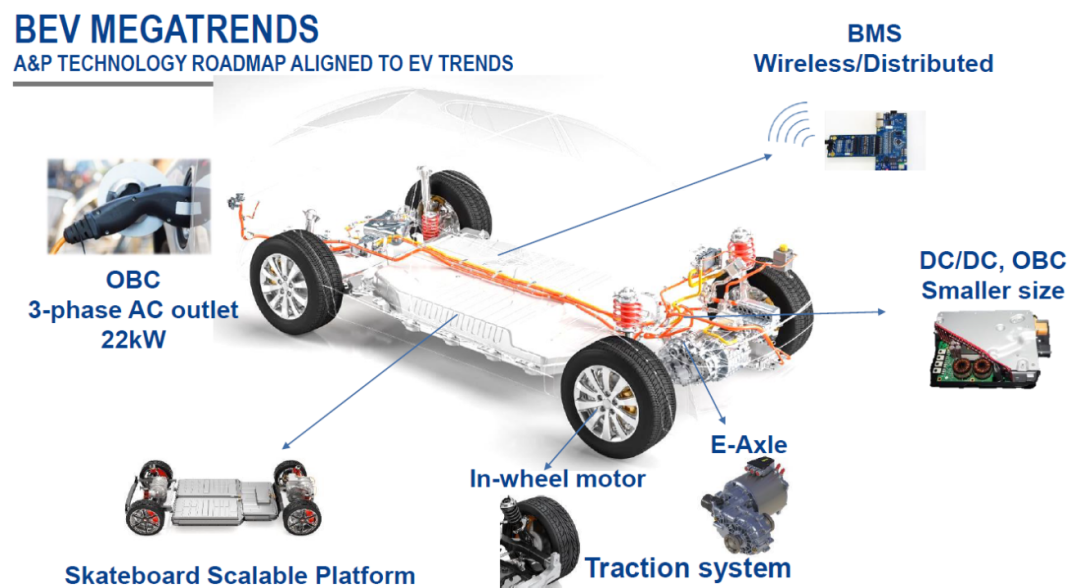
In terms of main drive motors, Renesas’ products are currently quite mature in the Chinese market and have seen successful applications. Now, major OEMs in China can see products based on Renesas’ main drive motor controller solutions that are in mass production or under development.
Differences: Providing IGBT Wafer Services to Global Customers
In the semiconductor industry chain, wafers are at the top tier. Renesas, as a product and solution supplier, also provides IGBT wafer services to customers in the global market.
In the automotive semiconductor field, many manufacturers offer IGBT module services in the Chinese market, but Renesas stands out by being able to sell wafers directly.
Five or six years ago, when the new energy industry in China was not fully developed, this was still a weakness for Renesas, as customers preferred to receive modules. However, with the rapid development of the new energy industry, every OEM wants to control its key components, and for Chinese OEMs, wafers are more needed than modules, leading to a phenomenon where each major OEM basically has its own module factory.
“At this time, providing wafer products to customers can ensure that our customers can customize different service packaging modes according to their main drive motor needs, not only for some industry-standard module packaging but also for single-tube packaging to better adapt to their overall product definitions and plans,” Zhao Mingyu explained the current situation of domestic automotive OEMs and Renesas’ wafer production lines.
“Currently, Renesas has several 8-inch wafer manufacturing lines globally, with one located in China, which is also a differentiating factor from our competitors. We are now introducing some wafer factories into China to expand our rapid response to domestic demand.”
In addition, Renesas announced in May this year that it will invest at least $900 million to transform one of the 8-inch production lines at its Kofu factory in Japan into a 12-inch production line, specifically for the production of power devices, including IGBT products. Based on this new 12-inch production line, Renesas expects to start mass production in 2024.
Localization: Leading the Path of Technological Development in China with a Local Design Team
Zhao Mingyu continued to introduce the automotive electronics GPU and the entire development philosophy, “In GPU products, we are increasingly utilizing our local analog design team in China to provide customized development services for Chinese customers, including OEMs. The latest product we launched is specifically tailored to meet the unique requirements of domestic OEMs for domain drive performance indicators.”
“Currently, the entire development direction and technological development direction of new energy vehicles in China are gradually diverging from global development directions. The development of new energy vehicles in China is now ahead of other regions overseas, rather than running parallel with them.”
“Therefore, in the future development philosophy or concept, it is difficult and unnecessary for Chinese OEMs to copy German, Japanese, or American companies, because we are following our own path of technological development. Therefore, at this time, our definitions of product performance and device specifications will become increasingly distinct.”
Thus, Renesas’ fundamental approach is to utilize its Chinese design team to respond quickly to the needs of Chinese OEMs or the Chinese market, thereby better meeting the demands of the Chinese market.
Welcome to all angel round and A-round enterprises in the entire automotive industry chain (including the electrification industry chain) to join the group; We will connect a portion of quality projects to existing institutions for roadshows by theme; We have communication groups for leaders of technology companies, automotive industry complete vehicles, automotive semiconductors, key components, new energy vehicles, intelligent connected vehicles, aftermarket, automotive investment, autonomous driving, vehicle networking, etc. If you want to join the group, please scan the administrator’s WeChat (please indicate your company name)