
Original by IoT Think Tank
Published by IoT Think Tank
Please indicate the source and origin when reprinting
—— [Introduction] ——
“The great things are wise,” which is the way for edge computing to enter the world!

The Internet of Things (IoT), the largest “network” in history, is quietly changing our way of life. We prefer to store photos in the cloud rather than simply on our phone’s memory; we prefer to connect to WiFi at home and are more willing to access 4G networks outdoors; instead of cumbersome input of purchasing information, we prefer one-click online shopping…
The existence of IoT is not only about changing people’s daily habits but also about creating a new “ecological” environment. In simple terms, it connects everything around us, linking two unrelated “pieces of wood”. Which “things” should communicate and which should not requires the ability to judge or compute between devices, and edge computing is the enabler of this capability.
The development of IoT is inseparable from edge computing
(1) The combination of edge computing and cloud computing catalyzes the implementation of IoT applications
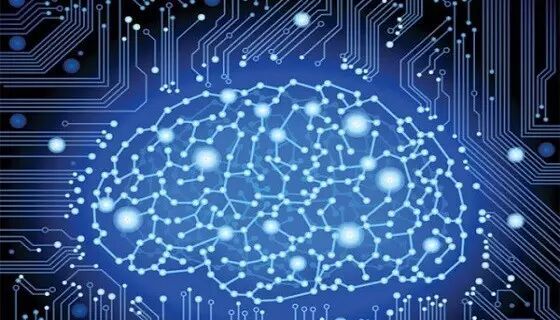
Edge computing refers to an open platform that integrates network, computing, storage, and application core capabilities at the network edge, close to the source of things or data, providing edge intelligence services to meet the critical needs of industry digitization in agile connectivity, real-time business, data optimization, application intelligence, and security and privacy protection.
Edge computing is like the nerve endings of humans, processing simple stimuli and feeding back the processed feature information to the cloud brain.
Edge computing and cloud computing work together to enable the digital transformation of industries: ① Cloud computing focuses on non-real-time, long-cycle data big data analysis, excelling in periodic maintenance and business decision support. ② Edge computing focuses on real-time, short-cycle data analysis, better supporting big data analysis of cloud applications; conversely, cloud computing can optimize output business rules through big data analysis and send them to the edge, where edge computing can optimize business execution based on the new business rules.
In the era of IoT, everything is interconnected, with smartphones, wearable devices, and smart devices equipped with sensors experiencing explosive growth. Business Insider’s premium search service “BI Intelligence” predicts that by 2020, there will be 5.8 billion IoT devices using edge computing in enterprises and governments. As IoT applications continue to mature and networks expand, more devices join the network, and the massive amount of data needs to be processed from the source; the increasing complexity of networks, network delays, and congestion will bring immeasurable losses to IoT. The existing model of directly connecting IoT to the cloud is no longer applicable; edge computing will efficiently, timely, and securely process massive amounts of data, becoming a focal point in the era of interconnected things.
(2) Edge computing improves the processing efficiency of IoT devices

In the internet era, business demands for product development and iteration are accelerating the widespread cloudification of IT infrastructure, with extensive use of third-party API interfaces. In the IoT era, massive device data uploaded to the cloud and then fed back to the terminal not only wastes cloud resources but also affects data processing efficiency.
For scenarios requiring real-time data processing, such as smart driving, if an obstacle is detected and a decision cannot be made intelligently to control the direction to avoid the obstacle, but instead the information is sent to the cloud and then commands are issued to the vehicle terminal, even a slight delay can lead to accidents. Take the smart security system’s cameras as an example; the U.S. has deployed over 30 million cameras, generating more than 4 billion hours of massive video data weekly. Processing this data in cloud data centers not only incurs transmission costs but also storage costs. If this data can be stored and processed at the network edge, it will significantly reduce costs and improve device processing efficiency.
How to utilize existing resources for data preprocessing, provide emergency responses, and filter data requires edge-side management based on corresponding “rules”. For example, H3C’s IoT gateway can customize data rules based on scenario needs, preprocess data to avoid a large amount of data being sent to the cloud, wasting resources, and help the cloud free up more space to handle more requests and optimize resource scheduling. Its industrial-grade gateway IG550 can provide various business interfaces for the edge side, such as RJ45, RS485, WiFi, etc., and can be expanded to support Zigbee, BLE, 3G/LTE, GPS, DIDO, HDMI, VGA, etc. Developers can flexibly set up applications on the installed CentOS operating system to compute and process edge-side business data, greatly improving the efficiency of IoT devices.
(3) Edge computing will redefine the relationship between “cloud-network-end”

In the initial stage of IoT, cloud management of terminals was basically completed, while terminals on the edge seemed to merely play the role of being managed. Edge computing endows terminals with simple computing and storage capabilities, allowing them to occasionally “detach” from cloud management and intelligently control their own behavior.
Information storage is decentralized from a unified cloud to various terminals, with edge-side intelligent processing extracting feature data to send back to the cloud. The IoT platform will face new challenges and opportunities, managing IoT devices while also accepting feedback from the edge and “tolerating” the autonomy of the edge. Edge-side platforms can be equipped with intelligent gateways for specific types of devices to respond to device data requests in real-time and control device behavior. The hot edge computing has attracted major players to compete for layout, such as Honeywell, which adds end intelligence based on digital industry to effectively solve the consistency and integrity issues of industrial data scheduling; giants like Intel, Cisco, and Nokia are also utilizing software solutions to achieve the first step in edge computing. To meet current and future IT demands, more and more computing power is being decentralized to the network edge.
The IoT requires scenario-based products, an overall solution from cloud to terminal. Against the backdrop of large connectivity and mature cloud markets, the computing power on the edge will be the most important link in the value extraction of IoT. Industrial IoT, agricultural IoT, and smart cities require true low latency, high bandwidth, and the ability to handle massive data, which needs to be addressed through the continuous maturation and development of edge computing.
Edge computing enables collaboration among IoT devices
(1) How many of the hundreds of billions of IoT devices need edge computing?
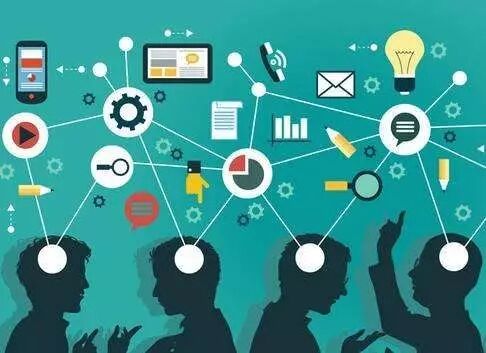
Edge computing, as a small data center, is designed to be as close to the terminal as possible to enhance access speed and performance. The continuous growth of IoT applications stimulates more demand for edge computing, with an increasing number of IoT devices requiring edge computing. From a security camera to an industrial device gateway, all need edge computing to achieve information communication and collaborative operation between devices.
Edge computing is similar to human nerve endings, capable of directly processing simple information; for complex information, it transmits to the cloud (the brain). Similar to human memory for simple processing, edge computing can trace back through the uploaded feature data. Just as all humans need nerve endings to respond, all IoT devices will need to be equipped with edge computing in the future to achieve true interconnectivity.
Whether it is a vehicle terminal with real-time data requirements, high bandwidth for massive data transmission, or connected elevators and high-speed Boeing airplanes, as well as high production rate assembly lines, all require the assistance of edge computing. Enhancing user experience from security, predictive maintenance, and personalized services, completing the intelligent upgrade of devices.
(2) Edge computing helps achieve deep integration of OT and IT
Whether it is Germany’s Industry 4.0, America’s Industrial Internet, or China’s Manufacturing 2025, they all advocate the integration of information technology and manufacturing technology. Facing issues such as high latency, heterogeneity, and massive connections, edge computing can provide real-time processing and reduce redundant data. For example, H3C’s industrial-grade IoT gateway can build a ubiquitous perception and control application service platform, and then use the Oasis platform for diversified configuration to achieve real-time progress of OT business. The emergency processing capability of edge computing ensures machine safety, making it easy to realize the integrated working scene of humans, machines, and things, further improving production efficiency.
In the industrial field, edge computing combines automated control with information communication technology to form intelligent manufacturing scenarios. Major industrial giants like Schneider, Honeywell, General Electric, and Siemens are introducing IT technology to upgrade manufacturing equipment and improve production efficiency. Especially mobile devices connected on the production line can cause random changes in equipment status, so it is necessary to use information communication technology for real-time dynamic network reconfiguration of equipment. The implementation of information technology requires deep integration of edge-side networks with industry operation and maintenance technology to overturn industry silos and achieve interconnectivity of IoT.
Edge computing horizontally develops general computing capabilities and vertically integrates vertical industry applications, serving as a catalyst for the implementation of IoT applications. In addition to industrial process control scenarios already involving edge computing, smart cities, smart homes, and smart healthcare scenarios are gradually showing the presence of edge computing.
For example, the upgrade of wireless home routers, deployment of wireless access points throughout cities, and the emergence of unattended checkout applications in shopping… However, edge intelligence alone is insufficient to support the operation of complete smart scenarios; it needs to collaborate with the cloud and combine deep industry understanding to provide high service quality. For instance, H3C’s IoT AP in medical scenarios serves as an intelligent gateway on the edge, filtering medical data, encapsulating tightly coupled IoT data for transmission, and not transmitting loosely coupled connections. Its Oasis platform, which connects operation and maintenance, utilizes a service model combining public and private clouds, allowing local private clouds to process and store uploaded data locally and retrieve edge-side gateway operating parameters for timely maintenance management. This reduces bandwidth usage on public network links and enables local autonomy when public network connections are interrupted. Additionally, the large number of shared bicycles we see everywhere is also a good application case of edge computing. H3C is establishing a Lora network, equipped with intelligent gateways and vehicle-mounted Lora+GPRS dual-mode communication modules, combined with the management of the Oasis platform’s private cloud, to address the pain points of slow unlocking, fast battery drain, data insecurity, and inaccurate positioning in shared bicycles. Edge-side base stations and IoT gateways as distributed data processing centers will enhance user experience.
Edge computing welcomes a new expansion of IT services, becoming an opportunity for digital upgrades. In the IoT layout, communication manufacturers, data service providers, chip designers, and module manufacturers have all entered or already laid out edge computing. Edge computing may provide a new business model for data operation services, better implementing IoT applications.
There are huge opportunities for the development of the edge computing industry, requiring forward-looking layouts

By 2020, there will be 50 billion terminals and devices connected to the internet. In addition to the largest “heterogeneous” feature of edge devices and terminals, product lifecycles are becoming shorter, personalized demands are increasing, and trends toward full lifecycle management and service are becoming more apparent. These new trends require strong technical support from edge computing.
Edge computing requires IT (Information Technology) management and OT (Operational Technology) control to connect and integrate through CT (Communication Technology).Before the IoT standards are established, edge computing has already entered the arena, and the standard disputes among various technologies will spark a bloody storm, but it is also an opportunity for each company to break through.
How should related enterprises layout based on their own advantages? Building an edge computing industry ecosystem is the preferred strategy for major players, such as how to solve scheduling issues between the cloud and edge, how to build information exchange for edge devices, business model construction, specific protocol design, etc.; new entrants can also utilize edge computing technology to develop new applications, such as personal multi-device collaborative applications, vehicle-road collaboration, etc.; of course, scaling applications is the way for layout players to seize the market.
Conclusion
The development of smart industries requires not only the high cloud but also ubiquitous edge computing. Edge computing, on one hand, collects data information, preprocesses it, and extracts feature data to transmit to the cloud brain; on the other hand, it connects various system platforms, allowing intelligent IT systems to navigate between various OTs, helping various IoT applications to land. Whether considering the efficiency of IoT application usage, time delays, or security, edge computing will be key to the popularization of IoT.

Previous Popular Articles (Click on the title to read directly):
-
《On the night of Trump’s inauguration, the big shots holding the industrial IoT trump card are already laughing in their mansions》
-
《KUKA, ABB, Fanuc, Yaskawa, the four industrial robot giants have long been stationed in the IoT field》
-
《[Heavyweight] A panoramic report on the IoT industry, pioneering the domestic IoT industry two-dimensional panoramic view》
-
《A cartoon tells you: Besides WiFi and Bluetooth, what can the recently popular NB-IoT do?》
-
《A cartoon tells you: Behind NB-IoT, what is the widely discussed LoRa?》