For more exciting content, please click on the “Chen Daxi” above, and feel free to follow!
Technical Exchange Compilation of Beekeeping Volunteers – Let’s discuss whether to confine the queen during wintering or not.
The beekeeping volunteer team is being successfully formed, with two volunteer groups currently having 982 beekeeping volunteers. They are actively engaged in promoting quality bee breeding and disaster relief for beekeepers, passionately dedicating themselves to the public welfare of beekeeping. The volunteers highly praise the charitable acts of the “Song Xinfang Beekeeping Development Foundation,” the “Jilin Provincial Beekeeping Scientific Research Institute,” and the “Chinese Academy of Agricultural Sciences Bee Research Institute” regarding the development of the beekeeping industry. To better promote quality queen bees, they continuously engage in technical exchanges within the group.
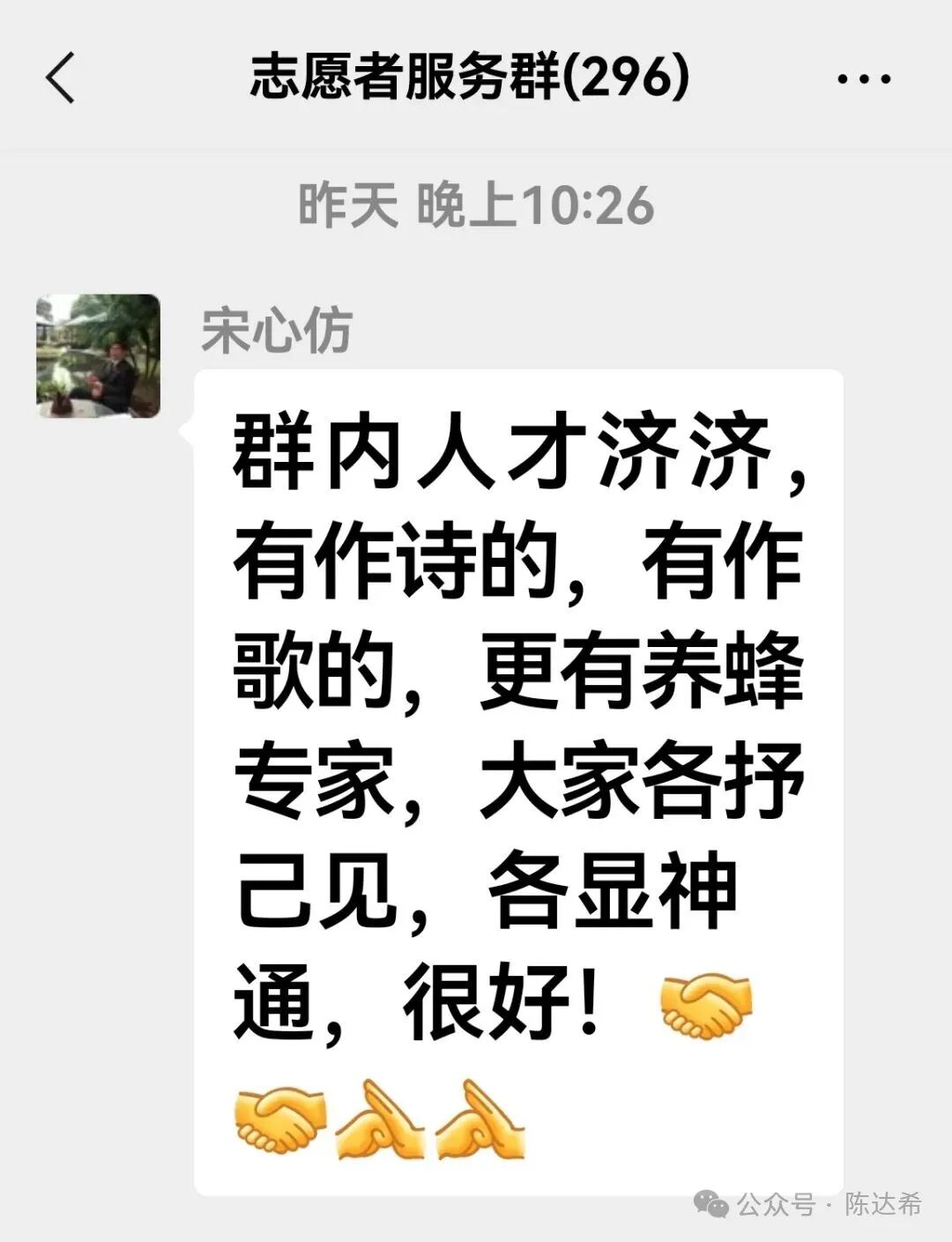
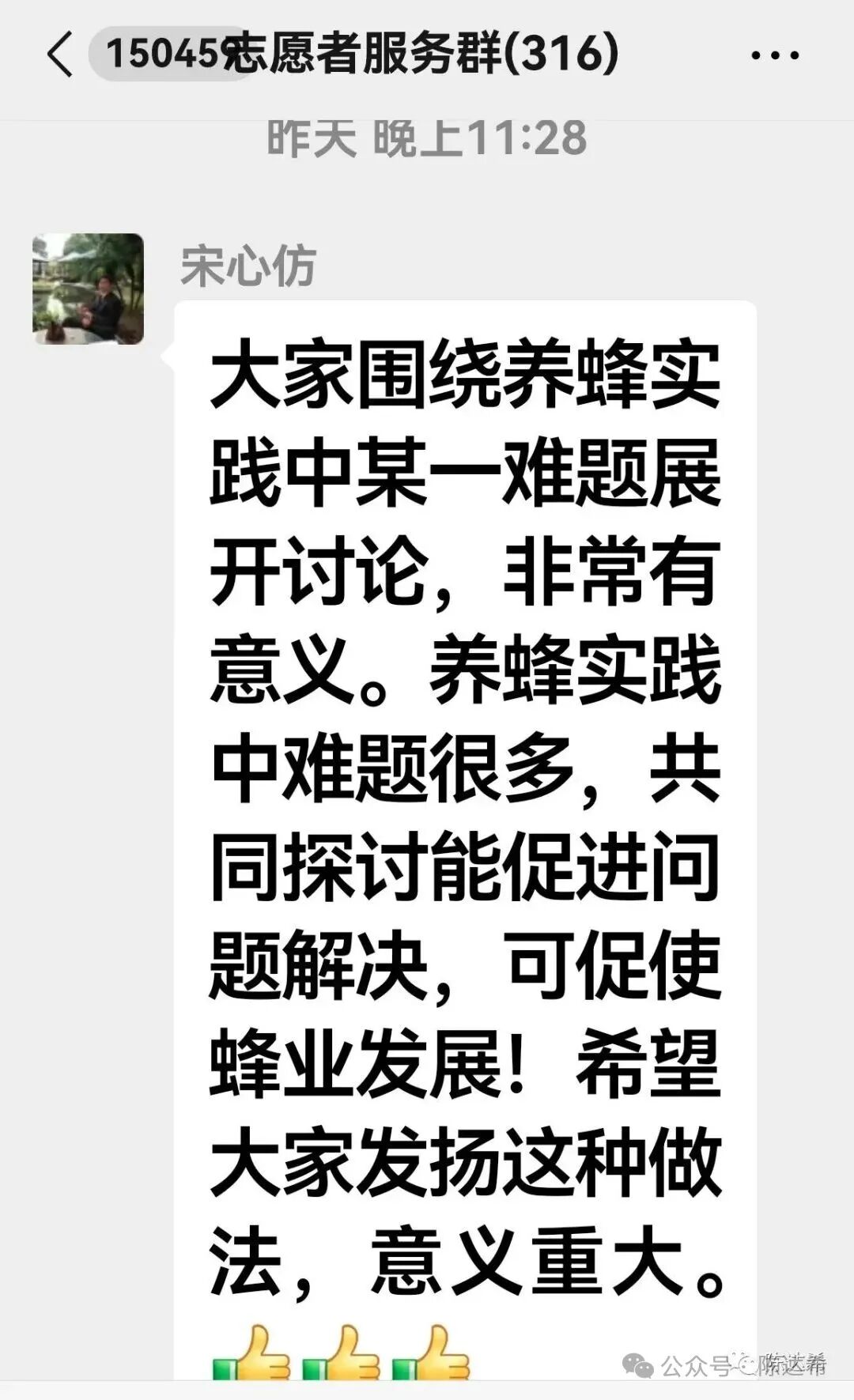
Teacher Song Xinfang passionately stated: The group is filled with talent, including poets, singers, and beekeeping experts. Everyone expresses their opinions and showcases their skills, which is great! Discussions around specific challenges in beekeeping practice are very meaningful. There are many challenges in beekeeping practice, and collective discussions can promote problem-solving and facilitate the development of the beekeeping industry! I hope everyone continues this practice, as it is of great significance.
 The “Technical Exchange Compilation of Beekeeping Volunteers” will be shared with everyone in succession. Welcome to follow!
Beekeeping Volunteer (Hu Xuehui Hebei Gaocheng):
Let’s discuss whether to confine the queen during wintering or not.
Beekeeping Volunteer (He Bang, Jiangxi Fuzhou):
It’s better not to confine her. Anyway, it’s a flat box.
Beekeeping Volunteer (Shanxi Wu Yanjie):
Confining makes management easier.
Beekeeping Volunteer (He Bang, Jiangxi Fuzhou):
It’s okay to use a contraceptive ring.
Beekeeping Volunteer (Shanxi Wu Yanjie):
This year I plan to use a long queen cage; last year I used a contraceptive ring. Anyway, there are losses every year.
Beekeeping Volunteer (He Bang, Jiangxi Fuzhou):
I still prefer plastic queen cages. I haven’t made my own.
Beekeeping Volunteer (Hu Xuehui Hebei Gaocheng):
Confining the queen makes me worry about her dying from confinement.
Beekeeping Volunteer (He Bang, Jiangxi Fuzhou):
That’s what I’m afraid of, so I won’t confine her.
Beekeeping Volunteer (Hu Xuehui Hebei Gaocheng):
I plan to let nature take its course and not confine her.
Beekeeping Volunteer (He Bang, Jiangxi Fuzhou):
We only have two, so we give one to the villagers. Therefore, we won’t confine her. I feel the same way. If she dies from confinement, it’s not worth it.
Beekeeping Volunteer (Hu Xuehui Hebei Gaocheng):
Exactly.
Beekeeping Volunteer (Han Fenglu, Jilin Province Baishan):
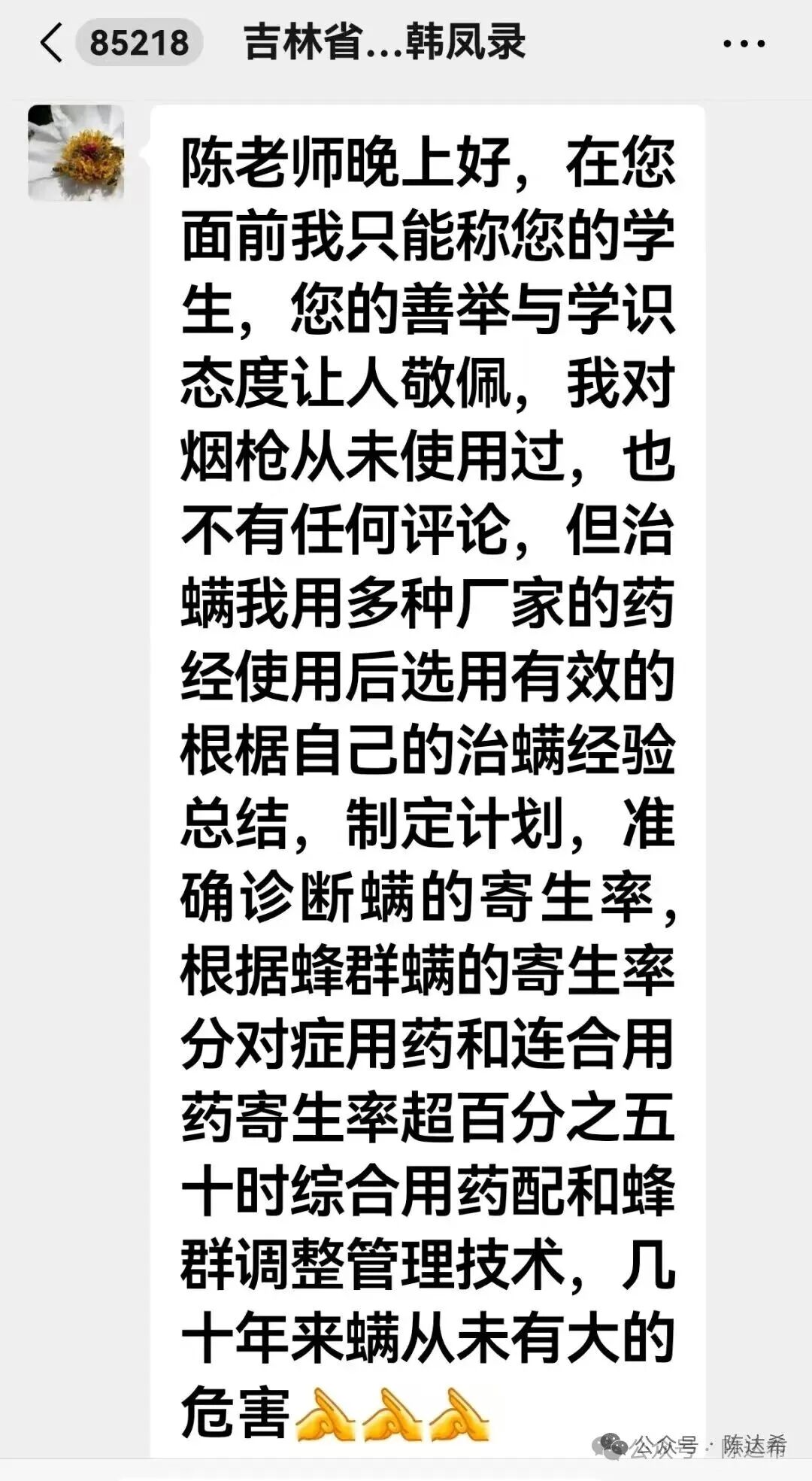
I personally believe that for queen bee colonies, if the mite infestation is heavy, it’s best to reduce the mites to a minimum before the brood break. If the timing is missed, one can choose a mite-free colony. If there are no mite-free colonies in the entire area, it’s impossible to organize a colony to break brood and treat mites, so one should strengthen the mite-free colony before reintroducing the queen to ensure the preservation of the breed. If it’s close to wintering, one can raise young bees in each colony, which means forming a strong colony with sufficient feed to preserve the queen, as preserving the breed is crucial.
Beekeeping Volunteer (Liu Xiaobing, Shanxi Lvliang):
What about winter? Should we confine the queen or not? Should we use queen cages or contraceptive rings?
Beekeeping Volunteer (Han Fenglu, Jilin Province Baishan):
Confining the queen, regardless of the method, cannot compare to not confining her; freedom is better. Confining the queen is just a workaround when conditions cannot be met. As long as the colony is free of mites and infectious sources, and the spring temperature is suitable, it’s not a storage queen colony; advanced methods for storage queen colonies are also feasible. In short, adapt to your own conditions, and achieving the safest and most efficient method is the best.
Beekeeping Volunteer (Liu Xiaobing, Shanxi Lvliang):
@Han Fenglu, Jilin Province Baishan Thank you for sharing!
Beekeeping Volunteer (Han Fenglu, Jilin Province Baishan):
My level is limited, and I hope for criticism and correction!
Beekeeping Volunteer (Liu Xiaobing, Shanxi Lvliang):
@Han Fenglu, Jilin Province Baishan Everyone should communicate more; management methods can be selected from the best.
Beekeeping Volunteer (Shen Caidong, Jinhua):
Civilized speech! For queen bee colonies, after sealing the brood frames, replace them with young larval frames and apply oxalic acid every two days. After three applications, apply once every 3-5 days (to prevent mites brought in from the outside).
Beekeeping Volunteer (Hu Ping, Hebei Pingquan):
It is recommended that everyone not confine the queen during wintering; using contraceptive rings is also not good. In some colonies, the queen is chased and bitten by worker bees all winter, affecting the queen’s lifespan and even causing her to lay some drone eggs. During spring breeding, a small number of brood should be discarded to prevent mite infestation. This is my personal opinion; if there are any inaccuracies, I welcome criticism and correction.
Beekeeping Volunteer (Liu Xiaobing, Shanxi Lvliang):
I previously thought that after the beginning of spring, the queen would start laying eggs, but when I talked to a local master, he said that she starts laying right after the major cold period, so by the time of the usual breeding time, the brood will be quite large. Especially for yellow bee species, they are particularly prolific. Should we let nature take its course?
Beekeeping Volunteer (Du Guangfa, Hebei Yangxian):
For sealed brood frames, use formic acid; for unsealed brood frames, use oxalic acid. Ideally, formic acid can kill the mites inside the sealed brood.
Beekeeping Volunteer (Hu Xuehui Hebei Gaocheng):
@Du Guangfa, Hebei Yangxian How many times did you use oxalic acid to treat mites after the autumn breeding ended?
Beekeeping Volunteer (Du Guangfa, Hebei Yangxian):
Don’t think that sealed brood frames have no connection with the outside; that’s not the case. There are air holes on the top of the sealed frames.
@Hu Xuehui, Hebei Gaocheng I used it 2 to 3 times, but when applying oxalic acid, it must be vented for 8 to 10 minutes for the best effect.
Beekeeping Volunteer (Hu Xuehui Hebei Gaocheng):
Okay.
Beekeeping Volunteer (Du Guangfa, Hebei Yangxian):
Not venting has little effect. The smoke travels in the mouth.
Beekeeping Volunteer (Shanxi Wu Yanjie):
At the entrance of the hive?
Beekeeping Volunteer (Du Guangfa, Hebei Yangxian):
Yes. If you don’t leave it busy, use a towel soaked in water and place it at the entrance of the hive. Don’t let the bees and smoke out for 8 to 9 minutes. The experience I shared is just a test; if it fails, don’t blame me; start with one or two colonies.
Beekeeping Volunteer (Shanxi Wu Yanjie):
Smoke is everywhere. I forgot to close the entrance, and this year one box suffocated.
Beekeeping Volunteer (Du Guangfa, Hebei Yangxian):
When you get older, you tend to forget. After using the towel soaked in water, count the towels; it won’t suffocate them. The white words are endless; I won’t say more.
Beekeeping Volunteer (Li Youxin, Shandong Qingzhou):
The mite problem is scarier than disease. Master Han Fenglu explained it very well. As long as the queen bee colony is free of mites and infectious sources, and has a moderate colony strength, it can safely winter. The colonies will also recover quickly in the spring. If the winter colony strength is too strong, the queen will start laying eggs.
Beekeeping Volunteer (He Bang, Jiangxi Fuzhou):
It doesn’t matter if the production is not large; when the time comes, we can treat it. Just replace it with a new frame. In winter, the weather is cold, so how much can they produce? They will stop producing themselves.
Beekeeping Volunteer (Shanxi Wu Yanjie):
When young bees come out, feeding larvae will shorten their lifespan.
Beekeeping Volunteer (Zhang Jian, Shaanxi Yangxian):
For queen bee colonies, normally leave 2 frames for regular reproduction. When it comes to wintering, do not confine the queen; just widen the frame distance and take 2 large honey frames from other colonies!
Beekeeping Volunteer (Liu Xiaobing, Shanxi Lvliang):
@Zhang Jian, Shaanxi Yangxian… How many bees can there be during wintering?
Beekeeping Volunteer (Zhang Jian, Shaanxi Yangxian):
One frame is enough.
Beekeeping Volunteer (Liu Xiaobing, Shanxi Lvliang):
Can one frame survive winter?
Beekeeping Volunteer (Zhang Jian, Shaanxi Yangxian):
In southern Shaanxi, the climate is similar to that of Sichuan; even half a frame can survive winter and can breed in spring! After all, it’s a queen bee colony, just preserving the breed!
Beekeeping Volunteer (Liu Xiaobing, Shanxi Lvliang):
Then the temperature is high there.
Beekeeping Volunteer (Zhang Jian, Shaanxi Yangxian):
Before autumn breeding, as long as the queen’s quality is good, and the mites are thoroughly treated, with sufficient pollen and honey in the hive, the bee population will increase sharply!
Beekeeping Volunteer (Han Fenglu, Jilin Province Baishan):
@Li Youxin, the region makes a difference; our insights should be effective in this area.
Beekeeping Volunteer (Liu Xiaobing, Shanxi Lvliang):
@Zhang Jian, Shaanxi Yangxian… What a good place!
Beekeeping Volunteer (Zhang Jian, Shaanxi Yangxian):
I keep bees just as a hobby; I don’t earn any money!
Beekeeping Volunteer (Han Fenglu, Jilin Province Baishan):
In spring, strong colonies are definitely better than weak ones; strong colonies have strong measures, and the benefits are definitely higher than weak ones. The high difference in levels should also be understood. It’s not easy to raise strong bees; weak ones are simple.
Beekeeping Volunteer (Zhang Jian, Shaanxi Yangxian):
Now extreme weather is frequent, and drought occurs every year. Beekeepers in our area are switching from keeping honey bees to keeping native bees. In this situation, even those keeping native bees are suffering losses.
Beekeeping Volunteer (Li Youxin, Shandong Qingzhou):
In our Shandong area, moderate colony strength in spring is very good for breeding.
Beekeeping Volunteer (Han Fenglu, Jilin Province Baishan):
That’s the result of poor planning, technology, and capability coordination. For example, in a certain area of Heilongjiang, bees are sold at a ratio of 1:20; with the right technology and management, good benefits can be achieved. It depends on the level of planning and technology!
Personal opinions are always biased and flawed; I welcome criticism and correction.
@Li Youxin, I share the same view; if the colony is strong and management technology is in place, the benefits will be even better.
Beekeeping Volunteer (Jilin Li Jingguo):
In Baiquan, forming an industrial chain for bee division and selling bees is easy, but without scale, it’s also difficult to sell. If you can’t divide enough for a truck, it’s also hard to sell.
Beekeeping Volunteer (Han Fenglu, Jilin Province Baishan):
Beekeeping friends who are close to me are welcome to visit and guide me. My colonies have been thoroughly treated for mites during autumn breeding, and I hope to receive guidance. Success or failure depends on a single thought; learning and doing are always the way forward.
Beekeeping Volunteer (Hu Xuehui Hebei Gaocheng):
@Han Fenglu, Jilin Province Baishan Can you share your techniques for treating mites?
Beekeeping Volunteer (Han Fenglu, Jilin Province Baishan):
@Hu Xuehui, Hebei Gaocheng I have already shared in this group; Teacher Chen has organized and published it. Please take a careful look at the article published by Teacher Chen.
Beekeeping Volunteer (Hu Xuehui Hebei Gaocheng):
@Han Fenglu, Jilin Province Baishan Okay.
Beekeeping Volunteer (He Bang, Jiangxi Fuzhou):
Can’t find it in the group.
Beekeeping Volunteer (Han Fenglu, Jilin Province Baishan):
[Image]1
 Beekeeping Volunteer (Liu Xiaobing, Shanxi Lvliang):
[Image]2
It’s better in the south; in December, they are still collecting royal jelly, then confine the queen for a month to treat the mites, allowing the colony to rest, and then they start breeding bees again. After a month, they can go back to the high boxes.
@Hu Xuehui, Hebei Gaocheng They only confine the queen for a month, and it passes quickly.
Beekeeping Volunteer (Hu Xuehui Hebei Gaocheng):
Here, if the queen is confined for more than twenty days and then released, many queens get surrounded and die. Don’t mention a month; it might be a temperature issue. Here in July, it’s hot and humid, making it easy for queens to be surrounded.
Beekeeping Volunteer (Liu Xiaobing, Shanxi Lvliang):
Different regions have different management practices.
Beekeeping Volunteer (Hu Xuehui Hebei Gaocheng):
Hmm.
Beekeeping Volunteer (Liu Xiaobing, Shanxi Lvliang):
[Image]3
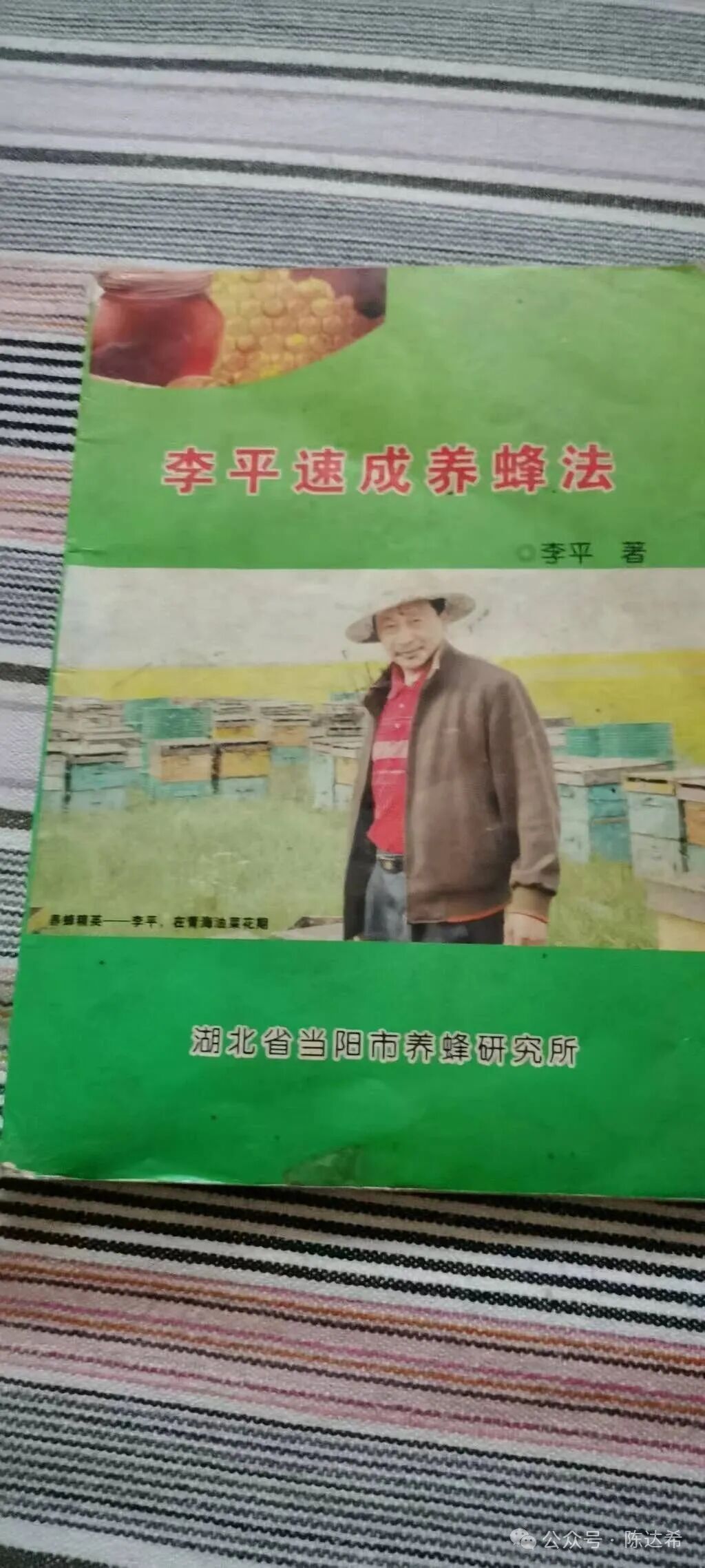
Learning the rapid beekeeping method from Li Ping is good; with sufficient sugar and pollen, and thorough mite treatment, double queens and superior queens do not require frame adjustments.
Alright, I’ve finished learning.

The above information comes from the Beekeeping Volunteers WeChat Service Group 2.
Beekeeping friends who need to join the Beekeeper Mutual Aid Special Fund, pleaselong press the image to recognize the QR code to open:

Compiled and edited by Chen Daxi, Supervisor and Member of the Publicity Committee of the “Song Xinfang Beekeeping Development Foundation”.
Technical Exchange Compilation of Beekeeping Volunteers, please click on the following article titles with links:
(1)Technical Exchange Compilation of Beekeeping Volunteers – How to Handle Bees Surrounding the Queen When Released
(2)Technical Exchange Compilation of Beekeeping Volunteers – What Temperature Should Bees Cluster During Winter?
(3)Technical Exchange Compilation of Beekeeping Volunteers – A Heated Discussion Triggered by the Video of “Bees Shaking in the Snow (Bankrupt)”
(4)Technical Exchange Compilation of Beekeeping Volunteers – Have You Discovered the New Type of Parasite in the Colony? How to Solve It?
(5)Technical Exchange Compilation of Beekeeping Volunteers – Issues to Pay Attention to in the Promotion of Quality Queen Bees: How to Ensure the Queen’s Safe Wintering
(6)Technical Exchange Compilation of Beekeeping Volunteers – The Living Space of Beekeepers is Shrinking Year by Year; Where Do We Go from Here?
(7)Technical Exchange Compilation of Beekeeping Volunteers – Issues to Pay Attention to in the Promotion of Quality Queen Bees: Causes of Bee Species Degeneration, Restoration, and Purification
(8)Technical Exchange Compilation of Beekeeping Volunteers – What Disease Causes Bees to Have Black Feces and Die Daily?
(9)Technical Exchange Compilation of Beekeeping Volunteers – Steadily Transitioning Every Year; Not Seeking Maximum Yield but Stable Income Each Year
(10)Technical Exchange Compilation of Beekeeping Volunteers – The Second Tool for Special Beekeeping Box Installation
(11)Technical Exchange Compilation of Beekeeping Volunteers – Homemade Double-Layer Thick Inner Oxalic Acid Vaporizer
(12)Technical Exchange Compilation of Beekeeping Volunteers – Knowledge Sharing: How Six People Manage 2000 Bee Colonies
(13)Technical Exchange Compilation of Beekeeping Volunteers – Can Diabetics Eat Naturally Mature Honey?
(14)Technical Exchange Compilation of Beekeeping Volunteers – Teacher Song Xinfang’s Important Opinion on the Question of Whether Diabetics Can Eat Naturally Mature Honey
(15)Technical Exchange Compilation of Beekeeping Volunteers – A Call to Eliminate Fake Honey
(16)Technical Exchange Compilation of Beekeeping Volunteers – Supporting the Initiative in Zibo! Together, We Must Protect the Beekeeping Industry!
(17)Technical Exchange Compilation of Beekeeping Volunteers – Teacher Song Xinfang’s Opinion on the Issue of Counterfeiting Bee Products
(18)Technical Exchange Compilation of Beekeeping Volunteers – Discussion on the Crystallization and Non-Crystallization of Honey
(19)Technical Exchange Compilation of Beekeeping Volunteers – The Content of the Pollination Contract of the Beekeeping Association in Qingzhou is Worth Referencing and Related Operational Methods
(20)Technical Exchange Compilation of Beekeeping Volunteers – The Ultimate Killer of Bees: Thiamethoxam, which Beekeepers Must Understand
(21)Technical Exchange Compilation of Beekeeping Volunteers – Should Beekeepers Be Notified When Pesticides are Sprayed by Drones? What Regulations Exist?
Technical Exchange Compilation of Beekeeping Volunteers – Beekeepers Making Their Own Enzymes, No Longer Needing Antibiotics for Mite Treatment
Technical Exchange Compilation of Beekeeping Volunteers – Treating Oriental Honey Bees is Urgent
Technical Exchange Compilation of Beekeeping Volunteers – If Pesticides are Sprayed During the Cherry Blossom Period, What Should We Do if Bees are Poisoned and Die? Do We Have Legal Recourse?
Technical Exchange Compilation of Beekeeping Volunteers – When Pesticides are Sprayed by Drones, the Poisoning is Particularly Severe. How Can We Protect Our Rights? I am from this town and have obtained a beekeeping work permit; do I need to report it?
Technical Exchange Compilation of Beekeeping Volunteers – What is the Easiest Method to Extract Drone Pupae?
Technical Exchange Compilation of Beekeeping Volunteers – Situation Report
Technical Exchange Compilation of Beekeeping Volunteers – Keeping Three Boxes, Double Queen Colony Rearing, External Feeding Equipment, and Techniques for Large-Scale Promotion of Non-Waxing in the Middle Box
Technical Exchange Compilation of Beekeeping Volunteers – Beekeeping Techniques on Beekeeping Vehicles
Technical Exchange Compilation of Beekeeping Volunteers – Analysis of the 2024 Honey Production and Market Situation in Shaanxi
Technical Exchange Compilation of Beekeeping Volunteers – Native and Italian Bees Can Be Raised Together Year-Round! However, Management Must Be Technically Sound!
Technical Exchange Compilation of Beekeeping Volunteers – Northern Regions Entering Wintering Period Should Study Techniques Well
Technical Exchange Compilation of Beekeeping Volunteers – Which Oxalic Acid Vaporizer is Best? What Do Masters Use?
Technical Exchange Compilation of Beekeeping Volunteers – It’s Best for the Queen to Successfully Mate in Early Spring in April
Technical Exchange Compilation of Beekeeping Volunteers – Should We Confine the Queen Now? Or Is It Better Not to Confine Her?
Technical Exchange Compilation of Beekeeping Volunteers – The Vertical Queen Exclusion Board is No Longer Used; Change to Center Frame
Technical Exchange Compilation of Beekeeping Volunteers – Can Virgin Queens That Emerged Last Month Successfully Mate Now? Teacher Song Xinfang Provided Technical Guidance
Technical Exchange Compilation of Beekeeping Volunteers – During the Insulation Period, We Need to Prevent Mice; With Climate Changes, Beekeeping Must Also Adjust Accordingly to Adapt to Weather Changes
Technical Exchange Compilation of Beekeeping Volunteers – If Someone Enters the Apiary and is Stung to Death, Should the Keeper Be Liable for Compensation?
Technical Exchange Compilation of Beekeeping Volunteers – Multi-Channel Sales of Bee Products Can Enhance Economic Benefits
Technical Exchange Compilation of Beekeeping Volunteers – Teacher Song Xinfang’s Report on the Safe Wintering Experiment of Bee Colonies in Tonghai County, Yunnan, on April 30, 1980: Control Breeding Experiment Report
Technical Exchange Compilation of Beekeeping Volunteers – This Spring, Beekeeping is Difficult Due to Climate Trends; I Hope Friends Manage Carefully to Reduce Losses
Technical Exchange Compilation of Beekeeping Volunteers – Spring Breeding Should Be Managed According to Weather Forecasts
Technical Exchange Compilation of Beekeeping Volunteers – Through Scientific Breeding Management Measures, Reduce the Impact of Adverse Weather on Bee Colonies
Technical Exchange Compilation of Beekeeping Volunteers – This Cold Wave Weather Easily Causes American Foulbrood; Here’s a Simple Method to Treat This Disease
Technical Exchange Compilation of Beekeeping Volunteers – A Method for Treating European Foulbrood
Technical Exchange Compilation of Beekeeping Volunteers – How to Add Frames to Italian Bees
Technical Exchange Compilation of Beekeeping Volunteers – Before Spring Breeding, Tighten Up and Loosen Quickly; Insulation is Essential for Rapid Breeding
Technical Exchange Compilation of Beekeeping Volunteers – Can This Method Still Be Used for Breeding Queens? Black Ring QueenTechnical Exchange Compilation of Beekeeping Volunteers – Blindly Producing Low-Concentration Honey is Not Advisable; Only Quality Can Ensure SurvivalTechnical Exchange Compilation of Beekeeping Volunteers – If There is a Laying Queen Below, Can a Virgin Queen Placed in the Super Successfully Mate?
Technical Exchange Compilation of Beekeeping Volunteers – After the Queen Cell is Sealed, If Another Layer of Wax is Added, Can It Still Emerge Normally?
Technical Exchange Compilation of Beekeeping Volunteers – Quality Queen Bee Compilation
Technical Exchange Compilation of Beekeeping Volunteers – How Can Beekeepers Use AI Technology to Answer What the Golden Three Methods of Beekeeping Are?Technical Exchange Compilation of Beekeeping Volunteers – Italian Bees are Prone to European Foulbrood in High Humidity; Native Bees are Also Susceptible to Larval Diseases; Preventive Disinfection and Treatment Must Be Done in AdvanceTechnical Exchange Compilation of Beekeeping Volunteers – Beekeepers Receiving Quality Queens Must First Ensure Queen Preservation, Protection, and Breeding in This Important LinkTechnical Exchange Compilation of Beekeeping Volunteers – The Simplest Method for Introducing QueensTechnical Exchange Compilation of Beekeeping Volunteers – Improving the Acceptance Rate of Queen CupsTechnical Exchange Compilation of Beekeeping Volunteers – The Source of Nectar is Gradually Ending; Entering the Brood Break and Mite Treatment Stage is Key, Related to Next Year’s Spring BreedingTechnical Exchange Compilation of Beekeeping Volunteers – Some of My Hives Were Stolen; Is There Any Way to Handle This?Technical Exchange Compilation of Beekeeping Volunteers – The Number of Queens in a Colony Depends on the Bee Population, Nectar and Pollen Sources, and the Season and PurposeTechnical Exchange Compilation of Beekeeping Volunteers – How to Use Oxalic Acid Vaporizers; Are They Effective? Do They Harm the Brood? Do They Cause Loss of Queens?Technical Exchange Compilation of Beekeeping Volunteers – Have You Ever Used the Song Dan No. 2 Queen? How to Make Jelly? Please Provide Detailed Information.Technical Exchange Compilation of Beekeeping Volunteers – I Have a Hive That Changed Queens Twelve Days Ago; This Morning I Found All Drones; What Should I Do? The Mite Problem is Serious; What Should I Do?