The Tangshan Institute of China Communications University was established on July 13, 1949, at the original site of Tangshan Jiaotong University. Chairman Tang Zhenxu of the Institute’s Administrative Committee wrote this article to mobilize overseas experts and scholars to return to China and participate in the development of the new Jiaotong University (this is a “talent recruitment” article), published in the August 1949 issue of the “Construction Progress Society Newsletter” No. 100, distributed both domestically and internationally, and in the February 1950 issue of the “Chinese Students Association Newsletter” published in Philadelphia, USA. It introduces the brilliant development prospects of the Tangshan alma mater after liberation. Subsequently, within less than a year, more than eighty professors and associate professors were recruited from the United States, the United Kingdom, Hong Kong, Taiwan, and other regions. Later, the three research institutes of Chemical Engineering, Materials, and Electrical Engineering were reorganized into a “Railway Technical Research Institute” directly under the Ministry of Railways, which was announced on March 1, 1950, in Tangshan, with Tang Zhenxu serving as the first director. This institute later moved to Beijing and is now known as the “Railway Scientific Research Institute.” The original document was provided by alumnus Wang Yingming.
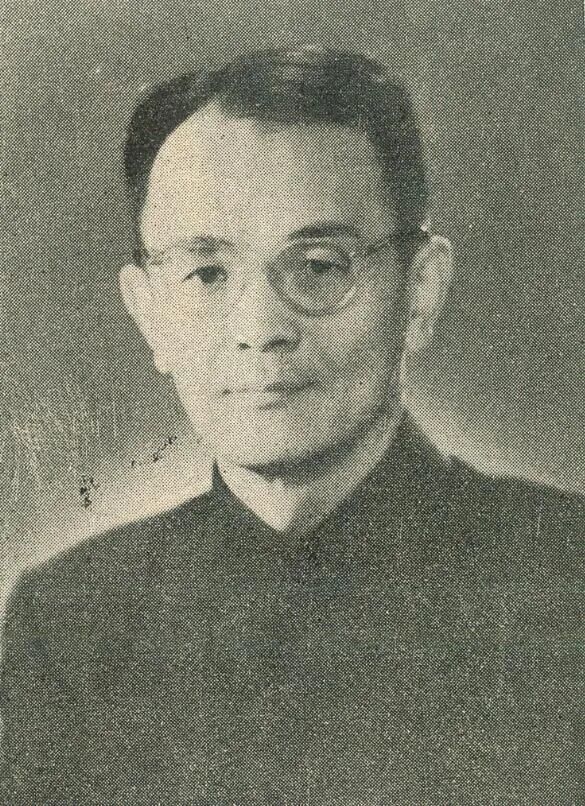
Tang Zhenxu in 1950
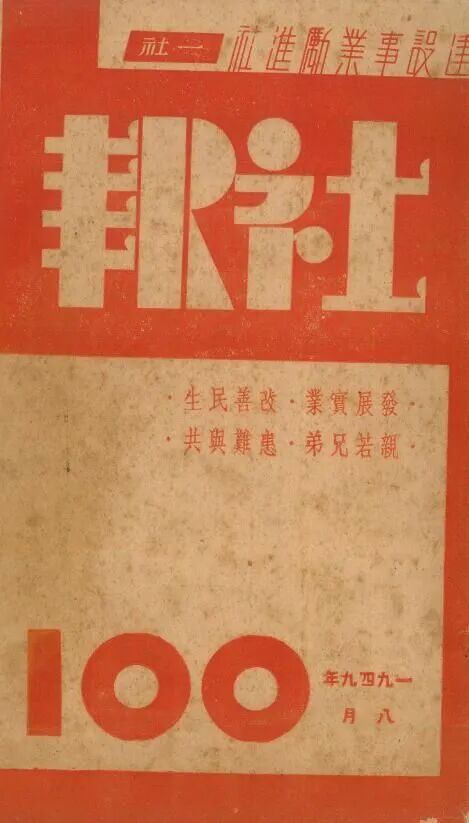
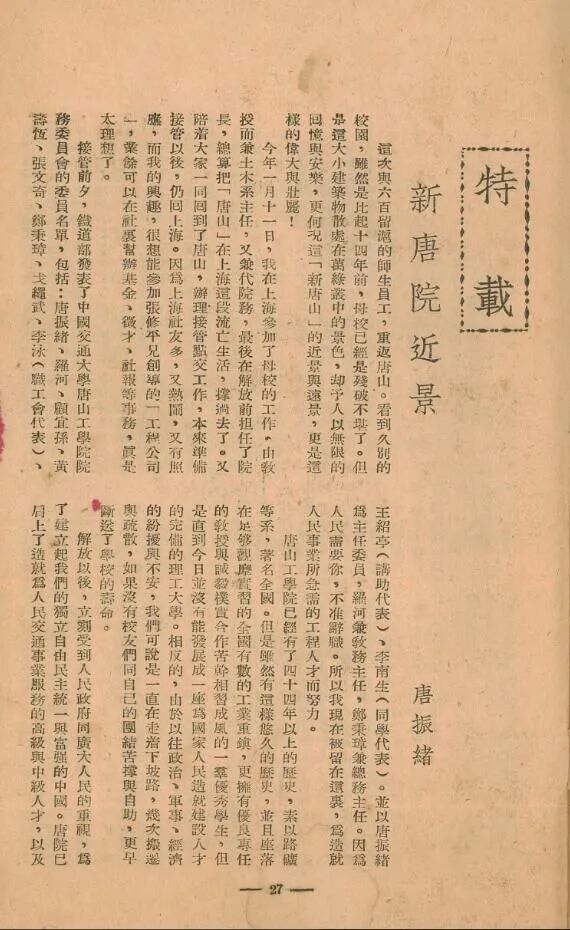 This original article
Returning to Tangshan with six hundred students and staff who stayed in Shanghai, I saw the long-lost campus. Although it has deteriorated compared to fourteen years ago, the sight of the buildings scattered among the lush greenery evokes infinite memories and comfort. Moreover, the near and far views of this “New Tangshan” are truly magnificent and grand!
On January 11 of this year, I participated in the work of my alma mater in Shanghai, serving as a professor and concurrently as the head of the Civil Engineering Department, and later as the acting dean, finally managing to sustain “Tangshan” through this period of exile in Shanghai. I returned to Tangshan with everyone to handle the handover work. Initially, I planned to return to Shanghai after the handover because there are many friends in Shanghai, and it is lively and supportive. However, I am very interested in participating in the “Engineering Company” led by Brother Zhang Xiuping, where I could help with fund management, recruitment, and newsletter affairs in my spare time, which would be ideal.
On the eve of the handover, the Ministry of Railways published the list of members of the Administrative Committee of the Tangshan Institute of China Communications University, including: Tang Zhenxu, Luo He, Gu Yisun, Huang Shouheng, Zhang Wenqi, Zheng Bingzhang, Ge Shengwu, Li Yong (representative of the staff), Wang Shaoting (representative of the lecturers), and Li Nansheng (representative of the students). Tang Zhenxu was appointed as the chairman, Luo He as the academic director, and Zheng Bingzhang as the general affairs director. Because the people need you, resignation is not permitted. Therefore, I am now here, working hard to cultivate the engineering talents urgently needed for the people’s cause.
The Tangshan Institute has a history of over forty-four years and is renowned nationwide for its departments such as Road and Mining. However, despite this long history and its location in one of the few industrial hubs in the country suitable for observation and practice, along with excellent full-time professors and a group of outstanding students who are honest, diligent, and cooperative, it has not yet developed into a comprehensive polytechnic university that cultivates construction talents for the country and the people. On the contrary, due to past political, military, and economic turmoil, we can say that we have been on a downward path, with several relocations and dispersals. Without the solidarity and self-help of alumni, the school’s lifespan would have ended much earlier.
After liberation, it immediately received attention from the people’s government and the general public, aiming to establish an independent, free, democratic, unified, and prosperous China. The Tangshan Institute has taken on the task of cultivating high and medium-level talents for the people’s transportation industry, as well as training technical personnel needed for other industrial construction based on existing foundations, and providing faculty for technical schools and research personnel for technical research institutions, at least becoming the core for cultivating transportation and engineering talents in North China.
The Tangshan Institute is now directly under the Ministry of Railways of the Chinese Revolutionary Military Committee. In addition to the original faculty and students, it has also welcomed a group of partners who are admirable and worthy of learning from in both work and political training, namely the North China Institute of Communications, which was previously established in the old liberated area of Shijiazhuang. We have now merged into one China Communications University Tangshan Institute. The Ministry of Railways has confirmed plans to establish a national China Communications University, with the main campus located in Tangshan. Until the new campus construction in Tangshan is gradually completed, it will temporarily be divided between Tangshan and Beiping. Now, let’s discuss the current situation and recent developments of the Tangshan Institute during this transitional period, with the following administrative system:
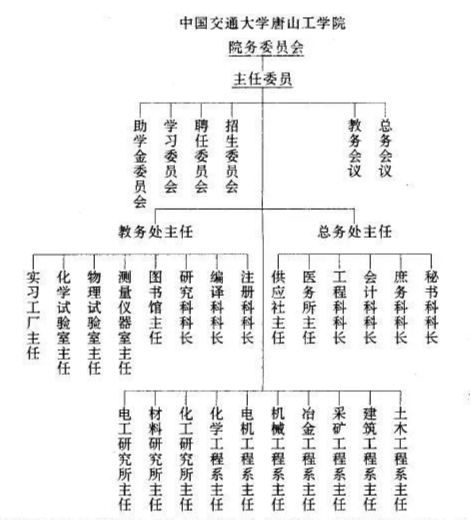
The Ministry of Railways has a policy of “expansion and development” for the Tangshan Institute. Originally, the Tangshan Institute only had four departments: Civil Engineering, Architecture, Mining, and Metallurgy. This autumn, in addition to the original four departments, three new departments of Electrical Engineering, Mechanical Engineering, and Chemical Engineering have been established, making a total of seven departments. Additionally, three research institutes in Chemical Engineering, Electrical Engineering, and Materials have been added. For the new undergraduate students next academic year, except for Civil Engineering, which will maintain two classes, the rest will have one class each, totaling eight classes. Each class will not exceed forty students to facilitate practical training, requiring approximately three hundred and twenty new undergraduate students. Specialized courses are planned for Railway Engineering, Telecommunications Engineering, Signal Engineering, Locomotive Engineering, and Freight Car Engineering, with one class each, totaling five classes, and about two hundred new students to be recruited. The three research institutes will not only solve technical problems for the Ministry of Railways and its affiliated institutions and other industrial agencies but will also conduct ongoing research work and accept graduate students.
In addition to the original excellent faculty, the Tangshan Institute is actively recruiting a large number of authoritative scholars to teach and conduct research at the institute, serving as the cornerstone for the development of the new Jiaotong University. There is no limit on the number of positions; as long as they are high-quality talents, we will strive to seize the opportunity to bring them to Tangshan. In terms of library resources, after the merger of the original Tangshan Institute and the North China Institute of Communications, there are approximately forty-five thousand books. The Ministry of Railways has approved the transfer of two hundred thousand books from the Beiping Railway Ministry Library to the Tangshan Institute, along with the recent purchases from Shanghai, totaling more than two hundred and fifty thousand books. In terms of equipment, the Ministry of Railways has transferred all electrical, chemical, and material equipment from the technical research institutes located in Beiping’s Xizhimen, Dongjiao Minxiang, and Changxindian to the Tangshan Institute. Recently, it has also approved the transfer of all equipment from the former Ministry of Communications Materials Testing Institute, which is currently in transit from Beijing-Shanghai, consisting of seven hundred boxes of equipment, to Tangshan. Comrades Ge Shengwu and Li Yong from the Tangshan Institute have been sent to Shanghai, along with Lecturer Xu Zuyao and Professor Gu Yisun, the director of the Tangshan Institute’s Shanghai office, to expedite this matter, requiring a direct train for special transport.
Under the leadership of the people’s Ministry of Railways, the Tangshan Institute will have several new missions and tasks that will continue to expand and develop. To adapt to this policy and direction, the entire faculty and students of the Tangshan Institute’s Architecture Department will lead the planning of the new campus for the new Jiaotong University. This includes the main campus, the College of Engineering, the College of Management’s offices and classrooms, a library that can accommodate five hundred thousand books and allow one thousand people to read and study simultaneously, faculty housing, new student dormitories, gymnasiums, various engineering buildings, laboratories, research institutes, translation centers, museums, etc., which will begin construction this autumn and will be gradually added. As for the construction of the spiritual aspect, the enhancement of academic research atmosphere, reform of the educational system and curriculum, and attention to learning and political training, these will also be renewed starting next academic year.
We are currently very busy, and the only obstacle to our progress is the insufficient allocation of talents. The recruitment of professors and research talents is still actively ongoing. Although many people have been introduced, very few meet our standards and expectations. We hope that the Construction Progress Society, adhering to its spirit of service, will also help us in scouting talents. As of today, the Tangshan Institute has already appointed over one hundred professors, associate professors, lecturers, and teaching assistants, but our tasks are too many, and we need more experts to participate.
The faculty we have appointed will enjoy the benefits of Ministry of Railways employees upon arriving in Tangshan. In addition to free train tickets for themselves and their families, there are also free transportation certificates for luggage and books. They will have housing here, and the salary treatment is higher than that of general universities. The salary for full professors ranges from one thousand to one thousand five hundred jin of millet (Tsinghua, Peking University, Beiyang, Nankai, etc., the highest is one thousand three hundred jin), and professors running their own dining groups will receive one hundred fifty jin of millet per month (with fish and meat included). In addition, water, electricity, and coal are provided by the school, so there are virtually no other expenses. Associate professors receive at least eight hundred jin, lecturers at least seven hundred jin, and teaching assistants at least four hundred jin.
I once served as the editor-in-chief and newsletter editor for a period. As this commemorative issue marks the one hundredth publication, I would like to introduce the recent developments of the “New Tangshan Institute” where I am currently serving to all society members, and I hope to continue receiving more assistance and guidance.
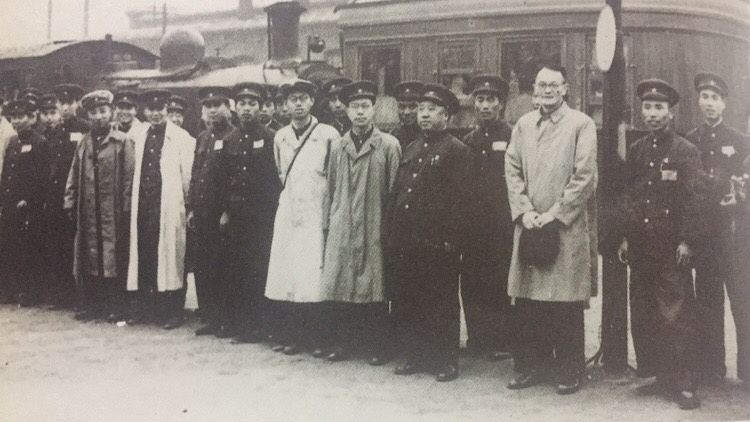
On May 14, 1950, Minister of Railways Teng Daiyuan traveled from Beijing to Tangshan to inspect the China Communications University Tangshan Institute and the Railway Technical Research Institute. Chairman Tang Zhenxu of the Institute’s Administrative Committee and the research institute led representatives to welcome him at the station. This is a group photo taken at the Tangshan station at that time.

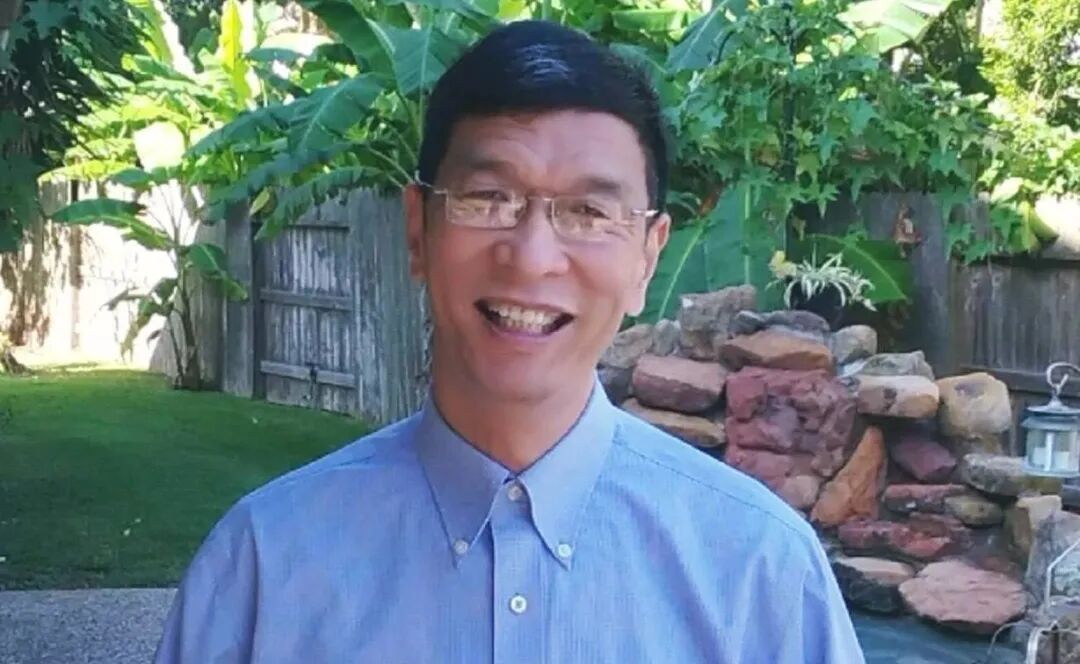
【Excerpt Author’s Profile】 Yang Lijun, obtained a bachelor’s degree in Electronic Engineering from Zhejiang University of Technology (formerly Zhejiang Institute of Technology) in 1984, and a master’s degree in Management from Southwest Jiaotong University in 1987. After graduation, he stayed at the university to teach and conduct research. In 1993, he went to the United States to study sociology at Fordham University in New York City. After obtaining his degree in 1995, he worked in programming on Wall Street and later took on development projects for the governments of Michigan and Texas. He is currently engaged in e-commerce and is also responsible for the work of the alumni association of Southwest Jiaotong University in Houston, Shanghai, Xi’an, Southwest, Beijing, and Hsinchu. He currently resides in the suburbs of Houston, USA.

Follow us
ID:ssyh120
 “Shishi Yanghua” – A public account run by Jiaotong University people, promoting outstanding and influential alumni from all walks of life globally, making it our lifelong mission to honor our alma mater.Please scan the QR code to share this public account and send this article to WeChat groups and Moments.