Focusing on Wireless Communication, Connecting the World
In modern battlefield communication, signal blind spots, inter-service communication failures, and dynamic disconnections are the “three major challenges” that hinder command coordination.
In mountainous ravines, communication is often “unreachable”; inter-service communication is “inefficient”; and during troop maneuvers, communication is “unstable”. These issues can lead to delayed intelligence at best, and at worst, affect the outcome of operations.
Wireless broadband self-organizing networks utilize three core deployment strategies: multi-hop blind spot coverage, protocol integration, and dynamic networking, effectively addressing communication challenges and establishing a battlefield communication network characterized by “comprehensive coverage, inter-domain interoperability, and dynamic stability”.
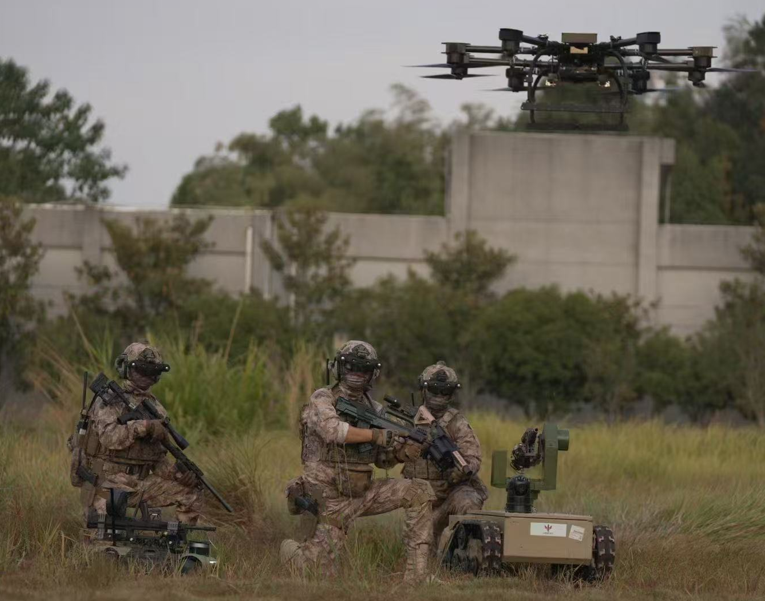
Challenge One / Signal Blind Spots — Multi-hop Relaying + Three-Dimensional Networking for “No Dead Zone Coverage”
Pain Point: Complex terrains such as mountains, forests, and urban buildings obstruct signals, causing the coverage radius of traditional communication terminals to shrink to within 500 meters, leaving dispersed forces often trapped in “communication islands”. In an urban combat training exercise, three squads lost communication for 15 minutes due to building obstructions and had to rely on manual relay of commands; during high-altitude training, frontline observation posts and command centers were unable to relay critical enemy intelligence in a timely manner due to ravine barriers.
Solution Deployment Strategy:
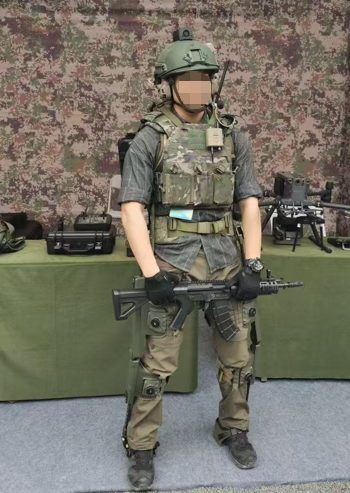
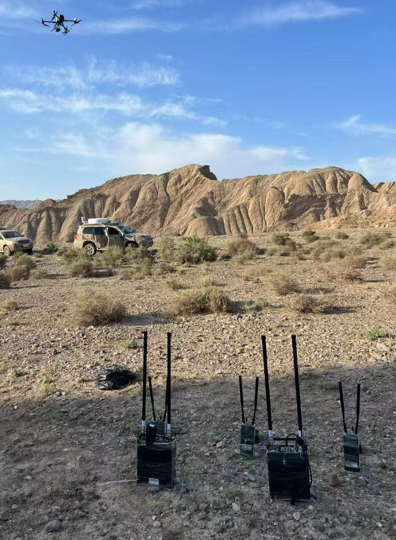
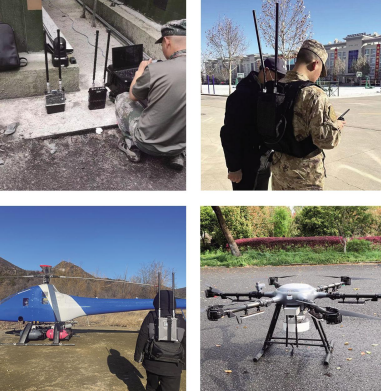
1. Ground Multi-hop Relay: Deploy portable relays (weight ≤ 2kg, battery life ≥ 8 hours) in blind spots, extending signals through a “node – relay – node” multi-hop cascading mode. During mountain operations, deploy one relay every 3km on high ground and ridgelines, constructing a ground communication chain that expands the coverage radius from 500 meters to 3km, increasing the communication availability in blind spots from 10% to 98%;
2. Aerial Relay for Blind Spot Coverage: Drones equipped with relay terminals ascend to heights of 100-200 meters, creating “aerial base stations”. In urban combat, drones patrol along preset routes to provide signal coverage for troops in building gaps; in high-altitude canyon missions, two drones alternately hover to maintain communication over a 20-kilometer narrow area;
3. Terminal Directional Adaptation: Squad terminals use directional antennas aimed at nearby relays or base stations to enhance signal reception strength in complex environments, reducing obstruction interference. A special operations unit improved communication stability by 60% through directional networking during jungle reconnaissance.
Challenge Two: Inter-Service Communication Failures — Protocol Integration + Unified Platform for “Comprehensive Interoperability”
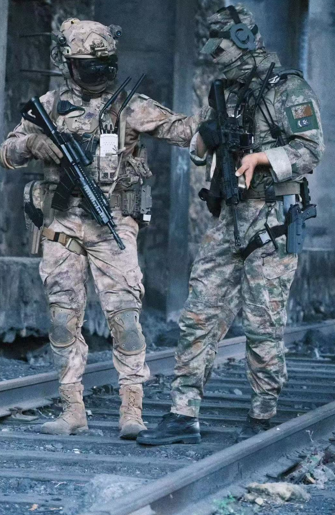
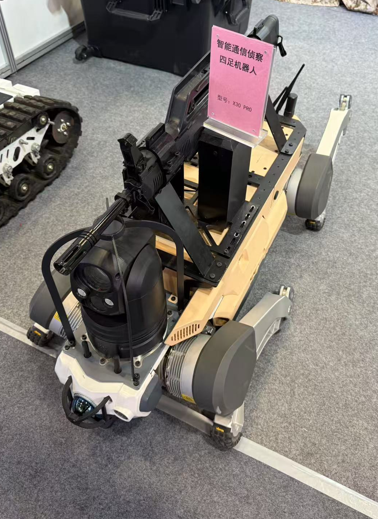
Pain Point: Different communication equipment standards and incompatible protocols among military branches create significant data interface discrepancies, forming “information islands”. Target coordinates transmitted by army reconnaissance drones require manual translation to be integrated into the air force’s data link; artillery fire parameters and infantry assault commands are transmitted slowly, leading to a delay of over 15 minutes in joint fire response. In a joint training exercise, data incompatibility caused deviations in fire strikes.
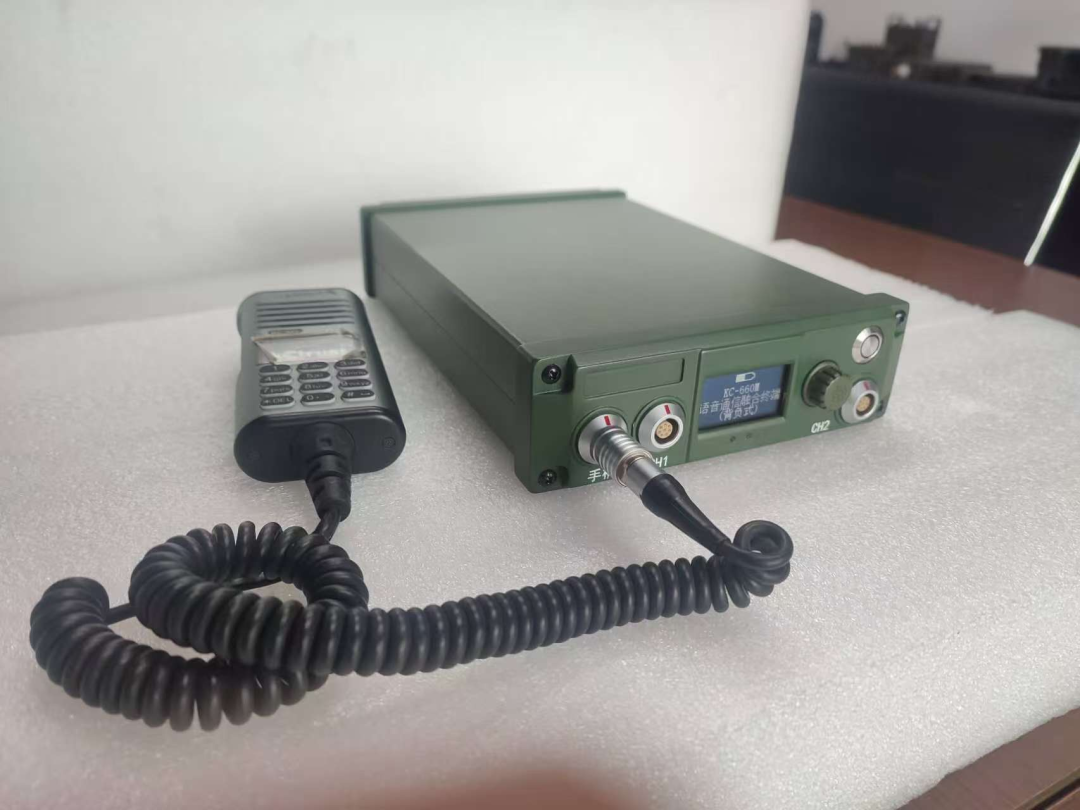
Solution Deployment Strategy:
1. Multi-Protocol Gateway Hub: Deploy a multi-protocol integration gateway (supporting military/civilian communication protocol conversion) with preloaded protocol templates for army, air force, artillery, and other branches. After connecting to the self-organizing network, the gateway automatically completes protocol conversion, achieving “one-click interoperability” for reconnaissance data, air situation information, and fire parameters, reducing data sharing latency from 15 minutes to 30 seconds;
2. Joint Command Platform: Build a unified situational integration platform that real-time aggregates data from all branches, generating a comprehensive battlefield situational map and synchronously pushing it to all terminals. Commanders can directly issue coordinated commands to army, air force, and artillery terminals through the platform without the need for inter-service relay, reducing joint fire response time by 70%;
3. Terminal Module Adaptation: Equip existing branch terminals with self-organizing network adaptation modules, allowing them to connect to a unified network without replacing equipment, thus lowering replacement costs. An air force communication unit achieved seamless integration of aircraft data links with the army’s self-organizing network through module adaptation.
Challenge Three
Dynamic Disconnections — Topology Self-Adjustment + Anti-Interference Encryption for “Stable Transmission Without Loss”
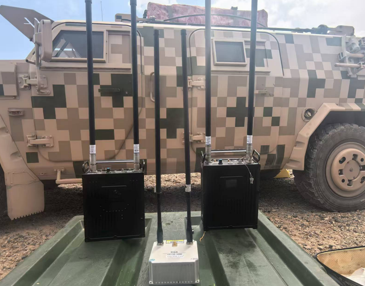
Pain Point: During troop maneuvers, high-speed movement of vehicles and soldiers leads to frequent changes in network topology, causing traditional communication links to be interrupted due to node displacement; in strong electromagnetic suppression environments, data packet loss rates exceed 80%, making it impossible to reliably transmit critical commands and situational information. In a combined arms battalion armored assault training, a delay of 8 minutes in assault commands occurred due to dynamic disconnections.
Solution Deployment Strategy:
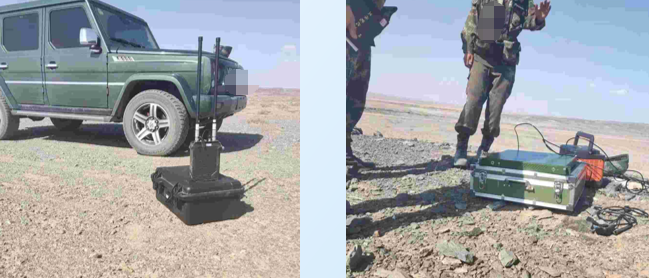
1. Dynamic Topology Self-Adjustment: Self-organizing network terminals scan surrounding nodes in real-time, automatically updating network topology during vehicle and soldier movements, completing link switching within 30 milliseconds. During armored cluster assaults, vehicle-mounted terminals dynamically network through “vehicle-to-vehicle relaying”, maintaining communication links even if some vehicles leave the formation, reducing communication interruption rates from 40% to below 5%;
2. Dual Guarantees for Anti-Interference Transmission: Employ dynamic frequency hopping (≥500 hops per second) to avoid electromagnetic interference, combined with the national secret-level SM4 encryption algorithm to ensure uninterrupted links and data security. In strong electromagnetic suppression training, the communication availability of self-organizing network terminals remained at 95%, with high-definition battlefield video transmission smooth and uninterrupted;
3. Node Redundancy Backup: Core communication nodes (such as command vehicles and drone relays) are deployed with a “one master, two backups” redundancy strategy. If one node is damaged, a backup node automatically takes over, with link recovery time ≤ 1 second, ensuring command communication is “always online”.
Leadership Focus: From “Being Connected” to “Being Well Connected” for Enhanced Effectiveness
“
Leadership emphasizes the actual improvement in operational effectiveness through solving communication challenges, focusing on three major values:
● Coordination Efficiency: Inter-service data interoperability efficiency improved by 80%, joint mission success rate increased by 40%, avoiding “each service acting independently”;
● Maneuver Support: Communication interruption rates during maneuvers reduced to below 5%, troop advancement speed no longer constrained by communication, with rapid response capability increased by 50%;
● Practical Adaptation: A single deployment solution addresses communication challenges across mountainous, urban, and maneuvering scenarios, eliminating the need for separate contingency plans for different challenges, reducing guarantee costs by 35%.
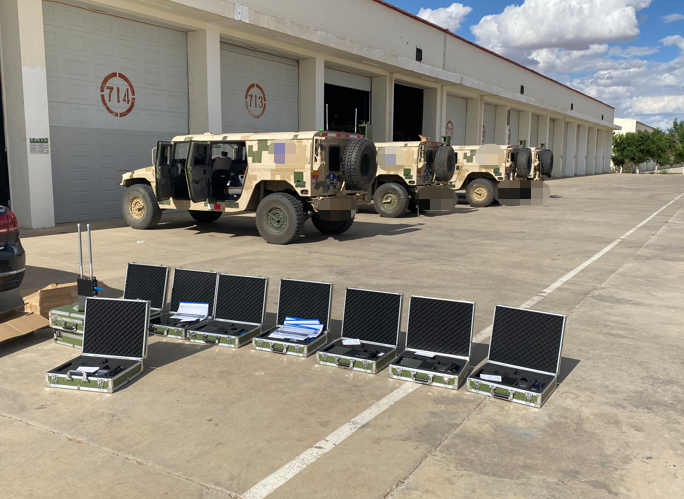
The core demand of battlefield communication is “comprehensive connectivity, inter-domain collaboration, and dynamic stability”. Wireless broadband self-organizing networks thoroughly address the three major challenges of signal blind spots, inter-service communication failures, and dynamic disconnections through multi-hop blind spot coverage, protocol integration, and dynamic networking strategies. When communication is no longer limited by terrain, service branches, or mobility, the command coordination and operational effectiveness of troops will achieve a qualitative leap — this is the core value of self-organizing network deployment in solving communication challenges, and it is also the “combat-ready communication support capability” that leadership values most.

Contact Number丨15735979040
Beijing Hanxun Technology丨Self-Organizing Network Equipment Manufacturer