In conjunction with the current trend of industrial intelligence and the characteristics of large model technology, the following systematically elaborates on the solutions for large models in the field of industrial automation script generation from four dimensions: core technical architecture, typical application scenarios, implementation paths, and countermeasures to challenges.

1. Core Technical Architecture and Toolchain
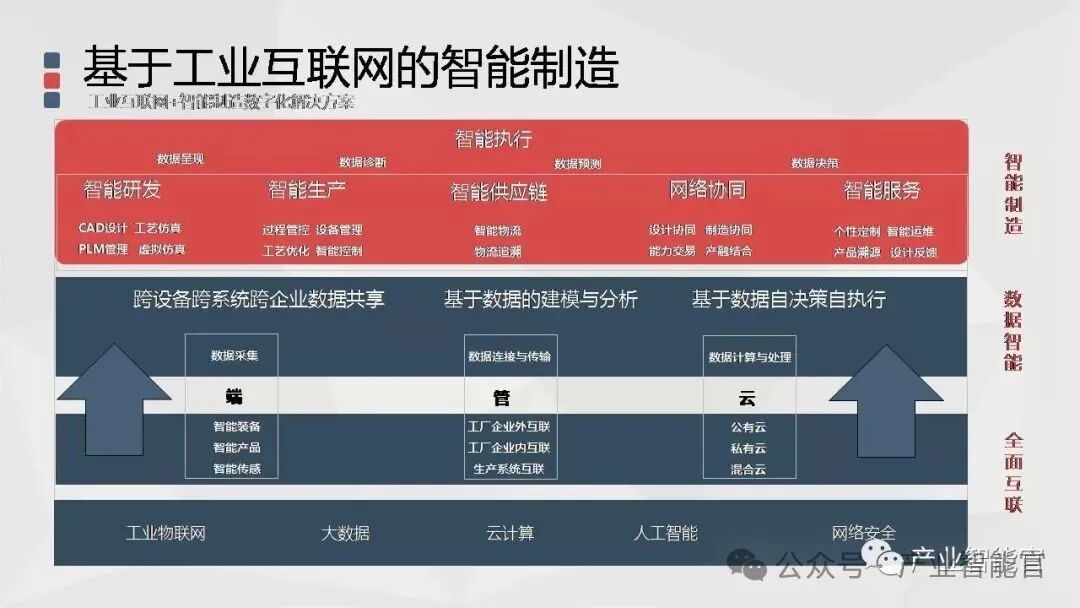
The generation of industrial automation scripts relies on the deep integration of multimodal large models and industrial mechanism models, and its technical architecture can be divided into four layers:
1. Data Perception Layer
Real-time collection of equipment operation data, process parameters, quality inspection results, etc., through Internet of Things (IoT) devices, to build an industrial time-series database. For example, the Central Control TPT large model connects to 100,000 control systems, accumulating 100 million I/O points of industrial data.
2. Model Layer
General Large Model: Based on the Transformer architecture, it learns the mapping relationship between natural language and industrial language. For instance, Kaos COSMO-GPT has hundreds of billions of parameters and supports cross-modal understanding of text, images, and device data.
Industry Model: Through domain data fine-tuning, it enhances understanding of specific processes. For example, the Dalian Chemical Institute Intelligent Chemical Large Model 2.0 has reduced the catalyst characterization time from hours to minutes in the methanol-to-olefins process.
Toolchain: Integrated code generation engines (such as CodeGen) and simulation verification platforms (such as TIA Portal) support automatic script generation and virtual debugging.
3. Application Layer
Provides standardized API interfaces to connect with PLCs, robots, and other execution devices. For example, the diagnostic scripts generated by the Baidu Dual Engine Large Model can directly drive vehicle control systems, improving the first-pass diagnosis rate by 31%.
4. Feedback Optimization Layer
Through online monitoring and reinforcement learning, dynamically adjusts script logic. For instance, the Kaos Injection Molding Process Optimization Model real-time corrects parameters based on equipment vibration data, reducing energy consumption by 35%.
2. Typical Application Scenarios
1. Dynamic Regulation of Chemical Production
Case: The Central Control TPT large model automatically generates optimization scripts in atmospheric tower operations by analyzing parameters such as tower temperature and flow rate, shortening oil product switching adjustment time by 1-1.5 hours, and reducing crude oil processing losses by over 2 million yuan annually.
Advantage: Replaces manual experience, achieving millisecond-level response, with product qualification rate increased to 100%.
2. Intelligent Welding in Automotive Manufacturing
Case: Shandong Zhongke Advanced Technology Company developed an AI automatic design system for welding assembly in conjunction with the DeepSeek large model, predicting welding paths based on weld point distribution, shortening design cycles by 50%, and increasing yield by 3 percentage points.
Innovation: Integrates 3D vision technology to achieve adaptive planning of robot trajectories, reducing assembly errors to within 0.1mm.
3. Equipment Fault Prediction and Maintenance
Case: The Guangyu Mingdao GQCM system monitors weld point parameters in real-time, using AI models to identify cold solder risks, automatically generating maintenance scripts, improving problem handling efficiency by 30%, and achieving a first-pass qualification rate of 99.5% for weld points.
Technical Path: Constructs an equipment health assessment model, dynamically updating maintenance strategies through Bayesian optimization algorithms.
4. Automated Test Script Generation
Case: The Postal Savings Bank’s Jinniu System combines large models and knowledge bases to automatically generate API test scripts based on requirement documents, covering 90% of interface scenarios, with human involvement reduced by 80%.
Toolchain: Integrates recording and playback, message parsing technology, supporting rapid script iteration.
3. Implementation Path and Key Steps
1. Demand Analysis and Data Preparation
Sort out industrial scene requirements, such as process parameter optimization and equipment control logic.
Clean and integrate historical data, constructing an industry knowledge base containing 3 million valid data entries.
2. Model Training and Tuning
Select open-source large models (such as Qwen-2) for pre-training, then fine-tune with enterprise private data.
Enhance the model’s robustness to abnormal data through adversarial training, such as simulating equipment fault scenarios.
3. Script Generation and Simulation Verification
Input natural language commands (e.g., “generate PLC code for robotic arm material handling”), and the model automatically outputs structured scripts.
Verify script logic in a virtual debugging environment to reduce on-site deployment risks.
4. Deployment and Continuous Optimization
Deploy models through edge computing nodes to achieve real-time responses.
Establish user feedback mechanisms, such as the Postal Savings Bank correcting script logic through log analysis, shortening iteration cycles to 2 hours.
4. Challenges and Countermeasures
1. Data Quality and Privacy
Challenge: Industrial data often has high noise levels and labeling costs.
Countermeasure: Use federated learning technology to ensure data does not leave the enterprise boundary; develop automated labeling tools, such as rule-based anomaly detection.
2. Model Generalization Ability
Challenge: Model performance fluctuates significantly under different working conditions.
Countermeasure: Introduce meta-learning technology for rapid adaptation to new scenarios; build cross-condition parameter tuning algorithms, such as the Kaos model supporting zero-shot transfer.
3. Human-Machine Collaboration and Safety
Challenge: Script execution may cause equipment failures.
Countermeasure: Set up manual review processes, such as requiring engineer confirmation before issuing Baidu diagnostic scripts; develop fault rollback mechanisms to ensure system reliability.
5. Future Trends
1. Self-evolving Industrial Intelligence
The model will possess self-learning capabilities, such as automatically optimizing control strategies through reinforcement learning, achieving fully autonomous adaptive production.
2. Cloud-Edge Collaboration Architecture
Large model deployment will expand to cloud and edge, such as Schneider Electric’s cloud-edge collaborative solution, reducing network latency to below 10ms.
3. Low-code/No-code Platforms
Through visual interfaces and natural language interactions, non-technical personnel can quickly generate scripts, such as the Ctrip UI automation tool improving testing efficiency by 80%.
Conclusion
The technology of automated script generation driven by large models has transitioned from proof of concept to large-scale application. Through knowledge injection, model fusion, and real-time feedback, it significantly enhances the efficiency and quality of industrial production. Despite facing multiple challenges in data, algorithms, and safety, as the industry knowledge base matures and the open-source ecosystem develops, it will become an essential tool for industrial intelligence transformation. Enterprises should choose appropriate technical paths based on their own scenarios to accelerate the deep integration of AI and industry.
Illustrated Version:


Advanced Industry + Physical Artificial Intelligence
Industrial Intelligence OfficerAI–CPS
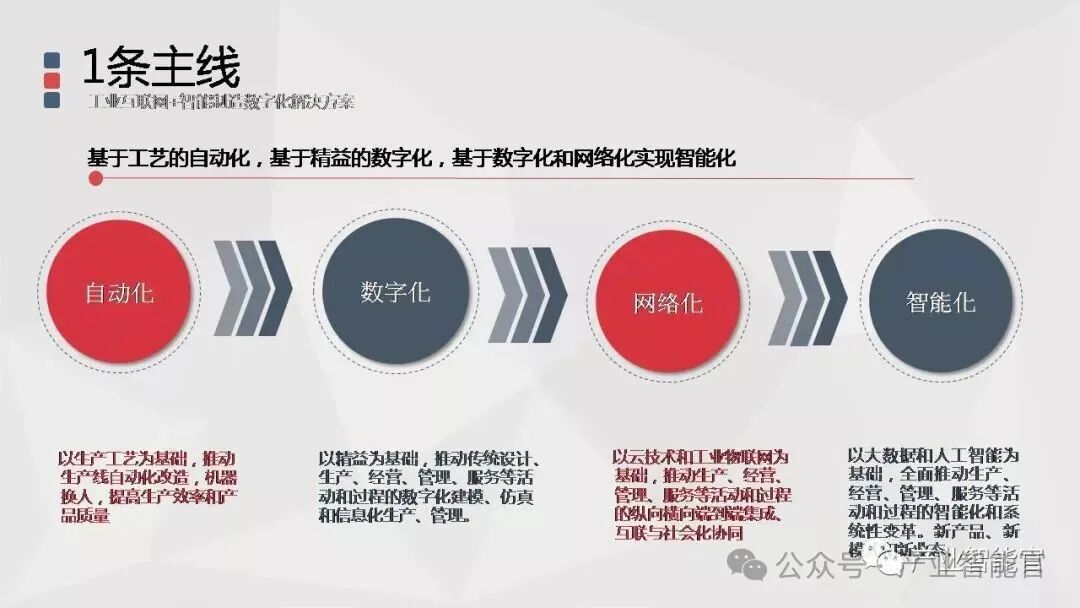
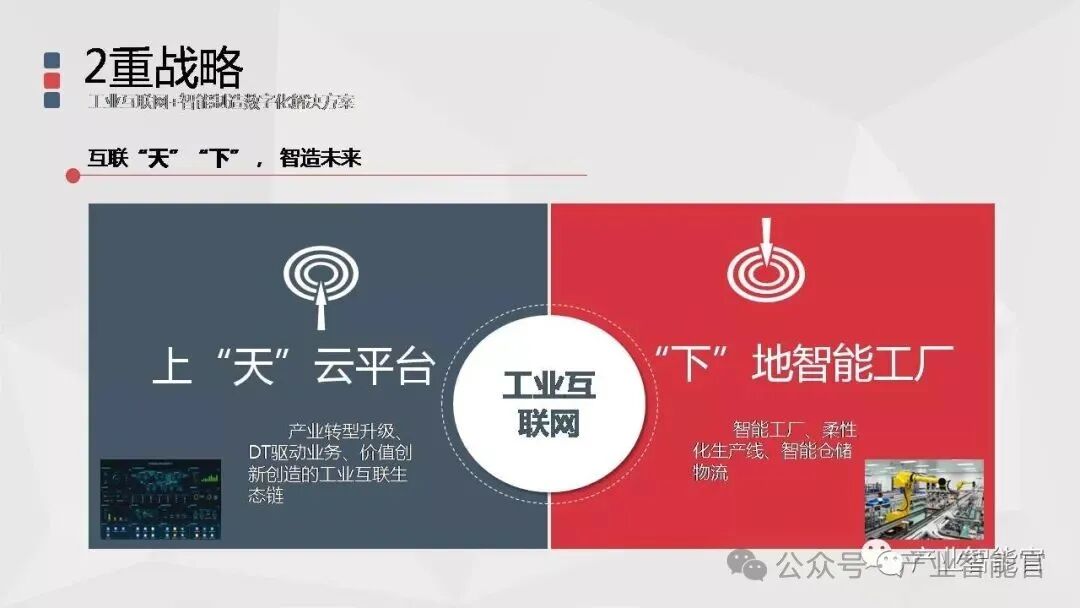
Join the Knowledge Sphere “Industrial Intelligence Research Institute“: Industry OT Technology (Automation + Machines + Crafts + Precision Benefits) and New Generation IT Technology (Cloud Computing + Internet + Blockchain + Big Data + Artificial Intelligence) deeply integrated, building in the scene “State Awareness– Real-time Cognition– Autonomous Decision-making– Accurate Execution– Learning Enhancement“ of Physical Artificial Intelligence (Physical AI); achieving industrial transformation and upgrading, DT driving business, value innovation and creation of industrial interconnected ecosystems.
Physical Artificial Intelligence (Physical AI) serves as the core driving force of the fourth industrial revolution, releasing the enormous potential accumulated through previous technological revolutions and industrial transformations, and creating new powerful engines; restructuring design, production, logistics, services, and other economic activities at all levels, forming intelligent demands across various fields, triggering new technologies, new products, new industries, new business models; leading to significant changes in economic structures, profoundly altering human production and lifestyle and thinking patterns, achieving a comprehensive leap in social productivity.
Today, the technology of industrial intelligence is being applied, and practitioners must understand how to fully integrate Physical Artificial Intelligence (Physical AI) into the entire company, products, and business scenarios, leveraging Physical Artificial Intelligence to achieve digitalization, networking, and intelligent capabilities, realizing a new layout for the industry, a new construction for enterprises, and a renewed vitality.

Copyright Statement: This article is recommended by the Industrial Intelligence Officer (ID: AI-CPS). Unless it is impossible to verify, we will always credit the authors and sources. For copyright issues, please contact us for resolution. Contact for submissions: [email protected].