Click the blue text in the upper left corner to get exclusive practical insights every day.
Source: Industry Research Report. This article is excerpted. The full text is about 8,100 words, recommended for collection and reading.

Where are the investment opportunities in the smart elderly care scenario?

-01-
Prospects of Smart Elderly Care Under “9073” Structure
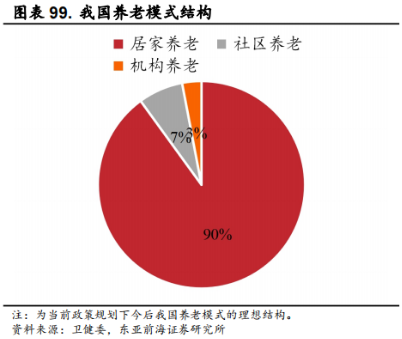
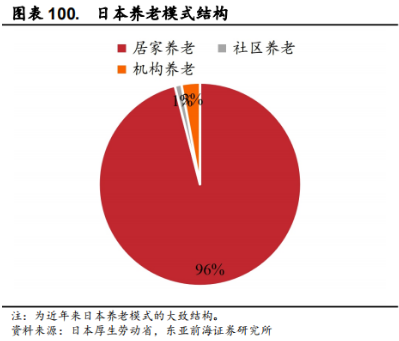
Home-based elderly care will be the main elderly care model in our country in the future.According to the policy direction disclosed at the press conference by the National Health Commission, our country is currently promoting the “9073” structure of elderly care, which means 90% home-based elderly care, 7% community elderly care, and 3% institutional elderly care. Japan, which is also an Asian country with a rapidly aging population, mainly adopts the home-based elderly care model. In home-based elderly care scenarios, elderly individuals are in a familiar environment, which enhances their comfort and sense of belonging, benefiting their physical and mental health, and is also more cost-effective. From a social perspective, home-based elderly care can alleviate social burdens and address issues such as the shortage of beds in elderly care institutions, making it the mainstream elderly care model in our country at this stage.
According to the survey results of the “China Urban Elderly Care Service Demand Report (2021)”, the main reasons elderly individuals choose home-based care are comfort and convenience, heavily influenced by family values. The gradual improvement of elderly care facilities and services is also one of the reasons for the preference for home-based elderly care among the elderly in our country.
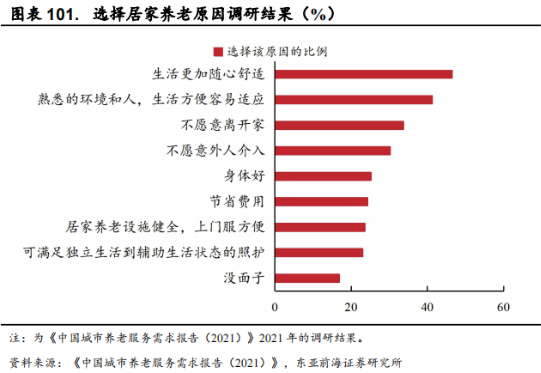
We believe that the smart elderly care industry is likely to see rapid development in home-based environments.The reasons are as follows:
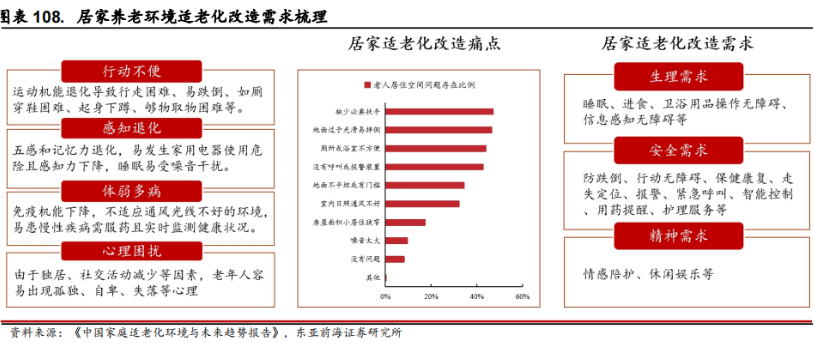
1) The home environment urgently needs to be renovated for elderly suitability, with pain points mainly focusing on safety, convenience, and accessibility. Intelligent renovations through real-time monitoring and data analysis may address these core pain points;
2) Our country has a relatively high elderly dependency ratio, and there is a shortage of elderly care personnel. Smart elderly care home products will serve as important supplements and alternatives to manual care services;
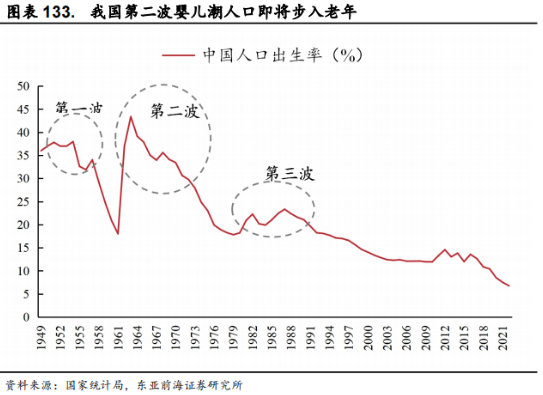
3) The second baby boom population, specifically those born in the 1960s, is beginning to enter old age. This demographic has a better consumption capacity for elderly care products than the current aging population (those born in the 1950s and earlier). Influenced by payment capabilities and consumption values, the newly aged population is expected to show a stronger willingness to pay for smart elderly care products.
4) Elderly consumption is similar to childcare consumption, with some of it funded by children. In 2021, the proportion of children paying for daily necessities for the elderly in our country was 28.8%. The younger generation is currently the main consumer group for smart home products, which is expected to drive market demand for smart elderly care products.
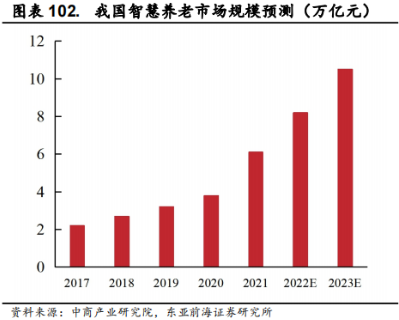
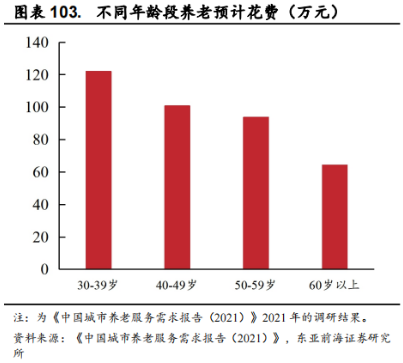
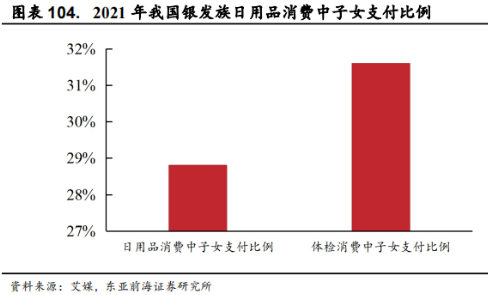
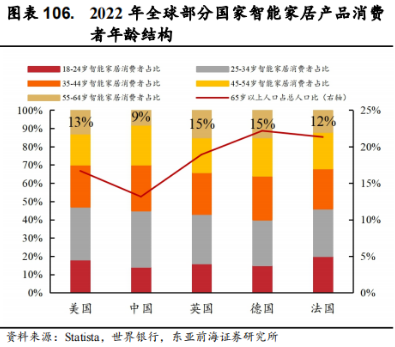
Currently, the contribution of elderly individuals to the smart home products market is only 9%, indicating significant room for improvement.According to Statista data, in 2022, the proportion of consumers aged 55-64 in China’s smart home products market was 9%. Compared to countries with a higher aging population like the United States and Germany, the contribution of elderly individuals to the smart home market in our country is relatively low. In the future, as the aging process accelerates, the proportion of elderly consumers in all smart home markets is expected to increase.
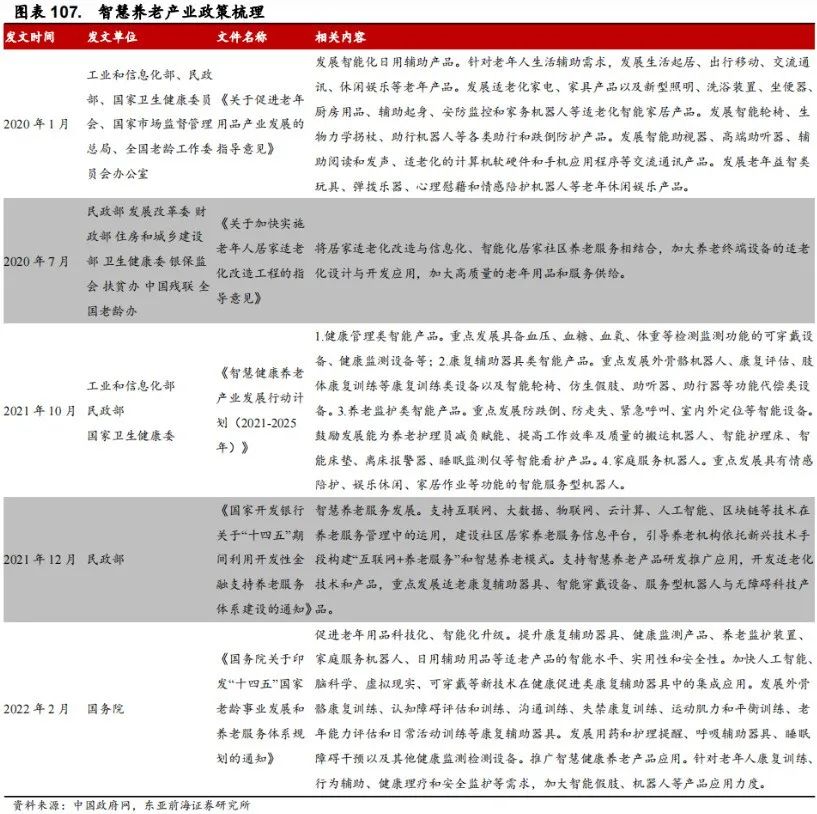
Policies for home renovations suitable for the elderly and smart elderly care industries are being introduced.In recent years, with the acceleration of the aging process, national policies have gradually been introduced to support home renovations suitable for the elderly and the development of smart elderly care products. The “Promotional Directory of Smart Health Elderly Care Products and Services (2022 Edition)” categorizes smart elderly care products and services, further clarifying the direction of industrial development.
-02-
Smart Elderly Care Product Map and Application Prospects
2.1. Smart Elderly Care Product Map
Starting from the living characteristics of the elderly, comprehensively sorting out the renovation needs for elderly-friendly living spaces.We have analyzed the living characteristics of the elderly and the current pain points in renovating their living spaces, identifying specific needs for elderly-friendly renovations. We reference Maslow’s hierarchy of needs to categorize the elderly’s care needs into three levels: physiological, safety, and spiritual, and propose corresponding renovation needs for each level.
Starting from smart home scenarios, reviewing the potential application areas of smart elderly care products.Smart homes have undergone an upgrade process from smart single products to partial smart scenarios to whole-home smart solutions, generally classified by the functional areas of living spaces into major application scenarios such as smart sleep and smart bathrooms. Each scenario includes multiple smart single products, and there are also smart control, smart lighting, and energy management scenarios applicable to the entire living space. We first sort out several major scenarios of smart homes and, based on this, look for potential application areas for elderly-friendly products in different functional areas of living.
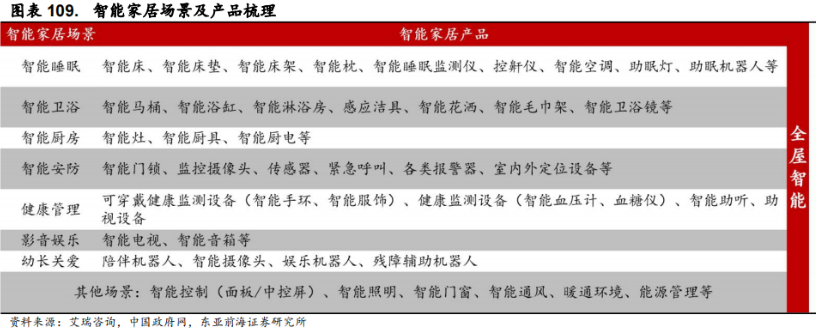
Smart home scenarios + elderly-friendly renovation needs – Smart elderly care product map.Based on the smart home scenarios, we specifically identify the main 12 scenarios of smart elderly care and their corresponding products based on the elderly-friendly renovation needs from different scenarios.
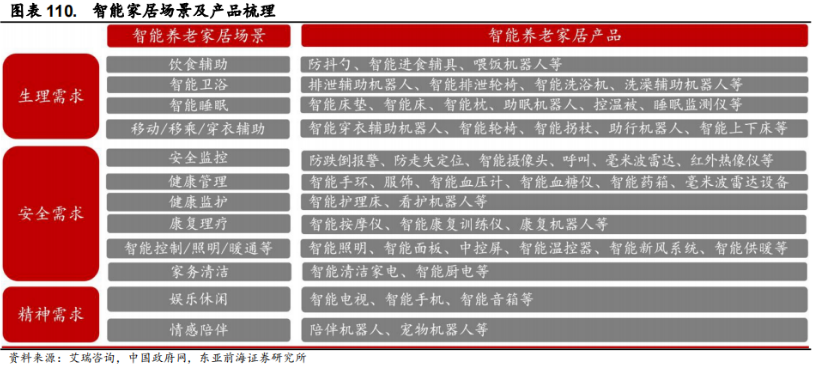
2.2. Analysis of Smart Elderly Care Products Likely to be Implemented First
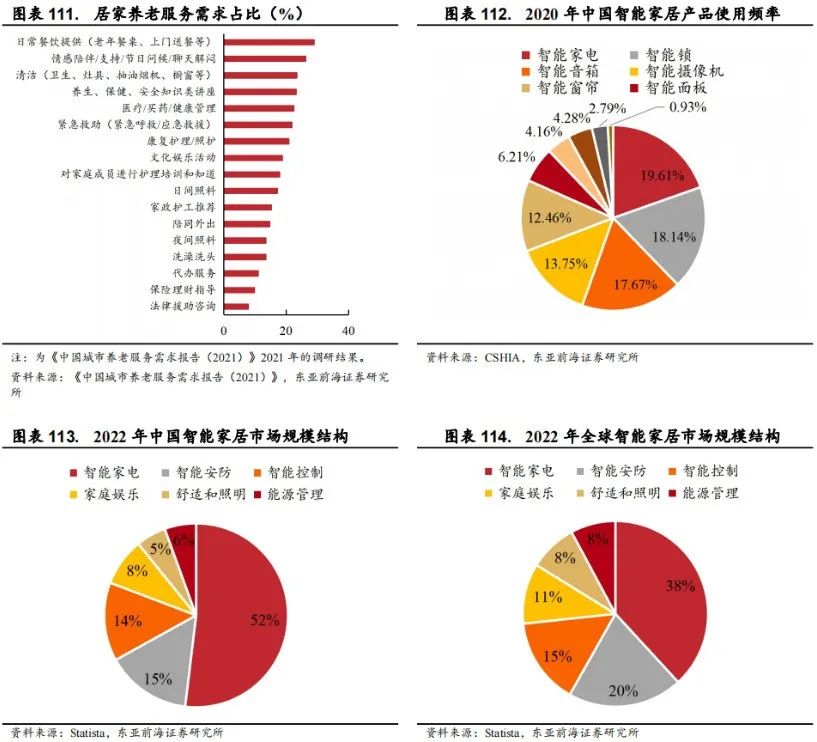
We believe that the factors influencing the implementation order of smart elderly care scenarios and products come from two aspects: one is the demand side, namely the urgency of elderly care needs. According to the “China Urban Elderly Care Service Demand Report” from 2021, over 20% of respondents aged 50 and above chose emotional companionship, cleaning, health safety, health management, emergency calls, and rehabilitation care services. Products with relatively strong market demand are expected to be implemented faster.
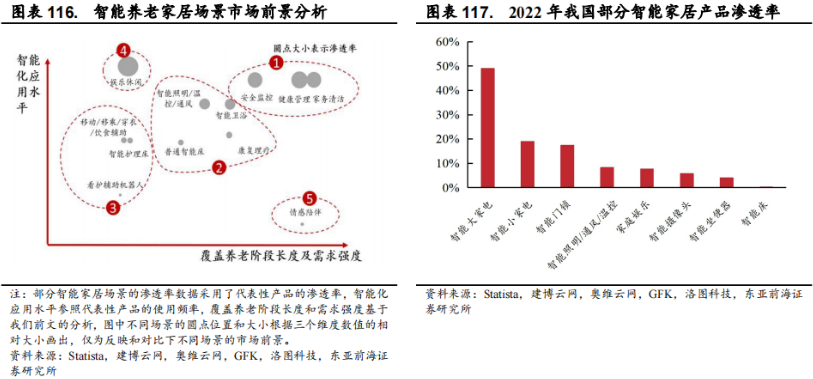
The second is the supply side, which refers to the current level of intelligence of smart home scenarios and products and their market application. Since there is currently no unified standard for assessing the intelligence level of smart home products in the industry, we tentatively estimate the technological maturity and consumer experience of different scenarios based on the current structure of smart home market scale and usage rates.According to Statista forecasts, in 2022, 52% of the revenue in China’s smart home market came from smart appliances, followed by smart security and smart control. However, compared to global structures, there is still room for improvement in the proportions of smart security, home entertainment, and smart lighting. From the perspective of usage rates, smart appliances, smart locks, and smart speakers have relatively high usage rates. We can infer that products with higher usage rates currently have higher technological maturity and conversion application rates.
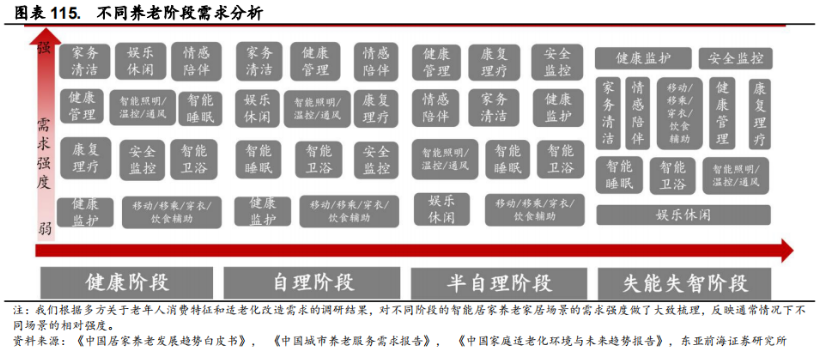
On the demand side, we have sorted out the intensity of smart scenario needs at different stages of elderly care to identify which scenarios have strong elderly-friendly renovation needs across different age groups.It can be seen that health management, household cleaning, and emotional companionship have strong demand across all stages of elderly care. In addition, safety monitoring and rehabilitation therapy have strong demand in the health self-care stage, while health monitoring and physiological needs are stronger in the later stages of elderly care. Smart bathrooms, smart control, and smart sleep have strong and relatively stable demand across all stages of elderly care.
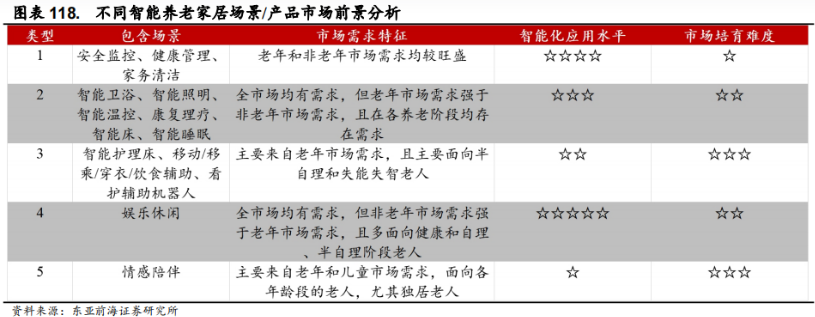
We have drawn a market prospect analysis framework for smart elderly care scenarios based on the intensity of elderly needs, intelligence and application levels, and penetration rates, categorizing them into five types:
1) Strong demand and strong application scenarios, including safety monitoring, health management, and household cleaning.We believe this will be the fastest-implementing scenario in the future. The characteristics include strong demand across the entire market and relatively high penetration rates. We believe scenario one may be the fastest-implementing smart elderly care scenario in the future due to: firstly, the maturity of the industrial chain and technology, with high conversion application rates, requiring only elderly-friendly renovations in function and design for implementation; secondly, the current relatively high penetration rates and rapid market cultivation progress, with strong demand across the entire market that can penetrate from the young market to the elderly market through child payments.
2) Relatively strong demand and application scenarios, including smart bathrooms, smart lighting, smart temperature control, rehabilitation therapy, etc.We believe this is the scenario with the largest long-term penetration space. The characteristics are that the elderly population has relatively strong demand, but the penetration rate is not high. For example, difficulties in bathing and toileting, high requirements for indoor environments, sleep disorders, and chronic diseases increase the demand for health monitoring and rehabilitation care. We believe scenario two is likely to be the scenario with the largest potential for increased penetration driven by future elderly care demand. The reasons are: firstly, the elderly market is the core potential market for this scenario, but the market cultivation efforts are insufficient, especially in the construction of B-end real estate home decoration channels, and there are incentives for market expansion on the supply side; secondly, there is considerable room for improvement in product intelligence levels, user experience, and cost-effectiveness.
3) Some stages have strong demand but low application scenarios, including smart nursing beds, care robots, mobile assistive robots, etc.We are optimistic about the B-end market space. The characteristics are that it mainly targets semi-dependent and disabled elderly individuals, with low penetration in the C-end market. The low penetration of health monitoring products in the C-end market is partly because smart devices and robots are currently more of an aid to elderly care personnel rather than replacements. Additionally, the high prices contribute to this low penetration. Therefore, we believe that in the short term, more attention should be paid to the B-end market demand for products in this scenario, such as elderly care institutions and rehabilitation institutions. Furthermore, referencing Japan’s relatively high penetration of interactive care robots, care robots are expected to be the first scene to land in the field of robotics.
4) Strong demand and low application scenarios, mainly referring to emotional companionship scenarios. We believe that the cycle from technological implementation to product application in this scenario still has a long way to go.The characteristics are that the level of intelligent application is relatively low, but demand is strong. The smart scenarios under emotional companionship mainly focus on companion robots, which are highly humanoid robots requiring emotional understanding and response, intelligent interaction, and self-learning capabilities. Therefore, the technology is currently not mature, and involves safety and ethical issues, resulting in low conversion application rates. We believe that although the emotional companionship scenario has strong market demand, the cycle from technology to product application still has a long way to go.
2.3. Analysis of the Smart Elderly Care Industry Chain
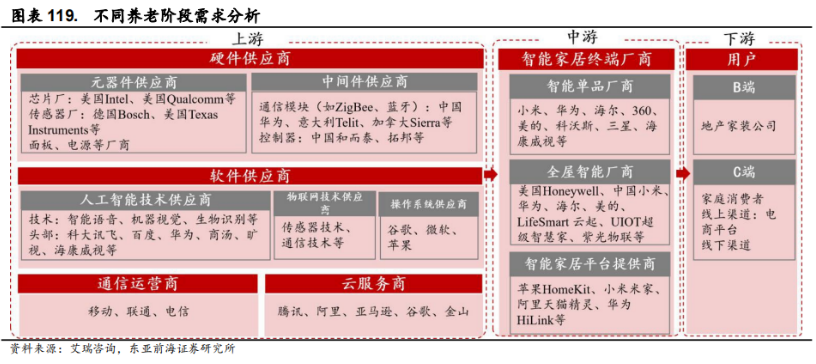
The elderly population is one of the sub-markets of smart homes, thus smart elderly care homes align with the entire smart home industry chain. The upstream consists of hardware and software manufacturers, communication services, and cloud service providers. The midstream consists of manufacturers of terminal smart products, and as the industry matures, also includes whole-home smart and central control system manufacturers. The downstream consists of B+C end customers, with B-end customers being real estate home decoration companies.
-03-
Investment Opportunities in Smart Elderly Care Segmentation
3.1. Smart Security: Large Space, Low Penetration Application Scenarios
Based on the security needs of the elderly, combined with the existing smart security products on the market, we have sorted out the types of products that elderly individuals need most in smart security scenarios, as well as additional functions and improvements needed for existing products, including smart cameras, body sensors, emergency call devices, smart locks, and alarms. From the perspective of the overall smart home market’s popularity, the application levels of smart cameras and smart locks are relatively high, while the penetration rates of sensors and emergency call devices are relatively low.
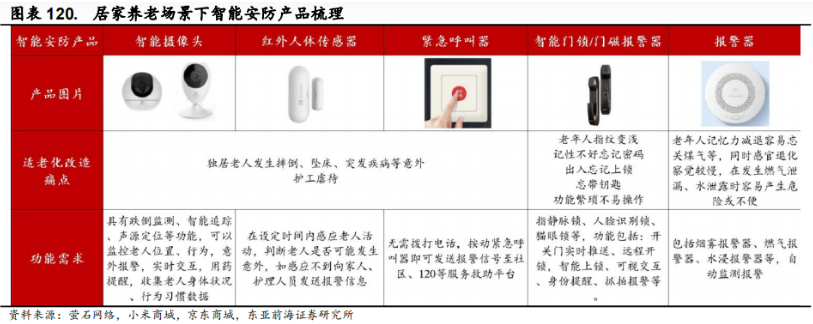
Security monitoring is a core demand in the elderly care market, and the increase in penetration rates is expected to accelerate.Smart security is currently one of the scenarios with a high level of intelligent application in all smart homes. Moreover, from the perspective of elderly demand, smart security needs cover all stages of elderly care, and according to surveys of their children, security monitoring is one of the most urgent needs. Therefore, theoretically, the market space for smart elderly security is quite large.
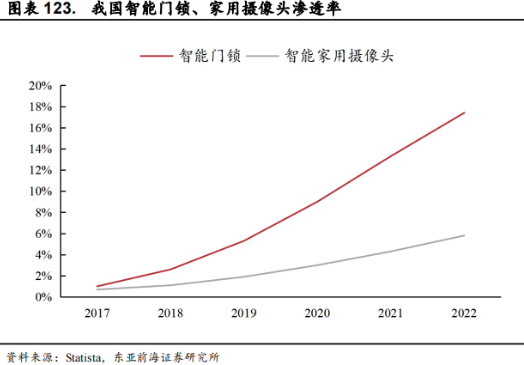
However, in terms of penetration rates, in 2022, the penetration rates of the relatively high application levels of smart locks and smart cameras in our country were 4.1% and 17.4%, respectively, both lower than the penetration rate of smart home appliances with the same level of intelligence (49%). The penetration rate of smart locks has been increasing rapidly in recent years. According to IDC estimates, the shipment volume of smart home cameras is expected to reach 21.55 million units in 2023, with a year-on-year growth of 7.5%. The shipment volume growth rate will maintain over 10% from 2024 to 2027. As the demand for elderly care gradually releases, the penetration rates of major smart security products are expected to accelerate.
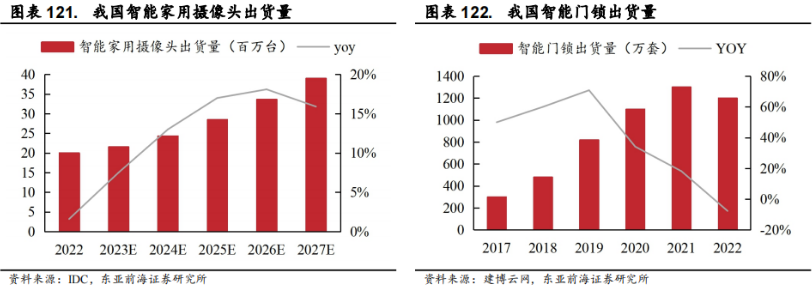
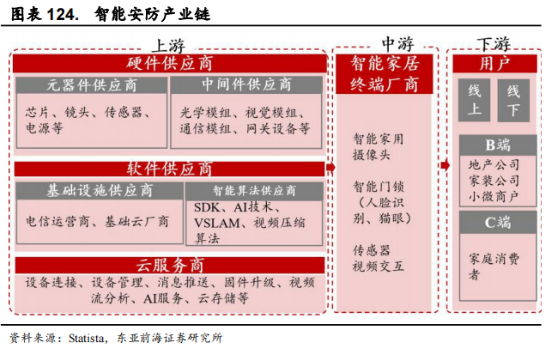
Pay attention to the upstream IoT platform access of terminal manufacturers in the smart security field and their downstream B-end channel construction capabilities.The upstream of the smart security industry includes components such as sensors and lenses, as well as middleware such as communication, gateways, and optical modules. The software aspect includes IoT technology, video compression technology, etc. The midstream comprises manufacturers of smart security devices, while the downstream B-end customers include real estate and home decoration companies.
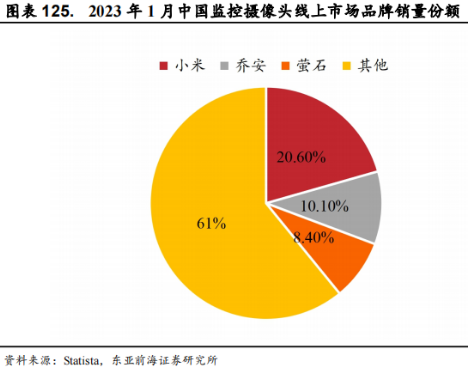
The market concentration of smart cameras is relatively high, with Xiaomi, Joann, and Ezviz leading the market share.In 2022, the sales volume of consumer-grade surveillance cameras in China reached 48.2 million units, with online market sales of 18.7 million units, of which home cameras accounted for nearly 80%. According to the latest data from January 2023, the CR4 of the online market for surveillance cameras in China is 46.4%, with Xiaomi holding a market share of 20.6%, maintaining a leading position, followed by Joann and Ezviz in second and third places, with other leading brands including TP-Link, 360, and Haizhu.
The penetration rates of facial recognition and vein-locking smart locks are expected to increase rapidly due to the growth in elderly care demand.In terms of the structure of smart lock terminal categories, because elderly individuals have shallow fingerprints that are difficult to recognize, facial recognition or vein-locking locks are considered more suitable for the elderly. In 2022, the sales proportion of smart locks equipped with either of these two unlocking functions was 29%, indicating significant penetration potential. Additionally, the shipment volumes of these two types of locks are on a high growth trajectory, with year-on-year growth exceeding 100% in 2022. As the demand for smart elderly security increases, the penetration rates of facial recognition and vein-locking locks are expected to accelerate.
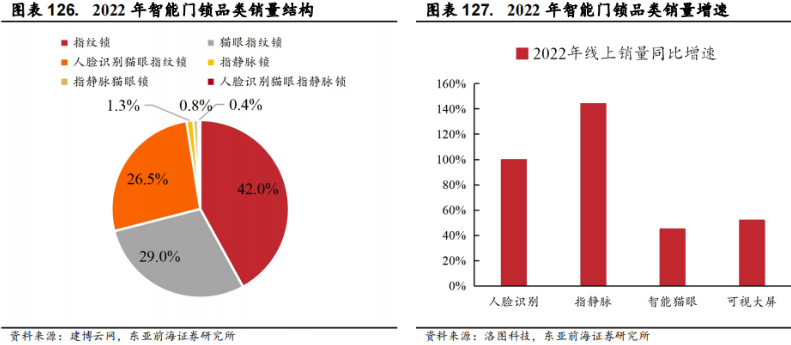
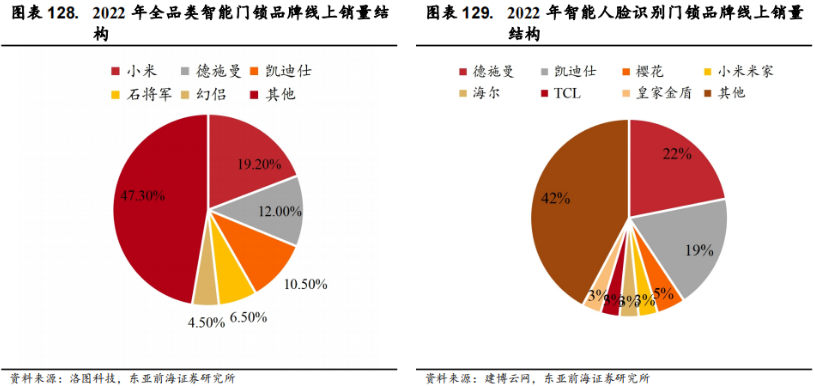
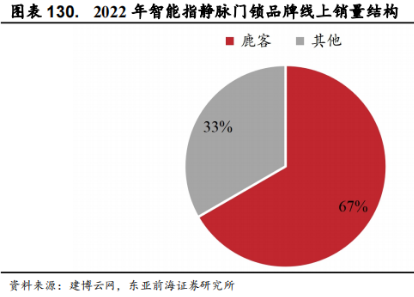
Xiaomi, Dessmann, and Kaadas lead the market share, with high concentration in the facial recognition and vein-locking smart lock segments.In terms of the brand landscape for smart lock terminals, in 2022, the CR4 of the entire smart lock online market reached 48.2%, with Xiaomi ranking first. In terms of the structure of the segmented market, the sales CR2 of facial recognition locks reached 41%, with Dessmann and Kaadas leading. The vein-locking lock market is dominated by LuKe, accounting for 67% of sales. The leading brands in the segmented market are expected to consolidate their market advantages under the influence of demand and technological upgrades.
3.2. Smart Appliances: A Relatively Mature Track Covering Multiple Elderly Care Scenarios
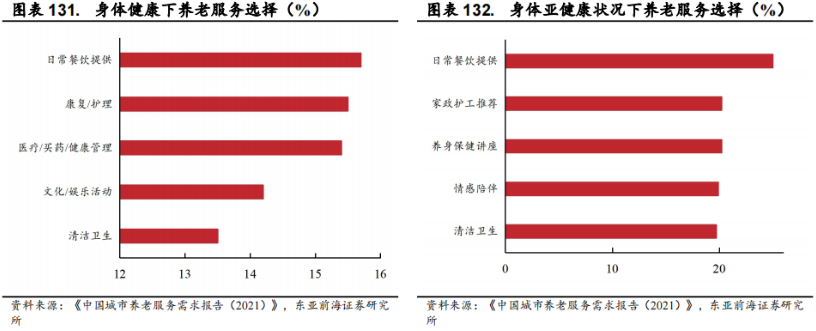
Smart appliances are core products in smart home elderly care scenarios such as household cleaning, health recovery, and entertainment.According to the “China Urban Elderly Care Service Demand Report (2021)”, elderly individuals in good health and sub-healthy states have strong demands for housekeeping services, health management, and cultural entertainment. The spiritual needs of elderly individuals in the health and self-care stages are relatively strong. As physical function declines and chronic diseases occur, elderly individuals in this stage will pay more attention to health care and rehabilitation. Smart appliances such as floor cleaning robots, washing machines, smart dishwashers, smart TVs, smart speakers, smart massage devices, and smart blood pressure monitors are the main products in the aforementioned smart elderly care scenarios.
Policy guidance, changes in population structure, and medical levels are expected to enhance the demand for smart appliances in related scenarios.In the short term, the second baby boom population is about to enter the elderly stage, leading to an increase in the elderly population in good health. In the long term, with the improvement of medical levels and adjustments in elderly care policies, the time span for health and self-care stages is expected to be extended. Moreover, entertainment and health management are the core needs of elderly individuals in this stage. Therefore, the aging process is expected to drive the demand for related smart appliances in elderly care scenarios.
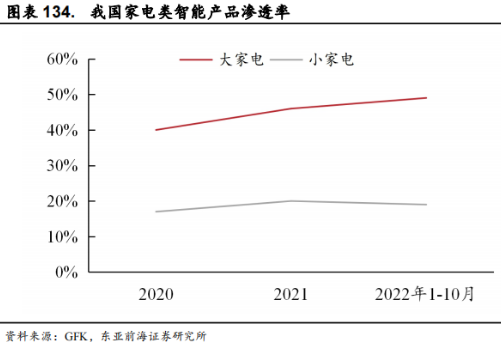
Smart small appliances have considerable penetration potential, and demand for elderly care is expected to drive industry penetration rates.From the perspective of the smart appliances involved in smart elderly care products, apart from the smart entertainment black appliances, the focus is mainly on small appliances for cleaning, kitchen and bathroom, health care, and entertainment scenarios. Currently, the penetration rate of smart small appliances in our country is still relatively low. According to GFK data, the penetration rate of smart small appliances in China from January to October 2022 was 19%, significantly lower than that of large appliances. The increasing demand from the elderly market is expected to accelerate the penetration of certain small appliances.
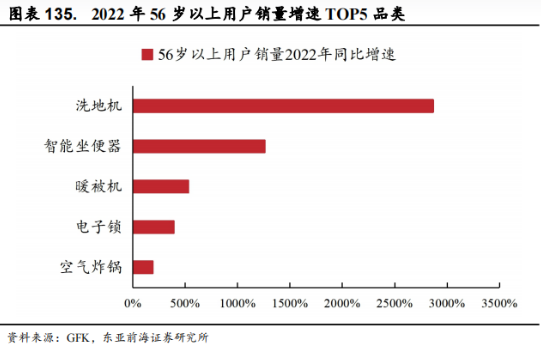
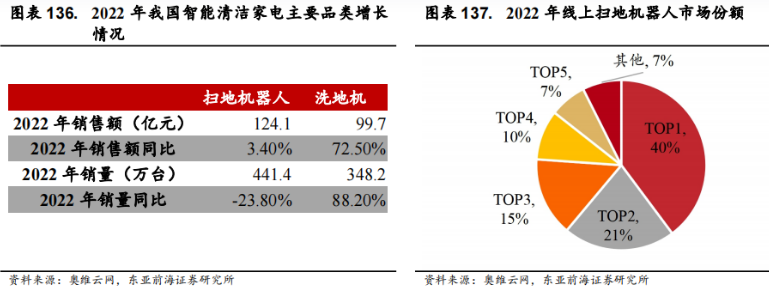
The demand for household cleaning among elderly individuals is strong, and the demand for smart cleaning appliances among elderly consumers is growing rapidly.Household cleaning is a scenario where elderly individuals across all stages have relatively strong demand. From the perspective of the segmented market for smart cleaning appliances, the market concentration of floor cleaning robots is already high, with leading players including Ecovacs and Roborock. In 2022, the industry CR3 reached 76%. The market for washing machines is growing rapidly, with sales increasing by 72.5% year-on-year in 2022, far exceeding that of floor cleaning robots, and is very popular among elderly consumers. The demand from the elderly is expected to become an important market supporting the sales growth of washing machines. Additionally, as the promotion of washing machines is not as advanced as that of floor cleaning robots, the market landscape remains undetermined, and the industry is expected to see the emergence of leading players in the future.
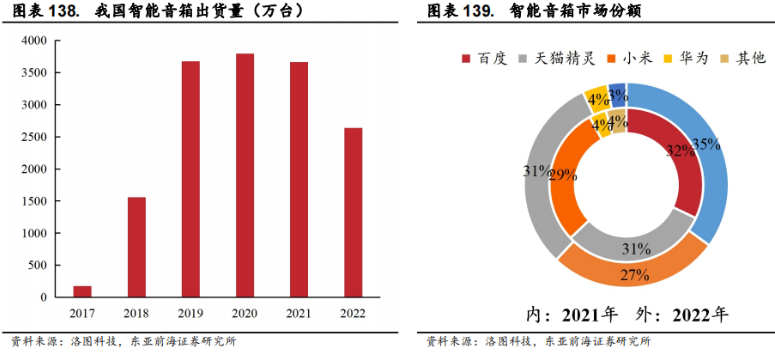
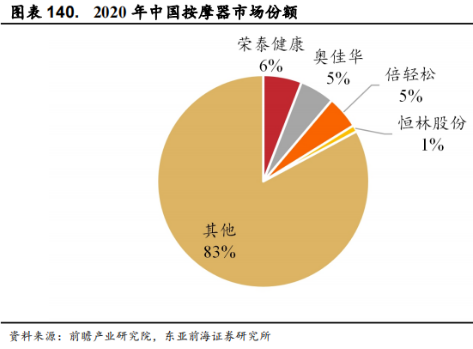
Segments such as smart speakers and smart massagers are expected to expand their customer base.Smart speakers are a track that all internet giants have laid out in the smart home sector. The entry of these giants has led to rapid development in the smart speaker industry, establishing a clear market structure. In 2022, the combined market share of the top three companies, including Baidu, Tmall Genie, and Xiaomi, reached 93%, indicating high market concentration. However, in recent years, the growth of smart speaker sales has slowed. According to predictions from Lottu Technology, the sales volume of smart speakers in China is expected to reach 27.15 million units in 2023, a slight increase of 3% year-on-year. This slowdown is related to the current products’ functional design and user experience. In the future, if smart speaker products can integrate ChatGPT technology, it is expected to significantly upgrade product functionality and user experience, stimulating consumer interest and replacement purchasing needs. Among elderly-friendly products, smart speakers are expected to provide functions such as medication reminders, video interaction, and emergency calls, meeting the strong demands for emotional companionship, health monitoring, and safety monitoring among elderly individuals. With the upgrade of AI technology, the elderly care market is expected to drive the demand for elderly-friendly smart speakers. Smart massagers, as a type of health care small appliance, are also among the products with high demand from elderly individuals, with leading brands including Rongtai Health, Aojiahua, and Beiqing Song.
3.3. Smart Wearables: Covering Strong Demand Scenarios for Safety Monitoring and Health Management
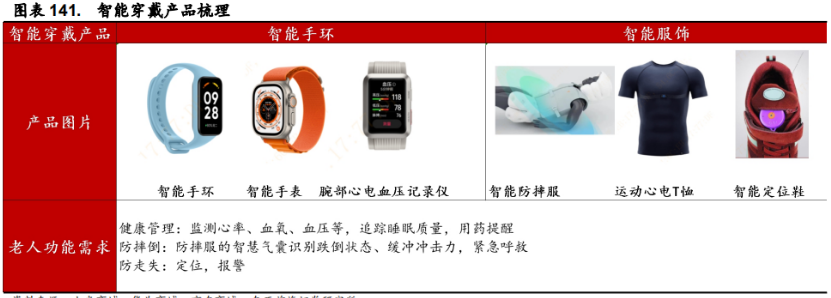
We summarize that smart wearable products will play a significant role in safety monitoring and health management scenarios based on the previous analysis of smart elderly care home scenarios. Product functions include alarms and calls for help in unexpected situations such as falls, positioning to prevent getting lost, and health management. Wearable products can be categorized into smart wristbands (smart wristbands, smart watches, smart bracelets, etc.) and smart clothing (smart clothes, fall-proof clothing, smart shoes, smart glasses, smart jewelry, etc.).
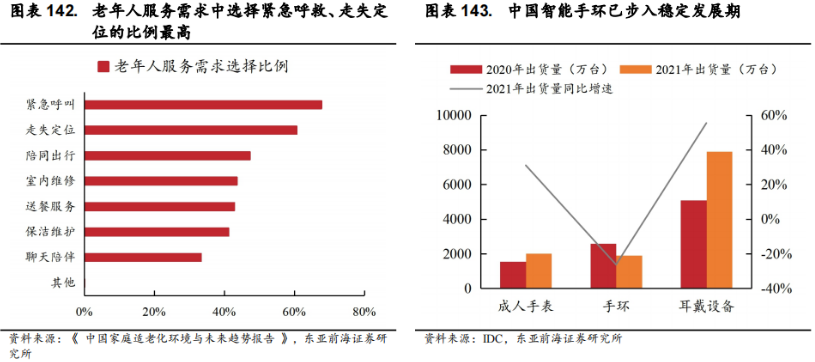
Smart wearable products can address the top-ranking needs in home-based elderly care scenarios.On one hand, according to the “2022 China Family Elderly-Friendly Environment and Future Trends Report”, emergency calls and lost positioning rank highest among the demands of elderly individuals. On the other hand, health management needs span the entire elderly care stage, and elderly individuals are the group with the strongest demand for health management. Smart wearables, due to their close and portable nature, can monitor the health status and geographical location of elderly individuals in real-time, fulfilling the aforementioned functional needs.
Smart watches have great growth potential, and the penetration rate among elderly groups has room for improvement.According to data from iResearch, among wearable devices in our country, smart watches are expected to be a rapidly growing segment in the future. While smart wristbands have developed relatively maturely, from the supply side, there are still few products specifically designed for elderly individuals among leading brands, and their promotional efforts are also limited, resulting in insufficient market cultivation. The elderly population’s awareness of smart wearable products is low, and the penetration rate still has considerable room for improvement.
Xiaomi, Samsung, Xiaotiangao, and Huawei are the leading global smart wearable brands.According to IDC data, the global shipment volume of wearable devices in 2022 was 490 million units, a year-on-year decrease of 7.7%. Among them, the shipment volume of smart watches increased by 9.4% year-on-year, making it one of the fastest-growing categories of wearable devices. In terms of the global brand landscape, the CR5 of global wearable devices in 2022 was 58.4%, with Apple ranking first with a 30% market share, followed by Samsung from South Korea. China’s Xiaotiangao and Huawei ranked third and fourth with 7% market share each. In the domestic brand landscape, the smart watch market in China saw a CR4 of 70% in 2022, with a market concentration higher than that of the overall wearable devices.
3.4. Smart Bathrooms: A Rapidly Rising Smart Home Scenario for Elderly Needs
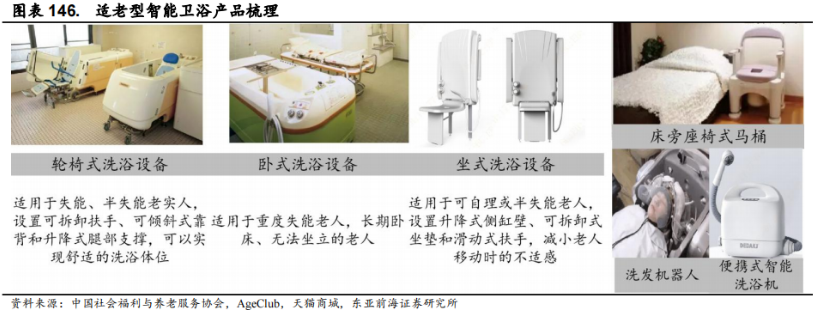
Inconvenience in toilets and bathrooms is currently one of the main pain points in elderly-friendly renovations of living spaces.According to the “China Family Elderly-Friendly Environment and Future Trends Report”, approximately 44% of respondents reported issues with toilet and bathroom convenience in their living spaces. When using the toilet and bathing, elderly individuals face actions such as turning, bending, and transitioning between standing and sitting, and they are prone to constipation due to weak gastrointestinal function. Wet bathroom floors increase the risk for elderly individuals. Therefore, features such as smart cleaning, flushing, and massage are particularly important for elderly individuals. Additionally, the requirements for bathroom products differ for elderly individuals who are self-sufficient, using walking aids, in wheelchairs, or bedridden, all of which demand higher standards for elderly-friendly renovations in bathroom spaces. In terms of intelligent renovations, the design of elderly-friendly smart bathroom products should emphasize intuitive guidance, ease of operation, human-computer interaction, and safety, while designing selectable smart products for elderly individuals with different health conditions. Products such as bedside toilet chairs, portable smart bathing machines, and sit-down bathing equipment are likely to be the first to be promoted in home environments.
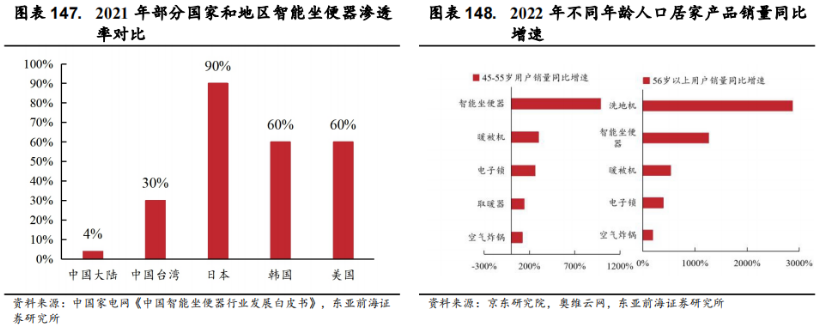
The demand for smart bathrooms among elderly individuals is significantly increasing.Taking the smart toilet segment as an example, according to data from China Household Appliances Network, the penetration rate of smart toilets in our country was only 4% in 2021, far below the levels of over 60% in the US, Japan, and South Korea. Japan, with the highest aging level, has a penetration rate of smart toilets reaching 90%. For our rapidly aging country, there is considerable room for improvement in the penetration rate of smart toilets. According to data from Aowei Cloud Network, smart toilets ranked first and second in sales growth among users aged 45-55 and 56 and above, respectively, making them one of the categories with strong and rapidly growing demand among elderly individuals in home products. In the future, as the aging process accelerates and elderly care demand continues to release, especially among the 45-55 age group approaching old age with stronger consumption power, the smart bathroom market scale is expected to expand rapidly.
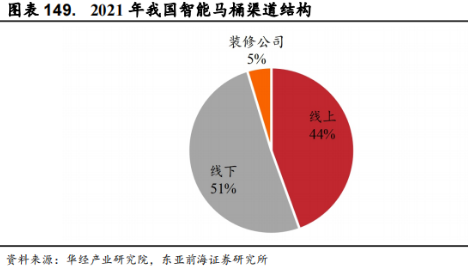
The high-end market is dominated by overseas brands, while the domestic brands have room for growth in the post-installation market driven by elderly-friendly renovation demand.In our country, the online and offline channels for smart toilets each account for half of the market. The matching rate of smart toilets in the high-end market has been increasing year by year. In 2022, the CR3 of smart toilets in the high-end market reached 48.2%, with a high market concentration. The top three brands in the high-end market are Kohler from the US, Toto from Japan, and Duravit from Germany. Among the top 10 smart toilet brands in the high-end market, only two domestic brands, Bluemoon and Jomoo, accounted for 6.2% and 4.2% market shares, respectively. The online market has lower concentration and is more led by domestic brands, with the top three Chinese brands being Jomoo, Hegii, and Arrow.Unlike the high-end positioning of the high-end market focusing on overseas brands, the average price of smart toilets in our country’s online market has been continuously decreasing, showing a clear trend towards popularization.There is a significant demand for elderly-friendly renovations in existing residential stock, which is expected to drive growth in the smart toilet post-installation market. The online market is one of the important purchasing channels for post-installation, and as the prices of smart toilets decrease and their cost-effectiveness improves, domestic brands targeting the mass market will have greater advantages in penetrating the elderly market.

3.5. Whole Home Intelligence: The Core of Comfort in Elderly Living Spaces
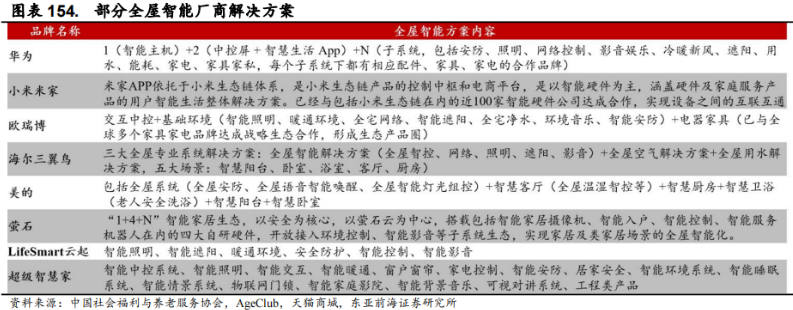
Elderly individuals have high requirements for ventilation, lighting, temperature, and safety in their living spaces, which can be perfectly met in whole-home smart scenarios.Elderly individuals, due to decreased immune function and chronic diseases, have high requirements for temperature and light in their living spaces. Furthermore, due to declines in memory, cognition, and reaction, elderly individuals need to pay more attention to safety and convenience when using appliances. Therefore, there is a strong demand for smart security, smart control, and smart lighting. These scenarios are often not limited to a specific living space but cover the entire home. Based on the solutions provided by leading players for whole-home intelligence, it mainly covers control, security, lighting, shading, HVAC, interaction, and door/window management, which aligns closely with the elderly-friendly renovation needs of living spaces. The future release of elderly care demand is expected to help unlock the market space for whole-home intelligence.
The penetration rate of smart home products in the high-end market continues to grow, and the efforts of leading brands to cultivate the C-end market are expected to drive the release of demand in the post-installation market.
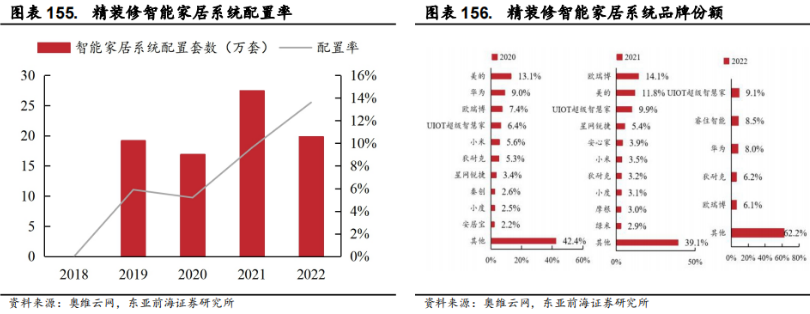
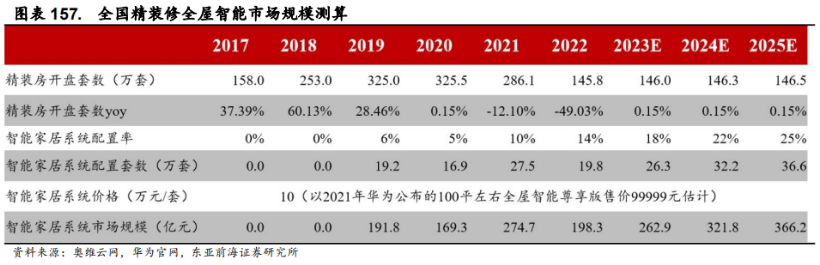
Currently, the main product forms of smart home in our country still focus on smart single products, while whole-home intelligence is still in its early development stage. Moreover, based on the plans and strategies disclosed by leading players in the whole-home intelligence sector, it is primarily focused on the pre-installation market, working with real estate developers to obtain high-end renovation projects. According to data from Aowei Cloud Network, the configuration rate of smart home systems in the high-end renovation market increased from 0 to 14% from 2018 to 2022, indicating a continuous rise in penetration, but the market landscape remains undetermined. Leading players are constantly changing, with market shares for top-ranking brands generally around 10%, resulting in lower market concentration than most smart home single product markets. We roughly estimate the market scale of whole-home intelligence in the high-end renovation market, projecting that the market scale could reach 26-36 billion yuan annually over the next three years. With a 10% market share for leading manufacturers, each leading manufacturer could share 2.6-3.6 billion yuan in annual revenue from whole-home intelligence in high-end renovations. Simultaneously, various manufacturers are actively planning for the post-installation market, and future elderly-friendly renovations are expected to be a crucial support for the demand release in the post-installation market.
3.6. Elderly Care Robots: Covering All Levels of Elderly Needs and Stages
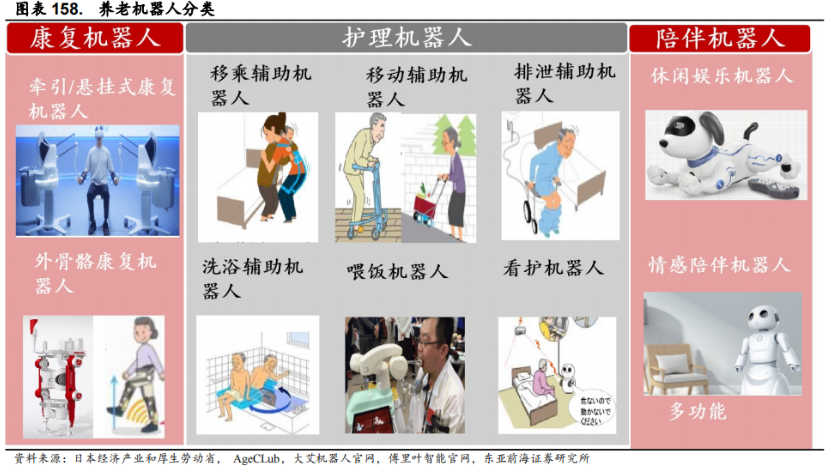
From our analysis of the smart elderly care product map, elderly care robots cover the physiological, safety, and spiritual needs of elderly individuals. Moreover, there are robot products in most scenarios, including life assistance, health monitoring, and emotional companionship. Based on their purpose, elderly care robots can be divided into rehabilitation robots, nursing robots, and companionship robots. In terms of elderly care stages, elderly individuals in good health and self-care stages have a higher demand for companionship robots, while semi-dependent and disabled elderly individuals mainly need rehabilitation and nursing robots.
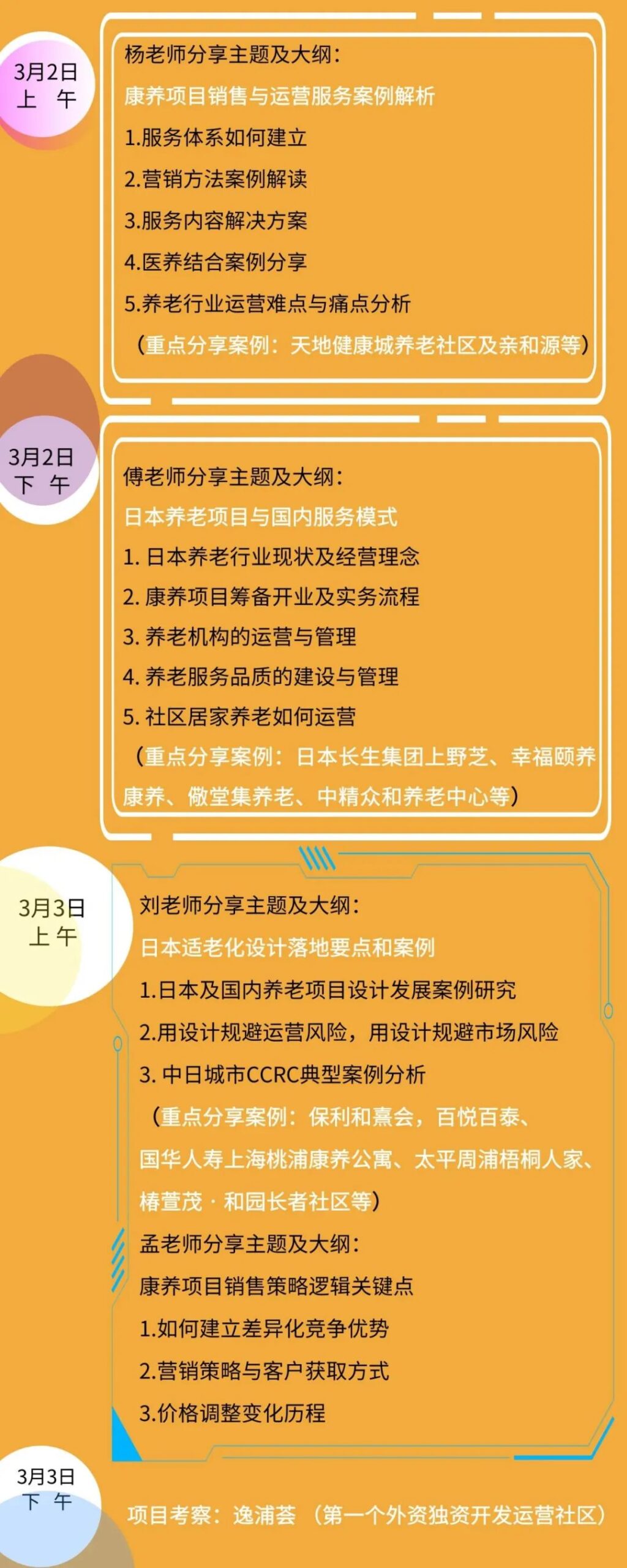
Warm ReminderShanghai March 2-3Seminar on Design and Sales Operation Improvement of Health Care Projects and Project Inspection

Event Consultation: 18903069081 Teacher Huang (WeChat)