Significant Turn in the Chip Game! The U.S. ‘Allows’ NVIDIA H200, What Does It Mean?
Recently, a piece of news has sparked widespread attention in the tech community: The U.S. Department of Commerce is considering allowing NVIDIA to export its latest AI chip, the H200, to China. This development stands in stark contrast to the escalating restrictions on chip exports to China over the past few years.
Previously, top chips like the H100 were explicitly banned from sale, yet now there is a possibility of a ‘green light’ for the more powerful H200. What does this signify? Is it a relaxation of policy or a more complex game at play?
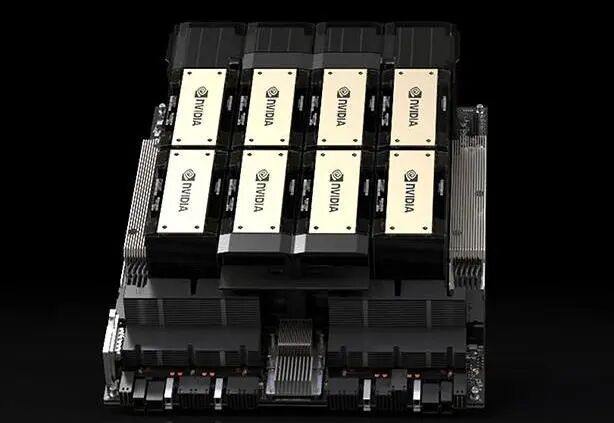
1. From H100 to H200: Strategic Considerations Behind the ‘Relaxation’
First, we need to understand what the H200 is.
If the previously banned H100 was the ‘nuclear bomb’ of AI computing, then the H200 is a super upgraded version of this ‘nuclear bomb’. It is equipped with ultra-high-performance HBM3e memory, enabling a qualitative leap in processing ultra-large-scale AI models, making it the ‘king of AI accelerators’.
This raises a key question: Why was the H100 banned, and now the H200 might be allowed?
This likely indicates a shift in the U.S. chip control strategy. The policy is moving from a simplistic ‘power threshold’ approach to a more nuanced control that considers complex metrics like ‘performance density’ for refined management. The core objective is to delay China’s development speed in cutting-edge AI without completely sacrificing the commercial interests of U.S. companies.
This is not a ‘gift’, but rather a form of strategic ‘cost control’. The U.S. semiconductor industry cannot afford to completely lose the Chinese market. Allowing the sale of the H200 essentially preserves a portion of revenue and profit space for U.S. chip giants, maintaining their ongoing R&D investment capabilities and ensuring long-term technological leadership.
2. ‘Allowing’ Does Not Mean ‘Opening’: The Invisible Constraints Are More Crucial
We must recognize that ‘considering allowing’ is by no means equivalent to ‘unconditional opening’.
Industry predictions suggest that this ‘allowance’ will undoubtedly come with extremely stringent additional conditions. For example:
Strict limitations on end-users: The chips can only be sold to specific commercial companies deemed ‘low risk’ by the U.S., strictly prohibiting sales to research institutions or enterprises related to military or national security.
Performance ‘customization’: The version exported to China will likely have limitations on bandwidth or software functionality, preventing it from realizing its full potential, resulting in a ‘dance with shackles’.
Tight follow-up supervision: The U.S. may require NVIDIA to establish complex tracking mechanisms to ensure complete transparency in chip distribution, with severe penalties for violations.
Thus, this resembles a ‘controlled release’. The U.S. aims to meet part of China’s demand for high-end AI computing power while avoiding a hard decoupling of the global supply chain, all while firmly controlling the most critical and advanced technologies. Gaining access to the H200 does not mean we have autonomy over core computing power.
3. Implications for China’s AI Industry: A Brief Respite and a Long-Lasting Alarm
For Chinese tech companies and AI developers, if the H200 is indeed approved for entry into China, it will undoubtedly serve as a ‘shot in the arm’ in the short term.
Leading internet companies and AI labs will gain access to more powerful computing tools for training more complex models, alleviating ‘computing power anxiety’ to some extent, which may help accelerate innovation at the application level.
However, in the long run, the alarm this situation sounds is far louder than the comfort it brings. It ruthlessly reveals that we remain in a strategically passive position in the foundational area of computing power—high-end AI chips. Today, others can ‘allow’, and tomorrow they can just as easily ‘tighten’ restrictions. Building the foundation of industrial development on policies that can change at any time is extremely risky.
This further strengthens China’s resolve to pursue a path of chip self-reliance and self-improvement. In recent years, domestic chip companies represented by Huawei’s Ascend and Cambricon have been striving to catch up. The potential entry of the H200 into China brings not only direct market competition pressure but also a valuable reference for learning and iteration for the domestic industry. The ultimate future of China’s AI does not depend on what chips we can buy, but on what kind of chips we can produce.
The U.S. ‘consideration to allow’ NVIDIA’s H200 chip is a tactical adjustment in the U.S.-China tech game, not a strategic shift. It is a carefully calculated operation of ‘political economy’.
For China, we must not let our guard down due to temporary ‘relaxation’, nor should we close ourselves off due to blockades. The correct stance is: to utilize all available resources to accelerate our own innovation while investing more resources and a firmer will into tackling core technologies.
The chip competition is a ‘race’ concerning the dominance of the future intelligent world. In this race, we have no retreat; we must firmly grasp the ‘lifeline’ of key technologies in our own hands to remain invincible in the face of any storm.