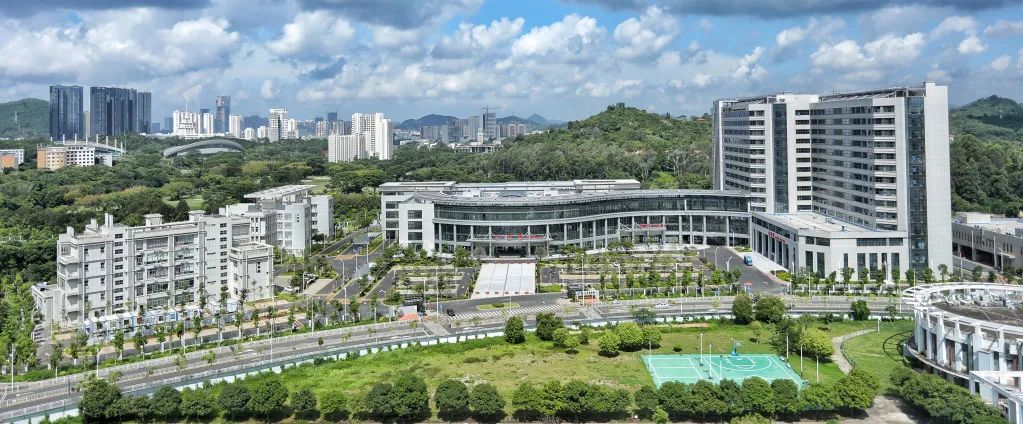
Shenzhen University General Hospital (Shenzhen University Clinical Medicine Academy, hereinafter referred to as “SZU General Hospital”) is fully funded by the Shenzhen Municipal People’s Government and is positioned as an internationally renowned, domestically first-class research hospital that integrates medical care, teaching, research, and health management.
In recent years, to support the rapid development of hospital operations and further enhance the level of digital management and construction, SZU General Hospital has continuously promoted the construction of medical information systems, completing the establishment of basic information systems such as HIS, EMR, LIS, and PACS, and expanding the hospital’s internet applications. In its four years of operation, the hospital has passed the electronic medical record level four and interconnectivity level four assessments. Its information technology centers around electronic medical records, introducing an integrated platform to achieve unified integration and interaction of hospital information systems, and is currently gradually building a hospital data middle platform that supports the construction of clinical data centers, management data centers, and operational data centers.
In terms of infrastructure, traditional architectures face challenges such as high construction costs, difficulties in high availability and disaster recovery, and complex scaling. Therefore, SZU General Hospital has chosen to adopt a strong extensibility and feature-rich hyper-converged infrastructure solution to meet the demands for high reliability, high availability, business continuity, data security, and high scalability for the integrated platform and CDR.
1
Hyper-Converged Architecture Data Center
The hyper-converged data center architecture connects general servers such as x86/ARM with layer 2 switches, software-defining all network, computing, storage, and security functions, thereby achieving all the functionalities traditionally completed by hardware in a data center through software. All components are integrated into a single virtualization management software platform. Hyper-convergence integrates CPU, memory, storage, network, and virtualization into a single device, overcoming traditional I/O bottlenecks and breaking the isolated boundaries of traditional servers, networks, and storage, realizing a unified integrated form.


Stable Architecture
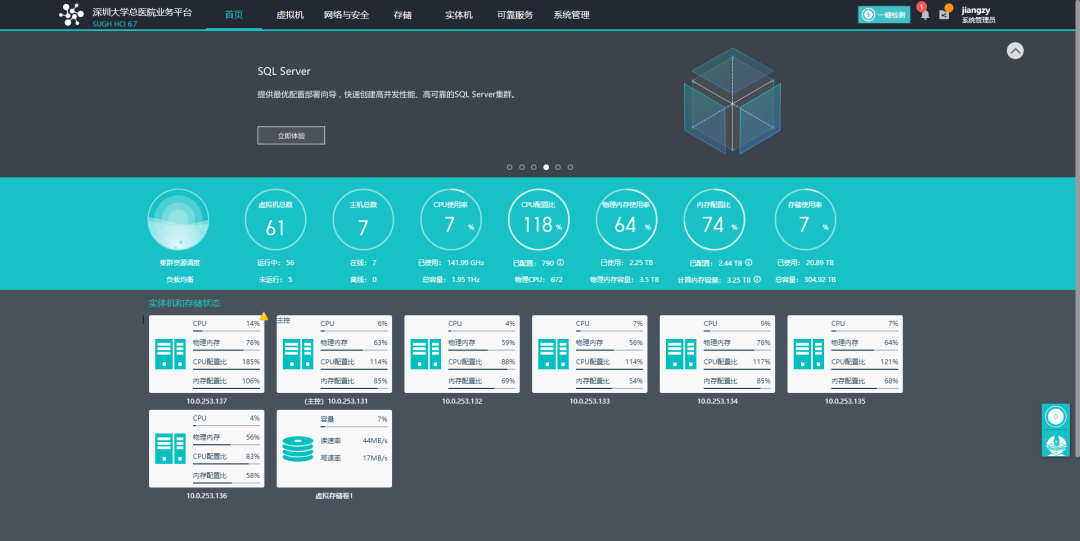
The core business adopts a hyper-converged architecture (HCI), utilizing virtualization and distributed storage technologies to share computing and storage resources, centrally allocate management, and construct a minimalist, stable, high-performance cloud-based medical data center foundation. This ensures the stable operation of the hospital’s information integration platform, efficient interaction of data and applications across departments, and provides a stable underlying platform for the subsequent construction of smart applications, bearing the important responsibility of the hospital’s data hub.
Business Reliability
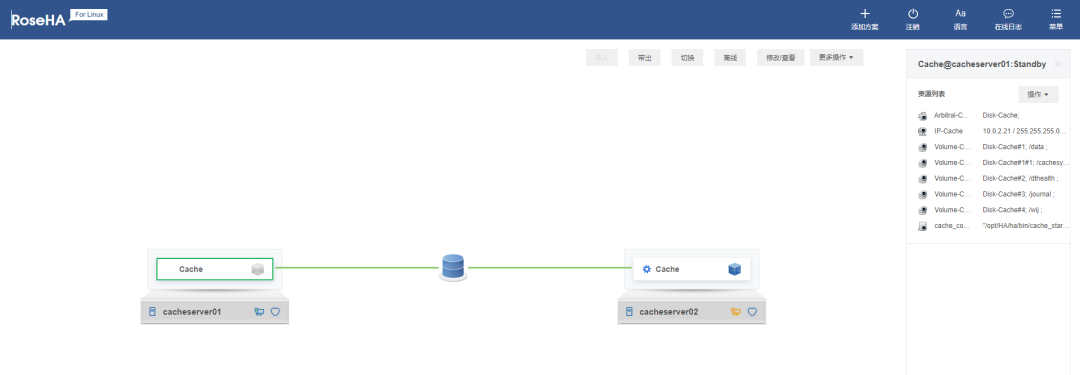
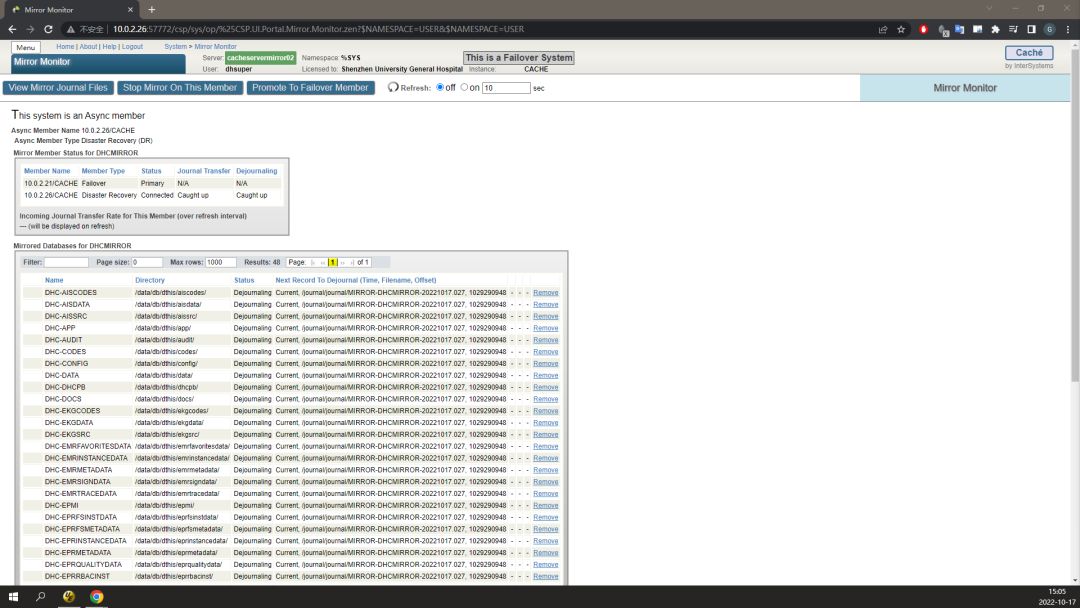
The construction of the data center has achieved separation between the production machine room and disaster recovery machine room, employing a distributed storage architecture. Virtual machine data is evenly distributed across different hosts in the cluster through high availability (HA) and multi-replication methods, effectively preventing data loss caused by hard disk and host-level failures. Ordinary business can achieve automatic backups on an hourly, daily, or weekly basis, while core business can realize near real-time continuous data protection. Core business utilizes RoseHA, integrating continuous data protection (CDP), snapshots, backups, and other cold backup features, along with ORACLE RAC, Cache database mirroring, and other measures to effectively prevent data loss caused by human errors, ransomware, and other logical failures, ensuring data integrity.
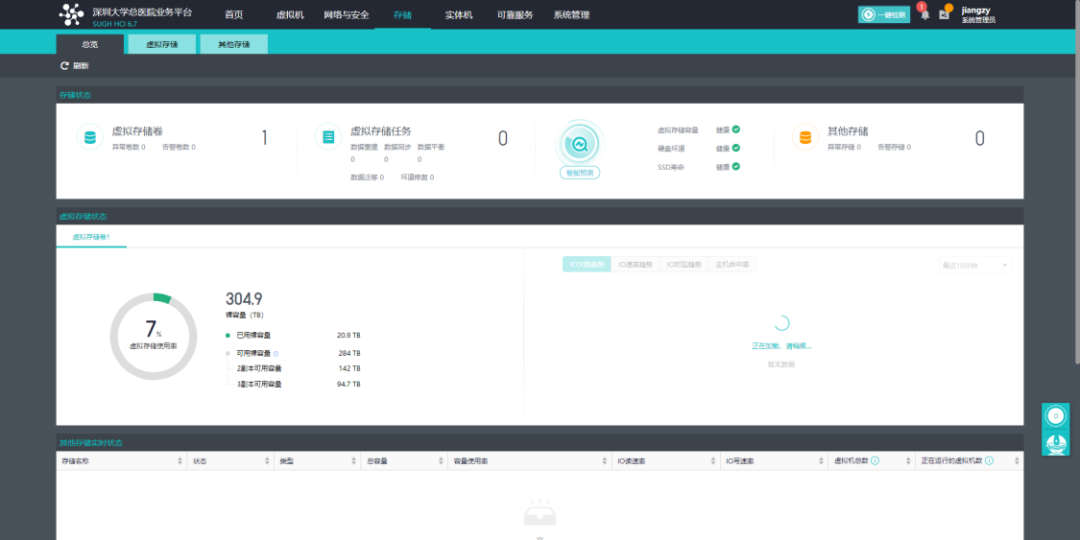
The core database storage adopts dual-active storage, using an AA dual-active architecture to form a cross-site cluster with two storage arrays, achieving real-time data mirroring. When any disk array fails, business automatically switches seamlessly to access the opposite storage without interruption.
Simple Architecture with High Cost Performance
By deploying 13 servers and layer 3 switches, a hyper-converged data center can be constructed within the hospital, with simple scaling; by building two hyper-converged clusters, the hospital can steadily support disaster recovery, HIS, CDR, integrated platforms, and other critical businesses. Compared to traditional data center architecture, the hyper-converged platform can flexibly plan and allocate according to business needs, saving time for software and hardware optimization; it also does not require additional procurement of storage devices, reducing hardware investment costs, saving rack space, and lowering UPS power supply and heat dissipation pressure, in line with national carbon neutrality policy requirements.
High Performance
Hyper-convergence adopts a distributed architecture, configured with a high-performance SSD+HDD disk combination, balancing high performance and cost input; supplemented by hyper-convergence’s intelligent striping, hot data tiering, data localization, AI scheduling, and other technologies. Through practical testing, a 7-node hyper-converged cluster supporting the core business of Donghua Smart Hospital can provide over 65W IOPS read/write performance, with read/write latency not exceeding 10ms during random read/write testing with 4K data blocks, fully meeting the performance requirements of all critical medical services at Shenzhen University General Hospital, including HIS, CDR, databases, and middleware.
Data Visualization and Early Warning
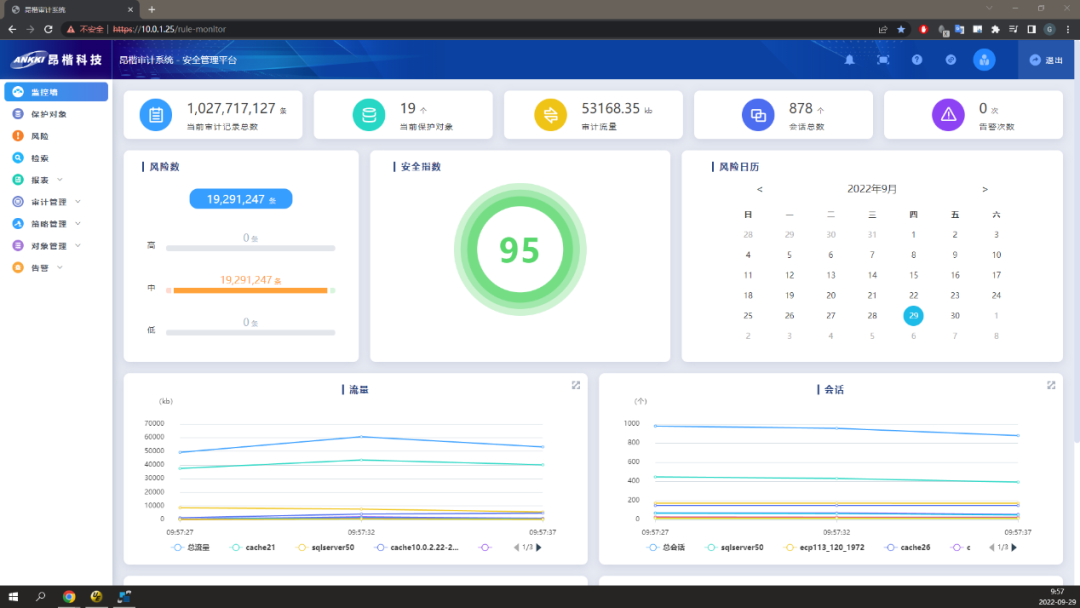
The Database Audit Platform (DAS) can display the distribution of data assets, automatically discover the distribution of database servers and sensitive data, and provide real-time visibility into the access and risk status of sensitive data in the hospital, clearly defining targets for subsequent security reinforcement. It monitors the risk status of databases in real-time, issuing early warnings during abnormal states to prevent business paralysis and ensure the continuous availability of business systems.
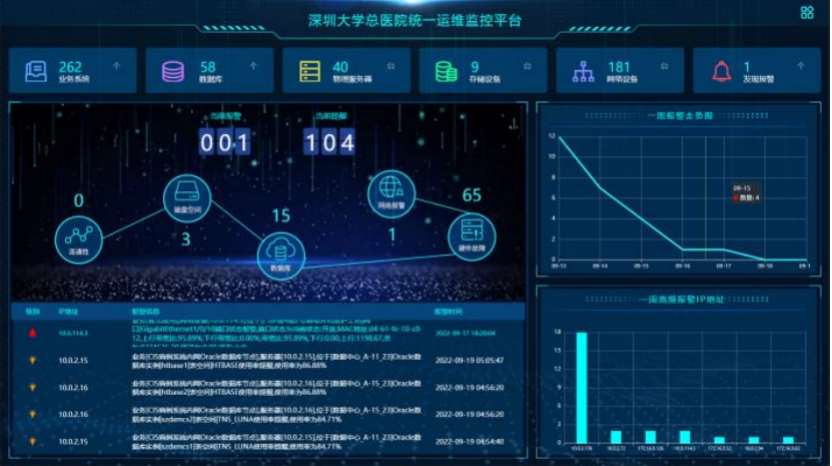
Enable an IT comprehensive operation and maintenance monitoring management system to achieve hospital asset management, hardware and software fault localization, daily inspection of information technology, decision analysis, and other functions. It monitors data activity in real-time, recording data access behavior, especially for sensitive data access, achieving comprehensive monitoring of direct access to databases and indirect access through web and applications.
2
Multi-Terminal Patient 360&MDT System
The 360 view&MDT system meets the needs for multidisciplinary online joint diagnosis during the epidemic prevention and control period. Medical staff can log in and access through various means such as the doctor’s station and WeChat platform. Whether at work, outdoors, or at home, they can easily check patient details in the hospital through mobile devices, initiate remote consultations, and discuss medical records.
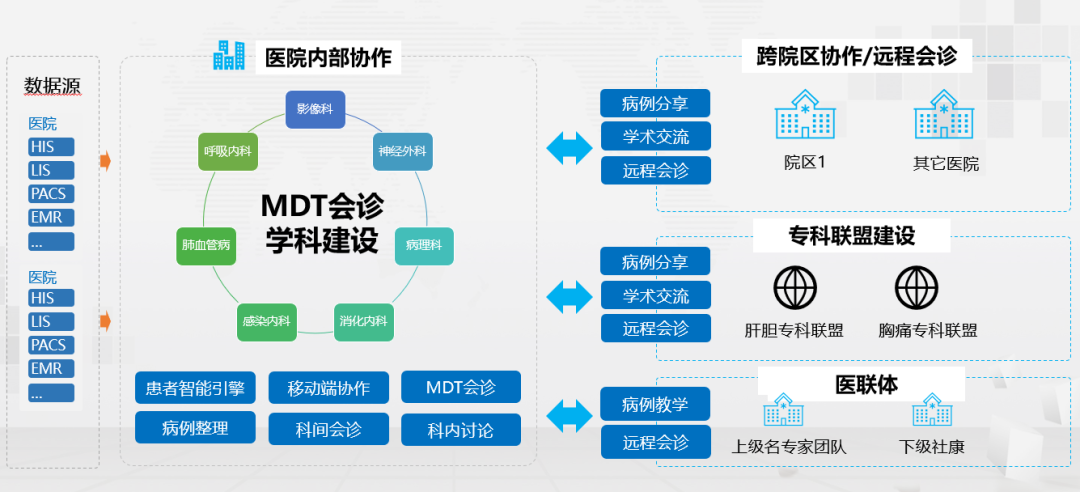
Through the MDT consultation system, it can remotely access, retrieve, and process patient-centered 360 view data, completing the full process of consultation business management, integrating various clinical departments into an efficient collaborative team. The system also has multi-terminal cross-platform integration communication capabilities, supporting different systems such as IOS, Android, and Windows, and can be displayed and used through large screens, mobile phones, PCs, and tablets. At the same time, under the premise of ensuring the security of the hospital’s internal network, it achieves data interaction of the MDT consultation system between internal and external networks, providing the medical team with more flexible application scenarios and a smooth experience in the consultation process.
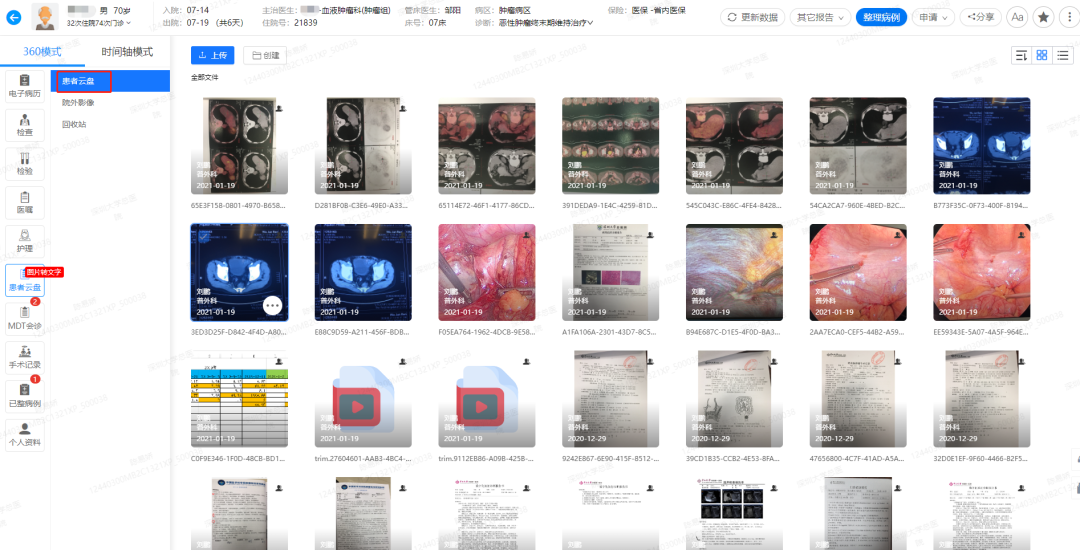
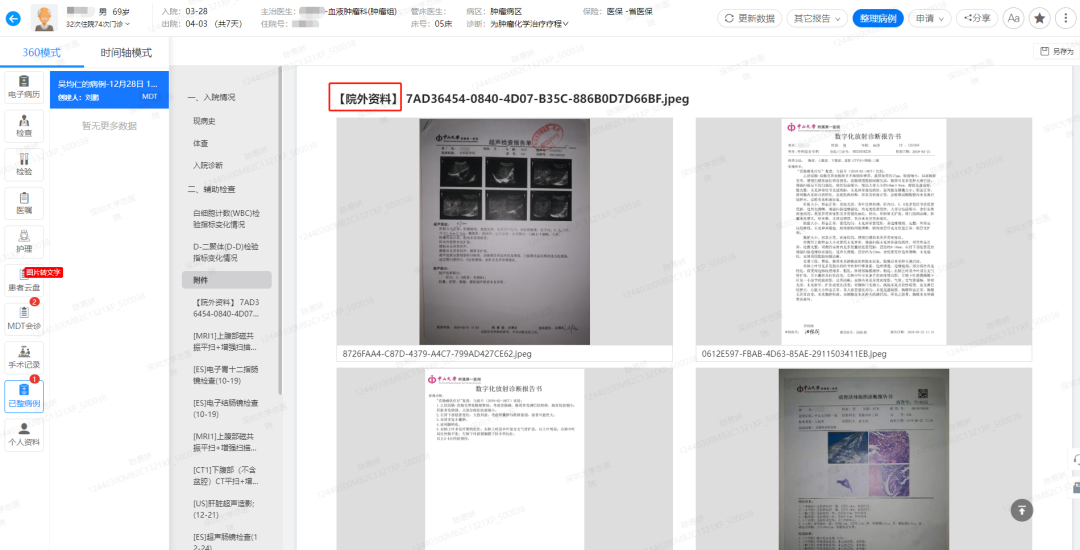
In response to the high workload and pressure faced by clinical doctors, the system quickly integrates voice electronic medical records, patient cloud storage, OCR text recognition, and other functions. Doctors can use voice to complete medical record input or quickly organize external medical record materials through patient cloud storage and OCR recognition. The system quickly and accurately completes recognition and conversion, forming electronic medical records, effectively reducing the workload of doctors and improving work efficiency.
3
Smart Cloud Film Application
The “cloud film” contains medical imaging and imaging diagnosis reports as information carriers. The cloud film system not only greatly upgrades the patient experience but also provides better examination tools for doctors. Patients can scan the examination QR code to understand the examination progress, view the examination report, and obtain electronic images, providing patients with a convenient and comfortable medical experience, saving time waiting for film collection. In addition to patient services, the smart cloud film also provides services for doctors. The doctor side has functions such as image viewing, image processing, work lists, and report editing, making it convenient for clinical doctors to access patient information and images anytime and anywhere. The cloud film can display multiple examinations and shows the corresponding images with correct hanging images, allowing radiologists to intuitively see historical reports and images, which are highly relevant to current examinations.
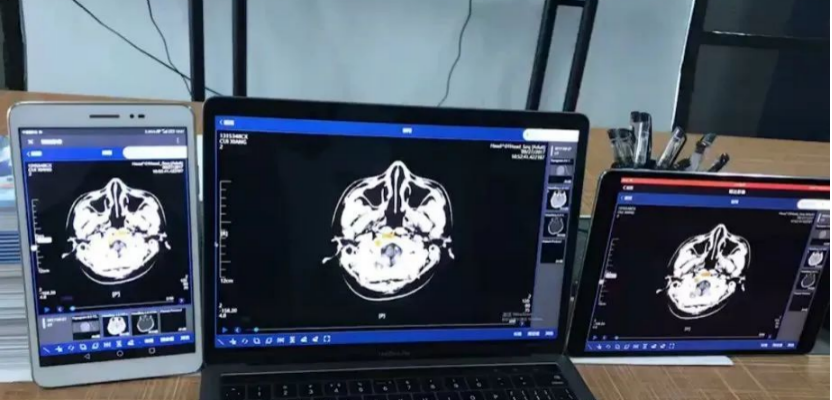
The cloud film supports displaying various types of original images such as DR, CT, MR, DSA, etc., with millisecond-level image transmission reading speed, allowing for immediate viewing without waiting, obtaining transmission flow on demand, and maintaining good performance even in 4G/3G and weak network environments, providing important evidence for remote diagnosis and treatment. The cloud film uses information technology to expand the space and content of medical services, constructing an integrated online and offline medical service model covering pre-diagnosis, in-diagnosis, and post-diagnosis.
4
Data Center Operation and Maintenance Platform
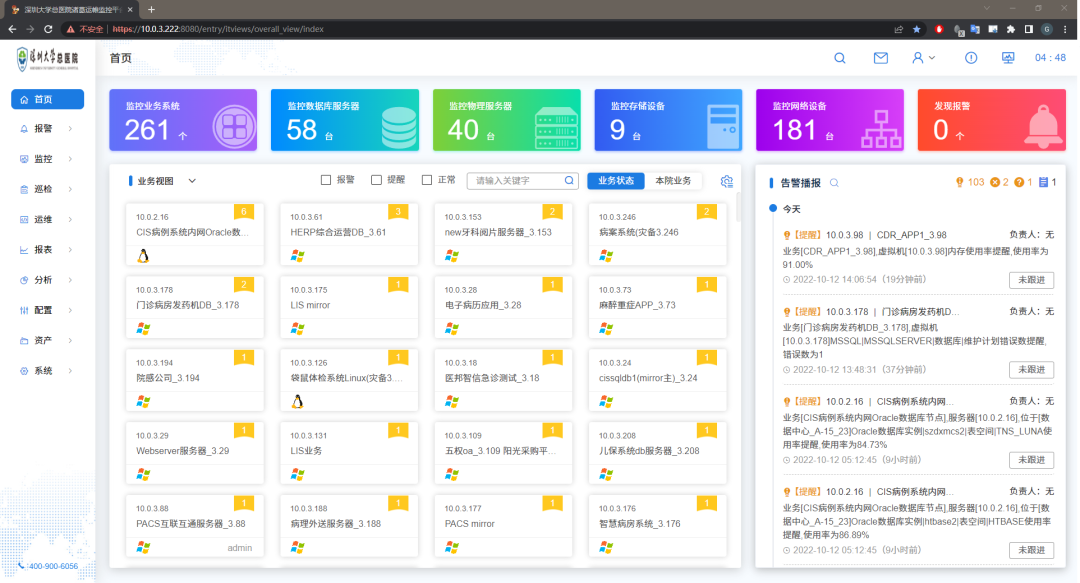
Since 2020, the hospital has introduced a data center operation and maintenance platform, which is an ITSS system operation and maintenance tool that integrates “operation and maintenance monitoring + service management + decision analysis”. Focusing on business system monitoring, it is based on a multi-dimensional visual management platform that monitors “business, software, network, and equipment” from multiple perspectives. It allows for free combination of monitoring targets, monitoring indicators, monitoring thresholds, and alarm levels, thereby enhancing the attention to core businesses, core devices, and core indicators, while reducing interference from alarm information related to non-essential businesses, devices, and indicators on operation and maintenance work. The hospital’s daily data center operation revolves around this platform, with various exceptions and resolutions for networks, servers, virtual machines, storage, databases, and middleware services being alarmed and pushed to the corresponding responsible person’s WeChat.
5
ITSM Service Platform
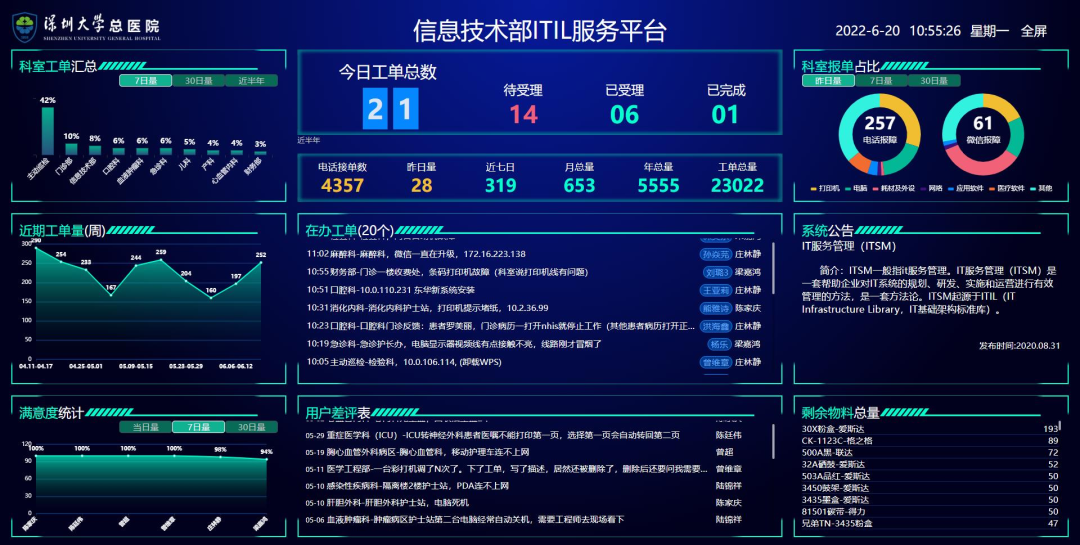
To efficiently address clinical information technology issues, the IT department of Shenzhen University General Hospital has collaborated with an operation and maintenance company to develop a service platform. The platform construction centers on departmental operation and maintenance business, guided by work order processes, implementing core processes such as incident management, satisfaction management, material management, and release management, continuously reducing the risks of operation and maintenance service management work and providing a flexible, quantifiable management platform for managers and technicians.
On the platform, one can view the operation and maintenance work order status of various departments with one click, displaying detailed information on different types of work orders, while also collecting satisfaction information from various departments, continuously improving the user experience for medical staff. For example, clinical departments can report repairs through scanning QR codes or various means such as WeChat, and the system automatically assigns work orders based on the current saturation status of operation and maintenance engineers, monitors the completion progress of work orders, and collects clinical feedback evaluations through WeChat, forming a closed-loop management for IT repairs.
The ITSM platform fully realizes the automation and intelligence of the entire process of IT operation and maintenance, promoting the hospital’s IT operation strategy and digital transformation.
6
Self-Service Drug Dispensing Machine for Fever Clinics
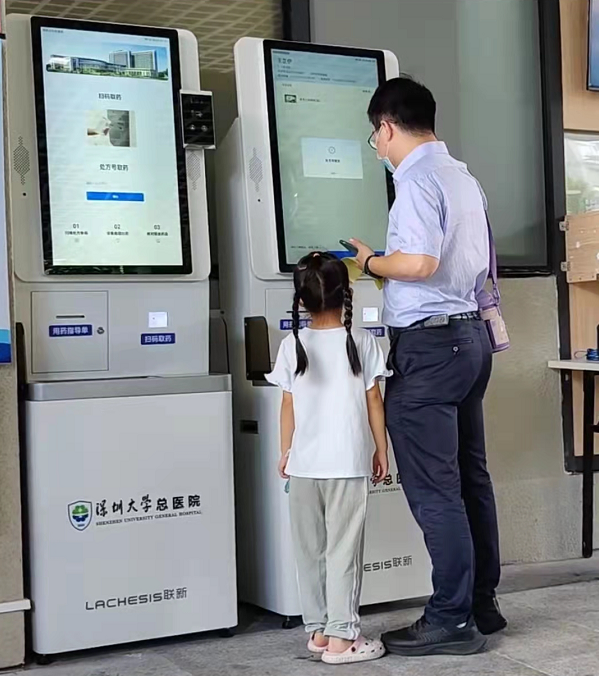
The self-service drug dispensing machine allows for dispensing medication by scanning the prescription code of fever clinic patients, deducting from the system inventory. Additionally, the self-service drug dispensing machine features a video call function to promptly address patient inquiries regarding prescriptions. The launch of the self-service drug dispensing machine has improved the dispensing process in fever clinics, increased the efficiency of fever patients obtaining medication, and reduced contact between fever patients and hospital staff, effectively protecting against the epidemic.
7
Integrated Online and Offline Internet Hospital
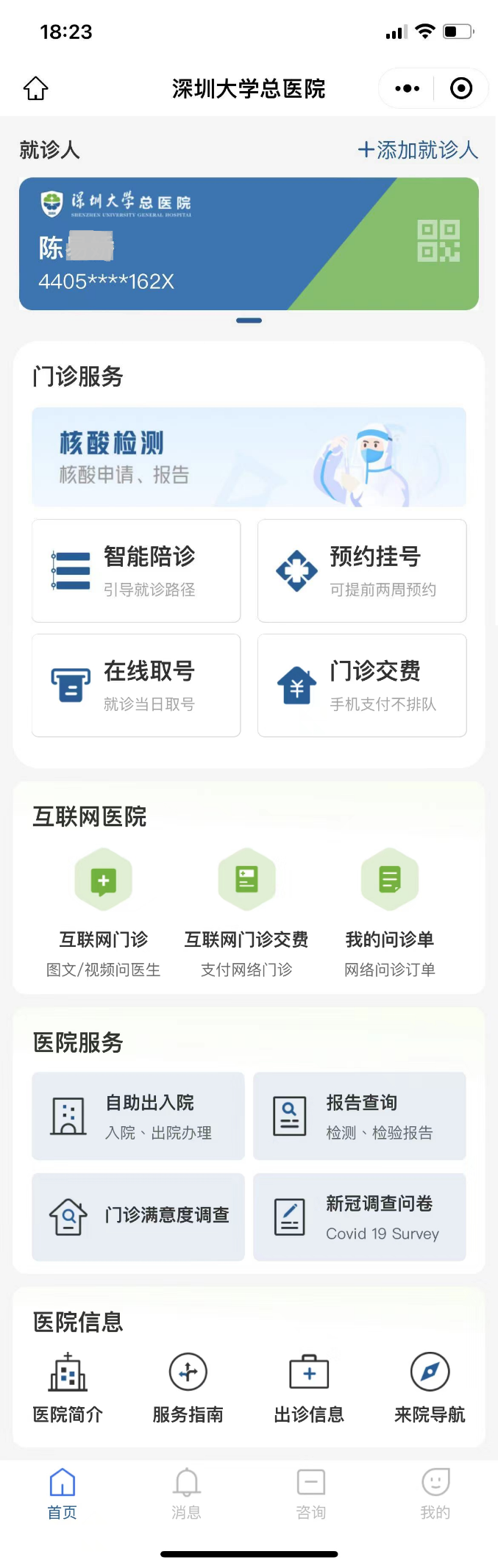
After obtaining the business license for the Internet hospital, to facilitate medical consultations for the general public and comply with the management requirements of higher authorities for Internet hospitals, our hospital has planned an integrated online and offline system for the Internet hospital. This system has the following advantages:
1. Unified patient entry, allowing patients to complete the entire process of appointment registration, outpatient payment, intelligent accompaniment, online consultation, Internet prescription delivery, and examination report viewing through a single WeChat mini-program;
2. Online and offline integration, with patient information, payment information, prescription information, and medical record information of the Internet hospital being the same as that of the physical hospital, written into the same system, facilitating the management of the Internet hospital by various departments;
3. Mobile consultation, enabling doctors to consult Internet hospital patients, write medical records, and prescribe through their mobile phones, fully utilizing fragmented time to serve the general public.
8
Big Data Analysis
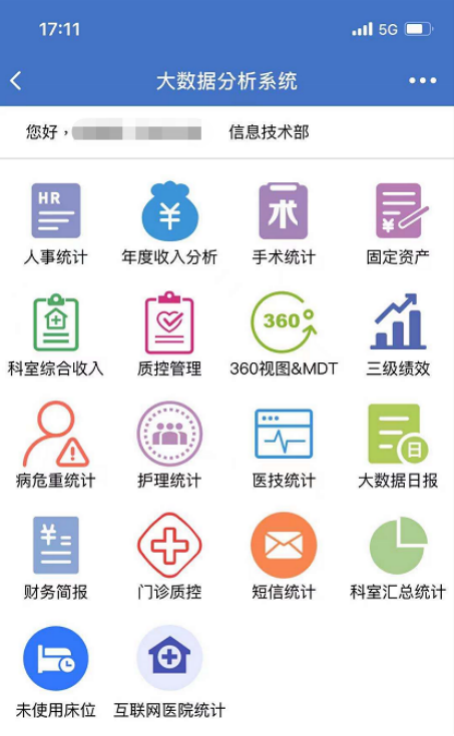
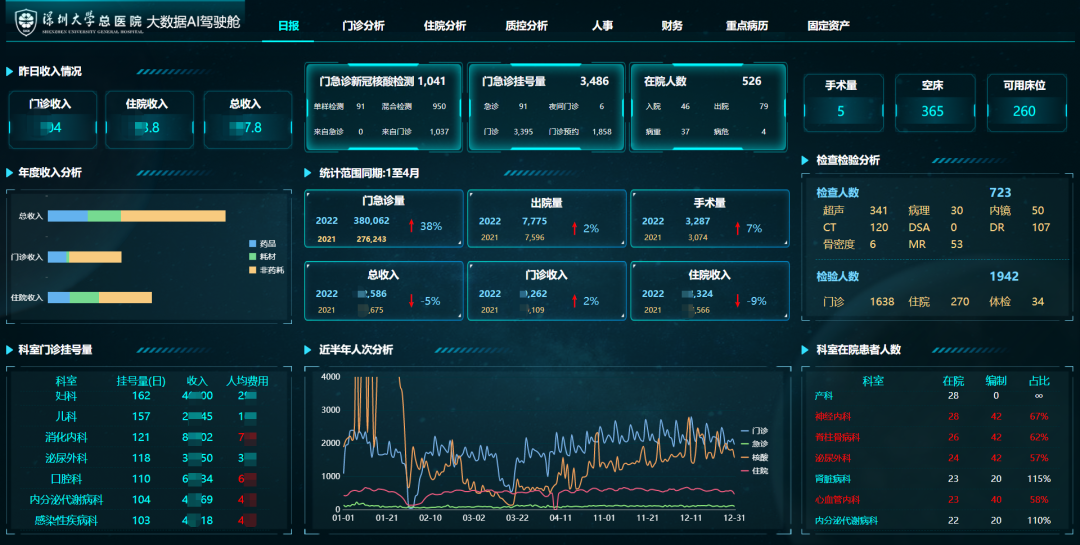
The construction process of the data analysis platform includes data collection, data integration, data processing, data visualization, etc. The big data analysis platform independently developed by the IT department of SZU General Hospital is demand-oriented, using data quality monitoring comparison as an auxiliary means to provide efficient, convenient, and accurate data support for hospital management and operations. It can not only bear the pressure of data analysis but also integrate business data, improving data processing performance to varying degrees, and achieving richer functional demands based on the data platform.
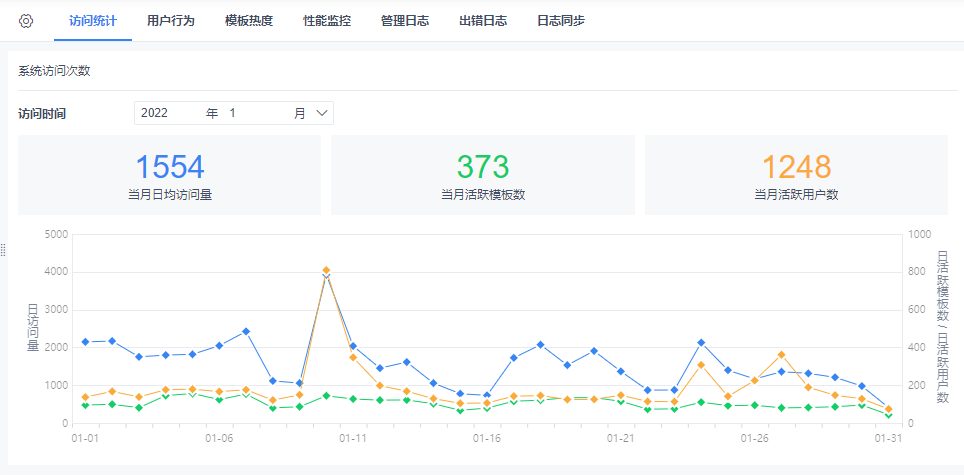
At the same time, the big data analysis platform has sufficient data visibility, providing both mobile and large screen displays, integrating various data report analysis results into a single page on the platform, and projecting them onto large screens to achieve data visualization. Below is the display effect of the mobile terminal page and the complete large screen.
Reflections from IT Personnel
The work at the hospital information center is complicated and multifaceted, and the clinical development, management, and operations of the hospital are inseparable from informatization. In recent years, as various rating requirements have gradually been introduced, the information department needs to cope with various rating demands. Facing such a multitude of work objectives, the information department’s team must maintain a correct work attitude, understanding that “busyness” is a norm in the information industry, and also a norm for healthcare IT personnel. From another perspective, we healthcare IT personnel are fortunate to be in a good era. Many jobs in this world involve a lifetime of repeating the same task, but with changes in the era, old models may not adapt to mainstream culture and business, gradually exiting the historical stage. Healthcare IT personnel not only have to address various clinical needs every day, realizing the innovative concepts of hospital managers, but also must learn and master endless new technologies and new business models. Therefore, the daily work of healthcare IT personnel is about innovation, mastering new technologies, and driving change. Isn’t that a form of luck?
Medical staff have transitioned from manually entering data with paper documents to achieving automatic uploads by the system, earning applause from information engineers. When data issues arise, regardless of the circumstances, information engineers become the scapegoats. This is the reality for us in hospital information. From manual processes to informatization and then to smart hospitals, the informatization of hospitals has followed the rapid advancement of computer technology and the internet, with increasingly daunting missions, and as hospital information personnel, we are always on the road.
With the development of information technology, medical information is becoming increasingly intelligent. Every step of the informatization process requires thorough research and a full integration of relevant clinical departments with information technology. As a member of informatization construction, one must deeply learn business knowledge, think from the user’s perspective to design products that are both standardized and user-friendly for clinical use, reducing clinical workload and improving clinical efficiency.
Once entering the field of healthcare IT, it feels as deep as the ocean. What I once imagined as a 9-to-5 job is, in reality, a 24/7 commitment. Just as clinical staff are on-call for 72 hours, so are we healthcare IT personnel. The construction of hospital informatization is a long exploratory process that must continuously improve, update, and enrich during application. Even the most widely used information system in the country will encounter various problems during the implementation in a specific hospital, inevitably facing communication difficulties with various parties. As healthcare IT personnel, we should delve into clinical work, strengthen communication with clinical businesses, and familiarize ourselves with business scenarios, starting from clinical thinking and viewing issues from the user’s perspective to more effectively promote the informatization of smart hospitals.
As someone who has worked in the IT industry for over ten years, I find myself a novice in the medical information sector. Looking at everything in my job that is both unfamiliar and familiar, yet comforting, for me, the Greater Bay Area, Shenzhen, Shenzhen University, General Hospital, and medical informatization represent a new beginning. In this position, I seem to be experienced, yet I remain humble, having been in the industry for many years but still eager to learn.
As a seasoned coder, I have spent almost half my life dealing with code, machines, and bugs. The most I communicate with are product managers and testers; I am just someone who buries my head in work. Coming to the hospital has changed the nature of my work; I have fewer solitary tasks and more interactions with people, which is challenging for someone with social anxiety like me. Take the recent project of bedside screen renovation, for example; I had to liaise with five departments, including the IT department and property management, which felt like the alliances of the Warring States period, and surprises were expected. From demand collection analysis to project initiation, bidding, supervising construction, and acceptance, I was forced to become a project all-rounder, often wishing I could just kick the development team out and do the work myself, reminiscing about the past… programmers are straightforward people.
It’s easier to talk to the other party; I can yell at them to get the job done; everyone has it tough. As a functional department, we provide service within the hospital, working to serve the clinical staff while receiving a salary from the hospital. Daily routines are manageable, and I have a clear self-positioning; as long as I provide smiling service, I can receive good feedback. When faced with quality inspections, holding the stick of rewards and punishments, I sometimes feel like a liberated serf singing songs of freedom, then during the inspection, I end up helping one doctor fix a computer, assisting a nurse with a system issue, and receiving a pile of complaints, which is not as grand as the medical staff’s visits. Time flows like falling flowers, and the world is divided between heaven and earth.
After saying all this, it may seem like I’m someone who dislikes this job. On the contrary, who are the most lovable people in this world? Of course, it’s the angels in white! Serving doctors and nurses every day is a great honor for me.
In the hospital, doctors and nurses receive much praise from the news, and society pays them a lot of attention. Did you know? There is a low-profile department in every hospital called the information technology department. However, many times the clinical staff’s impression of the department remains that they are just a group of computer repairers. In reality, many hospital issues, such as a malfunctioning printer, network outages, a non-working TV, and issues with HIS, LIS, or PACS, regardless of whether the system genuinely has problems, if it’s powered, just ask the information department, and you will definitely find answers. Clinical departments also refer to the information department as the “universal department.” I want to say that the information department can not only solve “everything under the sun” but also enhance the patient experience, meet residents’ medical service needs, and improve the overall operational efficiency of the hospital, becoming the “catalyst” in chemical reactions and the lubricant in mechanical operations. Relying on technology to improve efficiency and promoting development through science is what medical informatization is all about. As a pioneer in reform and opening up, Shenzhen firmly believes that “time is money, and efficiency is life”; the efficiency of the hospital is the lifeblood of the hospital. As an information personnel, enhancing hospital operational efficiency and building a solid platform for the future development of hospital informatization is our mission. The road is winding, but the future is bright. This requires us information personnel to work together, constantly embracing new challenges; the informatization construction is always on the road.
“Entering the gates of the palace is as deep as the ocean, wearing stars and the moon, forgetting who I am”—this is a mantra my family often recites to me after I joined the hospital’s information technology department. The ideal of a simple 9-to-5 job has been shattered by reality; I have never seen a sunset after work. My daily routine is more like early five to late nine. What allows me to persist without complaint in this heavy burden? Perhaps it is the professional ethics in my heart and the concept that “information is no small matter; service to clinical staff is paramount.” As a former military worker, I have a somewhat idealistic sense of national pride. It is precisely this “utopian” thought that supports every practitioner to strive forward.
The hospital carries the hopes of every patient, and medical staff are the trust of patients. Informatization is like another “surgical knife” in the hands of medical staff; this knife is also a double-edged sword. When wielded skillfully, it can achieve great results, but otherwise, it can be difficult to handle. Since the hospital opened, the informatization construction has weathered many storms, experiencing both gains and losses. I am fortunate to have participated throughout the process, deeply understanding the satisfaction and expectations of clinical staff, which will motivate my future work. Let us carry our original intentions and forge ahead!
Having been in the medical field, every technological change and policy adjustment in the industry affects millions of patients. As a part of the industry ecosystem, medical institutions have uniqueness, complexity, and limitations. We play an indispensable role in medical institutions, not directly facing patients but ensuring information security, supporting clinical departments, and pragmatically solving various problems. Sometimes, even a small adjustment or improvement can alleviate the burden on frontline staff, improve work efficiency, and enhance patient experience. This is a reflection of our value. Information is everywhere, omnipresent, and indispensable; it has become a reality. Facing increasingly certain challenges in medical informatization tasks, we can only immerse ourselves in the industry, striving to do better; this is our mission and the value of our existence.
Entering the medical informatization industry by chance, I realized that it is not as simple as the clinical staff jokingly refer to the information department as “restart, reinstall, change computers.” Clinical staff need intelligent healthcare, patients need intelligent services, leaders need intelligent management, and external institutions require interconnectivity… Medical informatization has become an inseparable part of modern hospitals, presenting both opportunities and challenges for us healthcare IT personnel. In an environment lacking talent cultivation and discipline construction in the healthcare IT sector, only by maintaining a sense of reverence, continuously learning, asking questions without shame, and honing our skills can we seize opportunities and meet challenges, driving the development of the medical industry from paper-based to informatized and then to intelligent.
The construction of hospital informatization is always on the road, with no end in sight.
Positioning must be precise, and goals must be clear. Informatization requires the participation of all staff and must closely align with the hospital’s overall planning, maintaining a consistent pace.
The information department’s responsibilities and powers are clearly defined. The leadership and management departments of the hospital, along with clinical and technical departments, should work together to utilize informatization to build an innovative hospital that satisfies the people and is recognized by employees, enhancing the overall operational efficiency of the hospital, emphasizing hospital culture construction, and forming a new trend that is people-oriented and sustainable.
Increase investment and introduce specialized talents. Information personnel should master project management, network security, system development, data statistics management, big data analysis, and equipment maintenance, and be familiar with hospital management, clinical business, and medical operations. They should also provide various forms of around-the-clock services, both online and offline, ensuring backup and disaster recovery. Informatization is the sharp sword leading the hospital forward, and hospitals should provide information personnel with compensation that matches their workload, rather than treating informatization as a burden on the hospital, thus promoting the healthy development of the medical industry.
In this fast-developing internet era, various information systems provide unprecedented convenience for our lives; essentially, a mobile phone can control most of the information systems related to us, involving our public communication and information services, energy, transportation, water and electricity, finance, public services, e-government, and healthcare. To provide patients with faster and better medical services, the hospital’s IT department has also devised various software and mini-programs for mobile devices to improve patient satisfaction. However, as one of the network security engineers at the hospital, I must face a severe situation: the hospital’s information systems, which store a large amount of personal information about patients, must connect to the internet in various ways to provide convenience, leading to certain information security issues that require constant vigilance against internet threats.
If the hospital’s critical information infrastructure and information systems are damaged, it may lose functionality or cause data leakage, endangering national and public interests and patient benefits, resulting in adverse social impacts. From the successful hosting of the Winter Olympics last year, which reported 3.8 billion cyber attacks, to the outbreak of the Russia-Ukraine war, which triggered cyber security confrontations among various countries, and the successful convening of the 20th National Congress, where various industries emphasized cyber security, all remind us that the medical industry is just a small corner of the internet, constantly facing invisible cyber security threats.
It is easy to evade visible threats, but hard to guard against hidden ones. My colleagues and I face all internet threats seriously, carefully sorting out assets, external ports, and data flows; seven parts management, three parts technology. From event detection, fault judgment, emergency response, fault confirmation, fault reporting, disposal review, to re-examination, we implement each step to ensure adequate preparation and effective emergency response, forming a closed loop for incidents. Under the interaction of people, tools, processes, and data, the overall network security situation of the hospital remains healthy, while continuously improving the dynamic security system of the hospital, meeting the normal operation of medical systems while easily addressing security incidents.
He said, on duty at night (weekends), I can’t go, let’s chat later.
He said, I’m in pre-examination triage, checking the patient’s nucleic acid code, let’s chat later.
He said, I’m researching the system at another hospital, consulting experts, let’s chat later.
He said, I’m dealing with an urgent issue, a primary incident, the system is not functioning properly, let’s chat later.
He said, I just finished a meeting with the clinical staff, I’m summarizing and reviewing the requirements; otherwise, I might forget the details, let’s chat later.
He said, I’m organizing materials for the system operation, preparing for medical record rating, interconnectivity, smart hospital, thousands of pages of materials, let’s chat later.
He said, I’m installing computers, fixing printers, making network cables, writing project documents, opening bids, initiating meetings, acceptance meetings, statistical data indicators, database deployment backups, server installation upgrades, antivirus and network security deployments…
Yes, he is you, and he is me. A salute to all information personnel in the hospital for their busy and tireless hearts.
As a healthcare IT personnel at Shenzhen University General Hospital, I often hear clinical colleagues raise questions: “In today’s mature internet era, how can there still be such outdated information systems?” This highlights the significant gap between hospital information systems and internet systems. Currently, we cannot change the status quo overnight, and we may not even see hope. However, I firmly believe that with the joint efforts of our department’s colleagues, we can transform into a medical information system that is both user-friendly and stable compared to the vast majority of other hospitals. Let’s go, SZU General Hospital IT personnel.
As a fundamental part of people’s livelihoods, healthcare has always been a solid shield for societal progress. In the face of the sudden pandemic, it has become the backbone of the times, demonstrating immense strength. Behind this strength are countless healthcare IT personnel working silently.
In this age of information, informatization is a national strategy and the driving force behind the rise of all industries. However, the current healthcare informatization industry has not yet developed to the level of “copying and pasting”; every informatization construction project cannot simply be a direct copy of other hospitals. Each project requires localized and personalized services, resulting from the collaboration of various parties. We in the hospital information department play a core role in this construction process.
We must consider policies, regulations, and industry development directions; we must consider the user experience of medical staff; we must consider the efficiency of patient treatment processes; we must consider the management methods of management departments… Constantly shifting perspectives is necessary to address seemingly simple demands. Sometimes we are project managers, at other times we become requirement analysts, developers, testers, and sometimes we are simply computer repair personnel… We need management skills, business acumen, professional technical skills, and communication abilities… The various aspects of our work are ordinary yet not simple.
The development of healthcare informatization is a long and arduous journey; we are determined to move forward and not waste our youth.
I am fortunate to be a part of the SZU General Hospital IT team, witnessing the rapid development of the hospital, experiencing the upgrades and replacements of information systems, and witnessing the successful interconnectivity and electronic medical record assessments. This process has brought tears, joy, and more of the unrecognized persistence of working overtime. In this competitive era, how to use limited resources to serve more patients and enhance patient experience poses greater opportunities and challenges for healthcare informatization. We must deeply understand the business, enhance our professional level, improve service awareness, continuously optimize systems, and empower healthcare through information technology, which is something we at SZU General Hospital IT personnel keep in mind.
Source: Shenzhen Health Information Association
Welcome to Follow Us
-
The 2022 China Hospital Information Network Conference will be held from December 15-18 in Fuzhou.
-
For more details, please visit the official website: 2022.chima.org.cn