Author: Wenjing Zhan ShiIoT Think Tank, Organized and Published
“The semiconductor market is beginning to recover.”
This is the view expressed by many research institutions and industry experts recently, marking the first growth since 2021. For IoT chip players, this is certainly a ray of hope. Moreover, the number of IoT connections continues to grow, and application scenarios are still expanding, which raises new requirements for underlying hardware.
Recently, IoT Analytics released the “2023 IoT Chipset and Module Trends Report”, extracting the top 10 key trends from 54 observed trends, showcasing the cutting-edge demands of IoT adopters and how semiconductor OEMs/ODMs are meeting them.
This information is crucial for suppliers to maintain foresight and a leading position in a rapidly changing market, enabling the development of smaller, more efficient, and more powerful IoT devices. For device manufacturers, chip innovations will also bring new opportunities (such as artificial intelligence, new connectivity, and higher energy efficiency). Of course, new challenges also arise that need to be addressed (such as heat dissipation).
Who can seize the next wave of opportunities? The following trends are key insights that can provide references for practitioners and the entire supply chain.
IoT Semiconductor Technology Continues to Advance in a Complex Market Environment
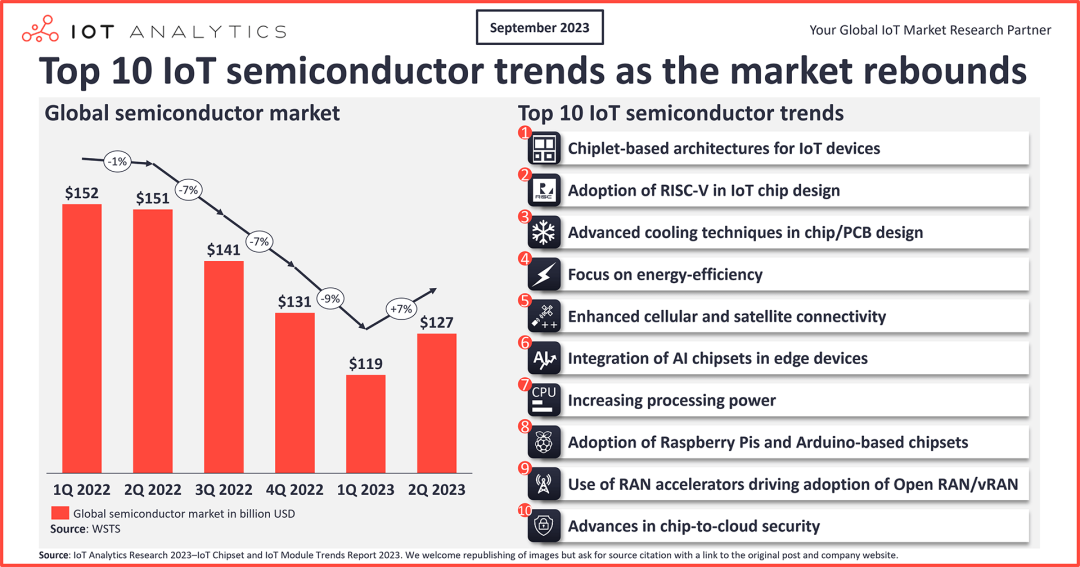
Despite ongoing trade tensions, slow economic growth, and chip shortages, the semiconductor market has shown subtle signs of recovery from Q1 2023 to Q2 2023.
The second quarter of 2023 marks the first positive change since Q4 2021, with a quarter-on-quarter growth of 4.2%.
Behind the cold numbers, several trends are driving the market rebound, including:
Growing demand for AI chipsets.
Stronger, even global IoT connectivity, with modular and scalable connections.
A desire to move data analysis and storage closer to the edge.
Pursuit of more miniature chip designs with higher efficiency in heat dissipation.
In this complex market, the share of IoT revenue among major semiconductor companies has generally increased in recent years, exceeding 10% of revenue for many large chip companies, and in some cases even surpassing 20%.
Here are the specific trends:
What Do the Top Ten Trends Indicate?
1. Adoption of Chiplet-Based Architectures in IoT Devices
Semiconductor chip Original Equipment Manufacturers (OEMs)/Manufacturers (ODMs) are adopting chiplet-based architectures.
A chiplet is a design concept that allows multiple chips with different process node sizes to be used within a single package. This design enables rapid prototyping, shortens time to market, and reduces production costs.
Chiplet-based architectures are particularly suitable for IoT devices, which vary in complexity from disposable RFID tags to integrated sensors, AI chips, processing, storage, and connectivity in advanced driver-assistance systems.
Example:
In November 2022, AMD released the Radeon RX 7900 XTX and Radeon RX 7900 XT graphics cards. These GPUs utilize AMD’s next-generation RDNA 3 architecture, featuring a chiplet-based design that combines 5nm and 6nm process nodes, achieving a 54% increase in performance per watt and a 2.7 times improvement in AI performance compared to RDNA 2.
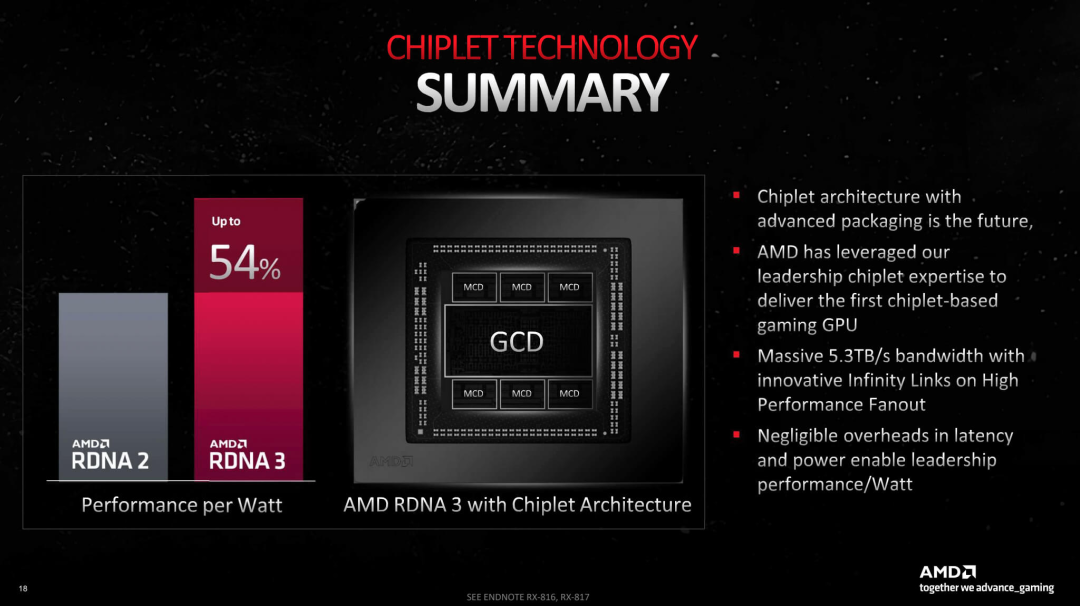 AMD’s next-generation RDNA 3 architecture.Image Source: Kitguru.
2. Increasing Adoption of RISC-V in IoT Chip Design
Many IoT device companies are turning to the open standard instruction set architecture RISC-V when designing chips.
RISC-V is known for its high energy efficiency and customizability, and is considered secure due to its transparent, open-source nature and ISA compliance. Its modular design allows for efficient resource utilization, making it cost-effective for various IoT deployments.
Example:
On August 4, 2023, a group of major semiconductor industry players, including Bosch, Infineon, Nordic Semiconductor, NXP, and Qualcomm, jointly invested in a new company aimed at promoting the adoption of RISC-V architecture. The goal is to accelerate product development and commercialization of RISC-V, establishing it as a single source for RISC-V products, reference architectures, and solutions.
3. Introducing Cooling Technologies into Chips/PCBs for Smaller Node Designs
The trend of shrinking chip sizes is inevitable, with processes reducing to 3nm and 2nm, which is expected to drive the development of IoT and general AI chips, bringing three distinct challenges:
Higher power density: Smaller, more advanced chips have higher power density, generating more heat due to increased circuits in a smaller area.
Reduced heat dissipation surface area: Smaller form factors typically mean less surface area for heat dissipation, making effective cooling more challenging.
Thermal resistance: Smaller form factors also lead to higher thermal resistance within the chip itself. As chips shrink, the space for heat propagation and dissipation decreases, resulting in increased thermal resistance.
To mitigate these challenges, semiconductor companies are developing and adopting various cooling technologies to manage and help dissipate heat generated during operation, including: heat sinks, fans, liquid cooling, vapor chambers, phase change cooling, and thermoelectric cooling.
Example:
In its iEP-5000G series industrial IoT controllers, Asrock employs copper heat pipes to address heat dissipation issues. Heat pipes are tubular devices embedded beneath the PCB, surrounding areas of the PCB that exceed temperature limits. Additionally, Asrock has added heat sinks to both the casing and internal heat pipes of the iEP-5000G.
4. IoT Processors Focus on Innovations for Future Energy Efficiency
As processors continue to advance in performance, connectivity, and compactness, the demand for energy efficiency is also increasing.
Due to this demand, ultra-low-power MCU-based SoCs are emerging, with semiconductor companies leveraging innovative energy-saving methods to extend battery life and optimize performance.
Example:
In March 2023, STMicroelectronics announced the launch of the STM32WBA52, which combines Bluetooth LE (BLE) 5.3 connectivity with ultra-low power modes, ARM PSA Level 3 certification, SESIP3 security, and a rich selection of peripherals for developers.
It is powered by an ARM Cortex-M33 core running at 100 MHz, featuring ST’s low-power DMA and flexible power-saving state switching for quick wake-up. According to STMicroelectronics, these features can reduce the MCU’s power consumption by up to 90%.
Similarly, in March 2023, Onsemi launched the NCV-RSL15, an automotive-grade wireless microcontroller. A notable achievement of this product is that it has been certified by EEMBC as the industry’s lowest power secure wireless microcontroller.
To minimize power consumption, the NCV-RSL15 employs a proprietary smart sensing power mode that can operate as low as 36 nanoamps. This microcontroller is known for its BLE connectivity tailored for various applications, such as smart vehicle entry, tire pressure monitoring systems (TPMS), and seatbelt detection.
5. Enhanced Cellular and Satellite Connectivity for Streamlined Operations and Global Coverage
5G Reduced Capability (RedCap), also known as 5G NR-Light, is a new specification in 3GPP R17 aimed at IoT use cases requiring mid-tier connectivity.
5G RedCap is an enhancement of current 5G technology, not a lightweight version of 5G. It balances throughput, battery life, complexity, and IoT device density.
Currently, mid-tier IoT devices rely on the wide-area wireless connectivity and mobility provided by LTE Cat-4. 5G RedCap will directly compete with LTE Cat-4 for this segment of demand, both operating on similar 20 MHz bandwidths and providing comparable throughput of 150 Mbps downlink and 50 Mbps uplink.
As LTE Cat-4 is an older technology, it has a relatively short lifespan in terms of network support, while 5G RedCap, as a next-generation technology, will have a longer lifespan.
Additionally, the IoT device market is seeing more advanced connectivity solutions that combine satellite and cellular technologies, providing global coverage and connectivity for IoT applications. These solutions can extend the global coverage of IoT devices beyond the limitations of terrestrial networks.
Example:
In March 2023, Fibocom announced the launch of its new RedCap module series FG132-NA. This module enhances energy efficiency, expands the diversity of IoT scenarios, and supports 5G SA while being backward compatible with LTE Cat-4 networks. It offers downlink speeds of up to 220 Mbps and uplink speeds of up to 100 Mbps, providing reliable network performance for various applications such as manufacturing plants, IPC, and smart grids.
Furthermore, in July 2023, Fibocom unveiled the non-terrestrial network module MA510-GL (NTN) at MWC Shanghai 2023. This module, featuring the Qualcomm 9205S modem, complies with 3GPP R17 standards and is designed to meet the needs of the global IoT market, supporting highly flexible GEO satellite communication and cellular connectivity.
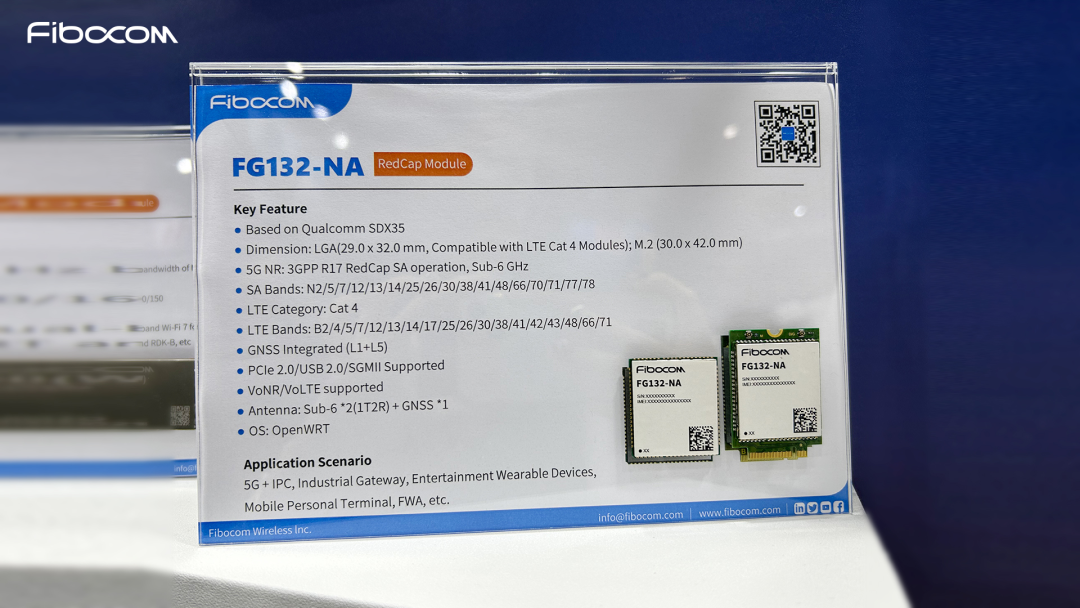 In March 2023, Fibocom announced the global launch of its new RedCap module series FG132-NA.Image Source:Fibocom.
6. Increasing Edge Integration of AI Chipsets
As enterprises continuously seek faster and safer ways to make better decisions, the demand for real-time data analysis and data privacy is rapidly growing.
This demand is driving the development of new edge devices equipped with chipsets that enable AI applications to run locally without sending data to the cloud. Localized AI processing can reduce latency, enable rapid decision-making, and protect data, as the data does not leave the premises.
Example:
At the 2023 Hannover Messe, Advantech showcased three industrial AI platforms, each based on different Nvidia GPUs, as follows:
-
MIC-733-AO, based on Nvidia Jetson AGX Orin
-
MIC-711-OX, based on Nvidia Jetson Orin NX
-
MIC-711-OA, based on Nvidia Jetson Orin Nano
These Nvidia GPUs have different performance levels, with Jetson AGX Orin being the most powerful and Jetson Orin Nano being entry-level. The Nvidia Jetson AGX Orin SoM is based on Ampere architecture GPU and ARM Cortex-A78AE CPU.
The Jetson AGX Orin 64GB features 2048 CUDA cores and 64 tensor cores, supporting up to 170 Sparse TOPs of INT8 tensor computation and up to 5.3 FP32 TFLOPs of CUDA computation. The NVIDIA Jetson Orin module can deliver up to 275 trillion operations per second (TOPS), achieving an 8-fold increase in concurrent AI inference performance compared to the previous generation GPU.
7. Enhanced Processing Power of Local Industrial Hardware Solutions
Some industrial automation suppliers have recently upgraded their hardware, such as IPCs (Industrial Personal Computers), with faster chipsets and features.
These upgrades enable industrial hardware to locally store and analyze data, while multi-core IPCs can run software-based PLCs (Programmable Logic Controllers). New chip technologies typically include Intel’s i9 processors (Raptor Lake) and Nvidia’s Jetson AGX.
Four customer demand factors are driving this situation:
Demand to migrate some software applications from the cloud to the edge;
Demand for faster data processing and analysis;
Need to handle multiple connections and convert various protocols as companies retrofit old assets using different protocols;
Need for better control over data collected from sensor networks, as well as local data storage and retrieval;
Example:
In November 2022, Beckhoff announced the introduction of a new member of the C60XX series IPC, the C6040, which is based on Intel’s new Raptor Lake technology, providing better caching for improved real-time capabilities.
Shortly thereafter, in March 2023, Beckhoff highlighted its further enhanced C6043 IPC, which includes an Nvidia RTX A4500 GPU for AI acceleration.
8. Adoption of Raspberry Pi and Arduino-Based Chipsets in IoT Gateways
To align with the trend of enhanced processing power in local industrial hardware solutions, IoT gateway manufacturers are incorporating Raspberry Pi and Arduino-based systems into their devices.
These devices were initially used for prototyping but have now been integrated into market industrial IoT gateway solutions due to their cost-effectiveness, availability, and large community support (primarily from developers and enthusiasts). Additionally, these systems offer various connectivity options, such as WiFi, Ethernet, and Bluetooth, which are crucial for IoT gateways.
Example:
In January 2023, Artila Electronic released the Matrix-310, an industrial IoT gateway based on the Espressif ESP32, featuring a Xtensa dual-core 32-bit LX6 processor with a frequency of up to 240 MHz.
Users can manage the ESP32 Arduino core through the Arduino board manager and program and develop applications for the Matrix-310 using the Arduino IDE. The Arduino IDE supports FreeRTOS, an open-source real-time operating system for managing multiple tasks on the ESP32 board.
9. Widespread Adoption of RAN Accelerators Driving Cellular Communication Infrastructure to Embrace Open RAN/vRAN Architectures
As communication service providers continue to roll out 5G globally and look towards 6G technology around 2030, they are increasingly interested in open, flexible, virtual, and programmable Radio Access Network (RAN) infrastructure for better performance, scalability, and cost savings.
One of the factors driving RAN performance is RAN accelerators. These are custom hardware components or software modules designed to enhance RAN performance, which can be based on FPGA, GPU, or ASIC, and are used to offload processing tasks from general-purpose processors in the system.
Notable architectures supporting RAN acceleration include Open RAN and virtualized RAN (vRAN):
Open RAN is an architecture that promotes the use of open interfaces and standards, enabling a more modular and flexible network infrastructure where components from different vendors can work together seamlessly.
vRAN is an architecture that implements network functions using virtualization technology, where various network functions are realized as software running on general-purpose hardware platforms (such as servers), rather than being executed on dedicated (often proprietary) devices.
Telecom operators can choose Open RAN to promote network heterogeneity, reduce vendor lock-in, and foster innovation through open interfaces and interoperable network elements.
On the other hand, choosing vRAN allows leveraging virtualization technology to implement RAN functions on general-purpose hardware platforms, helping achieve higher network scalability, flexibility, and cost efficiency, making network upgrades and maintenance simpler and more economical. However, it is worth noting that RAN-related technologies are still not mature.
Example:
In February 2022, Dell showcased an Open RAN accelerator card based on the Marvell OCTEON CNF10S baseband processor. A year later, Dell announced collaborations with industry leaders to enhance its RAN environment’s open infrastructure.
In January 2023, Intel launched its latest fourth-generation Intel Xeon Scalable processors, featuring Intel vRAN Boost, a new chip designed to directly integrate 5G and 4G vRAN acceleration into Intel Xeon SoCs. This processor is optimized to enhance performance in packet and signal processing, load balancing, artificial intelligence and machine learning, and power management implementations. Thus, there is no longer a need for custom first-layer accelerator cards. By eliminating the need for external accelerator cards, CSPs can reduce their vRAN component requirements, which in turn can significantly save computing power, simplify solution design, and lower the total cost of ownership for CSPs.
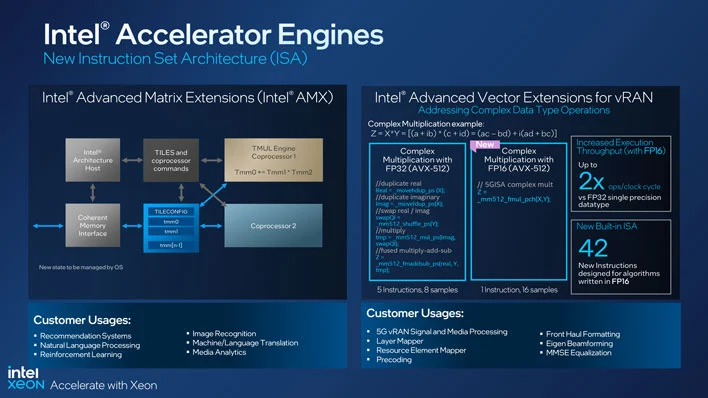 Directly implementing 5G and 4G vRAN acceleration on Intel Xeon SoCs.Image Source: hothardware.
10. Advances in Security from Chip to Cloud
As the number of connected devices continues to rise, the risks of network attacks and unauthorized access also increase. IoT chip technology suppliers are actively integrating security features into their products and complying with industry-specific regulations and standards.
One set of standards is the IEC 62443 OT standard series, and products certified under this must adhere to specific product development requirements from the early design stages. Many leading industry players have obtained this certification.
Example:
In March 2023, Eurotech announced that its ReliaGATE 10-14 multi-service IoT edge gateway complies with IEC 62443 standards and has undergone component-level security testing according to the following regulations:
IEC 62443-4-1, which defines the security product development process.
IEC 62443-4-2, which defines the technical requirements for network components, host components, and software applications of embedded devices.
It is also PSA certified at Level 1, with TPM 2.01C embedded on the PCB.
With the rise of eSIM and iSIM technologies, more suppliers are integrating these technologies to protect IoT devices using cellular connections. These technologies combine embedded security elements, providing more advanced security compared to traditional SIM cards. The embedded security element acts as a hardware root of trust for asymmetric encryption, ensuring secure end-to-end communication.
What This Means for IoT Semiconductor Companies
Based on the trends identified in this report, IoT semiconductor suppliers should ask themselves five key questions:
Energy Efficiency: Are we focusing on improving the energy efficiency of processors, potentially drawing inspiration from advancements made by companies like STMicroelectronics and Onsemi, and integrating ultra-low power modes and innovative energy-saving methods into our new chip designs?
Artificial Intelligence: How do we position ourselves in the AI chip market, and what partnerships or acquisitions can drive our growth in this area?
RISC-V: How can our company accelerate the transition to RISC-V architecture or incorporate RISC-V architecture into our IoT chip designs for a competitive advantage?
Heat Dissipation: As chip technology shifts to 3nm and 2nm nodes, how do semiconductor companies plan to assist customers in addressing challenges related to higher power density and reduced heat dissipation surface area?
Chiplet Architecture: Are we exploring the potential advantages of chiplet-based architectures for our customers’ IoT products? How can we leverage it to reduce production costs and shorten time to market?
What This Means for IoT Semiconductor Device/Equipment Manufacturers
Based on the trends identified in this report, IoT semiconductor device/equipment manufacturers should ask themselves five key questions:
New Connectivity: Are we exploring opportunities in LTE Cat 1 bis and satellite connectivity to enhance the global coverage and connectivity of IoT devices?
Heat Dissipation: How can we optimize PCB designs to adopt efficient heat dissipation methods?
Energy Efficiency: How can we leverage the energy-saving features of newly launched chips (such as STM32WBA52 and NCV-RSL15) to enhance the performance and battery life of IoT devices?
Edge Computing: How can we utilize faster chipsets to enhance local data processing and analysis capabilities, and what are the potential benefits of migrating software applications from the cloud to the edge?
Artificial Intelligence: What AI features do we need to incorporate into IoT devices to meet future customer demands related to edge AI inference?


Featured Articles
“Intelligent Mobility on Wheels,” How Will It Disrupt Your Travel Life?
“Huawei Genius” Zhi Hui Jun’s Entrepreneurial Debut! Large Model AI Robot Takes the Stage, Is Musk Worried?
Web3+AIoT=DePIN, DePIN is not very suitable for building markets from 0 to 1, but is more suitable for accelerating the mature AIoT market.
Recent Exciting Events (Advertisement)