What is PCDN?
CDN (Content Delivery Network) is a network architecture that provides fast, efficient, and reliable website and internet content distribution services through a distributed server system. It accelerates content loading speed and enhances user experience by caching content to servers closest to users, deployed in various geographical locations.
PCDN (P2P CDN), which stands for Peer-to-Peer CDN, utilizes the idle resources of numerous user devices located in different places, such as home broadband, to store and transmit content. Compared to traditional CDN, PCDN can provide distribution efficiency comparable to CDN while reducing costs through this decentralized approach.
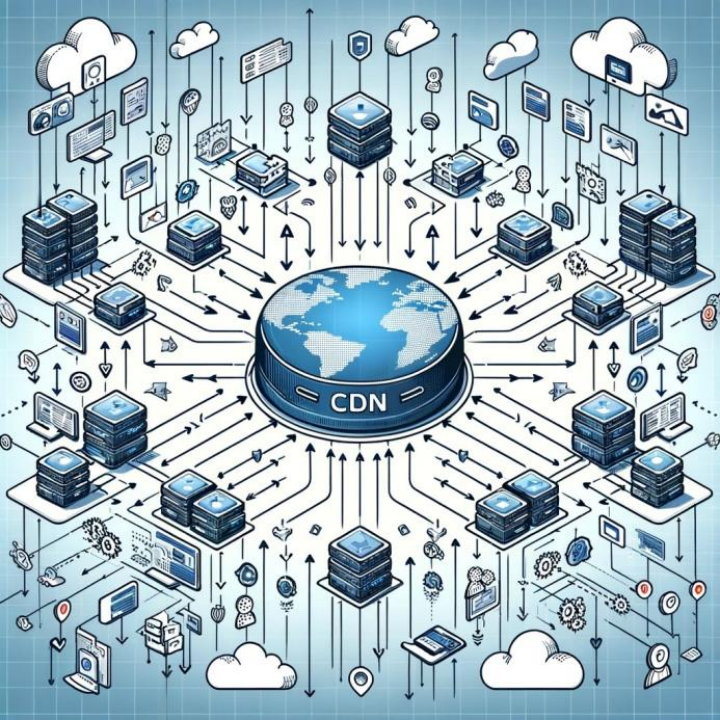
What are the application scenarios of PCDN?
Video on demand and live streaming: Utilizing the idle bandwidth of user devices for content distribution, suitable for video on demand and live streaming, especially in areas with limited bandwidth resources.
Large file distribution: PCDN can be used for distributing large files, such as game content, software updates, etc., particularly suitable for cost-effective distribution scenarios.
Community and online forums: In communities and online forums, PCDN can be used to distribute user-generated content, such as images and videos.
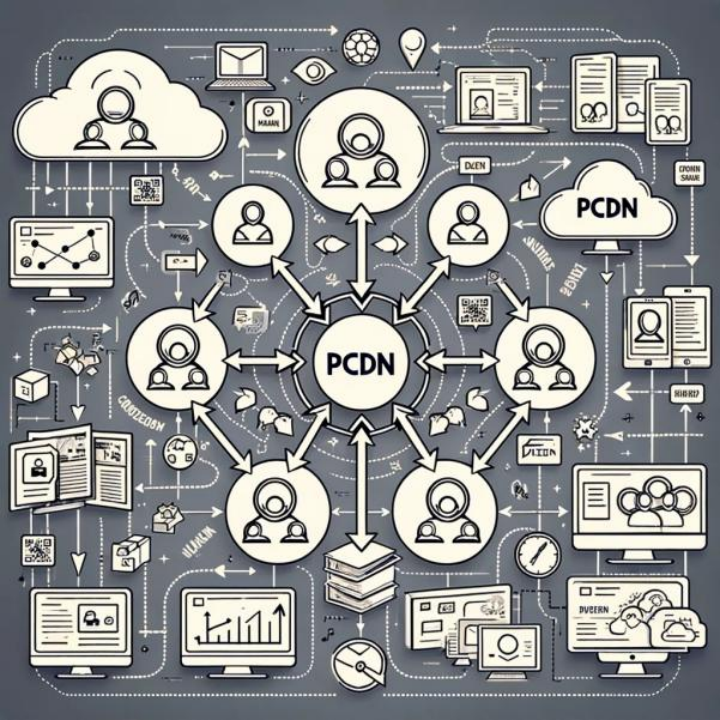
What are the characteristics of PCDN in home broadband?
Low cost: PCDN can effectively utilize the idle bandwidth in home broadband, reducing reliance on expensive servers and data centers, thereby significantly lowering content distribution costs.
Distributed traffic: By being spread across numerous home broadband users, PCDN can effectively distribute access pressure, improving the system’s resilience and reliability.
Bandwidth limitations: Due to the relatively limited bandwidth and stability of home broadband, it may affect the speed and quality of content distribution.
Security issues: In a home broadband environment, data security and privacy protection pose significant challenges, requiring additional security measures.
Is PCDN really a black technology?
Recently, some home broadband users complained that certain resources could not be viewed through a specific brand’s TV app when using mobile home broadband, and the issues were not concentrated in one location. During testing, it was found that using a mobile phone hotspot and other operators’ networks allowed normal viewing. TV users accessed live broadcasts and various on-demand programs through the TV’s built-in app using Wi-Fi or wired broadband. After checking the BRAS and OLT device upstream and downstream link quality based on user complaints, no poor quality links were found. The network quality on the user access side was good. By examining user terminals, it was noted that the problematic TV models and software versions varied significantly, with most being relatively new models, ruling out faults due to TV model issues. Using cellular-z to check the Wi-Fi quality of user-side routers, most users had no co-channel or adjacent channel interference, and replacing some users’ routers with newer models did not resolve the issues.
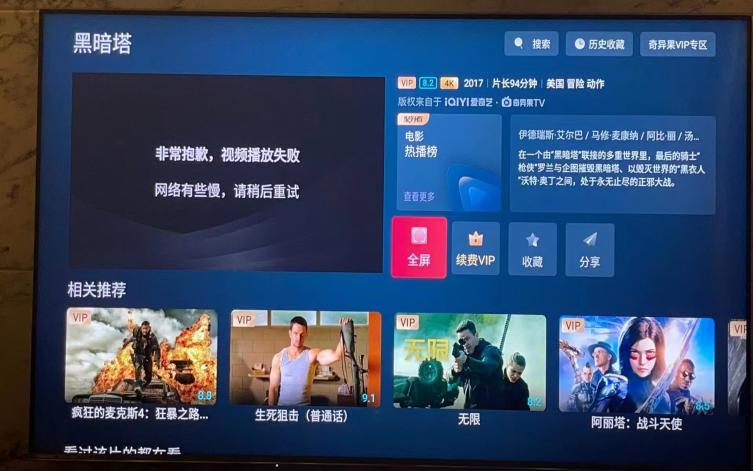
Through analysis of the app’s business application process, testing results in various network environments, and packet capture IP comparison, it was observed that when users normally use the app, the scheduled resource CDN nodes are the IDC addresses within each operator’s network. When mobile home broadband users experience abnormal buffering or cannot access resources, the scheduled resource distribution nodes are the mobile home broadband CGN public NAT addresses. These resource nodes are likely PCDN nodes, where network quality and distribution quality cannot be effectively guaranteed, leading to perceptual issues. After actively contacting the company of the TV’s built-in app to coordinate the optimization of this poor quality resource scheduling, the testing services returned to normal.
It is evident that video apps (TV, video, short video) typically use CDN for resource scheduling and distribution. To ensure user experience, content providers generally use CDN nodes from data centers with stable network quality and good server status for resource distribution. Recently, some content providers have adopted cheap PCDN methods for content resource distribution to reduce operational costs, but this distribution method cannot effectively guarantee network and content quality, leading to perceptual issues.
Copyright belongs to the original author. If there is any infringement, please contact us.
Reformatted and edited by Science Popularization China.
Content from: China Mobile Science and Technology Association.