In the realm of high-frequency trading (HFT), milliseconds are too slow, microseconds are competitive, and nanoseconds are victorious. The relentless pursuit of speed drives companies to explore technologies that push the boundaries of performance, determinism, and efficiency. Field Programmable Gate Arrays (FPGAs) are no longer optional in this race—they are the foundation of next-generation trading infrastructure.
In this article, we explore how FPGAs are transforming high-frequency trading and other latency-sensitive industries. You will learn:
-
Why traditional CPU-based systems struggle to meet the demands of modern markets,
-
How FPGAs provide deterministic, nanosecond-level performance,
-
What is required to design and integrate successful FPGA-based architectures.
This guide covers the key insights you need to stay ahead in the speed race, from real-time data processing to full-stack system engineering.
The Latency Arms Race
Financial markets have evolved into an extremely competitive ecosystem where the fastest systems often gain the advantage. Even nanosecond-level latency improvements can determine the difference between profit and loss. Traditional software stacks running on CPUs and managed by general-purpose operating systems face inherent limitations such as OS jitter, context switching, and cache latency.
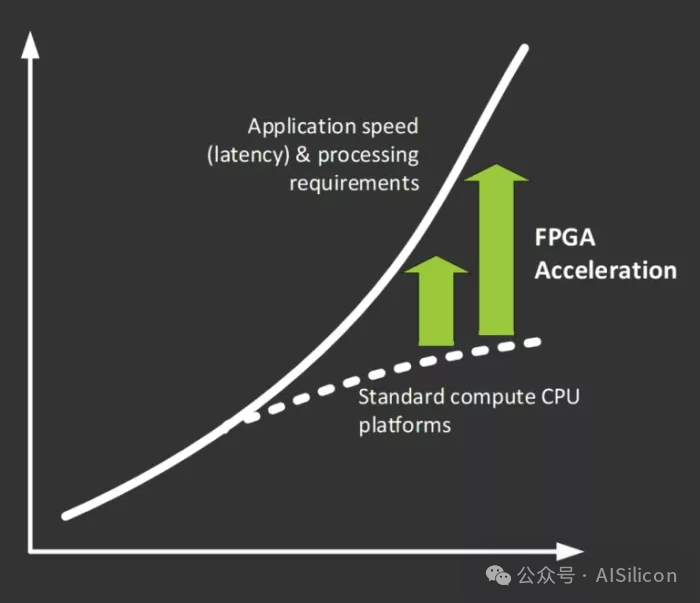
FPGAs overcome these bottlenecks by executing logic at the hardware level. With architectures tailored for specific tasks such as market data filtering, order book reconstruction, and trade execution, FPGAs provide deterministic behavior and consistent ultra-low latency performance. In a world where latency equals opportunity, determinism is no longer a luxury; it is a strategic necessity.
Unlike software-based solutions that rely on sequential instruction pipelines, FPGAs process data in parallel, achieving cycle-level precision and throughput. This enables ultra-fast data path optimization, significantly reducing the number of processing hops from packet arrival to trade execution. For example:
-
Market data can be fully decoded, filtered, and normalized within the FPGA.
-
Pre-trade risk assessments can be directly embedded in hardware logic.
-
Signal-triggered order execution can be activated instantaneously.
These capabilities allow trading firms to migrate latency-sensitive components away from CPUs, ensuring predictability and speed—regardless of external load or market fluctuations.
Advantages of FPGAs in Trading Systems
While high-frequency trading is a high-risk example, the performance advantages of FPGAs extend far beyond trading. In industries where deterministic response and real-time processing are critical, FPGAs are driving innovation:
-
Automotive: Advanced Driver Assistance Systems (ADAS) rely on real-time image recognition and control systems.
-
Medical Imaging: Devices such as MRI and ultrasound scanners require fast, high-resolution signal processing.
-
Aerospace and Defense: Applications such as radar, guidance, and communications rely on predictable, ultra-fast data processing.
These fields share critical demands: low latency, high reliability, and adaptability. With reconfigurable logic and hardware-level execution capabilities, FPGAs have a unique advantage in meeting these complex requirements.
Beyond Wall Street—Broader Applications of FPGA Technology
Unlocking the full potential of FPGAs requires more than just selecting the right silicon—it demands holistic system engineering:
-
Firmware and HDL Design: Clear and efficient HDL ensures tight timing convergence and resource-optimized logic.
-
Board-Level Design: Signal integrity, power optimization, and high-speed I/O must be expertly managed.
-
Software Integration: Seamless interaction with the software stack (from Linux kernel drivers to user-level trading logic) is crucial.
The future of high-frequency trading is being shaped in silicon. FPGAs offer an unparalleled combination of speed, precision, and reconfigurability. But tapping into their potential requires more than just hardware—it demands architectural vision, hands-on engineering expertise, and a deep understanding of performance-critical domains.
As the latency race accelerates, companies mastering FPGA acceleration technology will not just keep pace—they will define new performance standards. And its impact will extend far beyond trading—wherever speed meets intelligence, FPGAs will be there.
Follow us to stay updated⭐