Click the blue text above to easily follow  Produced byThis article was first published in the “Equipment and Technology” section of the May issue of Chinese Photography.
Turning the pages of Fujifilm’s more than half a century of camera manufacturing history, from 35mm cameras to medium format and large format cameras, there are brilliant marks.
As early as 1948, Fujifilm launched its first medium format film camera, the FUJICASIX1A, which is a lightweight 6×6 (cm) folding camera. Subsequently, Fujifilm has been pioneering in the research and development of medium format film cameras:
In 1968, Fujifilm launched the G690 camera, this 6×9 (cm) medium format rangefinder camera was hailed as the “Big Leica”;
In 1987, the Fujifilm GX680 was released, a 6×8 (cm) medium format SLR camera that became a classic configuration for commercial studios; In 1993, the Fujifilm GX617PRO was launched, a 6×17 (cm) ultra-wide format camera, which can be called the “dream camera” for landscape photographers;
In 1996, the first Fujifilm GA645 rangefinder camera with autofocus was launched, which is a tool for street photographers demanding image quality;
In 2003, the Fujifilm GX645AF autofocus SLR camera became a favorite among portrait photographers;
In 2010, the Fujifilm GF670 Professional was launched, this folding camera in the European and American markets is known as BESSA III, which can be seen as an upgrade and continuation of the classic German folding camera Voigtländer BESSA II.
Fujifilm’s medium format cameras cover almost all types of medium format film cameras, with a diversity of medium format types unmatched by any other camera manufacturer, from the common 6×4.5 (cm), 6×6 (cm), 6×7 (cm), 6×9 (cm), to the unique 6×8 (cm), and even the ultra-wide format of 6×17 (cm), everything is available. The milestone transformation of Fujifilm in medium format cameras occurred in 2016.
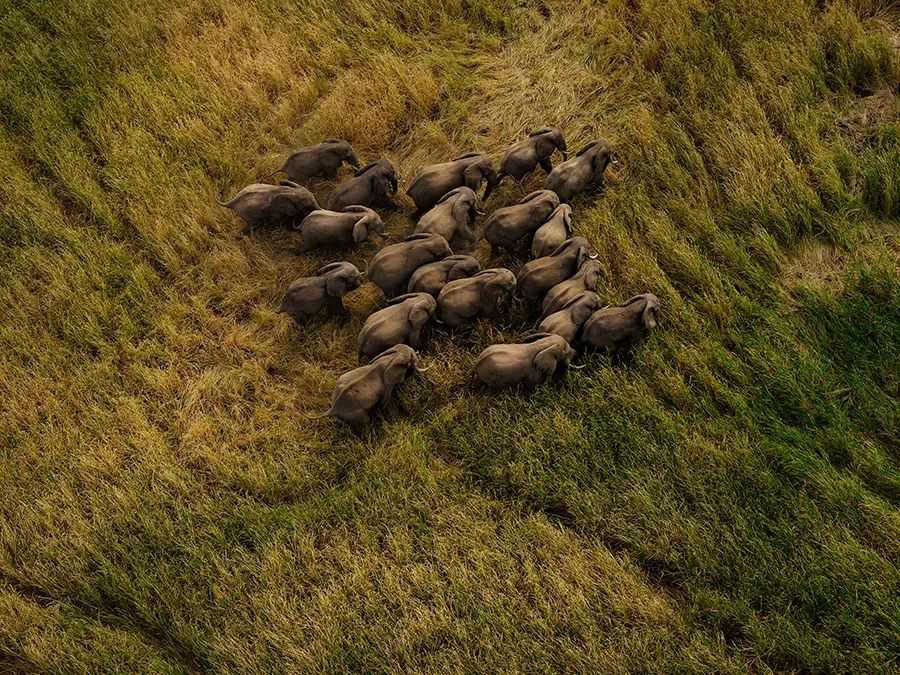 Earth Melody, Liu Yu Fujifilm GFX 50S camera, f/8, 1/1600 sec, ISO 800.Disrupting Tradition: Fujifilm GFX50S At the time when the development of 135 full-frame SLR cameras hit a bottleneck, Fujifilm felt the persistent pursuit of image size and quality by commercial photographers and high-end enthusiasts, directly skipping the full-frame level (or avoiding the most fiercely competitive full-frame market) and using a medium format sensor to develop high-end digital cameras. In September 2016, at the PHOTOKINA exhibition held in Cologne, Germany, Fujifilm officially launched the GFX medium format mirrorless camera system, with the first product being the Fujifilm GFX50S.
  Rock, Zhang Bin Fujifilm GFX 100 camera, f/18, 3 sec, ISO 50.Fujifilm also launched the GF series lenses with the G mount. Its appearance and control principles are designed according to the modular concept of medium format SLR cameras, but its interior is a mirrorless structure (S stands for SLR shape). This camera is equipped with a 51.4-megapixel Fujifilm G format 43.8×32.9 mm CMOS image sensor and an X Processor Pro image processor. The area of the medium format sensor is about 1.7 times that of a full-frame sensor and about 62% of the effective imaging area of traditional 645 medium format film. Due to the superior light-gathering performance of individual pixels, the Fujifilm GFX50S significantly outperforms full-frame cameras in detail reproduction, high sensitivity performance, and dynamic range under the same pixel conditions. It can output 4:3 aspect ratio, 8256×6192 pixel 14-bit RAW format photos. This 4:3 aspect ratio is a proportion that traditional 645 medium format photographers are very accustomed to.

Mountains Bloom with Light, Liu Yu
Fujifilm GFX 100 camera, f/22, 0.62 sec, ISO 100.
This camera is equipped with the X Processor Pro image processor, which can not only process the 50-megapixel image data captured by the medium format sensor at high speed but also allows the camera to have Fujifilm’s traditional film color simulation functions, such as: Velvia, PROVIA, ACROS, etc. Its standard sensitivity range is from ISO100 to 12800, and can be extended to ISO50 to ISO102400, with continuous shooting performance reaching 3 frames per second. Due to the use of magnesium alloy material and the maximum compact design of the overall body size, the Fujifilm GFX50S weighs only about 920 grams (including the electronic viewfinder), with a small volume and light weight, making it easy to operate, completely overturning the traditional heavy image of medium format cameras. When used with the standard prime lens Fujifilm GF63mm F2.8RWR, the total weight is only 1230 grams, almost equivalent to the weight of full-frame digital SLR cameras. This camera is also designed as a professional camera according to the needs of professional photographers. In terms of viewing performance, it is equipped with a 3.69 million pixel OLED electronic viewfinder and a 2.36 million pixel touch display. Particularly, its electronic viewfinder adopts a detachable structure, which can be flexibly operated according to shooting needs. By installing the EVF-TL1 external electronic viewfinder adapter, photographers can change the viewing angle to a maximum of 90° when shooting horizontal subjects, and ±45° when shooting vertically. The rear display screen adopts a 3.2-inch 2.36 million pixel three-way folding LCD touch screen, making it easier for professional photographers to compose shots, view images, and focus operations, enhancing the operational feel of medium format cameras. Not only that, through an adapter, this camera can be adapted to 4×5 large format cameras, which can fully utilize the tilt-shift shooting function of large format cameras while using the focal plane shutter on the camera. Fujifilm’s creation in the field of medium format digital cameras has been very successful. This camera has been praised by professional photographers since its launch and was awarded the TIPA award for “Best Medium Format Camera”, becoming an important choice for professional photographers’ equipment upgrades in fashion, still life, portrait, and landscape photography. Ultimate Lightweight: Fujifilm GFX50R In September 2018, Fujifilm continued to launch the GFX50R, a medium format mirrorless camera with a different design function and similar performance configuration. Its appearance and control principles are designed according to rangefinder cameras, but its internal structure is that of a medium format mirrorless camera (R stands for Rangefinder shape). This camera is still equipped with a 51.4-megapixel Fujifilm G format CMOS image sensor and an X Processor Pro image processor. However, GFX50R is designed to be more compact and lightweight, weighing about 145 grams less than GFX50S, and its body thickness is only 66.4 mm.

Light and Shadow Dream, Wu Shenjie
Fujifilm GFX 100 camera, f/5.6, 1/125 sec, ISO 100.
The GFX50R is equipped with a 0.77x 3.69 million pixel OLED electronic viewfinder for rangefinder-style viewing, allowing photographers to observe the subject with one eye while focusing on the viewfinder image with the other. In terms of body control, its design makes operation more intuitive, such as being equipped with a focus joystick for quick adjustment of the focus point; removing the selector button for easier grip of the camera, etc. In addition, this camera is the first camera in the GFX system to have Bluetooth functionality, enhancing connectivity. Images captured by users can be quickly wirelessly transmitted to smartphones or mobile tablet devices paired with the camera via an application. It can be said that the Fujifilm GFX50R is very suitable for street photographers or fashion photographers who pursue image quality and want flexibility, and it was also awarded the TIPA award for “Best Medium Format Camera” that year. The Return of the King: Fujifilm GFX100 By May 2019, Fujifilm had greater determination and confidence in the GFX system, launching the flagship model of the GFX series of mirrorless medium format digital cameras—the 100-megapixel GFX100. This camera adopts a new backside-illuminated image sensor, still sized at 43.8×32.9 mm, but the effective pixels have doubled to about 102 million. The new sensor, combined with the powerful computing capability of the fourth-generation X-Processor 4, paired with the Fujifilm GF series lenses, significantly improves the clarity, dynamic range, and color performance of the photos taken, achieving the highest image quality. It can output 4:3 aspect ratio, 11648×8736 pixel 16-bit RAW format photos, and the high-speed continuous shooting performance reaches about 5 frames per second. Moreover, this image sensor is covered with 3.76 million phase difference pixels, with nearly 100% coverage, allowing the camera to quickly and accurately autofocus regardless of where the subject is located in the frame. This sets a new benchmark for the dynamic recognition and tracking performance of medium format digital cameras. 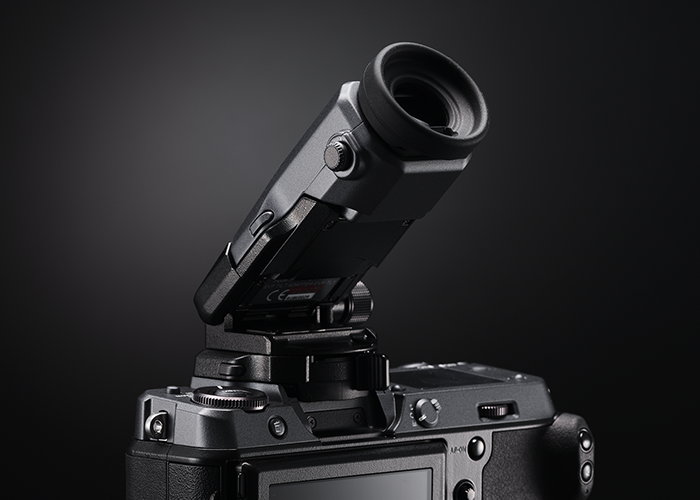 When the Fujifilm GFX100 is equipped with an external angle-adjustable viewfinder adapter, the viewing angle can be changed to a maximum of 90° when shooting horizontal subjects, and ±45° when shooting vertically.
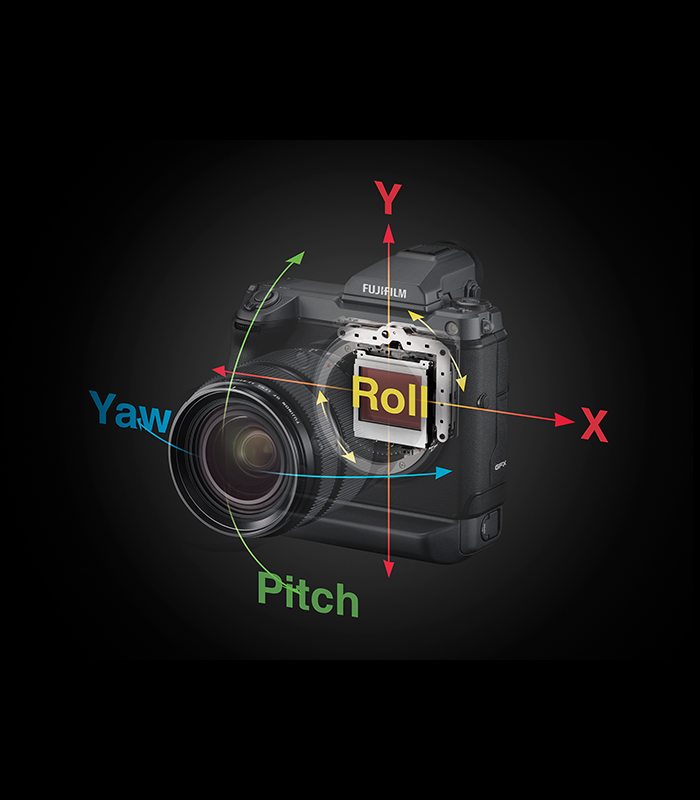 Fujifilm GFX100 has a body image stabilization system designed to provide up to 5.5 stops of image stabilization performance.To prevent camera shake from affecting image quality, Fujifilm creatively designed a body image stabilization system (IBIS) for this medium format sensor, providing up to 5.5 stops of image stabilization performance. This sensor-shift method—5-axis stabilization system can prevent image shake during pitch and yaw movements, as well as during shift (horizontal) and roll (rotational) movements. This feature greatly expands the application scenarios for professional photographers using medium format cameras handheld, completely overturning the traditional operating mode of medium format cameras. Although the starting point of GFX100 is a medium format camera, it has a sturdy magnesium alloy body, but its body size and weight are comparable to full-frame flagship digital SLR cameras, weighing about 1400 grams when including two batteries, storage cards, and electronic viewfinder. Due to the integrated vertical grip design, this camera is lighter and thinner, making vertical shooting more convenient.
 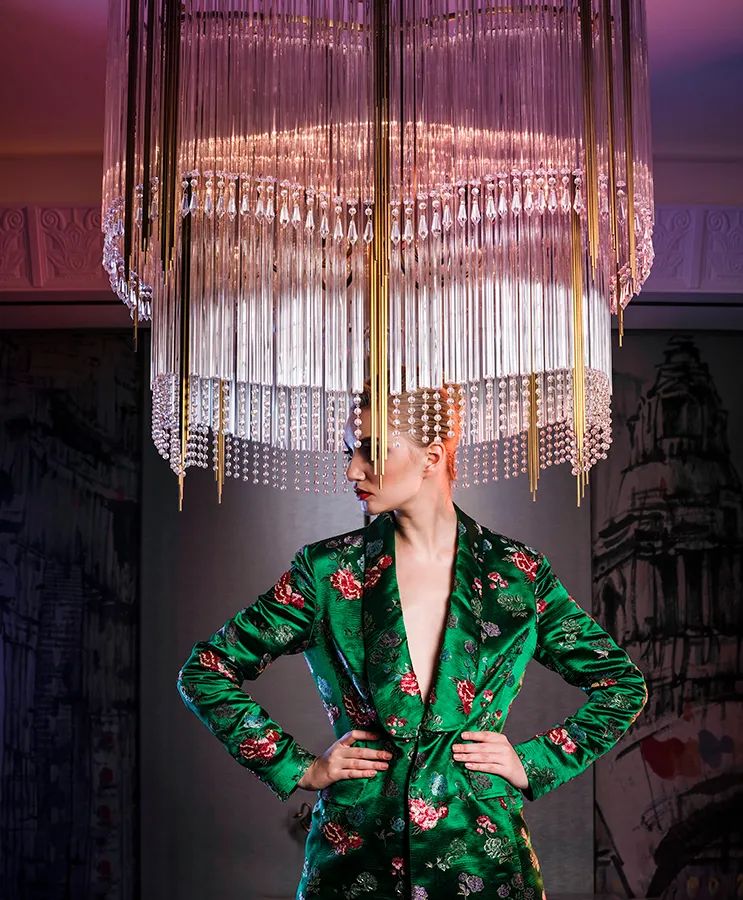 Portrait One, Kong Lingkai Fujifilm GFX 50S camera, f/8, 1/125 sec, ISO 100.Its back is equipped with a detachable 5.76 million pixel EVF electronic viewfinder, making it easy for photographers to switch to an external angle-adjustable viewfinder adapter, and it also features a three-way folding 3.2-inch approximately 2.36 million pixel rear touch LCD display that can fold up 90°, down 45°, and right 60°, making it convenient for photographers to view from various complex angles. Interestingly, more than a year later, Fujifilm released firmware Ver.3.00 upgrade for GFX100, enabling the multi-shot pixel shift function to capture photos with a resolution of 400 million pixels. This is a significant benefit for photographers shooting for artistic display or high-quality still images. The Fujifilm GFX100 is a revival of medium format cameras, its launch has made the Fujifilm GFX series medium format digital cameras product line more complete and mature, providing professional photographers with better image quality and stronger shooting performance options. This camera won the EISA award for “Best Innovation Camera” for the 2019-2020 year and was selected as the “Best Medium Format Camera” by the TIPA awards in 2020, even winning the highest award of the 2020 iF Design Award—the Gold Award. Breaking Limits: Fujifilm GFX100S The success of the first three medium format digital cameras made Fujifilm see the strong demand from professional photographers for medium format digital cameras. Soon after, in January 2021, Fujifilm launched the fourth mirrorless medium format digital camera using the GFX system, the GFX100S, based on innovative photographic concepts, further breaking through the limitations of traditional medium format cameras, highlighting the mobility and portability of professional cameras, creating a compact high-performance medium format camera.
  Portrait Two, Kong Lingkai Fujifilm GFX 50S camera, f/5, 1/125 sec, ISO 100.This camera is equipped with a top-spec 102 million pixel backside-illuminated image sensor and a fourth-generation X-Processor 4, maintaining a high-speed continuous shooting performance of about 5 frames per second. To give medium format digital cameras portability and shooting performance comparable to 135 full-frame cameras, Fujifilm has designed this GFX system camera to be as compact as possible, weighing only about 900 grams and with a body thickness of about 87 mm. To maintain compactness, the new camera has given up the detachable structure of the electronic viewfinder, using a fixed 0.77x 3.69 million pixel OLED electronic viewfinder, while retaining a 3.2-inch 2.36 million pixel touch LCD screen on the back that can fold in three directions. The biggest performance improvement of the Fujifilm GFX100S is the adoption of the newly designed shutter unit and five-axis body image stabilization system (IBIS), which is 20% smaller and 10% lighter than the stabilization system equipped on GFX100. Despite the reduced size, the five-axis stabilization system can provide about 6 stops of image stability (CIPA standard), improving by about 0.5 stops from GFX100, further enhancing the reliability of handheld shooting for photographers. This camera can be said to have redefined the concept of medium format cameras by reducing body size and weight, enhancing grip stability and feel, and equipping the strongest image stabilization system, completely eliminating the heaviness of medium format cameras, making it especially suitable for professional photographers for long handheld shooting. Professional photographers can use this camera to explore new creative spaces in commercial photography. Powerful Lineup: Fujifilm GF Lenses When Fujifilm announced the development of the medium format GFX system in 2016, it launched the Fujifilm G format standard with an image size of 43.8×32.9 mm, and established the G mount standard based on a mirrorless structure, subsequently releasing a new lineup of Fujifilm GF series interchangeable lenses, and later published a roadmap for the development of GF series lenses.
  Portrait Three, Kong Lingkai Fujifilm GFX 50S camera, f/5.6, 1/125 sec, ISO 100.The Fujifilm G mount adopts a large diameter design of 65 mm and fully utilizes the structural advantages of removing the mirror to shorten the rear flange distance to 26.7 mm, minimizing the rear focal length, which effectively reduces the occurrence of lens flare and greatly improves the sharpness of the edges of the images. This design enhances the optical design freedom of the Fujifilm GF series lenses and helps improve imaging quality and compact body design, as well as enhance the sealing of the body. In terms of optical quality, the design standard of the Fujifilm GF series lenses is aimed at medium format cameras, featuring ultra-100 million pixel resolution and rich tonal reproduction capabilities. This series of automatic lenses is also equipped with the aperture ring design that is popular in Fujifilm X series lenses, making it convenient for users to adjust the aperture through the command dial on the body. Currently, the series has launched 13 models, including 3 zoom lenses, 1 teleconverter, and 9 prime lenses, forming a powerful lineup to meet the growing professional shooting needs of photographers. The Revival of Medium Format As a manufacturer with a long history in both traditional film and medium and large format cameras, Fujifilm understands that different image sizes can have a profound impact on image expressiveness. The rapid development of the G format GFX system in these five years has redefined the professional status of medium format cameras in the digital age, greatly assisting professional photographers in expanding their creative space.
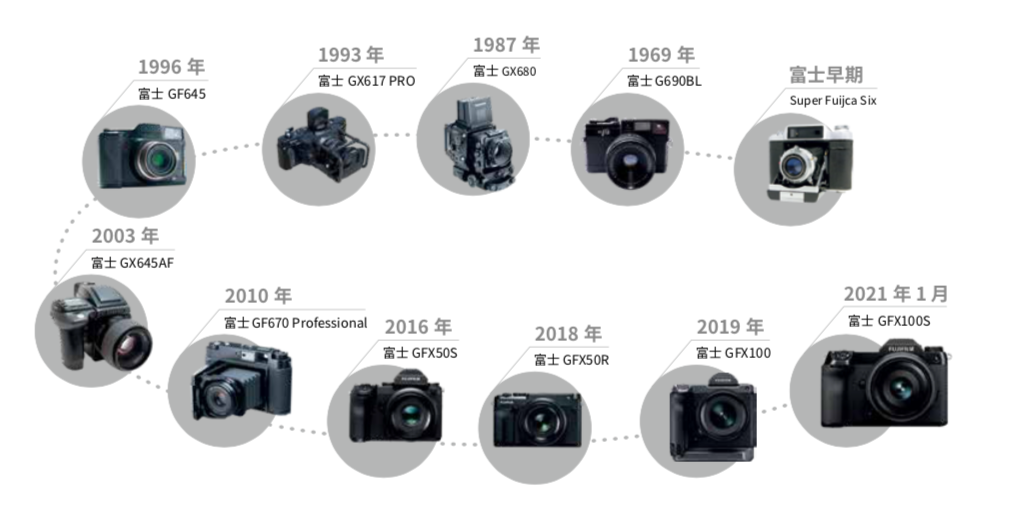 Fujifilm Product Timeline

 Recruitment | Join Us, Let’s Create a Quality Magazine Together
For more content, please continue to follow updates
If you need to reprint, please leave a message in the public account for an invitation
Click the cover image below to purchase this issue of the magazine
☟

Chinese Photography 2021 Issue 6 Cover
Click to subscribe to the annual magazine
☟

Exciting Article Review
-
A Family and a Hundred Families’ Stories
-
Lu Yuanmin: As long as the images in memory remain, one can feel at ease
-
<span be="" deserves="" dezhong:="" patiently
-
Centenary · Common People | My Father was a Village Photographer
-
People, Animals and Images | From Hunting and Serving to Emotional Dependence
-
1980s, The Bare Face of China
-
2019 Sony Young Photographer
-
Insight into the Future with “New Images”
-
Workshop | Photography in the Context of Contemporary Art
-
Book Club | Walking with a Line
-
Shari Mann: A Million Encounters
-
Exhibition Review | Ports and Images II
-
Fanghua · On the Road | Micro Image Exhibition Call for Submissions
-
2019 Arles Photography Festival Observation
-
Exhibition Review | “Taobao” in Pingyao
-
The Asian “Photography Show” of Dali Photography Association
-
Ren Shulin: Photography is grown out
-
Tang Haowu: Going Home with Photos
-
Making Photography Possible
-
Magnum’s “Home” Comes to China
-
Is Photography Development Stumbling?
-
Exhibition Review | Reunion in April
-
We Still Need to Report on Photographers
-
Araki Nobuyoshi’s “Tao” and Impermanence
-
Don’t Trust Awards, Trust Yourself | Liu Zheng Talks Photography
-
Photography: A Regulator Between People and Society
-
What Will Images Be Like in the 5G Era?
-
Shooting, Watching, Thinking, None Can Be Missed
-
Being Called a Photographer, I Feel Ashamed
-
To Make a Good Photography Book, You Need to Focus on These Aspects
-
The Culture of Japanese Photography Collections, This Article is Enough
-
Exclusive Interview with Andreas Müller
-
My 180 Days Interning at “Aperture”
-
The Scenery in His Lens, Empty Yet Penetrating the Heart
-
Simple Elements Reflect the Most Powerful Forces
做 有 品 格 的 摄 影 杂 志WeChat ID: cphoto1957Long press the QR code to follow▼