Programming UFS Chips

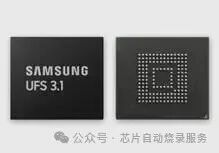
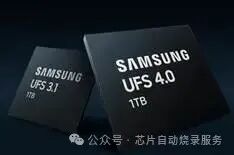
From a structural perspective:
Although there is no significant difference in appearance and function between eMMC flash memory and UFS flash memory, the internal structures of the two are fundamentally different. This essential difference in internal structure leads to a significant disparity in their theoretical bandwidth.
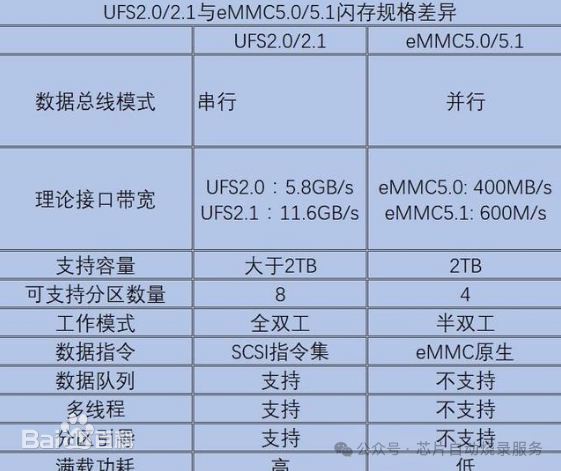
Overview of UFS Chips
Definition
UFS (Universal Flash Storage) is a high-performance, low-power embedded non-volatile storage solution. The UFS chip is a storage chip based on the UFS standard, primarily used in mobile devices such as smartphones, tablets, and smart wearables, and is gradually being applied in automotive electronics and industrial control.
Features
- High-speed read and write:
- Compared to traditional eMMC (Embedded Multi Media Card) storage chips,
UFS chips have higher data transfer rates. For example, the theoretical sequential read speed of UFS 3.1 can reach over 2100MB/s, and the sequential write speed can also reach around 1200MB/s, significantly enhancing data loading and processing speeds, such as quick application startup and smooth playback of high-definition videos.
- Low latency:
UFS chips have shorter response times during data read and write operations, allowing for quicker responses to device commands, reducing user wait times, and providing a smoother user experience.
- Low power consumption: while ensuring high performance,
UFS chips have relatively low power consumption, helping to extend the battery life of mobile devices.
Working Principle
UFS chips use a serial interface protocol for data transmission, utilizing high-speed differential signal lines to facilitate communication between the host (such as a smartphone processor) and the storage chip. They employ a command queue mechanism, allowing the host to send multiple read and write commands simultaneously, enabling the storage chip to execute these commands in the optimal order, thereby improving data transfer efficiency.
Programming UFS Chips
Programming UFS chips refers to the process of writing specific data (such as operating systems, firmware, applications, configurations, etc.) into the storage area of the UFS chip. This data is essential for the normal operation of the device, and during the manufacturing process, pre-developed software and configuration information must be accurately programmed into the UFS chip.
Content to be Programmed
- Operating System:
- Such as Android, iOS, etc., mobile operating systems are the foundation for device operation, managing hardware resources and software programs.
- Firmware:Includes the device’s low-level drivers and basic functional code, used to control various hardware components of the device, such as the display, camera, sensors, etc.
- Applications:Common applications pre-installed on devices, such as browsers, music players, etc., providing users with various services and functionalities.
- Configuration Information:Includes the device’s initial settings, network configurations, user preferences, etc., ensuring that the device can operate normally according to preset parameters upon first boot.
Programming Methods
- Offline Programming:Removing the UFS chip from the device (bare chip) and placing it on a dedicated programming device for data writing. This method is suitable for mass production, improving programming efficiency, and allowing for strict quality testing during the programming process. Offline programming devices typically have high-precision interfaces and stable power supplies, ensuring accurate data writing to the chip.
- Online Programming:During the device assembly process (the chip is already mounted on the PCB), data is programmed directly into the UFS chip through the device’s debugging interface. This method does not require removing the chip and is suitable for small batch production or research and development stages. Online programming requires the device to have the corresponding programming functions and interfaces, and the programming software must interact well with the device’s operating system.
Programming Process
- Preparation:Select the appropriate programming device and software, ensuring compatibility between the programming device and the UFS chip interface. Additionally, prepare the data files to be programmed and perform checks and backups to prevent data loss or damage.
- Chip Connection:Correctly connect the UFS chip to the programming device. Depending on the programming method, different physical connections may be required (e.g., offline programming requires a programming socket) or connect through the device’s debugging interface (e.g., online programming requires corresponding interfaces on the PCBA).
- Parameter Settings:Set programming parameters in the programming software, such as programming address, speed, data verification methods, etc. These parameters need to be reasonably set according to the specifications of the UFS chip and programming requirements to ensure stability and accuracy during the programming process.
- Data Programming:Start the programming software to begin writing the prepared data files into the UFS chip. During the programming process, the software will monitor the progress and status in real-time, providing alerts and handling errors as they arise.
- Data Verification:After programming is complete, verify the written data to ensure its integrity and accuracy. Verification methods typically include Checksum, CRC (Cyclic Redundancy Check), MD5 (Message Digest Algorithm 5), etc., comparing with the original data to validate the programming results.
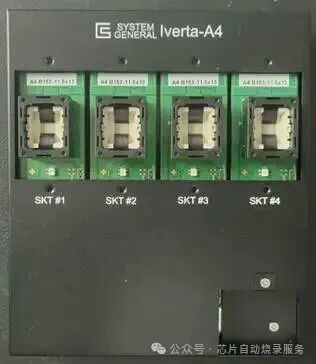
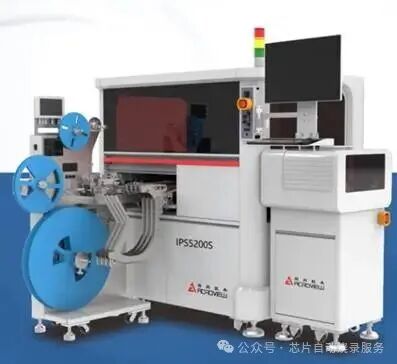
- Testing and Validation:Install the programmed UFS chip into the device for testing and validation, checking whether the device can start and operate normally, and whether all functions meet the requirements. If issues are found, reprogramming and testing are necessary until the device operates correctly. Once validated, mass production can commence. Currently, mass production is performed using automated equipment. The following images show our manual and automated programming devices for UFS.
Learn the basics, understand the underlying logic, and programming is actually quite simple!!!