Configuration Case of ModbusRTU to CCLink Gateway for Dehumidifier Control—Configuration Software Section
In this case study, the client selected a Mitsubishi brand Programmable Logic Controller (PLC) for the control end, implementing data exchange based on the CC-Link protocol. However, the inverter side uses the ModbusRTU protocol. Due to compatibility issues between the CC-Link protocol and the ModbusRTU protocol, direct communication between the two is not possible. Therefore, this study employs a self-developed CC-Link to ModbusRTU protocol conversion gateway to facilitate data communication between the two protocols.

Configuration Method for ModbusRTU to CCLink Gateway:
First, open and log in to the gateway configuration software. After entering the main interface of the software, carefully browse and select the appropriate protocol type to ensure the selected protocol type is correct.
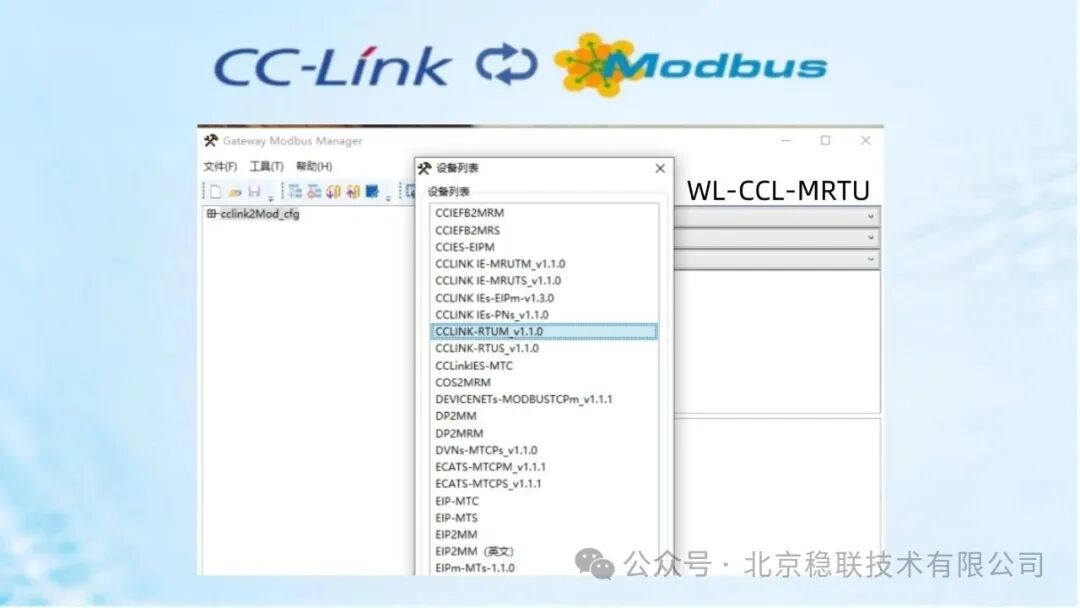
In the Modbus communication protocol system, the master station is responsible for initiating communication and controlling the slave station, while the slave station responds to the master station’s requests. When configuring the Modbus gateway, it is essential to comprehensively consider its communication requirements with the servo system that has been set as a ModbusRTU slave. Therefore, to achieve data exchange with the servo system and effectively transmit control commands, the gateway should be configured as a ModbusRTU master. This configuration ensures that the gateway can actively issue commands to the servo system and receive its feedback data, thus enabling efficient communication between the two. Setting the gateway as a ModbusRTU master guarantees the coordination and consistency of the entire communication process, allowing the gateway to effectively manage multiple slave industrial devices, including the servo system, playing a core role in the industrial automation control system.
When performing the conversion operation from ModbusRTU to CCLink, it is advisable to select the Modbus master type.
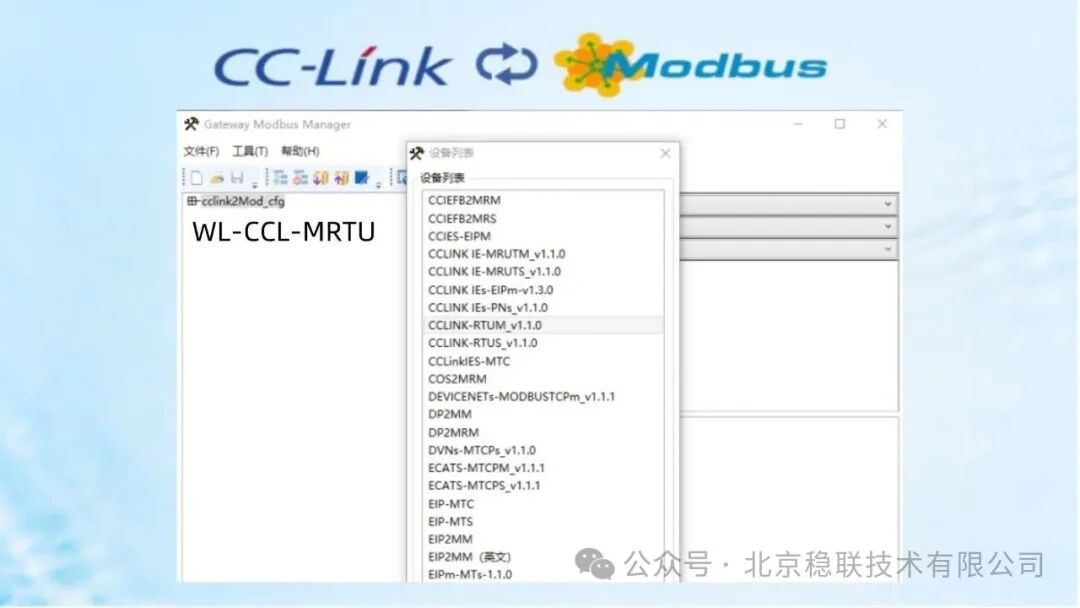
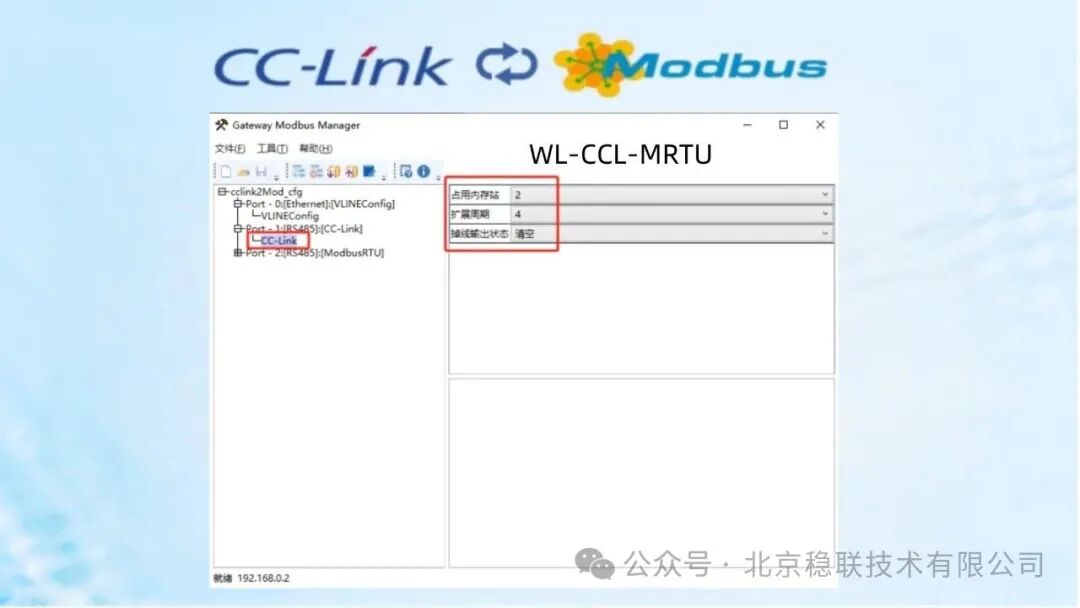
Start the Modbus master program by double-clicking, and then set the RS-485 communication parameters of the gateway. It is particularly important to communicate with the gateway engineer in advance regarding the memory station occupied by CC-Link and the extended cycle to avoid inconsistencies with the PLC settings when the gateway arrives on-site.
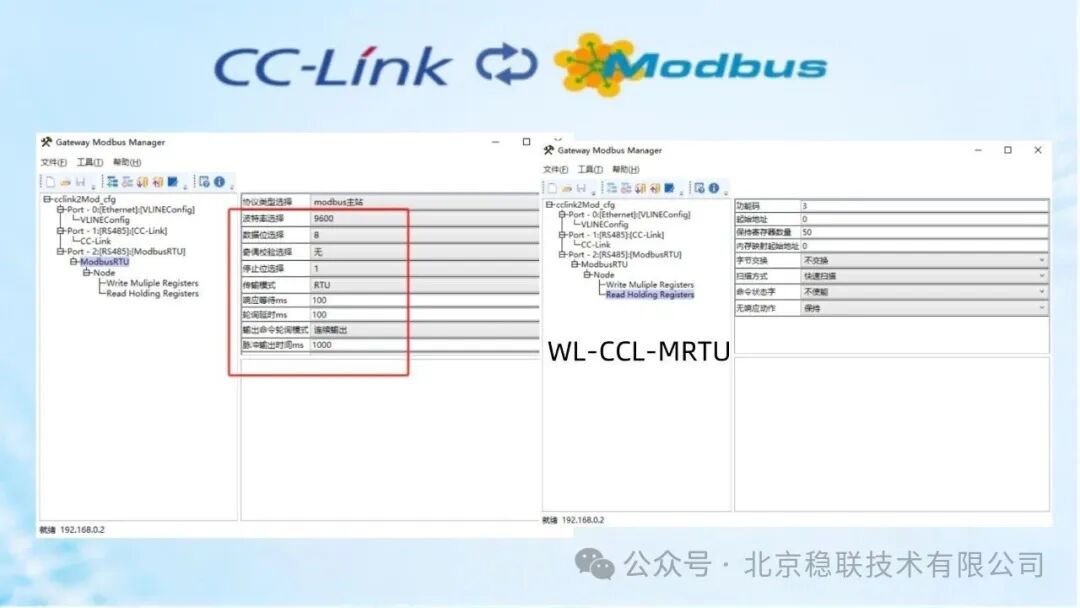
Add the ModbusRTU slave device to the system, which serves as an important component for data interaction and processing within the entire system, enabling data transmission with the master station according to specific communication protocols. After adding, it is necessary to accurately set all parameters required during the system operation, including function codes, which specify the types of operations for data interaction between the master and slave, such as reading and writing data; register addresses, which identify the specific locations for data storage, allowing precise access to the required data; and the number of registers, which defines the range of registers involved in data interaction, ensuring that data can be transmitted and processed completely and accurately.
Next, enter the operation interface of the Programmable Logic Controller (PLC) to configure the parameters. In the PLC interface, accurately configure all parameters of CC-Link, including station number, communication protocol, input and output points, etc. The configuration process should strictly follow the actual requirements of the equipment and system design specifications, as any deviation in parameters may lead to communication failures. Once all parameters of CC-Link are accurately configured in the PLC interface, the system will have the basic conditions for communication.
At this stage, the ModbusRTU to CCLink can achieve stable and efficient communication to ensure the normal and orderly operation of the industrial automation control system.
In summary, the ModbusRTU to CCLink gateway serves as a key link for protocol communication, enabling the rapid establishment of communication networks between different protocols and providing stable, efficient, and continuous communication for various devices.