
Click the blue text to follow us

The deep integration of AI cars and the Internet of Things (IoT) is an important trend in the field of smart transportation. This integration not only promotes innovation and development in the automotive industry but also brings unprecedented convenience and safety for future transportation.
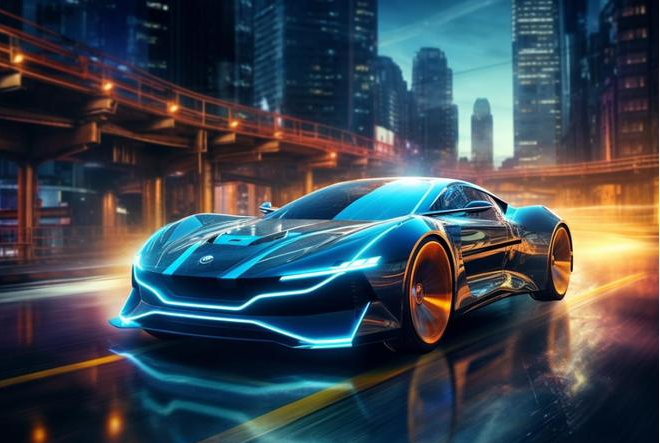
The following is an exploration of the deep integration of AI cars and IoT:
1. Technical Foundations and Integration Mechanisms
1. AI Car Technology
Core Technology: The core of AI cars lies in their powerful data processing and analysis capabilities, integrating high-performance computing units, deep learning algorithms, and massive sensor data. These technologies enable cars to perceive their surroundings in real time, including road conditions, pedestrians, other vehicles, and even weather changes, thus achieving precise prediction and control of driving behavior.
Autonomous Driving Technology: Autonomous driving is the culmination of AI car technology. From assisted driving to fully autonomous driving, AI systems can gradually take over driving tasks, including acceleration, braking, steering, lane changing, and even parking, significantly reducing the burden on drivers and improving road safety and traffic efficiency.
2. IoT Technology
Information Exchange and Sharing: IoT technology builds a bridge for cars to connect widely with the external environment, enabling information exchange and sharing between vehicles (V2V), vehicles and infrastructure (V2I), vehicles and pedestrians (V2P), and even vehicles and the cloud (V2C).
Intelligent Traffic Systems: Through IoT technology, vehicles can obtain real-time data on road conditions, traffic signal statuses, and emergency vehicle priority, thereby optimizing driving routes, reducing congestion and waiting times, and enhancing overall traffic efficiency.
3. Deep Integration Mechanisms
Data Sharing and Collaboration: The deep integration of AI cars and IoT relies on data sharing and collaboration. IoT technology provides rich data sources for AI cars, while AI cars analyze and mine this data through their powerful data processing capabilities, thus providing more accurate decision support.
Technical Complementarity: AI cars and IoT exhibit a high degree of technical complementarity. AI cars excel in data processing and analysis, while IoT specializes in data collection and transmission. The deep integration of the two can fully leverage their respective advantages and jointly promote the development of smart transportation.
2. Application Scenarios and Implementation Methods
1. Intelligent Driving Assistance
Autonomous Driving Systems: By combining the autonomous driving technology of AI cars with real-time road condition information from IoT, vehicles can autonomously plan driving routes, avoid congested areas, and improve traffic efficiency.
Intelligent Obstacle Avoidance: Utilizing IoT technology, vehicles can perceive surrounding obstacles in real time, and combined with the decision-making capability of AI cars, achieve intelligent obstacle avoidance and enhance driving safety.
2. Intelligent Parking and Charging
Intelligent Parking Systems: Using IoT technology, vehicles can obtain real-time information about the location of parking lots and available spaces, along with the navigation capabilities of AI cars, to enable intelligent parking.
Intelligent Charging Systems: Combining IoT technology with the energy management functions of AI cars, vehicles can automatically find and reserve charging stations, optimizing charging times and locations to improve energy efficiency.
3. Intelligent Connected Transportation
Vehicle-Road Collaboration: Through IoT technology, vehicles can communicate in real time with road infrastructure, achieving vehicle-road collaboration and enhancing the overall efficiency and safety of the transportation system.
Traffic Management: By leveraging the data analysis capabilities of AI cars and IoT, traffic management departments can grasp traffic conditions in real time, optimize traffic signal control, and reduce congestion and traffic accidents.
3. Challenges and Prospects
1. Challenges
Data Security and Privacy Protection: With the deep integration of AI cars and IoT, vehicles will generate and process vast amounts of sensitive data, making it crucial to ensure the secure transmission, storage, and use of this data.
Standardization and Interoperability of Technologies: There may be differences in AI car and IoT technologies among different manufacturers and regions; achieving standardization and interoperability of technologies is an important challenge for promoting deep integration.
2. Prospects
Technological Innovation and Industry Upgrading: With continuous technological advancements and the expansion of application scenarios, the deep integration of AI cars and IoT will drive innovation and upgrading in the automotive industry.
Intelligent Transportation Ecosystem: In the future, AI cars and IoT will jointly construct an intelligent transportation ecosystem, achieving seamless connections and efficient collaboration among vehicles, roads, pedestrians, clouds, and other elements, providing more convenient, safe, and intelligent solutions for future transportation.
Reviewed by: Cai Wendi
END
The Changsha Internet of Things Industry Promotion Association adheres to the principles of voluntariness, cooperation, and mutual benefit, enhancing communication and contact among various enterprises and institutions in the IoT industry, strengthening industry self-discipline, and promoting closer cooperation among member units in key IoT technologies, applications, standards, etc.; coordinating communication and channels between the industry and government authorities, assisting relevant departments and enterprises in organizing and implementing work and plans related to the development of the IoT industry; strengthening external communication and cooperation, promoting the implementation of national policies, laws, and regulations, popularizing IoT technology knowledge, fostering a good development atmosphere, and promoting the rapid and healthy development of the IoT industry in our city.
This article is sourced from NetEase, authored by Dancing Little Heart.


Welcome to join the Changsha Internet of Things Industry Promotion Association.
Long press to scan the QR code to follow us.