“
“The prophecy of the arrival of the Internet of Things has been around for nearly a decade, but the massive investments by companies have not garnered consumer favor. Aside from a few popular products, the consumer market remains lukewarm. However, the industrial application of the Internet of Things may be realized first in China, where manufacturing is upgrading. This is a far larger field and an opportunity for China to lead global market standards.


Smart Home Faces Challenges

The concept of “smart home” has been around for a long time, and analysts have repeatedly predicted that connecting everyday items to the “Internet of Things” will fundamentally change people’s lives, just like the proliferation of smartphones. The idea of a coffee maker that turns on automatically when the alarm goes off or a refrigerator that sends reminders when milk runs out sounds interesting. However, so far, consumers have generally shown resistance to making their homes “smart”.
High-tech companies have poured a lot of cash into IoT consumer products, only to be disappointed. In 2014, Google made the largest acquisition offer to date, bidding $3.2 billion for smart thermostat manufacturer Nest. However, Nest failed to meet Google’s expectations. According to a report by research firm Strategy Analytics, Nest sold only 1.3 million smart thermostats in 2015, with a cumulative sales volume of just 2.5 million over the past few years.
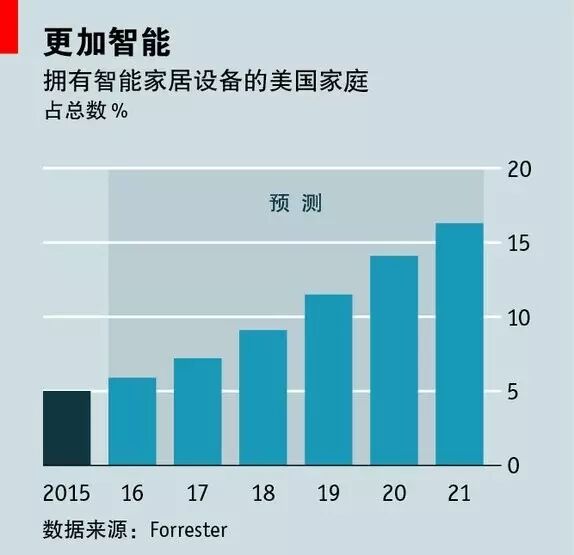
The issues with Nest are merely superficial. Frank Gillett from Forrester Research states that only 6% of American households own smart home devices, including internet-connected appliances, home monitoring systems, speakers, or lighting devices. This percentage is not expected to grow rapidly, reaching just over 15% by 2021. There are too few consumers who believe that “the Internet should be everywhere in life.” A survey conducted by PwC in the UK found that 72% of people have no plans to adopt smart home technology in the next two to five years, and they are unwilling to pay for it. Last year, global consumers spent a total of $60 billion on smart home hardware and services, which is only a small fraction of total household spending. The lack of consumer enthusiasm has its reasons, with product positioning, pricing, and technological bottlenecks being key. Companies are motivated to embrace the Internet of Things because it can significantly improve efficiency and reduce costs, whereas most smart home devices remain “fun but not essential.” To break through consumer indifference and find a profitable path, tech giants still need to continue exploring.
China Leads the Industrial IoT Wave
Compared to the sluggish consumer market, the industrial application of the Internet of Things seems likely to be realized more quickly. As the world’s largest manufacturing country, China has the advantage of leading this transformation.
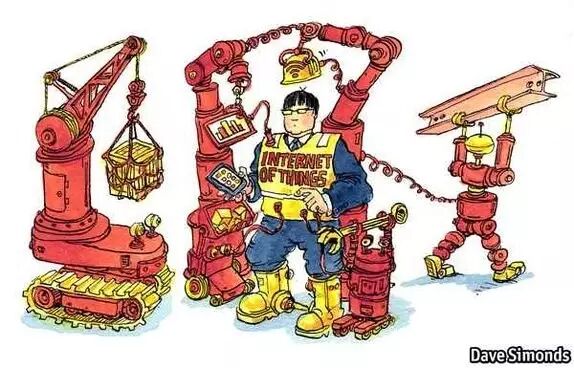
The industrial Internet involves factory machines and industrial products, enabling them to communicate with each other and their surrounding environment. This market could be much larger than the consumer market. China has millions of factories and billions of machines, producing the vast majority of electronic products in the world, including many sensors and other electronic devices that will form the backbone of the industrial Internet of Things. China already has more interconnected items than any other country, and this number is sure to soar further. Additionally, the Chinese government is keen on upgrading manufacturing bases, creating favorable conditions for breakthroughs in industrial applications of the Internet of Things. The world’s largest industrial company, GE, opened a so-called “digital foundry” in Shanghai this July and signed agreements with China Eastern Airlines and China Telecom, partnering with telecom equipment giant Huawei. Not only does GE believe that China is a potential hotbed for industrial IoT, but large tech companies like Siemens, HP, Honeywell, and Cisco are also rushing in.
However, Chinese companies have their own plans and hope to lead the global market with Chinese “national standards”. As the world’s largest mobile communications company, China Mobile has established its own digital innovation hub – the “Cellular IoT Open Lab”, and President Li Yue hopes to earn 100 billion yuan (about $15 billion) from the IoT connecting up to 5 billion devices by 2020. Local knowledge is another advantage for Chinese companies. The construction equipment manufacturer Sany Group has been networking machines in its factory workshops since 2008 and has since begun installing sensors on excavators and cranes for real-time monitoring to improve operational efficiency. Unlike foreign multinational companies, Sany proudly claims that they “know how to produce kits that are suitable for ‘China’s national conditions’ and are reasonably priced.” Huawei also emphasizes cost-effectiveness, basing its efforts to enter the IoT on the promotion of domestic standards and the application of low-cost, energy-efficient sensors.
To learn more, please visitThe Economist: Global Business Review App to read the IoT-themed articles in the August issue, including “The Great Convergence” and “Where Intelligence Lies”.
The August issue of The Economist: Global Business Review focuses on the silver-haired market, wealth and inequality, and the Internet of Things. Feel free to download the app for free to access this month’s themed articles.
The Economist: Global Business Review
Table of Contents for the August Issue
 Contents
Silver-Haired Market
-
Silver-Haired Market: Golden Oldies
-
Schumpeter: Silver-Haired Market
-
Wutong: The Disappearing Worker
Wealth and Inequality
-
Globalization and Inequality: New Trends
-
Schumpeter: The Tycoon Economics
-
Schumpeter: The Crazy Diamonds
Internet of Things
-
Industrial Internet of Things: The Great Convergence
-
Internet of Things: Where Intelligence Lies
Welcome to follow The Economist: Global Business Review August issue