When conducting high-concurrency and high-complexity testing tasks, if the testing tool itself has performance bottlenecks, hidden faults, or uncontrolled resource consumption, it often leads to unreliable results. Therefore, a professional testing instrument must possess the ability to be “self-monitoring”, ensuring that the testing process itself is transparent and controllable.
Our HTTP(S) application layer tester is designed based on this concept, integrating key capabilities such as dynamic packet capture, memory monitoring, CPU monitoring, report generation, and operational statistical reports, helping you combine packet capture, monitoring, and reporting into one, making the complex testing process efficient, transparent, and reproducible.
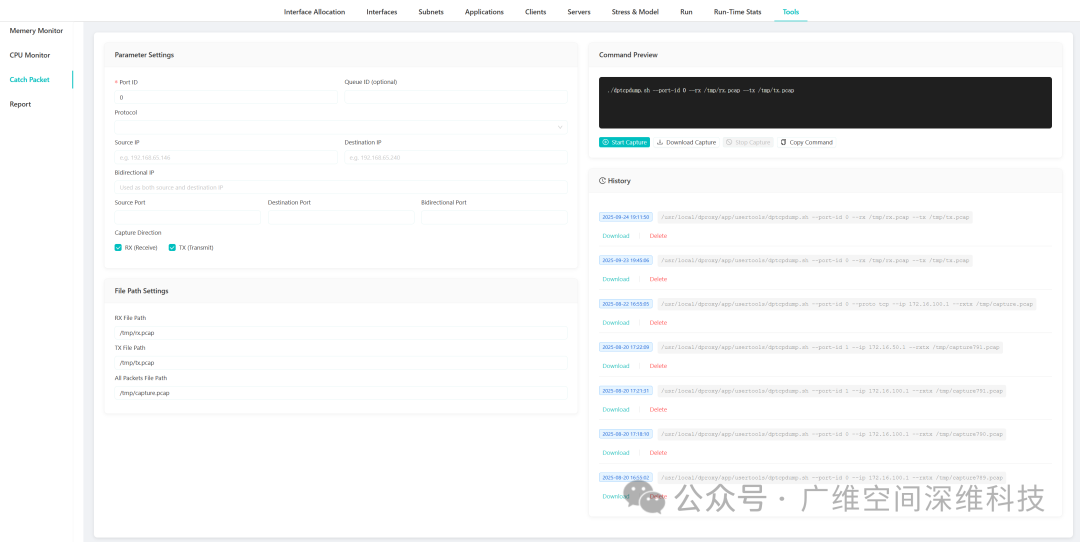
🔍 Dynamic Packet Capture: Accurately Restoring the Problem Scene
-
Supports real-time filtering based on IP / port / protocol number;
-
Start and stop packet capture at any time, export pcap files for analysis;
-
No redundant data, quickly focus on the core of the problem.
👉 Why is it necessary? Without packet capture in testing, it is difficult to verify whether data is truly sent and received. The dynamic and controllable packet capture capability ensures that every test has a reliable “chain of evidence.”
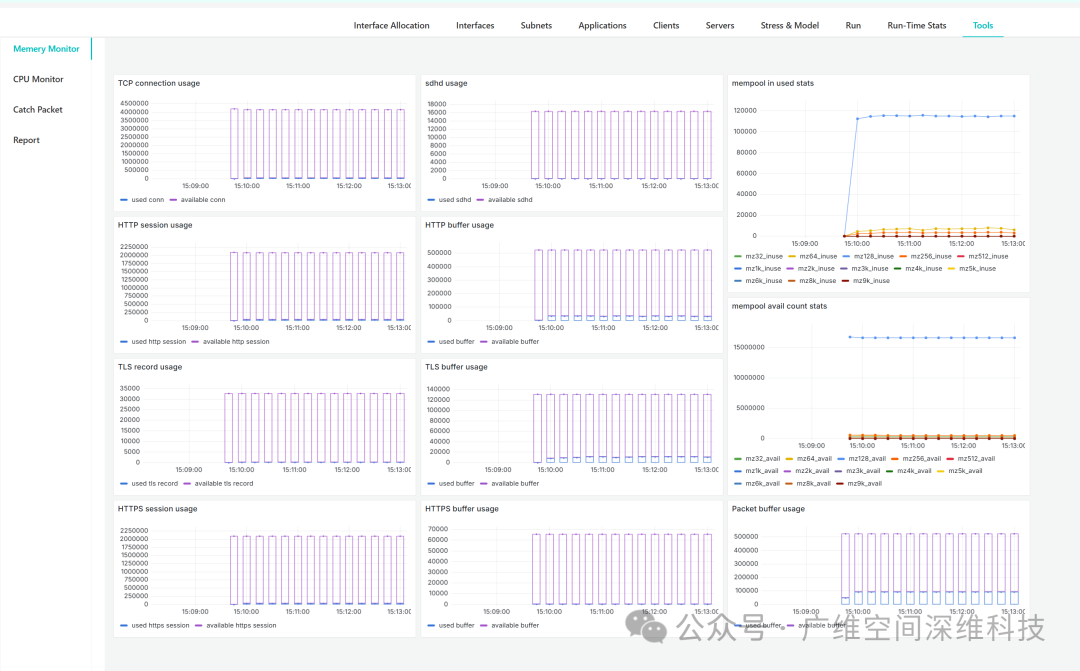
🧠 Memory Resource Monitoring: Stability at a Glance
-
Real-time display of the tester’s memory usage rate and trend changes;
-
Quickly identify memory leaks and abnormal usage;
-
Ensure that the testing process itself is not affected by insufficient resources.
-
Ensure stability even during long-term operation.
👉 Why is it necessary? Many test failures are not due to application issues, but rather insufficient resources of the testing tool itself. Memory monitoring can provide early warnings, preventing tests from “hanging halfway,” making the testing process sustainable and reliable.
⚡ CPU Usage Analysis: Every Core in View

-
Supports viewing overall CPU usage;
-
Detailed load conditions for each CPU core;
-
Ensure that the tester’s processing capability is not hindered by single-point bottlenecks.
👉 Why is it necessary? Testing tools may “silently distort” due to CPU overload on a single core. Monitoring both total and single-core usage ensures that the tester operates in a healthy state.
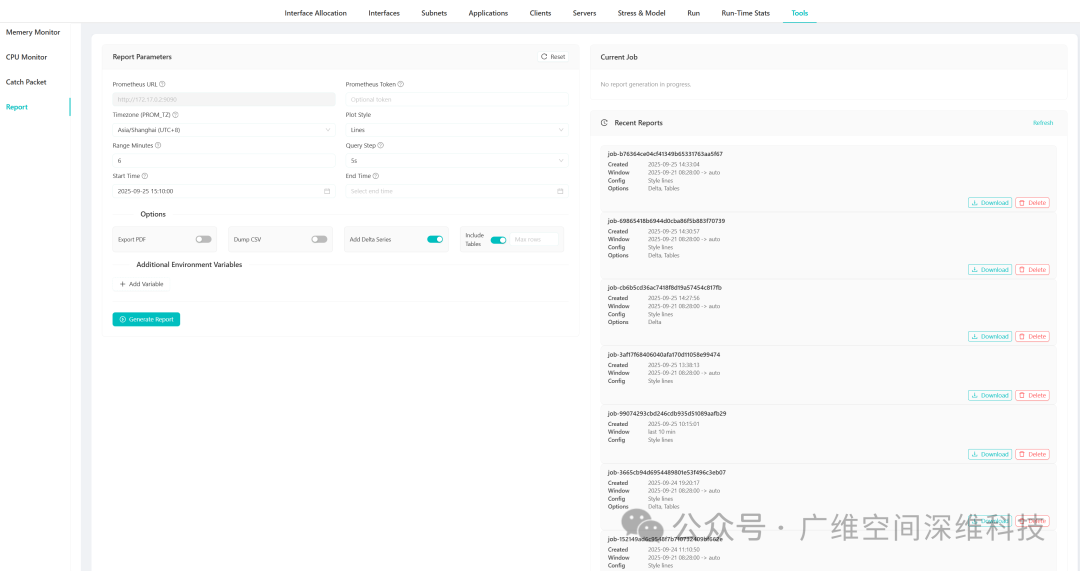
📑 Automatic Test Report Generation: One-Click Result Presentation
-
Automatically summarizes results, packet capture summaries, and key metrics after testing;
-
One-click export to PDF/HTML for easy team sharing;
-
Saves manual organization time, making results intuitive and reliable.
👉 Why is it necessary? The value of testing lies in the data. Automated reports reduce manual intervention, avoiding omissions and errors, allowing each test to produce results quickly.
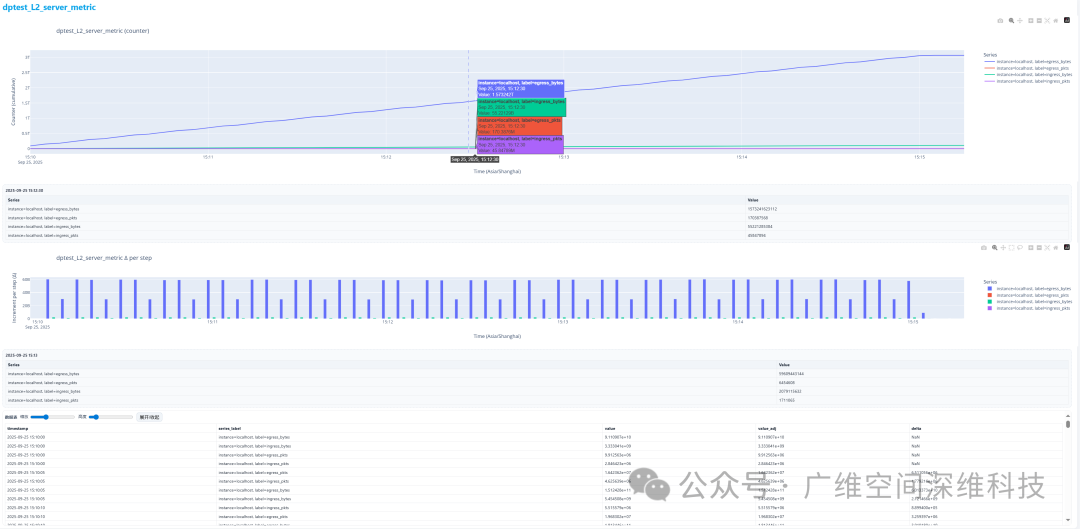
📊 System Operation Statistical Reports: Data Assetization
-
Long-term sampling generates CPU / memory / TCP/IP layer 2-5 statistical reports;
-
Provides a basis for capacity planning and trend analysis;
-
Makes test results no longer one-time occurrences, but sustainable data assets.
👉 Why is it necessary? Without historical data, it is impossible to judge trends. Statistical reports help teams see the past and predict the future, enabling teams to truly achieve “data-driven decision-making.”
📢 Summary
A professional testing instrument is not just about “sending traffic and receiving results”; it must also be integrated throughout the entire process:
-
Integration: Packet capture, monitoring, and reporting are no longer fragmented;
-
Efficiency: Real-time capture + automatic summarization saves labor costs;
-
Reproducibility: Complete preservation of test evidence for easy backtracking;
-
Reliability: Data is accurate and transparent, supporting decision-making.
Our HTTP(S) application layer tester achieves controllable and reproducible testing from execution to analysis through packet capture, memory monitoring, CPU monitoring, automatic reporting, and statistical reports.