 JZGKCHINAIndustrial Control Technology Sharing Platform
Programmable Logic Controller (PLC)
Programmable Logic Controllers (PLCs) are electronic devices used for automation control systems. They are specialized computers designed to monitor and control machines and equipment in manufacturing processes. The main functions of PLCs include reading input signals, performing logical operations, generating output signals, and providing real-time monitoring and feedback control. Currently, the PLC market is primarily dominated by European brands represented by Siemens, American brands represented by Allen-Bradley, and Japanese brands represented by Mitsubishi. However, in recent years, domestic PLCs have made significant progress and achieved good results.
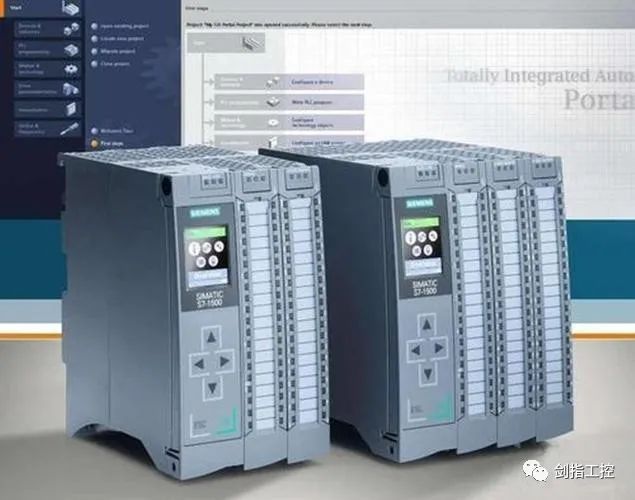
Domestic PLCs can be divided into two major systems based on application scenarios and business models,
namely discrete industry automation and process industry automation
Discrete industry automation is most prominently represented by Huawei, with Huichuan Technology as a leading company focusing on cost-effectiveness, motion control solutions, and sales channels. Process industry automation is most notably represented by Holley and Zhongkong, with Holley focusing on the power industry and Zhongkong on the chemical industry. Process industry projects are primarily engineering-based, with bidding being the main line of process projects.

Today, we will study how to design a PLC from the perspectives of product application scenarios and company business models, analyzing the differences in the PLC technology product systems of the two giants in automation from the north and south, as well as the main factors leading to these differences, and examining the development direction and prospects of PLC products today.
Holley‘s PLC products have a much longer history than those of Huichuan. To be precise, Huichuan’s PLCs have only emerged in recent years, whereas Holley’s PLCs have been in use for over 15 years and have been widely applied in control fields such as rail transportation, thermal power, and nuclear energy, proving to be time-tested and deeply rooted. Holley’s most prominent business is DCS, which is renowned in the distributed control industry. Holley’s business model is primarily project-based, with these types of projects typically costing millions to tens of millions. This business model leads Holley to not care much about selling products, which is a common issue in process control.

The product sales model is a slow and steady process, and Holley and similar companies find it hard to endure the solitude of selling products, which is why their influence in the small and medium-sized PLC market is limited. It can be said that the small and medium-sized motion control market is not very prominent. However, Holley is well-known in the large PLC field, where their design approach typically involves ARM+FPGA with an operating system. The military industry prefers using VxWorks due to its high real-time performance, although it is costly. The main control chips for large PLCs generally have a clock speed of over 800MHz, and Holley’s domestic Longxin solution is quite exemplary.
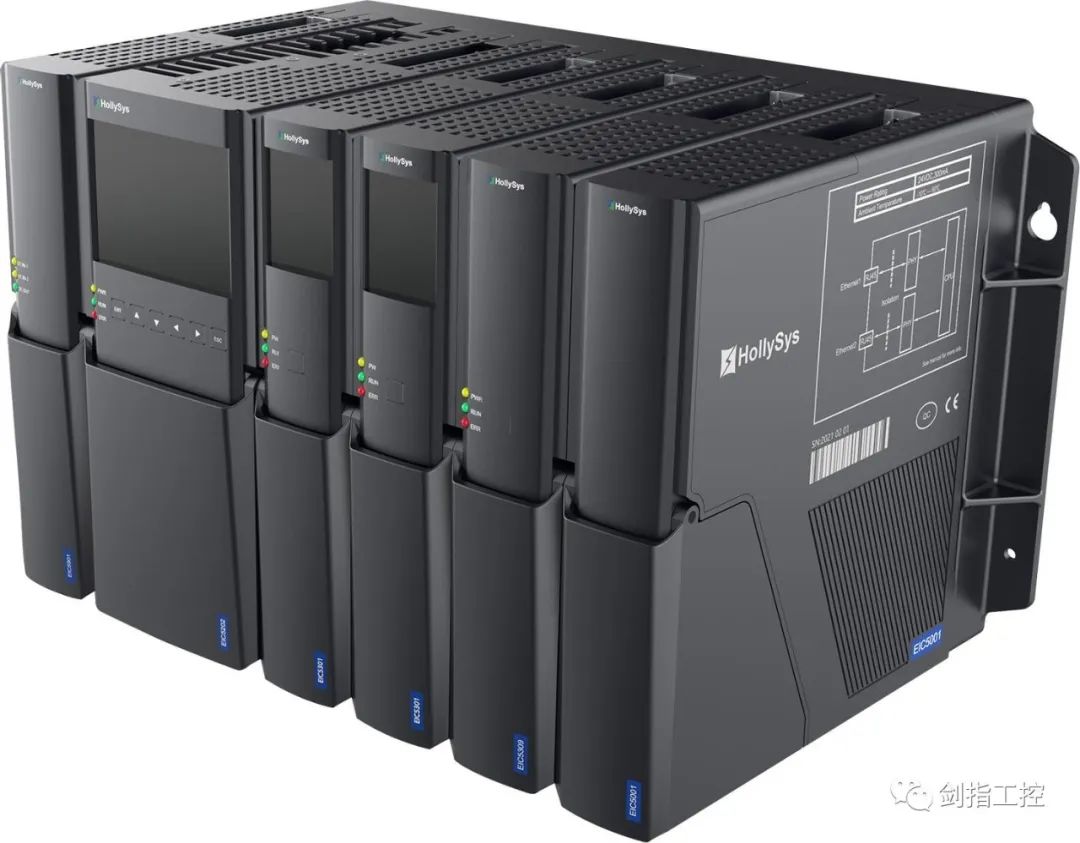
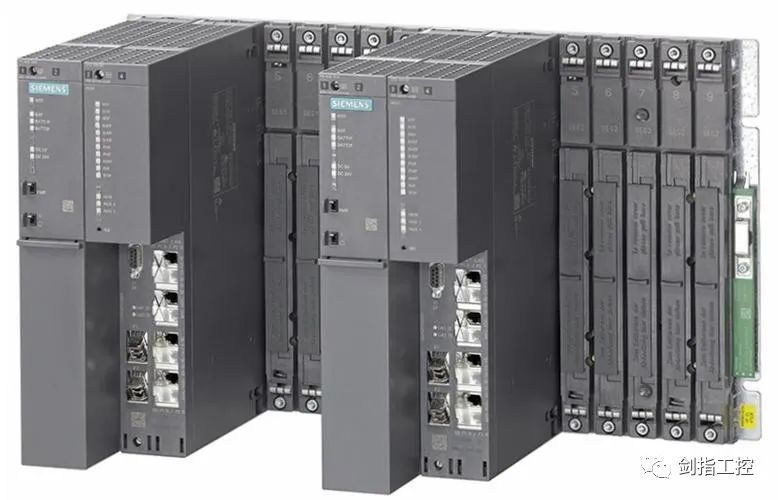
Holley’s large PLCs are basically identical to Siemens 300/400 series, which can be seen as a reincarnation of Siemens. PROFIBUS DP and PROFINET are essentially standard features, although PROFIDRIVE has always been firmly controlled by Siemens. Holley’s PLC system follows a CODESYS-like route, where the operating system runs a real-time kernel on the upper machine, a common practice in SCADA.
Huichuan Technology’s business model is product-centric, which can be described as a market built through hard work. Huichuan’s product thinking is stronger than Holley’s, as evidenced by their sales reaching billions, accumulated from hundreds of yuan PLC servo motors. Huichuan PLC’s design model started by imitating Mitsubishi and gradually developed its own style. Don’t you think H3U and H5U match well with Mitsubishi’s offerings? AM600 is even better. Let’s get back to the main topic: PLC research and design.
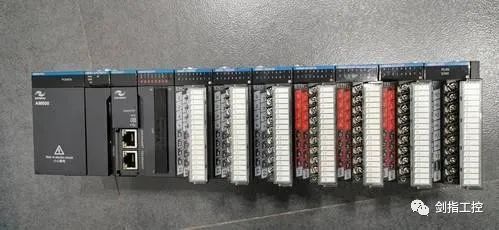
The technical implementation methods for PLC research and design mainly involve several technical models:
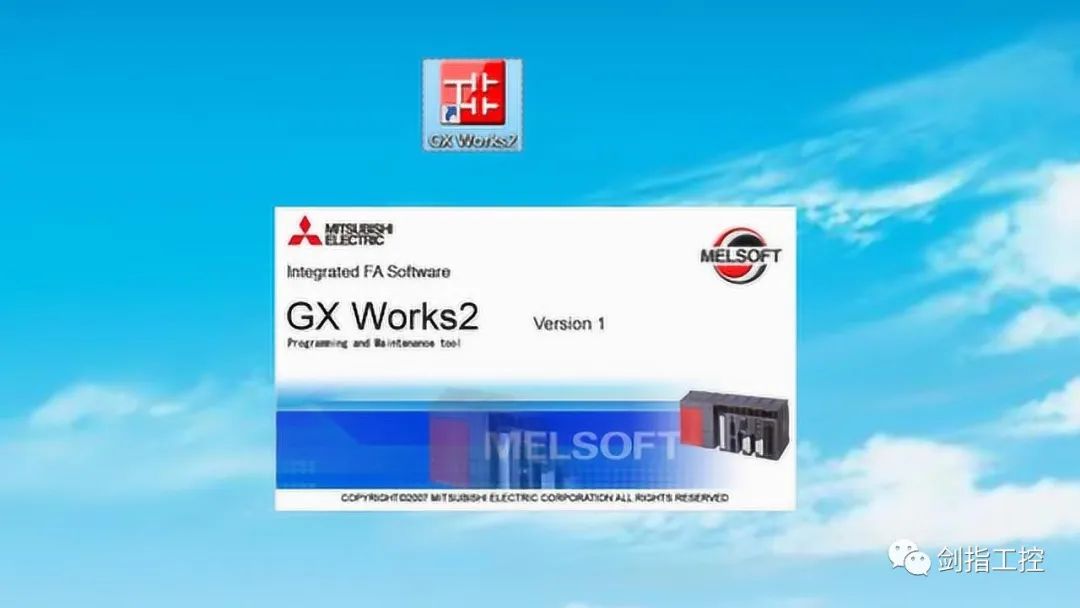
The first type is PLCs like Mitsubishi Gworks and Siemens smart200
These small PLC products have independent lower and upper machines, meaning the coordination between the lower and upper machines is through command docking. For hardware implementation, STM32-class microcontrollers or DSPs can be used. Achieving stability and performance in small machines remains a challenge. For a long time, domestic PLCs have been imitating Siemens or Mitsubishi software, and even now you may find that Mitsubishi’s Gworks and some domestic PLCs are compatible.
The second model is the CODESYS-like route
CODESYS requires high hardware specifications, including computational power and memory size (using flash or EMMC), as it needs to run an operating system. Ubuntu is quite resource-intensive, with ROM starting from 1GB and RAM starting from 128MB. Common chip options include the AM33 series, ZYNQ70 series, IMX8 series, and T3. Operating systems can be chosen from Linux or QNX. In terms of design models, medium and large PLCs are quite similar.
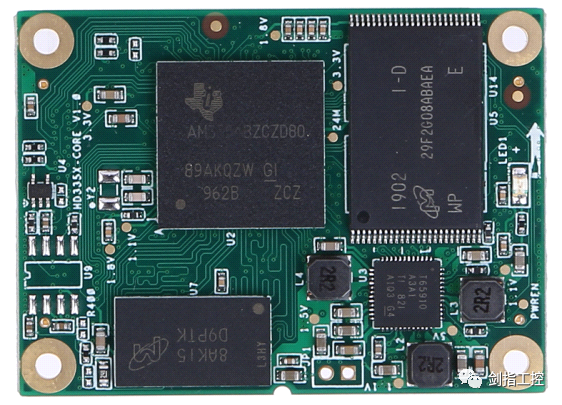
Using Linux for PLCs does limit performance. For those pursuing extreme performance, the X86 route can be considered, as ARM architecture is typically limited to 1.6G. The most motion control performance achievable is around 64 axes of EtherCAT. More can be achieved with X86 architecture, running Windows systems, following the industrial computer route. Today’s soft PLCs run CODESYS-like runtimes on Windows systems. X86 architecture chips can easily exceed 6G clock speeds, and their performance extends beyond just motion control to include artificial intelligence computations, utilizing Intel and AMD chips.The development of domestic PLCs is a gradual process, evolving from using CODESYS and Gworks to fully independent platforms like Huichuan Easy, from imitating Siemens and Mitsubishi to developing a completely new domestic style. The progress of domestic PLCs has been rapid. Although domestic PLCs still have various shortcomings, the sparks that will emerge from their collision with foreign PLCs like Siemens in 10 years are worth looking forward to.
Author:
Industrial Person, engaged in chip manufacturing research and related work. Feel free to share your stories with me so we can document them together!

October 2023
1. Smart200 & V90 Servo System: 15 courses updated
2. Beckhoff Live Course: 30 courses updated
3. PKS Quick Start: Beginner & Intermediate – All
4.Classic Public Course on Industrial Control: 35 courses updated5. EPLAN Quick Start: 20 beginner courses completed