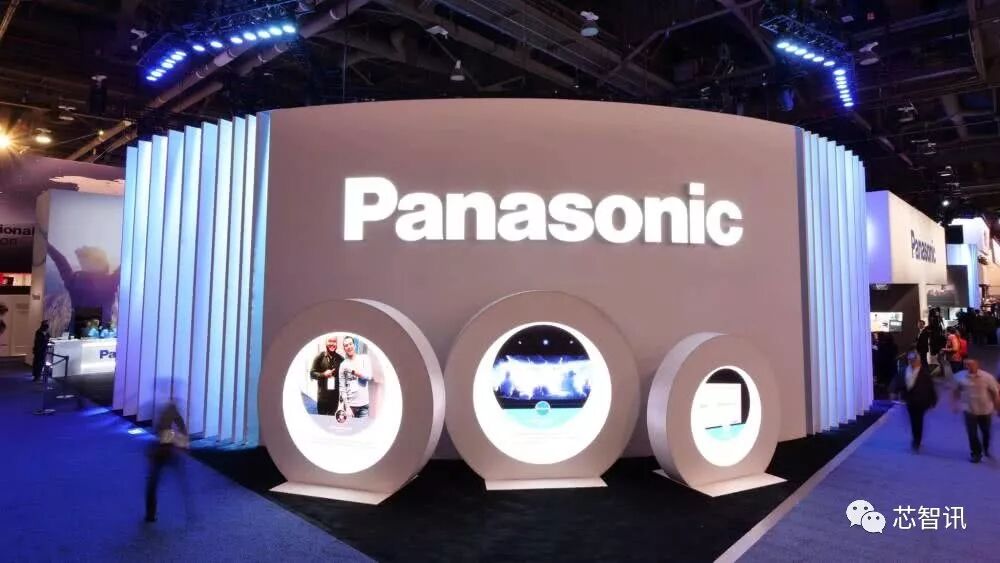
Over the past decade, Japanese electronics companies have undergone significant restructuring, divesting low-profit or loss-making businesses, particularly in traditional home appliances, which have largely been sold off. The semiconductor sector has also been a key focus of this restructuring. According to recent reports, the long-established Japanese electronics company Panasonic will exit the semiconductor industry, selling its currently loss-making semiconductor business to China’s Nuvoton Technology. Panasonic initially entered the semiconductor industry in 1952, but its business is now in distress.
Reports indicate that this sale will be a landmark event, signifying Japan’s transformation from a major chip manufacturing nation in the 1980s and 1990s to a supplier of semiconductor manufacturing equipment and materials, primarily serving semiconductor companies in China and South Korea.
Around 1990, Panasonic’s semiconductor business ranked among the top ten in global sales. Now, the company is preparing to sell its semiconductor solutions to a mid-sized Chinese semiconductor company that supplies chip products to HP, Dell, Microsoft, and others.
According to foreign media, Panasonic’s semiconductor division is responsible for the development, production, and sales of chip products. In addition to transferring this business unit, Panasonic will also abandon its joint venture, TowerJazz Panasonic Semiconductor Company, which operates three chip manufacturing plants in Japan, with its partner being the Israeli semiconductor manufacturer Tower.
Panasonic has been striving to turn around its chip manufacturing business. However, in April of this year, Panasonic announced it would sell some semiconductor operations to its Japanese peer, Rohm Semiconductor Group.
Meanwhile, Panasonic has begun to focus more on automotive-related semiconductor products, such as chips used for controlling electric vehicle batteries. It is well-known that Panasonic is a globally recognized manufacturer of lithium batteries for electric vehicles, operating a battery plant in Reno, Nevada, in collaboration with American electric vehicle manufacturer Tesla, utilizing technology from Panasonic.
In the fiscal year ending in March this year, Panasonic’s semiconductor business reported sales of 92.2 billion yen (approximately $840 million) and an operating loss of 23.5 billion yen (approximately $215 million).
Originally, Panasonic had planned to prioritize semiconductor profitability this fiscal year, but due to global trade uncertainties affecting semiconductor market demand, the company decided to completely exit this business.
Panasonic forecasts a 27% decline in overall operating profit for this fiscal year, down to 300 billion yen (approximately $2.74 billion). The company also plans to exit the liquid crystal display business in 2021, which is part of a broader strategy to divest loss-making operations.
Acquirer
The Chinese company Nuvoton Technology, which is acquiring Panasonic’s semiconductor business, is a subsidiary of another Chinese memory chip manufacturer, Winbond Electronics. Nuvoton primarily manufactures microcontrollers, controllers, and audio and power-related chips.
As a small-scale competitor to Texas Instruments, Infineon, and Renesas Electronics, Nuvoton was listed on the stock exchange in 2010. Its parent company, Winbond Electronics, holds a 61% stake.
Winbond executives previously stated to foreign media that their chip company is focused on growth in mobile, automotive, and factory automation applications. They also expressed no concerns about emerging semiconductor companies, chip market demand, or global trade uncertainties.
Japanese companies once dominated the global semiconductor industry, holding 49% of the global market share in 1990. However, slow decision-making in investment and integration has left them lagging behind competitors in South Korea and China.
In last year’s global rankings published by Gartner, no Japanese company made it into the top ten semiconductor manufacturers, with the total market share of all Japanese semiconductor companies shrinking to 7%.
Semiconductor Peers
Two years ago, the financially troubled Japanese company Toshiba also divested its high-quality asset, Toshiba Memory Corporation. A consortium led by Bain Capital in the U.S. acquired this business for approximately $18 billion.
This company primarily produces flash memory chips, and Toshiba is considered the inventor of flash memory chips, possessing top-tier semiconductor technology. However, to resolve its financial crisis, Toshiba had to sell off its high-quality assets.
Nevertheless, this company continues to operate in Japan, and Toshiba still holds a portion of the equity, maintaining a tenuous relationship with the spun-off company.
Sony is currently one of the few Japanese companies still operating in the semiconductor business, with its camera sensor chips holding the top global market share and a monopolistic advantage. In recent years, Sony has invested more resources in this area to expand its technological and production capacity advantages.
In June of this year, the prominent U.S. activist investment firm Third Point proposed to Sony that it split its semiconductor and entertainment businesses into two separate companies. This firm holds $1.5 billion worth of Sony shares and believes that the current structure of Sony is too complex, and that splitting and independently listing the businesses would help maximize shareholder value.
However, Sony’s management rejected the proposal to split the semiconductor business. Sony believes that retaining its sensor chip business while integrating it with technologies such as artificial intelligence can continue to enhance its value.
Source: Tencent Technology Edited by Chengxi
Previous Exciting Articles
TSMC/Samsung/Intel’s Advanced Process Battle
Winning multiple global firsts! MediaTek’s Dimensity 1000 enters the high-end market: OPPO may be the first to launch!
Fleeing the U.S.! The RISC-V Foundation headquarters will move to Switzerland, supported by Huawei
Antitrust defeat, Qualcomm’s patent licensing model faces a “life and death” challenge
The future of TWS earbuds: Bluetooth BLE Audio is coming, will smartphone giants dominate?
2019’s Top Ten IC Design Companies in China: Besides the first-ranked HiSilicon, who else is there?
Breaking foreign monopolies! Domestic PHY chip company Yutai Chetong receives investment from Huawei
A panoramic analysis of the semiconductor raw materials industry: the U.S. and Japan dominate, with domestic self-sufficiency rate below 15%!
For industry communication and cooperation, please add WeChat: icsmart01Official WeChat group of Chip Intelligence: 221807116