Abstract: As one of the important forms of chronicles, the overview is regarded as a “window” and “guide map” of a chronicle, an indispensable part of a complete chronicle. The overview of the “Zhejiang Provincial Chronicle: Land and Resources” has been very successful, achieving the goal of “comprehensive overview, integration of various aspects, highlighting characteristics, and ease of reading.” From this, we can summarize many aspects worth learning and referencing.
Keywords: Land and Resources Chronicle, Overview, Comprehensive, Integration, Characteristics
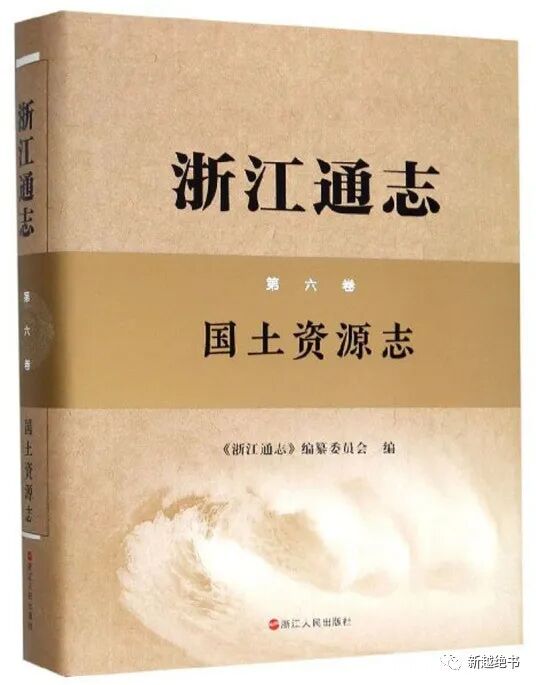
Zhejiang is a beautiful land that captivates the heart, as well as a place with a long history and brilliant culture. As introduced in the “Beautiful China Series: Beautiful Zhejiang”: every pore is soaked and exudes the gentle temperament of Jiangnan. When thinking of Zhejiang, one envisions the picturesque water towns of Jiangnan, the unforgettable beauty of West Lake, the indomitable entrepreneurial spirit of the people of Zhejiang, the thriving private economy, and the innovative digital economy. It also brings to mind the unyielding spirit of Wenzhou people venturing across the nation and the world. This is a beautiful land, a fertile ground for entrepreneurship and innovation. Therefore, upon receiving the “Zhejiang Provincial Chronicle: Land and Resources” (hereinafter referred to as “Land and Resources Chronicle”), I couldn’t wait to open this beautifully bound chronicle and search for the content I was familiar with and wanted to know. The first thing I read was the overview of this chronicle, and I was impressed by its brilliance.
The overview, as one of the important forms of chronicles, has a history of less than a hundred years. Compared to other forms of chronicles, it can be considered a “young shoot.” Although its history is short, its role and status in chronicles cannot be ignored, being referred to as a “window” and “guide map” of a chronicle. Therefore, once it emerged, it was highly valued in the field of chronicles, especially in the compilation of new socialist chronicles, where the overview was defined as an indispensable part of a complete chronicle. From the first and second rounds of chronicle compilation, it can be seen that there are various writing styles for the overview, and the overview of the “Land and Resources Chronicle” is one of them. Without evaluating the pros and cons of these various writing styles here, it can be seen that the author has carefully studied the important local conditions of land and resources in Zhejiang Province and how to better reflect these local conditions through the form of local chronicles. The overview is divided into six parts, summarizing all the content of the ten chapters of this chronicle, achieving the goal of “comprehensive overview, integration of various aspects, highlighting characteristics, and ease of reading.”
1. Comprehensive Overview, Bird’s Eye View, Summarizing Trends
The quality of the overview is primarily measured by whether it can reflect the changes of a place or an undertaking throughout history with few words and a short length, leaving readers with an overall impression of the development of that place or undertaking, which is to say, whether it can reflect the general trends of development. Although this is just a basic requirement for the overview of a chronicle, achieving this goal still requires effort. First, the compiler must have a high perspective, carefully studying the basic situation of a place or undertaking based on comprehensive data, extracting the essence from a large amount of complex information, identifying and depicting the main threads of development. Secondly, one must have a clear understanding of the overall structure of the chronicle and the data it contains, possessing the ability to comprehensively overview and manage the data. Only then can one compile an overview that can “comprehensively overview, provide a bird’s eye view, and summarize trends.”
The “Land and Resources Chronicle” is an important professional chronicle reflecting local conditions. It records and reflects not only the management of land and resources but also the “assets” of a place. This part of the “assets” is not only important in this professional chronicle but also forms the foundational content of the entire “Zhejiang Provincial Chronicle.” Therefore, reading this chronicle will not only influence readers’ understanding of the entire chronicle but also to some extent shape their understanding of the whole province of Zhejiang. The compiler has firmly grasped this point, ensuring that all expressions are based on the perspective of “land and resources” without oversimplifying the content. For example, the introduction of the overview reflects the historical trends of Zhejiang from the perspective of land and resources.
The largest river in Zhejiang Province is the Qiantang River, referred to as “Zhejiang” in texts such as the “Yuejue Shu” and “Records of the Grand Historian.” The “Zhuangzi: External Things” refers to it as “Zhihe,” while the “Water Classic” calls it “Jianjiang.” The names Zhejiang, Zhi, and Jian are all variations of pronunciation. The earliest recorded mention of the current territory of Zhejiang Province is found in the “Bamboo Annals,” Volume 4, “Chronicles of Zhou”: In the 24th year of King Cheng of Zhou, “guests came from Yue.” From the late 11th century BC to the time of King Goujian of Yue, the tribal center moved from the mountains to the plains, marking the Spring and Autumn period of the Yue state. During the Qin dynasty, Zhejiang Province was divided into three commanderies: Kuaiji, Minzhong, and Guzhang. In the first year of the Tang Dynasty (758 AD), the names of the two administrative divisions, Eastern Zhejiang and Western Zhejiang, appeared, marking the beginning of the use of Zhejiang or Zhe as an administrative name. The Northern Song Dynasty had the Liangzhe Road, while the Southern Song Dynasty had the Eastern and Western Liangzhe Roads. The Yuan Dynasty established the Jiangzhe Province. The Ming, Qing, and Republic of China periods all established Zhejiang Province, and the name and region of Zhejiang Province have remained relatively stable since then. As of 2010, the administrative divisions of Zhejiang Province include two sub-provincial cities, Hangzhou and Ningbo, and nine prefecture-level cities: Wenzhou, Jiaxing, Huzhou, Shaoxing, Jinhua, Quzhou, Zhoushan, Taizhou, and Lishui, with a total of 36 counties (including one ethnic autonomous county), 22 county-level cities, and 32 urban districts, as well as 728 towns, 443 townships, and 341 streets. According to the sixth national census of Zhejiang Province in 2010, the permanent population of the province was 54.42 million; based on registered population, the population density of the province was 466 people per square kilometer.
With few words, closely adhering to the basic requirement of “special chronicles being specialized,” the overview outlines the historical development of Zhejiang over 3,000 years: why it is called Zhejiang, the evolution of administrative divisions during important historical periods, and the administrative divisions as of 2010. The focal point is particularly striking: based on registered population, the population density of the province is 466 people per square kilometer. Such details can be found throughout the overview, and interested readers can savor them.
2. Integration of Various Aspects, Merging Scientific and Holistic Elements
The content to be recorded in the “Land and Resources Chronicle” is quite diverse, as mentioned in the first paragraph of its overview: land and resources, in a narrow sense, refer to natural resources such as land, minerals, oceans, water, atmosphere, forests, and scenery. In a broader sense, land and resources encompass natural resources, labor resources, and socio-economic resources. Following the principle of combining scientific classification with social division of labor, as well as the responsibilities of the land and resources system in Zhejiang Province, the “Land and Resources Chronicle” focuses on documenting the management, planning, protection, and utilization of land and mineral resources in Zhejiang Province. Although this statement might be more appropriate in the “General Principles” section of the chronicle, it also illustrates the extensive and complex nature of the content covered in this professional chronicle. Some chapters contain purely “natural” content, while others reflect administrative management and government actions. Additionally, starting from the origins of matters, the historical and contemporary intertwine, making the content of the overview, although “higher” than the chapter content, still inseparable from the chapter content. Integrating so many different aspects is indeed not easy, but the overview has done this quite well.
The “Land and Resources Chronicle” is divided into ten chapters, but the overview does not mechanically divide it into ten parts; instead, it appropriately consolidates the content into six parts for documentation. What left a deep impression on me is that the substantial “natural” section is only one part of the overview, yet it adopts a segmented approach to describe its “elements,” making the content concise and clear. The remaining five parts cover land and mineral systems and regulations, the development and utilization of land and mineral resources, land and mining taxes and fees management, land and mining surveys and registration, and the construction of scientific education and institutional teams. It is evident that the compiler has placed a strong emphasis on management work, which aligns with reality and effectively addresses the contradiction of having a large amount of management content that is complex and difficult to clarify. Moreover, rather than simply corresponding to the chapter content in the overview, it effectively resolves the issue of “causal disconnection” caused by the horizontal arrangement of the chronicle, integrating various aspects and greatly enhancing the overall and scientific nature of this chronicle.
3. Highlighting Characteristics, Demonstrating Patterns, Emphasizing Thoughtfulness
The various characteristics presented are the most impressive highlights of the overview. Starting from “Zhejiang Province is located on the southeast coast of China, bordered by the East China Sea to the east, adjacent to Jiangsu and Shanghai to the north, connected to Anhui and Jiangxi to the west, and neighboring Fujian to the south, situated between latitudes 27°02′44″ and 31°10′57″ north, and longitudes 118°01′16″ and 123°09′23″ east, belonging to the subtropical monsoon zone, with a mild climate and fertile land, it is known as the land of fish and rice, the home of silk, the advantage of mountains and seas, a land of cultural relics, and a tourist destination. The total land area of the province is 100,000 square kilometers, accounting for only 1.06% of the national land area, ranking 25th among the 32 provinces, regions, and municipalities in the country,” and continuing with statements like “Zhejiang Province has a complete range of strata from the Precambrian to the Cenozoic,” “Zhejiang Province has a wide variety of mineral resources,” “Zhejiang Province has complex and diverse landforms,” “Zhejiang Province is a mountainous province,” “Zhejiang Province has a winding coastline,” “Zhejiang Province has numerous rivers,” and “Under the influence of terrain, climate, soil parent material, vegetation, and long-term human agricultural activities, Zhejiang Province has formed a variety of soil types,” all reflect the characteristics and features of Zhejiang’s land and resources based on summarizing the basic situation. Such expressions not only reflect local conditions but also highlight characteristics and features, naturally leaving a deep impression on readers.
In documenting management aspects, the compiler also pays attention to highlighting unique characteristics.
“Land development and utilization. Zhejiang Province began land development and utilization early. Archaeological discoveries indicate that during the Hemudu culture period, about 5,000 to 7,000 years ago, the ancestors had already begun rice cultivation and initiated primitive land development. By the Liangzhu culture period, agriculture had transitioned from hoe cultivation to plow cultivation, further expanding land development. During the Spring and Autumn and Warring States periods…”;
“After the founding of the People’s Republic of China, land development and utilization in Zhejiang Province have developed in depth and breadth. Agricultural water conservancy construction has been carried out, and low-yield fields have been transformed, implementing comprehensive development of mountains, water, fields, forests, and roads, and building drought and flood-resistant, stable and high-yield farmland.”
Local chronicles must reflect characteristics and highlight features, which we have always emphasized. However, how to achieve this, how to extract and distill characteristics and features from a vast amount of data, requires solid data as support, as well as the compiler’s high perspective and analytical, writing abilities, and a serious study of local conditions.
4. Combining Narrative and Discussion, Highlighting Key Points for Reader Convenience
The combination of narrative and discussion is an important way in which the overview differs from other forms of chronicles. However, how to discuss, how to narrate, and how to combine them seamlessly requires considerable effort. From the overview, it can be seen that the compiler has a good grasp of this aspect.
The requirements for the overview are high, with few words but substantial content. It also requires, while outlining the overall development of a region or undertaking, to reflect characteristics and features while also highlighting uniqueness. This necessitates the compiler’s ability to add the finishing touch at critical points. I believe this is also what is meant by the “discussion” in the overview. Discussions should be based on history, allowing readers to feel natural and substantive, avoiding empty rhetoric.
“Overall, the endowment of energy and metal mineral resources in Zhejiang Province is not high, and there are not many types of minerals suitable for large-scale development, mainly mining coal, anthracite, iron, copper, lead-zinc, molybdenum, gold, and silver; non-metallic mineral resources are relatively rich and distinctive, with the mining of fluorite, alum stone, and montmorillonite occupying an important position in the country for a long time.”
“The biggest characteristic of land resources in Zhejiang Province is that there is little land but many people, which is also one of the most basic provincial conditions. The land area of Zhejiang Province accounts for only 1.06% of the national land area, but its population accounts for 3.64% of the national total population. According to the summary of the second national land use status survey, in 2009, the arable land area in Zhejiang Province was 29.8 million mu, accounting for only 1.49% of the national arable land area. The per capita arable land in the province is 0.55 mu, less than half of the national average per capita arable land, far below the warning line of 0.795 mu per capita arable land set by the Food and Agriculture Organization of the United Nations. As of 2010, the population pressure on the arable land area in Zhejiang Province remains significant.”
“Land regulations. In accordance with the land systems of various historical periods, Zhejiang Province has formulated relevant land regulations. Before the founding of the People’s Republic of China, the land regulations established by successive rulers served to maintain their socio-economic systems.”
Such descriptions, though brief, provide a refreshing feeling, and the role of the “discussion” is invaluable, especially the summary and identification of disadvantages and shortcomings, which further demonstrate the compiler’s objectivity, fairness, and commitment to facts.
5. Ecological Civilization Construction as a Component of the Five Major Constructs Established by the 18th National Congress
On November 17, 2012, General Secretary Xi Jinping, while presiding over the first collective study of the 18th Central Political Bureau, pointed out: “The 18th National Congress incorporated ecological civilization construction into the overall layout of socialism with Chinese characteristics, making the strategic position of ecological civilization construction clearer, which is conducive to integrating ecological civilization construction into all aspects and processes of economic, political, cultural, and social construction. This is an important achievement of our party’s continuous deepening of the laws of socialist construction in practice and understanding.”
“In the past, we spoke of both green mountains and clear waters and gold and silver mountains, but in fact, green mountains and clear waters are gold and silver mountains.” This was creatively proposed by Xi Jinping, then Secretary of the Zhejiang Provincial Party Committee, during his inspection in Yucun, Anji County, Zhejiang, on August 15, 2005, and has since developed into Xi Jinping’s ecological civilization thought, becoming an important part of Xi Jinping’s thought on socialism with Chinese characteristics for a new era, which has been applied in practice and has greatly promoted remarkable achievements in ecological civilization construction in our country.
Although the “Land and Resources Chronicle” is not an environmental protection chronicle, it is one of the important chronicles reflecting ecological civilization construction, especially in terms of land development and mineral resource development, which are directly related to ecological civilization construction. The chronicle reflects this point well.
“Mineral protection. The development and utilization of minerals in Zhejiang Province experienced chaotic mining and resource wastage at the beginning of the People’s Republic of China and the early reform and opening-up period. Since the early 1990s, Zhejiang Province has continuously carried out concentrated governance and rectification of mining order according to national deployments. Following the “Overall Planning for Mineral Resources in Zhejiang Province,” mineral resource development has been integrated, the total number of mines has been reduced, the layout of mining enterprises has been rationalized, and the total amount of mineral mining has been strictly controlled, with special protection measures implemented for advantageous minerals such as fluorite. By 2010, the number of mines in the province had decreased to 1,900, a reduction of 7,203 compared to 2000. According to the “Overall Planning for Mineral Resources in Zhejiang Province,” the province has designated nine types of limited mining minerals, nine limited mining areas, and 84 prohibited mining areas. At the same time, the ecological environment protection and governance of mines have been included as important components of ecological province construction, building green mines, and rehabilitating abandoned open-pit mines and abandoned mines, striving to achieve harmony between humans and nature. By 2010, the province had built 152 green mines; rehabilitated 1,457 abandoned open-pit mines, accounting for 90.5% of the total number of mines to be rehabilitated; and rehabilitated 805 abandoned mines, accounting for 28.7% of the total number of abandoned mines.”
It is somewhat regrettable that although the overview touches on ecological civilization construction, it does not adequately document the emergence and development of the “Two Mountains Theory” within the scope of its discussion.
One can infer the whole from a leaf, and one can understand the entire chronicle from an “overview.” Through the overview, we gain a rough understanding of the “assets” of Zhejiang’s land and resources, as well as the changes in its land system and the process of land resource development and utilization, the evolution and development of mineral resource management. The overview also provides clues for us to deeply read and understand the development of this undertaking. This is perhaps the success of the overview of this chronicle.
(This article was originally published in the “Research on the Quality and Characteristics of the Zhejiang Provincial Chronicle,” Fangzhi Publishing House, September 2022. The author, Liu Xing, is a former first-level inspector and editor of the Xinjiang Uygur Autonomous Region Local Chronicle Compilation Committee.)
This article is authorized by Mr. Liu Xing to be published on the “New Yuejue Shu” WeChat public platform.