
Zheng Xixi
Doctor of Medicine, Peking Union Medical College
Physician, Peking Union Medical College Hospital
Milk is an essential item in many households, and dietary guidelines recommend consuming 300 grams of dairy products daily, with cow’s milk being the absolute staple at breakfast.
However, some people experience diarrhea or discomfort after drinking cow’s milk, and others cannot consume it due to vegetarianism. What alternatives are available?
How does the nutritional value of plant-based milks, represented by “oat milk”, compare? What about soy milk, coconut milk, and almond milk?
Today, we will analyze various types of plant-based milks.
Plant-based milks cannot replace cow’s milk
Although plant-based milks are called “milk”, their nutritional components are very different from those of cow’s milk. None can fully replace cow’s milk.
If you cannot drink cow’s milk due to milk protein allergies, lactose intolerance, or dietary restrictions, you can use plant-based milks as substitutes in recipes or beverages. However, it is essential to ensure adequate intake of key nutrients such as protein, calcium, and vitamin D.
Common plant-based milks include oat milk, soy milk, almond milk, and coconut milk. Oat milk has a good taste but is high in carbohydrates, soy milk has a protein content closest to cow’s milk, almond milk is low in calories, and coconut milk is recommended for cooking in small amounts rather than for direct consumption.
When purchasing, pay attention to added sugars; it is best to choose varieties without added sugars.
Plant-based milks are suitable for lactose intolerant individuals and others
Plant-based milks have certain advantages in some aspects, making them suitable for the following groups:
Milk protein allergy: 2-3% of children have milk protein allergies, which can cause rashes, vomiting, diarrhea, and in severe cases, anaphylactic shock. Although most allergic individuals can outgrow this by around age 16, some adults continue to be allergic to milk protein. For these individuals, plant-based milks can replace cow’s milk in breakfast, baked goods, and coffee beverages.
Lactose intolerance: Diarrhea after drinking cow’s milk may be caused by lactose intolerance. Plant-based milks do not contain lactose, which can help avoid symptoms like diarrhea and bloating. Individuals with dietary restrictions, vegetarians, and vegans who cannot consume cow’s milk and other animal dairy products can also drink plant-based milks to enhance the flavor of their diets.
However, it is important to note that some soy milks are mixtures of cow’s milk and soy milk, and those who drink plant-based milks due to dietary restrictions need to ensure they are getting enough vitamin D, vitamin B12, and other nutrients.
For growing children who cannot drink cow’s milk due to allergies or other reasons, it is crucial to ensure they receive adequate protein, vitamin D, and calcium while consuming plant-based milks.
Plant-based milks are made from processed plants
Plant-based milks are not actually milk; only mammals can produce milk, and plants obviously cannot.
Plant-based milks are similar to soy milk, made by soaking, grinding, and homogenizing beans, grains, nuts, or coconut meat.
They are called milk mainly because of their texture and color, resembling cow’s milk, and they can be consumed like cow’s milk. Some plant-based milks may contain emulsifiers like carrageenan to achieve a similar milky appearance and texture.
Soy milk and soy milk are both derived from soybeans, differing mainly in their production processes. Homemade soy milk typically undergoes fewer processing steps and has a shorter shelf life.
In contrast, boxed soy milk is subjected to high-pressure homogenization, which breaks down proteins, fats, and phospholipids into finer, more uniform solid dispersions and liquid emulsions, and is also pasteurized at high temperatures, making its nutrients more absorbable and extending its shelf life.
You can also make plant-based milks at home, with steps similar to making soy milk, involving soaking, blending, filtering, and extracting. It is very simple and convenient.

Image source: Provided by the author
The nutritional value of plant-based milks is inferior to that of cow’s milk
Nutritionally, no plant-based milk can replace cow’s milk.
As shown in the following image, compared to cow’s milk, various plant-based milks each have their shortcomings, with only cow’s milk providing a balanced nutritional profile.

Comparison of the three major nutrients and calories between plant-based milks and cow’s milk, with the deep blue line representing cow’s milk
Image source: Provided by the author
The nutritional components of various plant-based milks can also be clearly seen.



Image source: Provided by the author
Each type of plant-based milk has its own advantages and disadvantages
With the increasing variety of plant-based milks, how should one choose, and what are the nutritional differences?
➊ Oat Milk
Relatively balanced nutrition: Oat milk has a relatively balanced nutritional profile, with protein content lower than soy milk but higher than other plant-based milks. It contains some dietary fiber, moderate calories, less than whole cow’s milk but more than water-like unsweetened almond milk and skim milk.
Contains dietary fiber: Oats contain dietary fiber, and although oat milk is made by juicing, which removes much of the fiber from the oat bran, it still retains some beneficial soluble dietary fiber, beta-glucan, which can help lower blood lipids. However, oat milk should not be relied upon for dietary fiber intake.
Good taste and texture: Oat milk has the densest texture among various plant-based milks and can even be frothed for coffee preparation. This is why coffee shops often choose oat milk. Additionally, oat milk has no distinctive flavor, making it more palatable compared to soy milk lattes, which can have a strong bean taste that not everyone enjoys.
Versatile and hypoallergenic: Many people who give up cow’s milk or cannot drink soy milk do so due to allergies to those ingredients. Oats are not nuts and are a staple food, and most oat milks are gluten-free, making them friendly for those with lactose intolerance, soy protein sensitivity, nut allergies, or even celiac disease.
However, oat milk also has disadvantages.
Higher carbohydrate content: Oat milk has a relatively high carbohydrate content, ranking medium to high among plant-based milks, second only to rice milk, and higher than cow’s milk. After all, oats are a staple food, and their nutritional profile differs from that of legumes and nuts. Therefore, if you are following a low-carbohydrate diet, you should reduce oat milk consumption and choose varieties without added sugars.
➋ Soy Milk
Higher protein content: Soy milk is the only plant-based milk that can match cow’s milk in protein content. Although the amounts are similar, the quality of soy protein is slightly inferior to that of cow’s milk. Soy protein contains all essential amino acids, but its amino acid profile and absorbability are slightly lower than those of cow’s milk.
Contains plant nutrients: Soy milk contains isoflavones, a type of plant nutrient that has been the subject of much research. Although there is no definitive conclusion yet, it may help prevent cardiovascular diseases.
The disadvantages of soy milk include potential allergies and the fact that many soy milks contain added sugars.
Potential allergies: Some individuals may also be allergic to soy. Some people experience bloating after consuming soy milk or soy products, similar to lactose intolerance, due to a subset of individuals being intolerant to fermentable oligosaccharides, disaccharides, monosaccharides, and polyols (FODMAPs), which can be present in soy milk made from whole soybeans.
Some soy milks contain cow’s milk: It is important to note that not all soy milks are suitable for vegetarians, as some soy milks are a mixture of soy milk and cow’s milk.
Potential added sugars: To compensate for the taste deficiencies of soy milk, most soy milks contain added sugars, so be sure to check the ingredient list for white sugar when purchasing.
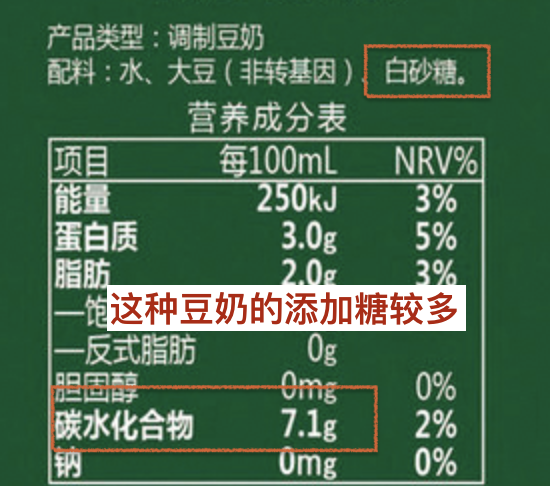
Image source: Provided by the author

Image source: Provided by the author
➌ Almond Milk
Contains monounsaturated fatty acids: The fats in almonds are primarily healthy monounsaturated fatty acids, which are beneficial for weight loss and cardiovascular health.
Low in calories and carbohydrates: Almond milk is indeed lower in calories compared to cow’s milk, with 1 cup of almond milk containing only 30 kcal, while cow’s milk has 150 kcal. However, the low calorie content comes with low nutritional value, as 1 cup of almond milk contains only 1 gram of protein compared to 8 grams in cow’s milk, making almond milk nutritionally inadequate as a substitute for cow’s milk.
The disadvantages of almond milk mainly include:
Low protein: Almond milk is filtered during production, which removes most of the nutrients, and trace nutrients such as calcium, vitamin D, and iron are lower than in cow’s milk.
Potential allergies: Many people are allergic to nuts.
Added sugars: Most almond milks on the market also contain added sugars, with 1 cup potentially containing up to 16 grams of sugar.

Image source: Provided by the author
The sugars in almond milk are added sugars, which can cause rapid spikes in blood sugar, while the sugars in cow’s milk are natural lactose, which has a relatively smaller impact on blood sugar. The protein content in cow’s milk is also significantly higher than that in almond milk.
Almond milk is low in calories, low in saturated fat, and has a rich flavor without the bean taste of soy milk, making it a good choice for those seeking taste while dieting or for older adults needing to control saturated fat intake. However, its nutritional content is lower than that of cow’s milk, so it should not be used as a substitute for cow’s milk in growing children.
➍ Coconut Milk
Unlike coconut water, which is the water inside the coconut, coconut milk is made from the pressed meat of the coconut. More often, coconut milk is used for cooking rather than as a substitute for cow’s milk. Coconut milk for direct consumption is essentially diluted coconut milk.
Coconut milk generally does not pose allergy issues and is low in carbohydrates.
Medium-chain fatty acids (MCT): The saturated fats in coconut oil are medium-chain fatty acids, which are easily absorbed and have certain metabolic advantages.
However, the disadvantages of coconut milk are also quite evident: it is low in protein and contains almost no protein.
High in fat and calories: The calories in coconut milk come almost entirely from fat, and all of it is saturated fat. One cup of undiluted coconut milk contains nearly three times the calories of cow’s milk, with 48 grams of fat, of which 43 grams are saturated fat.
Added sugars: Many commercial coconut milks are diluted coconut milk with added sugars, leading to high sugar content.

Common pure coconut milk
Image source: Provided by the author
It is very high in calories, with one cup reaching up to 422 kcal, and almost entirely from saturated fat. The carbohydrate and protein content are both very low.

Image source: Provided by the author
In conclusion, no plant-based milk can replace cow’s milk. If you enjoy drinking plant-based milks, it is best to choose varieties without added sugars.
Author’s WeChat Official Account: Xixi Nutrition
Disseminating practical and effective nutritional knowledge
Long press to recognize the QR code on the right to follow >>


Supervised by Fan Fan
Typesetting by Fan Fan

References

[1] https://foodinsight.org/whats-in-a-name-types-of-milk-dairy-nondairy-alternatives-consumer-research
[2] Cow’s milk allergy: evidence-based diagnosis and management for the practitioner. Eur J Pediatr. 2015 Feb;174(2):141-50. doi: 10.1007/s00431-014-2422-3. Epub 2014 Sep 26.
[3] Vanga, S.K. and Raghavan, V., 2017. How well do plant based alternatives fare nutritionally compared to cow’s milk?. Journal of Food Science and Technology, pp.1-11.