Lesson 55
The Sawyer family
The Sawyer Family
Vocabulary List
1 live [liv] v. to live, to reside
2 stay [stei] v. to stay, to remain
3 home [həum] n. home; ad. at home, to home
4 housework [‘hauswə:k] n. housework
5 lunch [lʌntʃ] n. lunch
6 afternoon [ˌɑ:ftə’nu:n] n. afternoon
7 usually [‘ju:ʒuəli, ‘ju:ʒəli] ad. usually
8 together [tə’geðə] ad. together
9 evening [‘i:vniŋ] n. evening
10 arrive [ə’raiv] v. to arrive
11 night [nait] n. night
Text and Translation
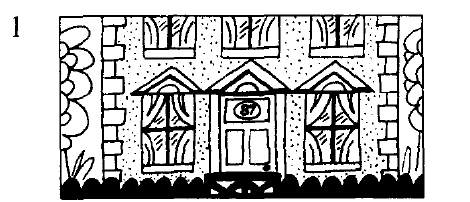
The Sawyers live at 87 King Street. The Sawyer family lives at 87 King Street.
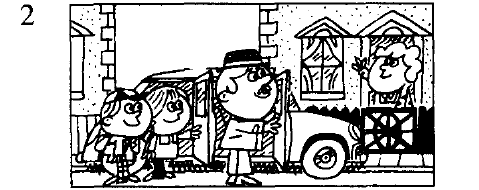
In the morning, Mr. Sawyer goes to work and the children go to school. In the morning, Mr. Sawyer goes to work and the children go to school.
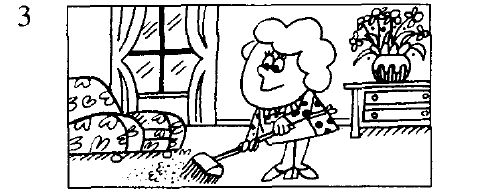
Mrs. Sawyer stays at home every day. Mrs. Sawyer stays at home every day. She does the housework. She takes care of the housework.
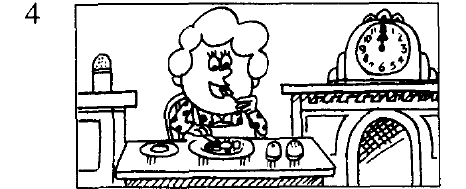
She always eats her lunch at noon. She always eats her lunch at noon.
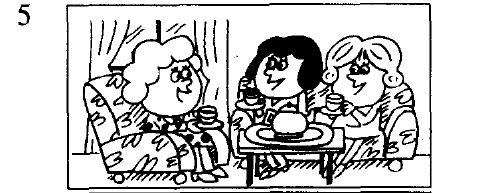
In the afternoon, she usually sees her friends. In the afternoon, she usually meets her friends. They often drink tea together. They often drink tea together.
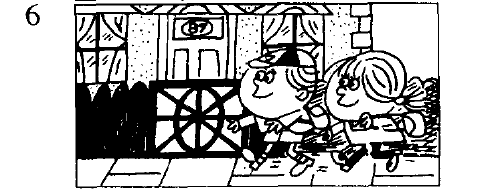
In the evening, the children come home from school. In the evening, the children come home from school. They arrive home early. They arrive home early.
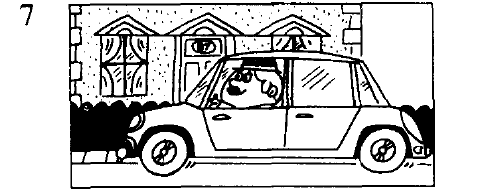
Mr. Sawyer comes home from work. Mr. Sawyer comes home from work. He arrives home late. He arrives home late.
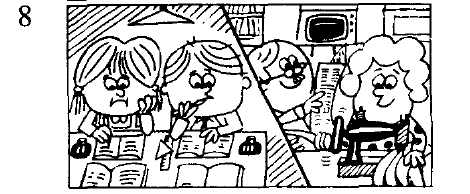
At night, the children always do their homework. At night, the children always do their homework, then they go to bed. Mr. Sawyer usually reads his newspaper, but sometimes he and his wife watch television. Mr. Sawyer usually reads his newspaper, but sometimes he and his wife watch television.
Key Points of the Lesson:

Detailed Notes on the Text
1. go to work, to go to work.
Other phrases in the text led by the verb go include: go to school (to go to school), go to bed (to go to bed). Note that work, school, and bed do not take any articles before them.
2. stay at home, to stay at home.
Stay home is similar in meaning. In the former, home is a noun, while in the latter, home is an adverb.
3. do the housework, to do housework.
Housework is an uncountable noun. Compare: do the homework (to do homework).
4. at night, at night.
If referring to a specific night, use the preposition on:
on the night of June 2
Grammar
Simple Present Tense (2)
Click to enter Simple Present Tense (1)
The simple present tense is used to express habitual actions, regular behaviors, and eternal phenomena. It is usually used with frequency adverbs and time phrases. These time phrases include:
every day/week/month/year
in the morning/afternoon/evening
at noon/night
The third person singular verb must be conjugated, which can be divided into several cases:
(1) Add -s directly, such as:
come—-comes
arrive—-arrives
(2) For verbs ending in -sh, -ch, -o, and -s, add -es, such as:
wash—-washes
go—-goes
watch—-watches
do—-does
(3) For verbs ending in a consonant + -y, change -y to -i and add -es; for verbs ending in a vowel + -y, just add -s:
hurry—-hurries
carry—-carries
play—-plays
stay—-stays
Vocabulary Learning1arrive v.
(1) to arrive; to come:
We arrived home early.
The train is expected to arrive in London at 8:20 p.m.
(2) (time, etc.) to come; (baby) to be born:
At last the day of graduation arrived.
Elizabeth’s baby arrived at midnight.
2live v.
(1) to reside; to live:
Frank lives in Paris.
Where do you live?
(2) to survive; to exist:
Fish can’t live long out of water.
My grandmother lived until she was 94.
(3) to lead a life; to enjoy life:
At 40 he was just beginning to live.
You haven’t lived till you’ve been to Paris.
(4) to live on (by/on):
He lives by playing the violin.
He lives on the fortune left to him by his father.
3stay v.
(1) to stay; to remain:
Mrs. White stays at home every day.
(2) to stay temporarily:
We were staying at the same hotel.
(3) to remain; to keep:
The house has to stay exactly as it was.
Lesson 56
What do they usually do?
What do they usually do?
Text and Translation
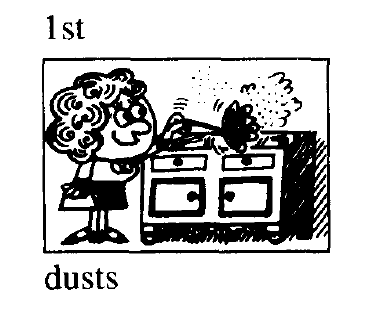
(1) T: Look at the 1st picture. What does she often do in the morning?What does she often do in the morning?
S: She often dusts the cupboard in the morning.She often dusts the cupboard in the morning.
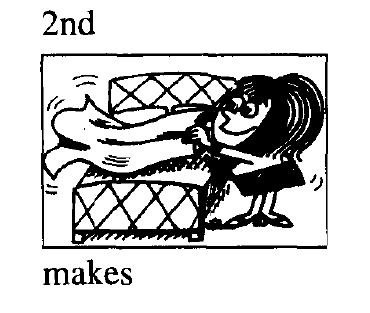
(2) T: The 2nd picture. What does she always do in the morning?What does she always do in the morning?
S: She always makes the bed in the morning.She always makes the bed in the morning.
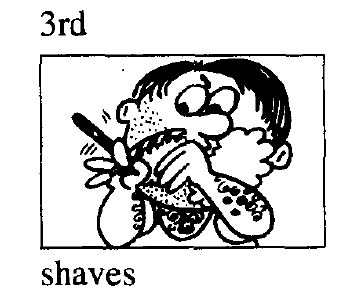
(3) T: The 3rd picture. What does he always do in the morning?What does he always do in the morning?
S: He always shaves in the morning.He always shaves in the morning.
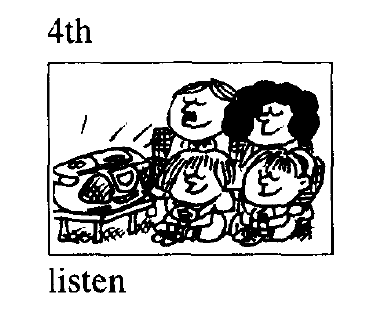
4 T: The 4th picture. What do they sometimes do in the evening?What do they sometimes do in the evening?
S: They sometimes listen to the stereo in the evening.They sometimes listen to the stereo in the evening.
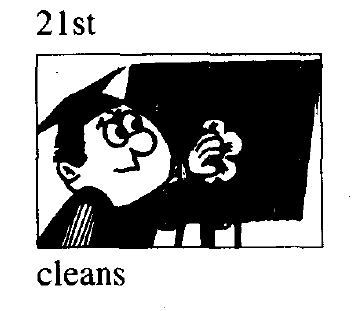
5 T: The 21st picture. What does he always do every day?What does he always do every day?
S: He always cleans the blackboard every day.He always cleans the blackboard every day.
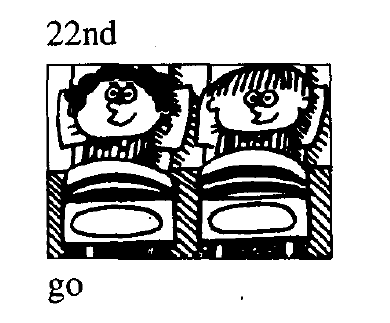
6 T: The 22nd picture. What do they always do at night?What do they always do at night?
S: They always go to bed at night.They always go to bed at night.
7 T: The 23rd picture. What does she usually do every day?What does she usually do every day?
S: She usually washes the dishes every day.She usually washes the dishes every day.
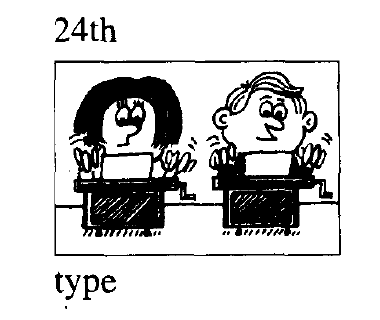
8 T: The 24th picture. What do they usually do in the afternoon?What do they usually do in the afternoon?
S: They usually type letters in the afternoon.They usually type letters in the afternoon.
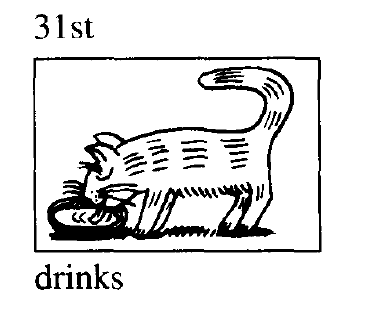
9 T: The 31st picture. What do they sometimes do in the evening?What do they sometimes do in the evening?
S: They usually drink milk every day.They usually drink milk every day.
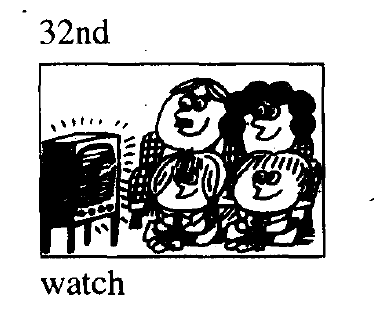
10 T: The 32nd picture. What do they sometimes do in the evening?What do they sometimes do in the evening?
S: They sometimes watch television in the evening.They sometimes watch television in the evening.
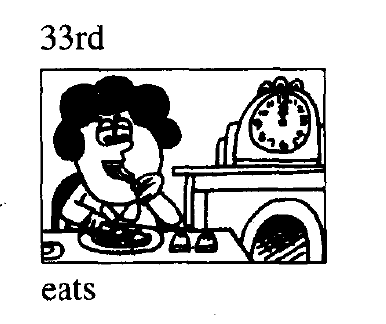
11 T: The 33rd picture. What does she always do at noon?What does she always do at noon?
S: She always eats her lunch at noon.She always eats her lunch at noon.
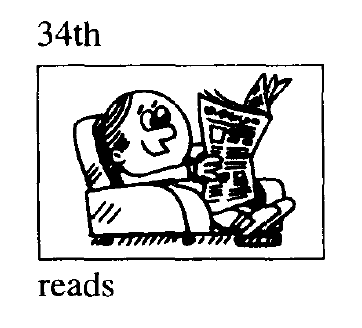
12 T: The 34th picture. What does he often do in the evening?What does he often do in the evening?
S: He often reads his newspaper in the evening.He often reads his newspaper in the evening.
Key Points of the Lesson:
Post-Lesson ExercisesA1 The children go to school in the morning.2 Their father takes them to school.3 Mrs. Sawyer stays at home.4 She does the housework.5 She always eats her lunch at noon.B1 What does she do in the morning?She always makes the bed in the morning.2 What does he do in the morning?He always shaves in the morning.3 What do they do in the evening?They sometimes listen to the stereo in the evening.4 What does he do every day?He always cleans the blackboard every day.5 What do they do at night?They always go to bed early at night.6 What does she do every day?She usually washes the dishes every day.7 What do they do in the afternoon?They usually type some letters in the afternoon.8 What does it do every day?It usually drinks some milk every day.9 What do they do in the evening?They sometimes watch television in the evening.10 What does she do at noon?She always eats her lunch at noon.11 What does he do in the evening?He often reads his newspaper in the evening.