In the world of microcontrollers (also known as microcontrollers), ROM (Read-Only Memory) and RAM (Random Access Memory) are two important storage components, each playing an indispensable role, often found alongside engineers. Today, let’s discuss what ROM and RAM are, their uses, and more.
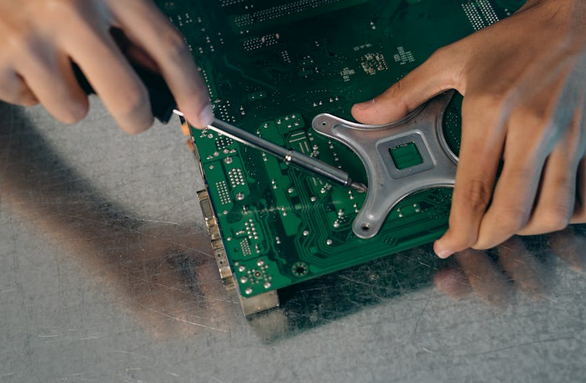
1. What is ROM?
ROM, or Read-Only Memory, is a type of storage that can only be written once and cannot be modified thereafter. It is mainly used to store program code or fixed data that needs to be read when the microcontroller starts up. The content in ROM is written during manufacturing, and users cannot change it at will.
Common types of ROM include Mask ROM, Programmable ROM (PROM), and Erasable Programmable ROM (EPROM), etc.
2. Main Functions of ROM in Microcontrollers
In a microcontroller, the main function of ROM is to store the firmware and data. When the microcontroller is powered on, it reads the startup code from ROM and then executes the corresponding program. Since the content of ROM cannot be changed, it ensures the security and stability of the program, preventing accidental modifications or corruption.
3. What is RAM?
RAM, or Random Access Memory, is a type of storage that can be read and written repeatedly. Unlike ROM, the data in RAM can be read and written at any time by the microcontroller during operation. The content of RAM disappears when the power is off, which is why it is also called volatile memory.
4. Main Functions of RAM in Microcontrollers
In a microcontroller, RAM is mainly used to store temporary data and variables generated during program execution. Because the content of RAM can be dynamically changed, it becomes an important place for data exchange and storage during program execution. For example, variables, stacks, and buffers in programs are usually stored in RAM.
This article is an original piece by Fan Yi Education. Please indicate the source if reproduced!