The multi-protocol data acquisition box is an industrial IoT device that supports multiple communication protocols, enabling data collection, processing, and transmission from various devices in industrial environments. This type of device typically has the following features:
-
Support for Multiple Protocols: The multi-protocol data acquisition box can support various industrial communication protocols such as Modbus, OPC-UA, MQTT, LwM2M, etc., to meet the access requirements of different devices and systems.
-
Rich Interfaces: The device is usually equipped with various industrial interfaces, such as RS-485, RS-232, CAN, Digital Input (DI), Digital Output (DO), Relay, etc., as well as Ethernet interfaces for connecting various sensors and actuators.
-
Edge Computing Capability: Some multi-protocol data acquisition boxes also have edge computing capabilities, allowing for local data processing and analysis, reducing the need for data transmission to the cloud, and improving response speed and data security.
-
Wireless Communication Capability: Supports wireless communication methods such as Wi-Fi, 4G/5G, making it convenient for deployment in industrial environments where wiring is difficult.
-
Easy to Configure and Use: Many data acquisition boxes offer simple configuration methods, such as configuration via wireless AP connection, making on-site deployment and debugging more convenient.
In application scenarios, multi-protocol data acquisition boxes can be used in industrial automation, smart manufacturing, energy management, and other fields, helping enterprises achieve real-time monitoring, analysis, and optimization of equipment data, thereby improving production efficiency and reducing operational costs. For example, they can be used for data collection from CNC machine tools, environmental monitoring, and equipment health management.
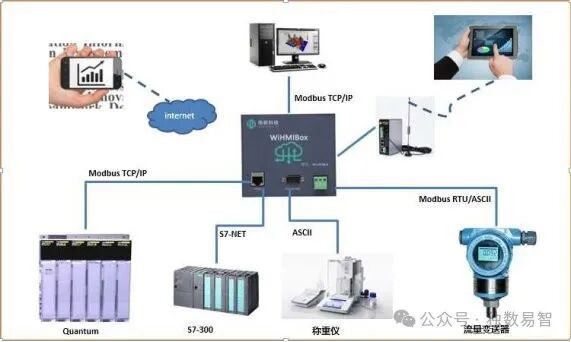
The edge computing capability of the multi-protocol data acquisition box can enhance data processing efficiency, primarily achieved through the following aspects:
-
Local Data Processing: Edge computing allows data processing to occur near the data source, reducing the need for data transmission to a central data center, thereby decreasing network latency and accelerating data processing speed.
-
Reduced Bandwidth Requirements: By performing data preprocessing at the edge node, such as data cleaning, filtering, and aggregation, the amount of data that needs to be transmitted to the cloud can be reduced, saving bandwidth and lowering costs.
-
Enhanced Real-Time Performance: Edge computing provides faster data processing and analysis capabilities, enabling applications with high real-time requirements (such as industrial automation control) to respond quickly, improving production efficiency and safety.
-
Improved Data Security: Processing data locally can reduce the risk of data transmission over the network. Security measures at the edge computing node, such as data encryption and access control, can better protect data privacy and security.
-
Reduced Burden on Central Data Centers: Edge computing can offload some computational tasks from the cloud to edge nodes, alleviating the processing pressure on central data centers and improving the overall system’s operational efficiency.
-
Strong Adaptability: Edge computing nodes can be customized according to the needs of different industrial scenarios, supporting various industrial protocols and devices, making data collection more flexible and efficient.
-
Fault Recovery Capability: Edge computing nodes are designed with consideration for the complex environments of industrial sites, such as wide temperature ranges, waterproofing, dustproofing, and resistance to electromagnetic interference, ensuring stable operation even in harsh conditions and providing rapid fault recovery capabilities.
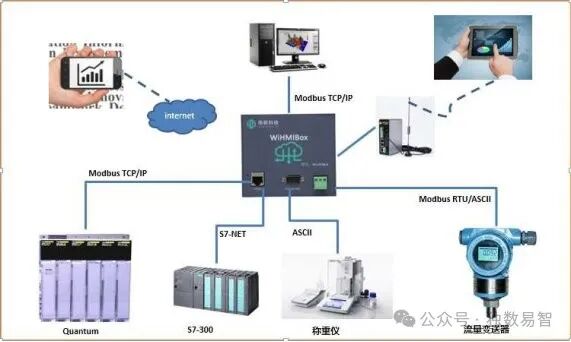
Edge Cloud Computing Systems rely on corresponding platforms, which can help categorize their capabilities. On the south side of the platform, 5G technology can be utilized to effectively connect built-in cloud-driven work with industrial devices, enabling effective data collection of various information while also helping enterprises quickly respond to the collected information. On the north side of the platform, industrial application empowerment operations can be performed, such as cycle analysis, cloud-edge collaboration, OEE analysis, anomaly detection, transparent data operation and maintenance, energy-saving analysis, and predictive maintenance applications.