
In the field of construction safety, we are witnessing a deep collision between behavioral science and intelligent technology. When traditional safety management encounters AIoT, computer vision, and other innovative technologies, the identification and intervention of unsafe behaviors are undergoing revolutionary changes.
Today, I will guide you through the comprehensive research methodology from the laboratory to the construction site—this is not only an academic exploration but also an engineering practice to safeguard lives.
01
Unsafe Behavior Capture Technology Stack
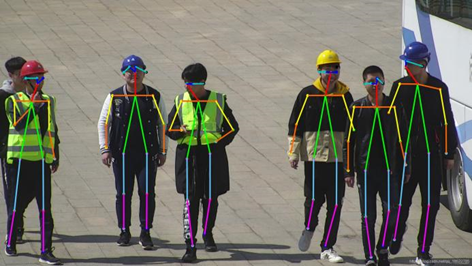
To accurately capture unsafe behaviors, utilizing multimodal behavior recognition technology is key. Improving the YOLOv8 algorithm can efficiently detect violations such as “not wearing a safety belt”. Combined with OpenPose for posture estimation, it can provide comprehensive insights into workers’ behavior states through RTSP video stream processing (recommended FFmpeg + GStreamer) + edge computing boxes (NVIDIA Jetson AGX). In complex scenarios where workers obstruct each other, designing a “spatiotemporal attention mechanism” effectively enhances detection accuracy.
At the same time, leveraging digital twin technology (Unity3D + BIM data fusion) to construct a “human-machine-environment” dynamic model, real-time interaction of tower crane swing and worker paths is achieved through the Havok physics engine, visually presenting the spatiotemporal distribution of high-risk behaviors with 3D heat maps, making potential dangers clear at a glance. Additionally, using the Empatica E4 wristband to collect workers’ EDA/HRV data, a stress-unsafe behavior correlation model can be constructed. Utilizing BioSPPy (physiological signal processing) + MNE-Python (time-frequency analysis), it can be found that the probability of violations increases by 2.7 times within 15 minutes after a stress peak.
02
Behavior Data Analysis Paradigm
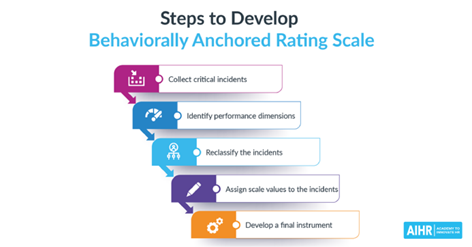
After behavior capture, in-depth analysis is a critical step. A construction safety behavior scale is developed based on BAR (Behavioral Anchored Rating), and NVivo is used to automate behavior coding, greatly improving coding consistency and accuracy. Using sequence mining technology, the PrefixSpan algorithm is employed to mine sequential patterns of violations, combined with construction progress data for temporal constraints, aiding in a deeper understanding of the causes and evolution of violations.
To evaluate the intervention effects of safety training, a double difference model (DID) is used, combined with the CausalML library and EconML tools to conduct causal inference experiments. It was found that VR safety training is less effective for experienced workers, reminding us to customize training content.
03
Intelligent Intervention Technology Matrix
Intelligent intervention is an important means of preventing unsafe behaviors. A real-time early warning system is constructed, using YOLOv7 detection + LSTM prediction for early warnings, and a “gradual warning” mechanism is designed, ranging from voice prompts to vibration feedback, up to emergency shutdown, comprehensively reducing the occurrence of violations.
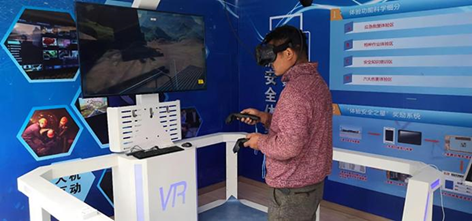
Using reinforcement learning to recommend safety measures, with Ray RLlib (distributed training) + Optuna (hyperparameter optimization), tailored differentiated safety training content is provided for workers of different risk levels, achieving personalized intervention. Additionally, a construction safety VR training ground is built using Unity + ML-Agents, employing photorealistic rendering technology to enhance the realism of behavioral decision-making. Actual results show that the VR training group significantly reduced violations.
04
Alchemy of Top Conference Papers
In terms of top conferences and paper publications, researchers are also provided with some strategies and guidance. Keeping up with academic hotspots, such as the CHI2023 topic on “AI + Safety Behavior”, exploring cutting-edge directions like human-machine collaborative intervention systems. When selecting topics, an innovative formula of “traditional problems (e.g., ineffective safety training) + new technologies (federated learning)” can be used to create highly cited papers. In experimental design, setting up control groups such as traditional supervision group, intelligent early warning group, and human-machine collaboration group can clearly demonstrate the effects of different intervention strategies. Using UpSetR to display multi-factor interaction effects makes experimental results more intuitive and understandable.

When submitting, aim for top journals such as Safety Science (IF=6.7) and Accident Analysis & Prevention (IF=4.5). To enhance the persuasiveness of the paper, SHAP values can be used to explain model decisions, and actual case video links can be attached to help reviewers better understand the research value.
05
Research Acceleration Package
In terms of research acceleration, there are currently rich and authoritative data resources available. For example, the OSHA accident database contains a large number of publicly available construction accident cases, providing researchers with real and reliable research materials; the UCF101-Action behavior recognition benchmark dataset can be used for training and testing behavior recognition algorithms, helping to improve model accuracy.
AlphaPose, as an open-source framework for high-precision posture estimation, can assist in achieving more accurate worker posture recognition; the SafeAct construction safety behavior analysis toolkit integrates various behavior analysis algorithms, facilitating researchers to quickly conduct related studies.


Finally, I would like to share some research insights.Spending 30 minutes a day analyzing accident reports helps cultivate an intuition for behavioral patterns; when model performance is poor, first check whether the behavior definitions are clear, as often the problem lies in ambiguous labeling. I hope these methods can bring new ideas to researchers in the field of construction safety, contributing to the protection of worker safety.
Text and Image Editor | An WenlongEditor | Li ZhiwuInformation Source | Qiu Yue