Note: Swipe left on the briefing content to view the event timeline, historical background, technical details, and quick Q&A information.
Fwupd 2.0.14 Adds Support for Framework and SteelSeries
Fwupd 2.0.14 was released today, adding support for Framework QMK devices and SteelSeries Arctis Nova 3P headphones.
This update also introduces build support for RHEL 9 and 10, and includes UEFI capsule fixes.
Fwupd is widely used on Linux for BIOS and peripheral firmware updates.
Historical Background
Fwupd has become the standard way to provide vendor firmware updates on Linux, handling BIOS/system firmware and an ever-expanding range of peripherals. Version 2.0.14 is described as the thirteenth maintenance update in the 2.0 series, reflecting ongoing incremental improvements in stability and hardware coverage.
Did you know?
Fwupd does more than just update BIOS—it now supports a growing range of peripherals, including gaming headsets.
Technical Details
UEFI capsule updates:A mechanism where firmware is packaged into a UEFI Capsule so that the operating system can stage and apply BIOS/firmware updates during reboot, reducing manual flashing steps.
QMK devices:QMK is open-source keyboard firmware; adding support for Framework QMK devices means fwupd can now manage firmware for certain Framework components using QMK.
RHEL build support:Providing build support for RHEL 9/10 simplifies packaging and integration in enterprise environments using these distributions.
Quick Q&A
What new devices does fwupd 2.0.14 support?Framework QMK devices and SteelSeries Arctis Nova 3P headphones.
Which distributions received build support?Red Hat Enterprise Linux 9 and 10.
What fixes are included in this version?Fixes related to UEFI capsules to improve the reliability of firmware updates.
Ubuntu Releases 25.10 Snapshot 4 for Testing
Ubuntu has released the fourth monthly snapshot of Ubuntu 25.10 “Questing Quokka,” with new test images now available for download.
This is the last planned monthly snapshot before the September Beta and October release window, marking the final regular pre-Beta milestone for broader testing.
Event Timeline
❶ Pre-beta period (2025) Snapshot 4 released for community testing as the final monthly snapshot before Beta.
❷ September 2025 Beta is planned before the final release.
❸ October 2025 Final Ubuntu 25.10 release window.
Historical Background
Ubuntu follows a biannual release cadence, with updates in April and October, and interim releases between LTS versions. The 25.10 cycle has released a series of monthly snapshots, culminating in Snapshot 4 to help the community test the development state before Beta and final release.
Did you know?
Ubuntu release codenames traditionally use alliterative adjectives-animal pairs, such as “Questing Quokka” for 25.10.
Technical Details
Snapshot builds:A periodic installable image that captures the current development state for testers to verify features and catch regressions early.
Beta release:A feature-complete pre-release version intended for broader testing and final polishing before stable release.
Codename “Questing Quokka”:The identifier used in snapshots and milestones for the Ubuntu 25.10 cycle.
Quick Q&A
Is Snapshot 4 the last monthly snapshot for Ubuntu 25.10?Yes, it is described as the fourth and final planned monthly snapshot for this cycle.
When is the Ubuntu 25.10 Beta expected to be released?The Beta is scheduled for September 2025.
When is the final Ubuntu 25.10 release expected?The stable release window is in October 2025.
Armbian 25.8.1 Expands Board Support, Adds Linux 6.16 Option
Armbian 25.8.1 is a significant update to 25.5, expanding board support and providing Linux 6.16 as an optional kernel for many devices.
This Debian-based distribution focuses on ARM64 and RISC-V, and also adds support for Debian 13 “Trixie.”
Technical Details
Linux 6.16 option:Provides an updated upstream kernel with broader device support and features; the availability for “many boards” indicates a wider testing coverage without forcing upgrades on all devices.
Debian 13 “Trixie”:Armbian images have added support for Debian 13, keeping the SBC user space aligned with the latest Debian release cycle and packages.
Board enablement:Expanding board support typically involves new device trees, boot configurations, and driver updates to ensure boards can reliably boot and utilize functioning peripherals.
Quick Q&A
What new kernel does Armbian 25.8.1 provide?It offers Linux 6.16 as an option for many supported boards.
Which Debian version does this update support?Armbian 25.8.1 supports Debian 13 “Trixie.”
What platforms does Armbian primarily target?It targets ARM64 and RISC-V single-board computers and related devices.
Kubernetes Celebrates a Decade Milestone with v1.34 Network Optimization Release
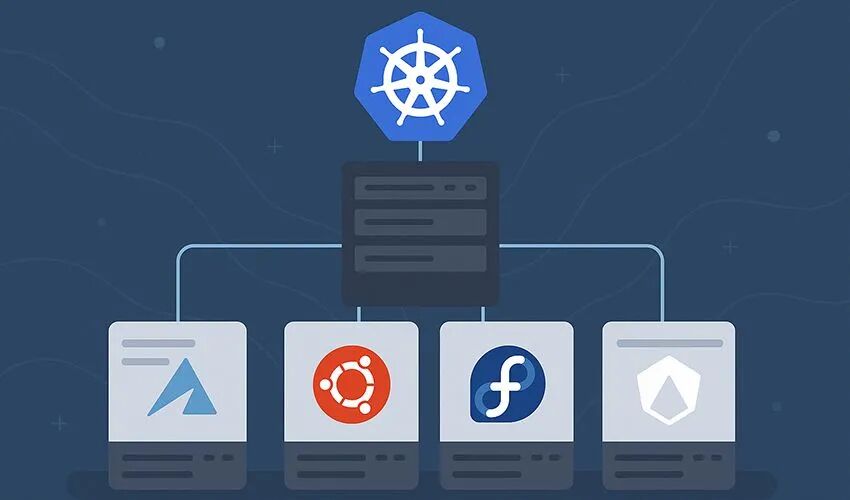
Kubernetes has reached its 10th anniversary milestone and released version 1.34, which emphasizes network optimization for cloud-native infrastructure.
A guide for developers from Linux Journal explains how lightweight Linux distributions can accelerate Pod startup in k3s, MicroK8s, or full clusters and free up resources.
These updates and guides collectively highlight improvements in cluster networking and a more streamlined developer setup.
Historical Background
Kubernetes originated at Google and was open-sourced in 2014, quickly becoming the de facto standard for container orchestration. Under the management of the Cloud Native Computing Foundation, the project has evolved through regular releases and widespread ecosystem adoption. A decade later, the project is celebrating its 10th anniversary milestone while launching v1.34, which emphasizes network optimization for the modern cloud-native stack.
Did you know?
“Kubernetes” comes from the Greek word meaning “helmsman” or “pilot,” reflecting its role in steering containerized workloads.
Technical Details
Container runtime compatibility:Kubernetes clusters typically use containerd, CRI-O, or Docker; choosing an operating system that integrates these components cleanly aids in smooth cluster bootstrapping and operation.
Immutable vs. mutable distributions:Immutable systems like Fedora CoreOS or Talos enhance reliability and consistency, while mutable distributions like Alpine and Ubuntu Core allow for easier modifications and temporary customizations.
Network optimization:Version 1.34 emphasizes improvements in network behavior for cloud-native infrastructure, indicating ongoing investment in cluster connectivity and operability.
Quick Q&A
What is the main focus of Kubernetes v1.34?This version emphasizes network optimization for cloud-native infrastructure.
Why consider using a lightweight Linux base for Kubernetes development?It minimizes operating system resource usage and simplifies container runtime setup, leaving more CPU/RAM for workloads and faster startup.
Which distributions illustrate immutable vs. mutable approaches?Immutable examples include Fedora CoreOS and Talos, while Alpine and Ubuntu Core provide more flexible, mutable setups.
OBS Studio 32 Beta Introduces Plugin Manager
OBS Studio 32.0 has released a public beta with a built-in plugin manager.
This beta also introduces hybrid MOV support, and OBS remains a free, open-source, cross-platform recording and live streaming tool, including on Linux.
Event Timeline
❶ Late August 2025 OBS Studio 32.0 enters public beta, introducing a plugin manager.
Did you know?
Phoronix describes OBS Studio as a widely used open-source cross-platform desktop streaming and recording application.
Technical Details
Plugin manager:The built-in manager centralizes plugin handling in OBS, simplifying the management of extensions compared to manual installation.
Hybrid MOV support:The beta adds support for hybrid MOV recording options, expanding the set of containers supported in OBS.
Open-source, cross-platform:OBS is free open-source software that runs on operating systems including Linux for recording and live streaming.
Quick Q&A
What are the main features of the OBS 32.0 beta?The new plugin manager and hybrid MOV support are the main new features.
What stage is this version currently in?It is in the public testing stage; GamingOnLinux has designated it as 32.0.0 Beta 1.
Is OBS Studio still open-source and available on Linux?Yes, it remains free, open-source, and cross-platform, including Linux support.
Mozilla Boosts Firefox Device-side AI Speed by 10x
Mozilla has transitioned Firefox’s device-side AI capabilities from WebAssembly to native C++, accelerating performance for tools like smart grouping and alt-text generation by 10 times.
Additionally, Firefox 142 has been released, which includes a flexible exception list in its enhanced tracking protection (strict) divided into “baseline” and “convenience” categories to improve website compatibility while maintaining core privacy protections.
Event Timeline
❶ August 2025 OMG! Ubuntu reports that Firefox’s device-side AI speed has increased by 10 times after transitioning from WebAssembly to native C++.
❷ Date not specified in source Linux Today reports that Firefox 142 has been released, with its flexible ETP strict exceptions divided into baseline and convenience categories.
Technical Details
WebAssembly to native C++:Mozilla migrated Firefox’s device-side AI components from WebAssembly to native C++ to reduce overhead, resulting in performance improvements of up to 10 times.
Affected AI features:Smart grouping and image alt-text generation are among the device-side features benefiting from the speed boost of the native implementation.
ETP strict exceptions:Firefox 142 adds a flexible exception list for tracking protection, divided into baseline (core functionality) and convenience (additional features) to fine-tune compatibility while maintaining privacy.
Quick Q&A
Which Firefox features become faster due to AI changes?Smart grouping and alt-text generation are considered beneficiaries of the speed boost.
What new features are included in enhanced tracking protection in Firefox 142?The ETP strict mode now supports a flexible exception list divided into baseline and convenience categories to improve website compatibility while maintaining core protection.
Is Firefox 142 available for download now?Yes, Firefox 142 is now available for download.
Framework Launches Ryzen AI 300 and RTX 5070 Upgrade Options
Framework has announced upgrade options for its 16-inch Framework Laptop 16, adding AMD’s Ryzen AI 300 series (codenamed “Strix Point”) processors and an optional modular Nvidia GeForce RTX 5070 discrete graphics card.
This update continues the laptop’s user-upgradable design philosophy through motherboard updates and pluggable GPU modules.
Event Timeline
❶ Early 2025 Framework 13 received a Ryzen AI 300 motherboard upgrade.
❷ August 2025 Framework announced Ryzen AI 300 and RTX 5070 GPU module upgrades for Laptop 16.
Historical Background
Earlier in 2025, the Framework’s 13-inch model received a motherboard upgrade featuring AMD’s Ryzen AI 300 series processors, laying the groundwork for similar modular updates in other models. Phoronix noted that prior to this release, the 16-inch version had been stuck on the previous generation Zen 4 architecture.
Did you know?
Notable Linux hardware review site Phoronix pointed out that before this Ryzen AI 300 update, the Framework 16 had been “stuck in the Zen 4 era.”
Technical Details
Ryzen AI 300 (“Strix Point”):AMD’s latest mobile processor, integrating an NPU for device-side AI tasks; this is applied to Framework 16 in the form of a pluggable motherboard upgrade.
Modular GPU module:Framework 16 supports replaceable discrete GPU modules, with the new option adding Nvidia’s GeForce RTX 5070. This retains user choice and upgradability.
Motherboard upgrade path:Similar to the earlier Framework 13, the CPU upgrade for the 16-inch model is achieved through a motherboard replacement, aligning with the platform’s repairable, modular philosophy.
Quick Q&A
What new CPUs are supported for the Framework Laptop 16 upgrade?AMD’s Ryzen AI 300 series (codenamed “Strix Point”) processors.
What new discrete graphics card option has been added?A modular Nvidia GeForce RTX 5070.
Is this upgrade provided in a user-replaceable motherboard form?Yes, the motherboard upgrade path for the 16-inch model is similar to the Framework 13 update earlier in 2025.
Alyssa Rosenzweig Leaves Asahi Linux Project for Intel
Alyssa Rosenzweig announced that after successfully developing the Apple M1/M2 GPU driver code that provides full GPU support on Linux for Apple Silicon, she will leave the Asahi Linux project.
She is now working on Linux graphics drivers at Intel.
These changes come at a time of broader shifts among contributors to the Asahi Linux project, including departures or pauses from other core developers.
Event Timeline
❶ Recently After successfully developing the M1/M2 GPU driver, Alyssa Rosenzweig announced she will leave the Asahi Linux project.
❷ Recently Rosenzweig is now working on Linux graphics drivers at Intel.
❸ Recently The Asahi Linux project has seen other changes, including Hector Martin’s departure and Asahi Lina pausing driver work.
Historical Background
Asahi Linux is a community project aimed at bringing a native Linux experience to Macs with Apple chips, requiring extensive reverse engineering of Apple’s proprietary GPU architecture. Rosenzweig’s work through the Mesa driver has helped achieve full GPU support on Apple chips, marking a long-term milestone for the project. After achieving this milestone, she chose to leave, coinciding with news of other contributor changes this week.
Did you know?
HoneyKrisp is the codename for the Vulkan driver developed for Apple GPUs in Mesa, part of the Asahi project work.
Technical Details
Mesa driver:Mesa is the open-source 3D graphics stack used on Linux; the Asahi Gallium3D (OpenGL) and HoneyKrisp (Vulkan) drivers developed for Apple GPUs are implemented within this framework, enabling standard-based graphics acceleration on Apple chips.
Reverse engineering:To achieve OpenGL and Vulkan drivers compatible with the Linux graphics stack, a clean-room analysis of Apple’s GPU architecture is required.
Upstreaming goal:Incorporating the drivers into Mesa ensures their availability across various Linux distributions and allows for ongoing maintenance by the broader graphics community.
Quick Q&A
What Apple GPU drivers did Rosenzweig develop for Linux?She led the development of the Asahi Gallium3D OpenGL driver and the HoneyKrisp Vulkan driver in Mesa.
Where did Rosenzweig go after leaving Asahi Linux?She has joined Intel, working on its Linux graphics drivers.
Who else has recently exited from Asahi’s GPU work?Hector Martin has left the project, and Asahi Lina has paused work on the open-source Apple drivers.
Proton GE 10-14 Released, Fixes Issues for “Darktide,” “ARK,” and More
Proton GE 10-14 has been released, bringing a batch of compatibility fixes for Windows games running on Linux/SteamOS and Steam Deck.
This update fixes the wine-wayland crash issue in “Warhammer 40K: Darktide,” resolves menu/mouse focus issues in “Dead by Daylight,” restores settings saving in “Black Desert,” and addresses launch, mod, or play issues for several games including “Age of Empires IV” and “Nightingale: Fallen Feather”; SteamDeckHQ also noted improvements for “ARK: Survival Evolved” and “Dragon Age: Inquisition.”
Historical Background
Proton is a compatibility layer developed by Valve based on Wine, allowing Windows games to run on Linux via Steam; since its debut in 2018, its support has continually expanded. GE-Proton is a community variant maintained by developer GloriousEggroll, integrating additional patches and changes to enable or improve support for games beyond the official Proton versions.
Did you know?
This version is tagged as “GE-Proton10-14” in the GitHub repository GloriousEggroll/proton-ge-custom.
Technical Details
Proton/Wine:Proton is built on Wine, translating Windows APIs to allow many Windows games to run on Linux without native porting.
GE-Proton:A community-built version of Proton that integrates additional patches and quick fixes, often resolving certain game issues earlier than the official Proton.
wine-wayland:The Wayland driver for Wine allows Windows applications to run natively on Wayland; this version fixes the wine-wayland crash issue in “Darktide” and restores menu/mouse focus in “Dead by Daylight.”
Quick Q&A
What specific game issues did GE-Proton 10-14 fix?“Warhammer 40K: Darktide,” “Dead by Daylight,” “Black Desert,” “Age of Empires IV,” and “Nightingale: Fallen Feather,” with improvements for “ARK: Survival Evolved” and “Dragon Age: Inquisition.”
Does this update resolve any issues related to Wayland?Yes, it fixed the wine-wayland crash issue in “Darktide” and restored menu/mouse focus in “Dead by Daylight.”
Who maintains GE-Proton?This community-built version is maintained by GloriousEggroll, who released the GE-Proton10-14 tag.