In a field tent, soldiers press the start button, and the printer head buzzes as the skeleton of an attack drone gradually takes shape amidst the smoke of battle—this is no longer a scene from a science fiction movie, but a reality on the battlefield in 2025.
On the smoke-filled training ground, soldiers from the British Army’s Rifle Regiment gather around a portable 3D printer. Amidst the humming of the machine, the body components of an FPV attack drone gradually take form. Four hours later, this newly ‘born’ drone takes to the sky for a reconnaissance mission—the entire process from production to combat deployment takes only the time of a field meal.
Thousands of miles away on the front lines in Ukraine, engineers from ‘Wild Hornet’ are busy in a mobile factory converted from a shipping container. Every day, a new ‘Sting’ interceptor drone is born from the printer, theseweapons costing only one-thousandth of traditional interception systems, yet capable of overwhelming multi-million dollar air defense systems.
01 The Battlefield as Factory: A Manufacturing Revolution at the Front
During the British Army’s summer exercises in 2025, a silent revolution is taking place. Soldiers are using Bambu Lab 3D printers to directly produce drone components under field conditions,completing the entire process from production to combat deployment in four hours. Captain Stephen Watts of Company F, 3rd Battalion witnessed this historic moment: the traditional military production chain has been compressed into a camouflage backpack.
At the numerous U.S. military bases scattered across the Pacific islands, soldiers no longer anxiously wait for rear supplies when faced with malfunctioning drones. The mobile 3D printing stations deployed in June 2025 providefrontline units with immediate repair and manufacturing capabilities, completely freeing them from the long logistics chains across the ocean.
Meanwhile, in the laboratory of Royal3D in the Netherlands, 3D printing technology has broken through water boundaries. The ShearWater underwater vehicle uses a modular printed body, extending manufacturing boundaries from the air to the depths of the ocean, opening up a new dimension for naval cross-domain operations.
The U.S. Air Force Research Laboratory (AFRL) has collaborated with Continuous Composites to develop continuous composite 3D printing technology, capable of directly manufacturing high-strength drone wings to meet the stringent requirements of combat aircraft.
02 Cost Reduction by a Thousandfold: Redefining the Rules of Drone Warfare
On the battlefield in Ukraine, engineers from ‘Wild Hornet’ hold up a fully 3D printed ‘Sting’ interceptor drone. Thisweapon costs only one-thousandth of a ‘Patriot’ missile, yet can reach a speed of 250 km/h and carry a payload of over 1 kg for more than 15 km.
The dramatic drop in costs has disrupted traditional military economics. When the cost of an interceptor drone drops from a million dollars to the thousand-dollar range, ‘attrition warfare’ is given a new definition. The practices at Creech Air Force Base are even more convincing: the MQ-9 ‘Reaper’ drone originally required $10,000 in spare parts, but with 3D printing, it can be resolved for just $15, reducing costs to 0.15%.
In February 2025, the U.S. Air Force signed a $100 million deal with Firestorm Labs to procure the containerized mobile manufacturing system ‘xCell’. This mobile factory, capable of producing a drone in 24 hours at the edge of the battlefield, is rewriting the rules of equipment replenishment.
03 Invisible Logistics Chain: An Unseen Strategic Advantage
On the modern battlefield, traditional supply lines have become the most vulnerable link. In 2024, the container factory deployed by Firestorm Labs in Ukraine provided a solution: thesesemi-automated micro-factories can complete the production of a drone within 24 hours, and can be relocated at any time, significantly reducing the risk of being located by the enemy.
The operations of the U.S. Army’s 25th Infantry Division in the Philippines validated the strategic value of this model. Through frontline 3D printing equipment,the unit deployed over 100 FPV drones on-site, establishing rapid response capabilities that traditional logistics could not achieve.
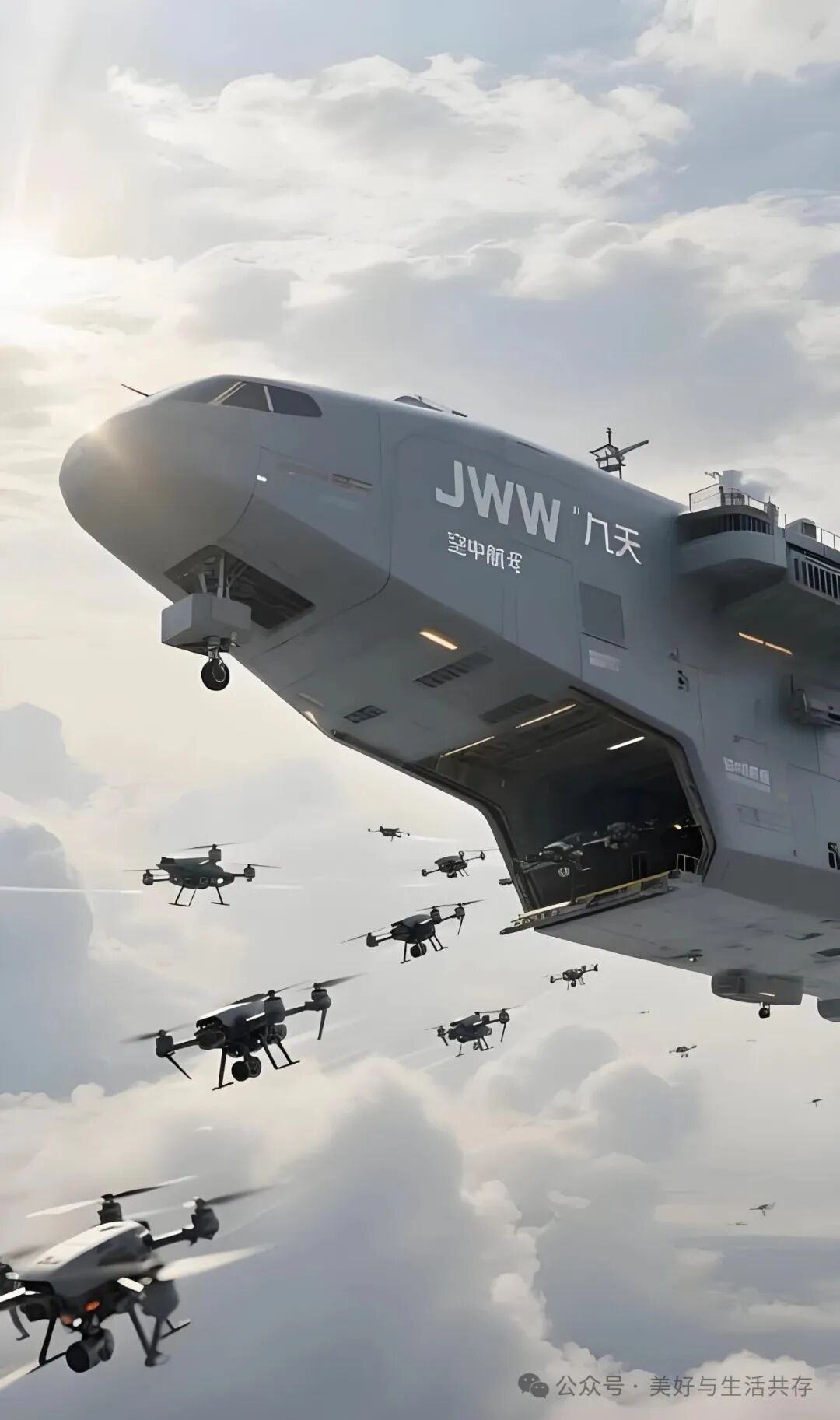
The ‘Nine Days’ drone, as an aerial mothership, is equipped with a ‘heterogeneous hive mission module’, capable of carrying hundreds of cruise missiles or small drones. As it approaches the target area, the sub-drones are quickly released to perform reconnaissance, electronic interference, or saturation attack missions.
A deeper transformation is occurring in the equipment maintenance system. After introducing 3D printing technology, the MQ-9 maintenance team at Creech Air Force Base has achieved ‘zero inventory’ manufacturing of critical spare parts, increasing training efficiency by 300% and reducing operational readiness time by two-thirds.
04 Cross-Domain Operations: Battlefield Coverage of Printing Technology
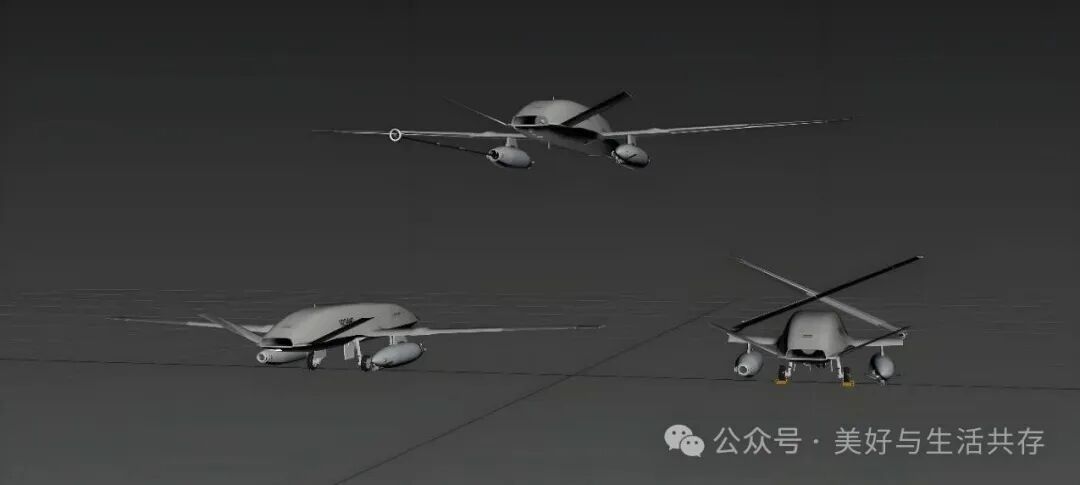
In May 2024, above the Utah desert, an MQ-20 ‘Avenger’ stealth drone opened its weapon bay. Surprisingly, what was released was not a missile, buta fully 3D printed A2LE drone—marking the birth of a new combat mode of ‘mothership + expendable sub-drone’.
The underwater battlefield is also undergoing transformation. The ShearWater underwater drone launched by Royal3D in the Netherlands usesa modular 3D printed body, solving the problems of high costs and difficult maintenance of traditional submersibles. Its ability to quickly replace parts allows a single platform to perform multiple tasks such as reconnaissance, mine clearance, and pipeline inspection.
In August 2025, U.S. Beehive Industries launched the revolutionary ‘Rampart’ engine—entirely manufactured through 3D printing. Frontline units can transmit manufacturing parameters via digital files to print and assemble the drone’s power core on the battlefield, freeing themselves from the constraints of traditional engine supply chains.
05 Reconstructing the Rules of War: New Forms of Challenges and Reflections
As drones can be printed and used like newspapers,the traditional strategy of ‘destroying enemy equipment’ is becoming ineffective. An internal assessment from the U.S. Pacific Command noted: ‘The outcome of future battles may depend on which side has stronger on-site manufacturing capabilities, rather than the quantity of pre-stocked weapons.’
The swarm tactics thus gain a new connotation. In 2025, CCTV’s ‘Assault’ program revealed that our military’s drone ‘swarm’ demonstrated overwhelming advantages during exercises through manned-unmanned collaborative operations. Hundreds of drones surged towards the target, instantly overloading and paralyzing traditional air defense systems.
Ethical challenges have emerged as well. When any armed group can quickly manufacture offensive drones on the front lines, the international arms control system faces pressure for reconstruction. At the Geneva Disarmament Conference, representatives from multiple countries have proposed including ‘mobile weapons manufacturing systems’ in the control list.
U.S. military internal reports also warn of the risks of technological dependence: ‘When war becomes a competition between printers, electromagnetic pulse weapons will become a more lethal threat than missiles.’
On a remote island beach in the Pacific, soldiers from the U.S. 25th Infantry Division retrieve the third freshly printed drone of the day from the container-modified ‘xCell’ factory. These combat units, still warm from production, are about to join the surveillance network of the surrounding sea.
Thousands of miles away at the Pentagon, strategists continuously erase traditional logistics supply lines in their war games—on the future battlefield map, symbols marking the locations of 3D printers will be more prominent than missile bases.
As Firestorm Labs’ mobile factory can transform a pile of plastic pellets into combat drones within 24 hours, Clausewitz’s ancient principle that ‘war relies on logistics’ is being rewritten.