If you don’t want to miss my updates, remember to check the public account in the upper right corner and mark it as a star, and send me a star.

 Playing games, acting as a central control center, and even connecting to Raspberry Pi, what can you do with such a palm-sized open-source development board? Let’s create a project that tests basic skills:Click the image to watch the project demonstration.
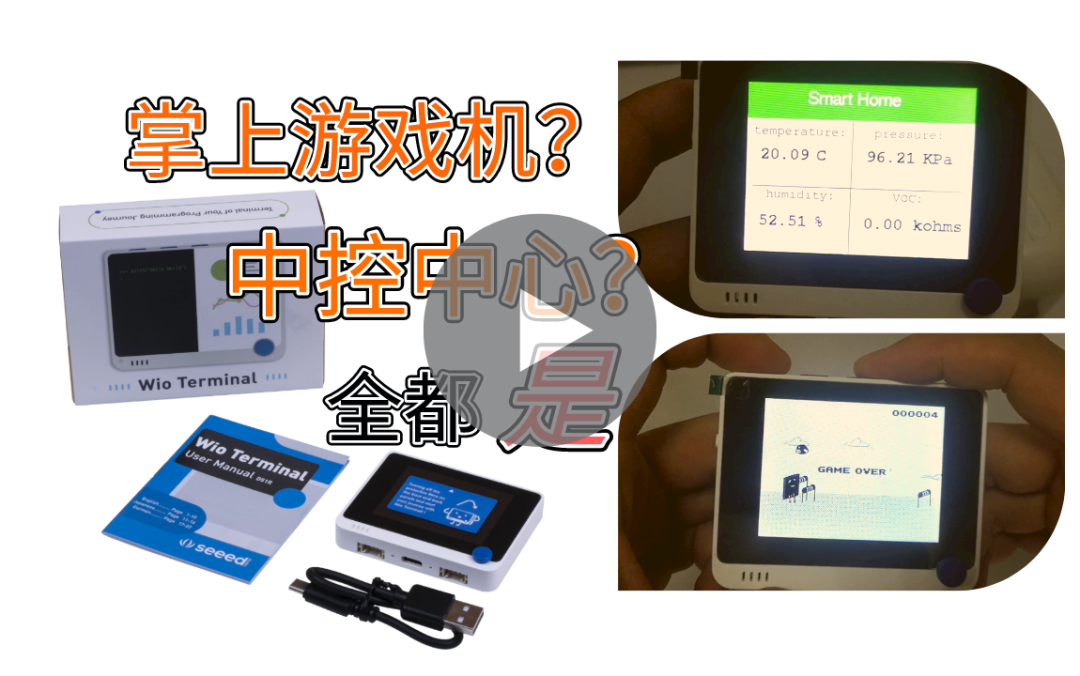 The video above is from the Back2School Project Season 2, Project 13 launched by Darwin and Digi-Key, featuring the smart home central control center project presented by Yang Fangjian from Chengdu University of Technology.The core of the project is the open-source Wio Terminal development board. Let me briefly introduce this board:
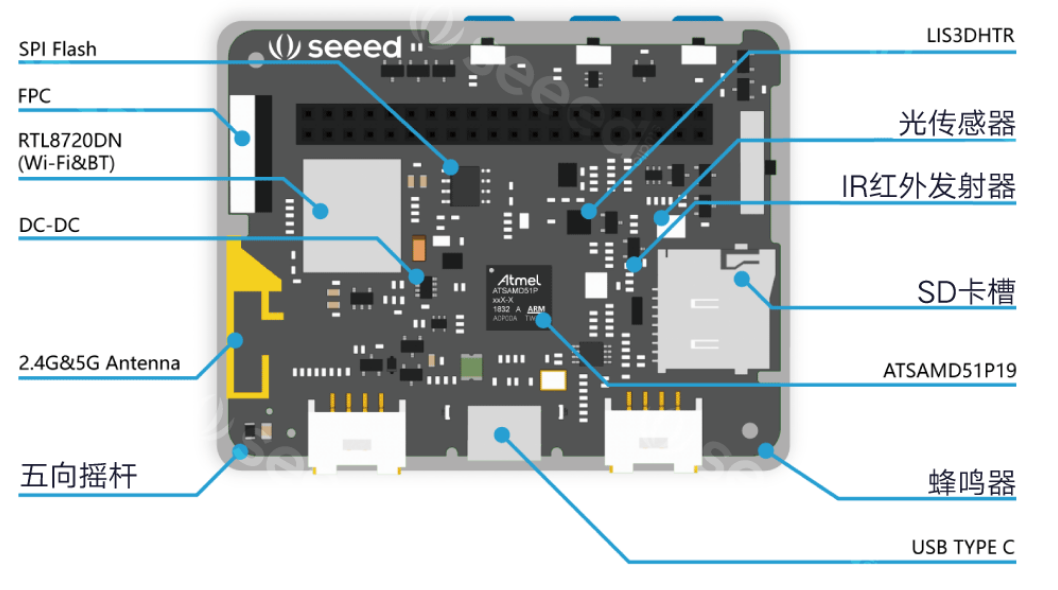
It integrates the ATSAMD51P19 microcontroller with an ARM Cortex-M4F core, with a main frequency of 120MHz, which can be overclocked to 200MHz. Its performance far exceeds that of Arduino and can compete with other high-performance MCUs. At the same time, Wio Terminal also integrates various sensors such as IMU, microphone, speaker, SD card, light sensor, infrared transmitter, and has 192kb of RAM with an external 4Mb flash. Most importantly, it integrates a WIFI chip that supports both 2.4G and 5GHz wireless networks, allowing it to connect to the internet anytime. This solves the pain point of indoor IoT devices needing to connect to the gateway through wired connections or wireless networking via Zigbee, RS485, etc. It can directly upload data to the cloud server and also receive commands from the cloud server. As a single-chip embedded IoT device, its functionality is very powerful.
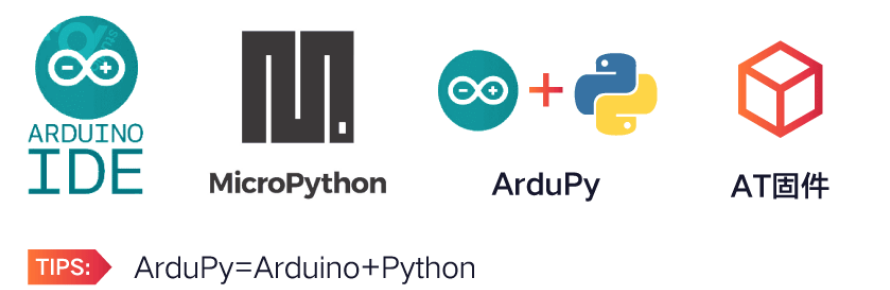
Wio Terminal not only supports Arduino but also supports MicroPython, allowing development in Python, which lowers the development difficulty.
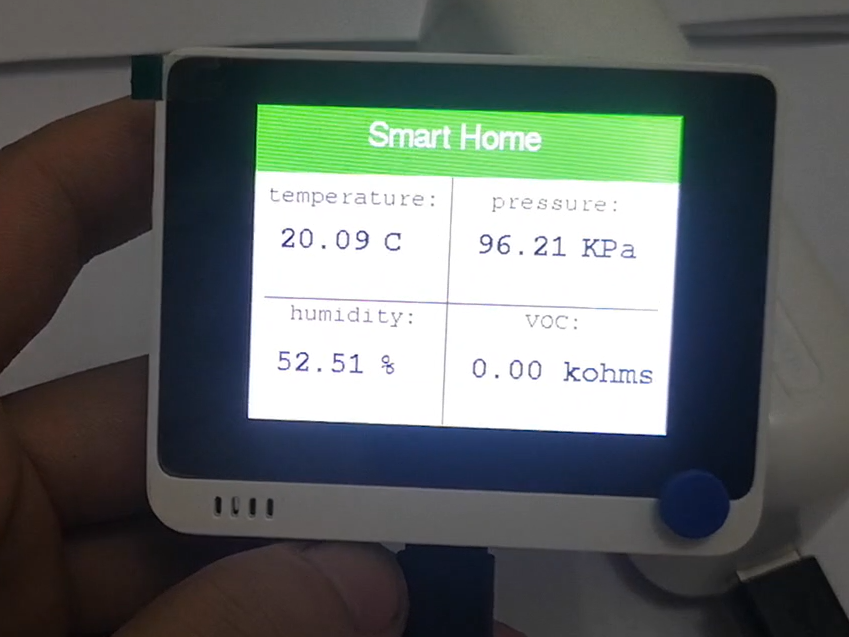
In this project, another core component is the BME680 four-in-one sensor, which can measure environmental temperature, humidity, pressure, and VOC concentration. The BME680 sensor uses I2C communication, and Wio Terminal reads data from the BME680 sensor through the I2C bus and connects to WIFI using the RTL8720 chip, uploading environmental monitoring data to the server using TCP.
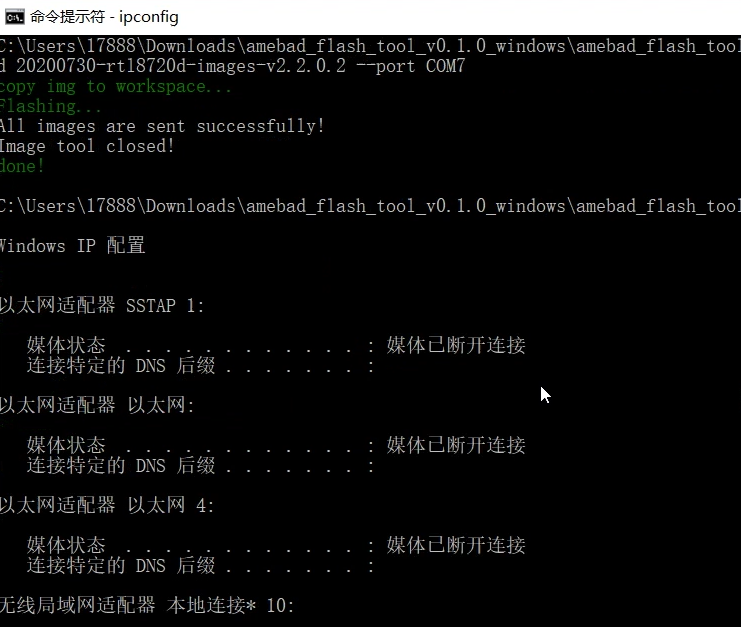
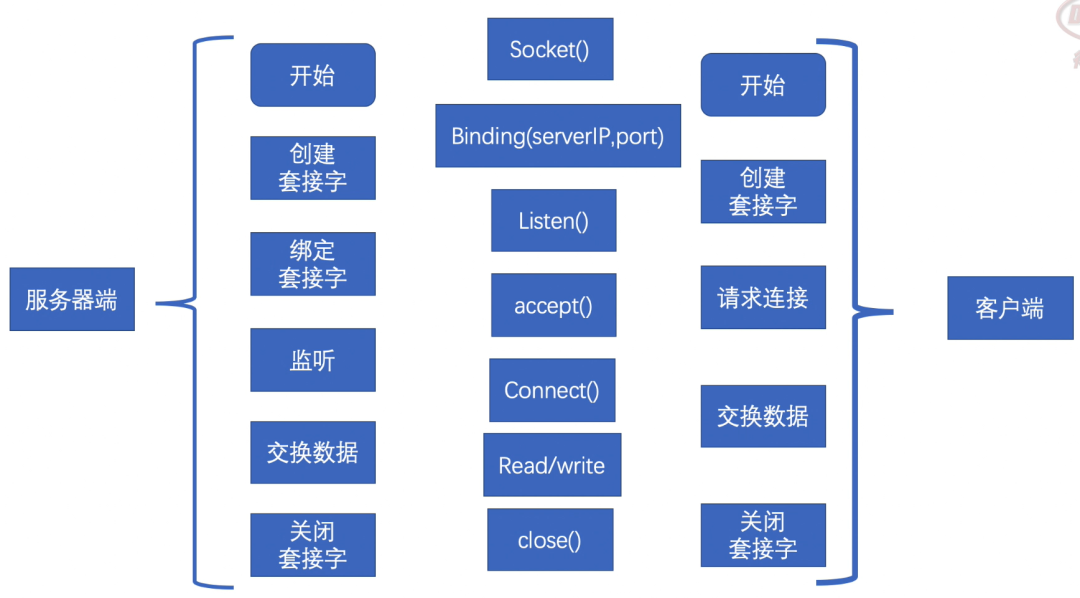
Wio Terminal + BME680 achieves: using Wio Terminal to read the BME680 data to create an air quality monitoring module in smart homes and push the data to the server. The extended function can make Wio Terminal act as the central control center and human-computer interaction module of smart homes.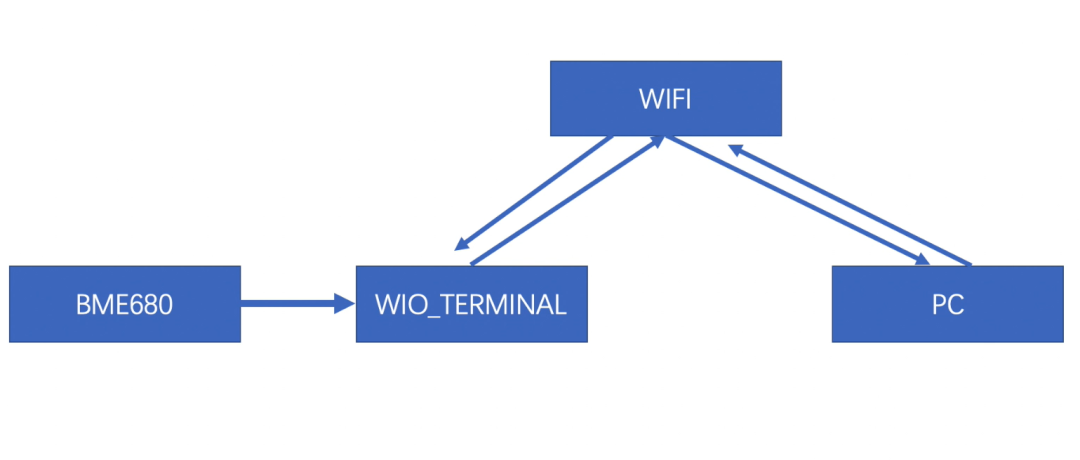 Using Wio Terminal as the central control center and human-computer interaction module means fully utilizing the Wio Terminal‘s network communication and display capabilities, deploying control programs on Wio Terminal, and the remote server sends commands to Wio Terminal over the network to control smart network devices in the local area network, such as smart lights, electric curtains, etc., and push data to the server. This involves complex computer networking technologies, requiring the use of network penetration technology and more. Human-computer interaction can take various forms; locally, data can be displayed directly on the Wio Terminal screen, and in addition, WeChat mini-programs/APPS can be used for human-computer interaction and remote control functionalities.In this project, the main technology used is TCP/IP network programming, requiring familiarity with TCP/IP communication methods and programming function interfaces, as well as understanding the I2C communication protocol. The server side is implemented using Python programming, requiring a certain programming foundation.
If you are a freshman or sophomore with some programming foundation, you can play with this development board and DIY various creative projects, but here are a few points to note:1) The preparation environment is relatively cumbersome, requiring the addition of various library files.2) Before using WIFI, you need to update the firmware; otherwise, you cannot connect to WIFI.3) The RAM is relatively small, making it difficult to run larger programs, such as displaying a lot of text or images.4) The WIFI firmware still has issues; Wio Terminal will automatically disconnect from WIFI after a period of time and needs to be restarted to reconnect.5) The BME680 sensor needs to be powered for a period to provide stable and accurate VOC gas concentration output.If you want to design a dedicated central control center, this Wio Terminal is worth having!This Saturday at 1:30 PM, lock in the Darwin Bilibili live room, and we will give away 20 units!Scan the QR code below to enter the live room.

Darwin and the globally renowned component distributor Digi-Key launched the Back2School Series Season 2, featuring 14 memorable projects during university to help freshmen and returning students quickly return to campus. This content is the thirteenth project of the Back2School Series Season 2.
Other Back2School Projects Overview:Project 1: Simple transistor + amplifier to achieve signal reception from 1000 kilometers away.Project 2: A step-by-step guide to making an FPGA electronic piano to play the coffin dance.Project 3: STM32 PK Raspberry Pi, giving a new play to the perpetual calendar.Project 4: Classic coursework: making a signal amplifier, 3 components are enough (watch on Darwin Bilibili).Project 5: 9 modes of automatic switching, with music spectrum of “Canton Tower”.Project 6: Techniques for tracking/obstacle avoidance/PID algorithm control of the divine team and vehicle.Project 7: Quickly recognize moving objects with a Raspberry Pi + camera.Project 8: DIY a “smart” RoboMaster that moves!Project 9: The universal gimbal allows the RoboMaster robot to strike accurately.Project 10: PWM pulse width modulation! DIY upgraded breathing light.Project 11: Difficulty=0, quickly DIY multifunctional monitoring platform (temperature/heart rate/pitch angle).Project 12: Helmet tracking technology! Automatically identify aiming + motor control to achieve face tracking.Join the Back2School project season now to get firsthand information:QQ Group: Search: 1081905597 to join the project discussion group.WeChat Group: Add Ni Jie or Momo on WeChat to pull you into the group!Ni Jie: 459888529Momo: 447559848END
Recommended Reading:
Project Sharing | Electronics Competition Series | Artificial Intelligence | Postgraduate Entrance Exam Essential Knowledge Points | Graduation Design | Switching Power Supply | Job SeekingWe are Ni Mo, the founder of Darwin, a sister who only talks about technology and does not flirt. The Darwin online education platform aims to serve professionals in the electronics industry, providing skill training videos covering popular topics in various niche fields such as embedded systems, FPGA, artificial intelligence, etc. It tailors layered learning content for different groups of people, such as commonly used knowledge points, disassembly assessments, electronics competitions/smart cars/postgraduate entrance exams, etc. Welcome to follow.Official website: www.darwinlearns.comBilibili: DarwinQQ Group: Group 1: 786258064 (full) Group 2: 1057755357