
1. Choose the appropriate megger: If the rated operating voltage of the motor being tested is 380 volts, we can choose a 500V megger.
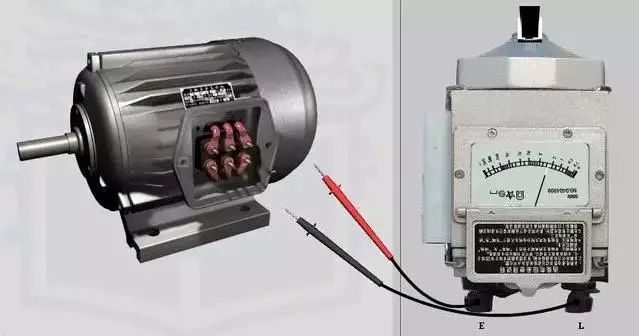
2. Place the megger flat, perform a short circuit test by connecting the two probes together; if the pointer approaches 0, it indicates good condition.
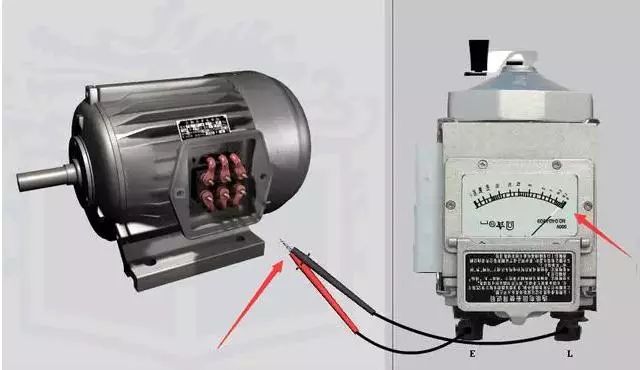
3. Next, separate the two probes, rotate the handle, and if the pointer approaches infinity, it indicates good condition.
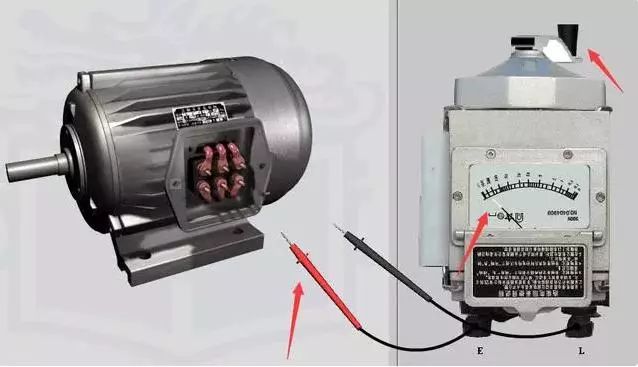
4. When measuring, it is best to remove the connection plate of the three-phase motor, ground the outer casing, and mark the bottom terminals of the three windings from left to right as UVW.
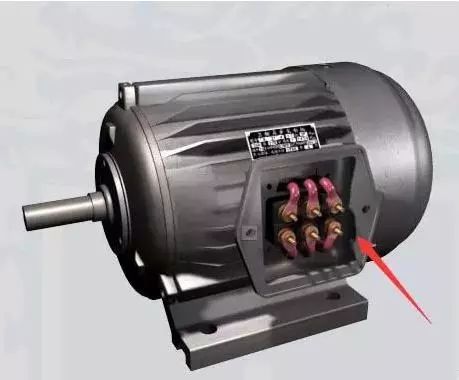
5. First step: Measure the insulation resistance between the three-phase output terminal and the outer casing. Connect E to the motor casing and L to the three terminals UVW. Rotate the handle at about 120 RPM, and when the pointer stabilizes near infinity, the insulation is good.
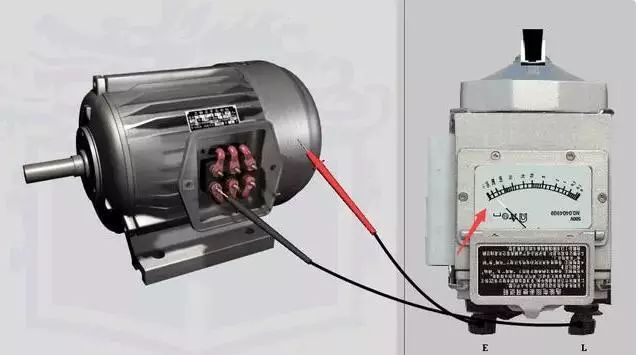
6. Second step: Measure the insulation between the three points UVW, measuring each pair once. If the pointer for all three sets of data reads infinity, then the insulation is good.
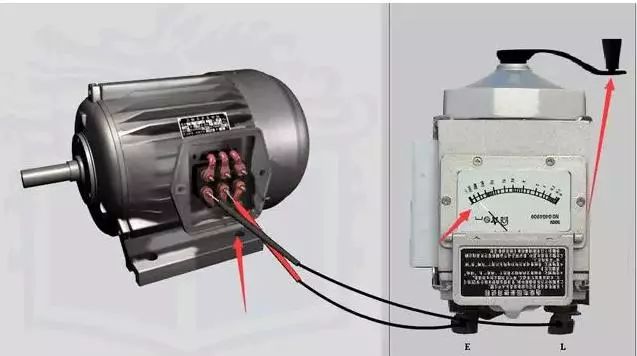
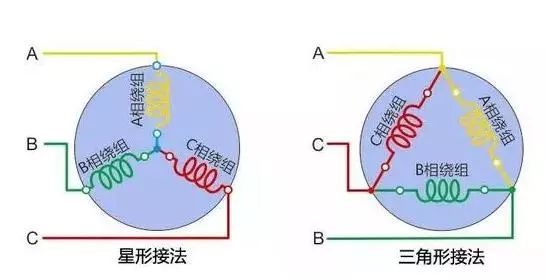
7. If you do not remove the connection plate, you can also measure. This is the difference between star and delta connections. In star connection, you can measure the resistance between the three points UVW and the neutral point; if the three resistance values are close, it indicates good condition. In delta connection, measure the three points UVW pairwise; if the resistance values are close, it indicates good condition. Measuring resistance with a multimeter is more accurate, and also measure the resistance to ground.
How to Quickly and Simply Determine the Health of a Motor?1. How to Test the Health of an AC Three-Phase Motor?
1. Use a megger, a 500V megger is sufficient, to measure the insulation resistance of the wires on the three terminals against the motor casing. It should be above 0.5M ohms, indicating no short circuit to ground.
2. Measure with a multimeter: Measure the resistance between phases A/B/C to see if they are equal; they should be similar. If the difference is too much, it can still run, but not for long. Remember, the larger the motor, the smaller the resistance! However, all three phases cannot be 0 ohms unless it is a particularly large motor, such as over 50KW! Remember, if it is a variable speed motor, the resistance values of the 6 terminals can be different!
3. Check the bearings and fans; generally, when rewinding a motor, it is advisable to replace everything! Because sometimes a seized bearing can also burn the motor!
4. The no-load current of the motor is generally 10% to 50% of the rated current; sometimes the no-load current can even be zero!
5. The rated current of the motor during operation is at full load, and the output power is basically 100%. A small operating current indicates that the motor output power is reduced, indicating light load operation.
2. How to Test the Health of an AC Single-Phase Motor?
Use a 500V megger to measure the insulation resistance between the motor winding and the casing, which should not be less than 0.5 megaohms; use a multimeter to measure the winding leads, ensuring there are no broken wires. If all the above requirements are met, the motor is in good condition.
To check the capacitor’s health, a pointer multimeter is more convenient (there are also digital meters with a capacitor range that can measure directly).
Set the multimeter to the 1K or 10K resistance range and measure the two leads of the capacitor. If the needle quickly deflects to the right and then slowly returns to the left, the capacitor is good; if it remains deflected to the right, the capacitor is shorted; if the needle does not move, the capacitor has an internal break or has no capacity. This method can only determine the capacitor’s health.
3. How to Determine the Health of a DC Motor?
First, check for broken wires and measure the resistance to see if it is normal. If it is a brushed DC motor, you can rotate the rotor and measure the output DC voltage with a multimeter to see if it is normal. If it is a brushless DC motor, and three phases are drawn out, you can rotate the rotor and measure the output AC voltage with a multimeter to see if it is normal. The output voltage is proportional to the speed.
4. How to Determine the Health of an Offline Motor?
1. Use a multimeter to measure the DC resistance of the three-phase winding. The closer the results of the three measurements are, the better. If the difference is more than 10%, the phase with the smaller resistance may have a turn-to-turn short circuit.
2. Use a 500V insulation megger to measure the insulation resistance between the three-phase windings and to ground (to the casing). For motors that have been stored for a long time, each insulation resistance should be above 0.5 megaohms to be considered a good motor for use. If it is above 0.1 megaohms but below 0.5 megaohms, it indicates that the motor is damp and needs to be dried before use. Very low insulation resistance indicates that the insulation has been damaged.
3. Rotate the motor rotor; it should turn smoothly and easily, with no noise or friction sounds, indicating that the bearings and air gap are normal. You can also connect it to 220V to see if it turns.
Source: Electrician and Electrical Forum

If you like this content, please give us a thumbs up.