China was once a semiconductor powerhouse. Can it return to greatness?
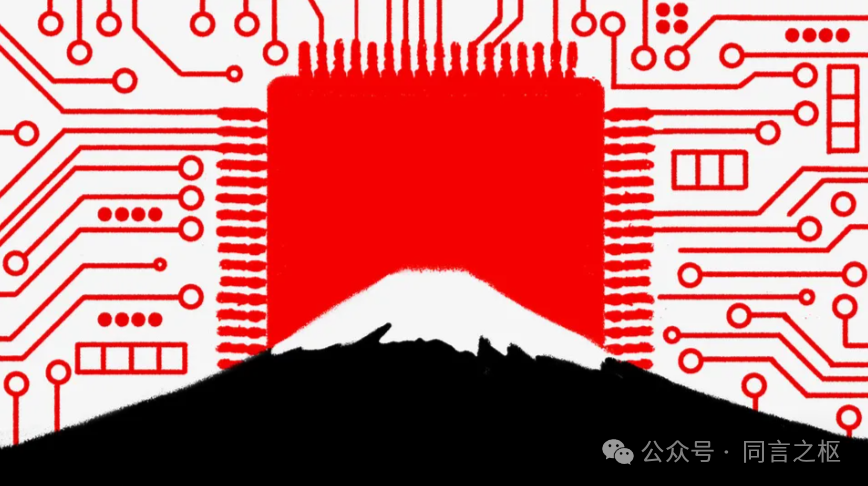
Mr. Koike Atsuki, a 73-year-old semiconductor engineer and motorcycle enthusiast, brings the same rhythm to his latest company, Rapidus. Founded in 2022, the company opened a large semiconductor factory in the small city of Chitose on Hokkaido, Japan’s northernmost main island. In December, Rapidus became the first Japanese company to acquire an extreme ultraviolet lithography (EUV) system from the Dutch company ASML, which produces this unique equipment; Rapidus built and put this comprehensive facility into operation within a few months. In mid-July, Mr. Koike announced the successful trial production of two-nanometer (2nm) transistors, the thinnest and most advanced chips to date. “A company that was established less than three years ago has achieved this,” he proudly stated. “This is an incredible speed.”
Rapidus is the most ambitious component of Japan’s broader efforts to revitalize its semiconductor industry. As the boldest industrial policy push in a generation, the Japanese government has invested 3.9 trillion yen (27 billion USD) to support the semiconductor industry from early 2020 to early 2024. In terms of GDP percentage, this is even greater than the commitment made by the United States through the CHIPS Act for its semiconductor industry. Japan hopes to both revitalize its domestic leading companies and attract foreign firms, such as Taiwan’s semiconductor giant TSMC, which is currently producing chips in southern Japan. Last year, at the inauguration ceremony of the TSMC factory, founder Morris Chang spoke about the “revival” of chips.
Japan once dominated the semiconductor industry. In the 1980s, Japanese companies held more than half of the global market share and had an even larger share in the cutting-edge chip sector at that time. However, trade friction with the United States led to restrictions on Japanese chip exports, creating opportunities for competitors in Taiwan and South Korea. Japanese companies also struggled to enter an increasingly specialized era of semiconductor production. Although some Japanese firms maintain strong positions in the materials and equipment needed for semiconductor manufacturing (from coating chemicals to silicon wafers themselves), they have fallen behind in cutting-edge manufacturing. By 2019, Japan’s share of the global semiconductor market was less than 10%.
The Japanese government views this situation as not only a commercial disaster but also a national security risk. Supply chain disruptions during the pandemic heightened public awareness of the critical role chips play in modern life. The outbreak of war has intensified concerns about chips and highlighted the risks of relying on a single company to supply most of the world’s high-end chips. The rise of artificial intelligence (AI) has further increased the strategic importance of semiconductors. Japan’s latest national security strategy, released in 2022, explicitly sets the goal of strengthening the “foundation for the development and manufacturing of next-generation semiconductors.”
Japan’s semiconductor strategy is built on two main pillars. The first is “indispensability,” which, according to Mireya Solis of the Brookings Institution, effectively means “influence over other countries.” The idea is that if Japan can control certain segments of a long supply chain, it can leverage this interdependence to prevent other countries from weaponizing their control over certain inputs.
The second pillar is autonomy, or having domestic production capacity. “The world will be divided into two categories: countries that can supply semiconductors and countries that buy semiconductors,” said Akira Amari, a ruling Liberal Democratic Party member who previously led semiconductor policy. “Countries that supply semiconductors will be the winners, while those that buy semiconductors will be the losers.”
To address this challenge, the government has updated its industrial policy tools. In recent years, the Liberal Democratic Party has passed a series of new laws to provide broader and more sustained government support for chip companies like Rapidus. While these measures involve using taxpayer money for large-scale bets, they have garnered widespread political support. A senior Liberal Democratic Party official involved in these policies stated, “Of course, there are risks, but there are also risks in doing nothing.”
These measures have already shown results. Substantial subsidies have attracted TSMC to establish a factory in Kyushu. Its first factory produces chips using 12-28 nanometer processes—this is Japan’s most advanced semiconductor technology to date, but still lags behind its most cutting-edge models. TSMC has announced plans to build a second factory in Kyushu for producing higher-end logic chips; reports indicate that negotiations for a third factory are underway. TSMC’s establishment has attracted suppliers and partners to expand their businesses in Kyushu, which has positioned itself as a “Silicon Island.”
American memory chip manufacturer Micron has also received over $1 billion in subsidies to expand its chip manufacturing plant in Hiroshima. Meanwhile, South Korean electronics giant Samsung is building a cutting-edge research facility in Yokohama, south of Tokyo.
Another emerging ecosystem is forming around Rapidus. The company is one of the highest-risk, highest-reward among many. Rapidus is collaborating with IBM, which has developed a new method for manufacturing the next generation of transistors, an electronic component. Rapidus aims to leapfrog the semiconductor engineering era and catch up with global leaders. The company has attracted investments from a consortium of eight Japanese blue-chip companies, including Sony, Toyota, and SoftBank. The Japanese government is also covering a significant portion of the initial investment, expected to reach 1.72 trillion yen (12 billion USD) by early 2025.
Yasuhiko Ota of Hokkaido University states that Rapidus’s success depends on its ability to tackle three major challenges. The first is cultivating enough talent. Universities across Japan are launching programs to train a new generation of semiconductor engineers. However, at the same time, Rapidus has to rely heavily on the older generation of experts who grew up during Japan’s first chip boom; the average age of its recruitment personnel initially exceeded 50 years. About 150 top engineers have been sent to IBM’s research facility in New York for training.
The second challenge is developing a sustainable business model. Samsung and TSMC are advancing their self-developed 2nm chips and have established partnerships with high-end semiconductor buyers. Rapidus positions itself as a boutique chip supplier capable of producing small batches of custom chips rather than mass-producing uniform products. “We do not intend to compete directly with TSMC—the markets are different,” Mr. Koike stated. He hopes that generative AI can become a tailwind, boosting overall chip demand and increasing interest in products that can enhance efficiency and reduce power consumption.
But first, Rapidus must achieve mass production, with plans to start in 2027. While the success of pilot wafers is an encouraging sign, the real test will be whether Rapidus can mass-produce products that meet commercial viability standards. The production process for such semiconductors is closer to handcrafted than the mass production of small parts: engineers must constantly adjust equipment to maintain the correct parameters. For Mr. Koike, motorcycles provide another lesson. He says a lifetime of riding has taught him “how machines and humans can work closely together.” Japan’s chip revival depends on this.