Cool Play Lab Work
Originally published on WeChat account Cool Play Lab
WeChat ID: coollabs
Look, Qualcomm is stirring things up again!
On June 28, 2021, the Qualcomm Snapdragon 888, known for its “warm hands and cold heart,” officially announced its enhanced version —
Qualcomm Snapdragon 888 Plus.
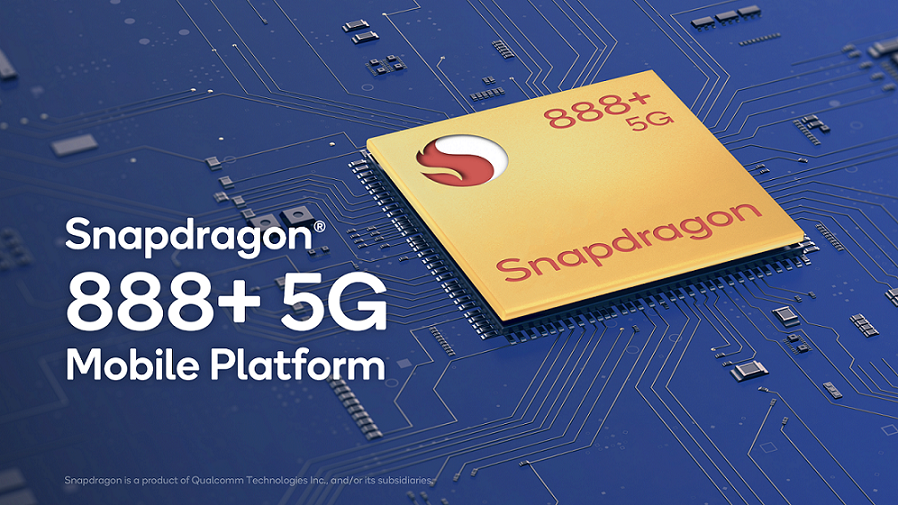
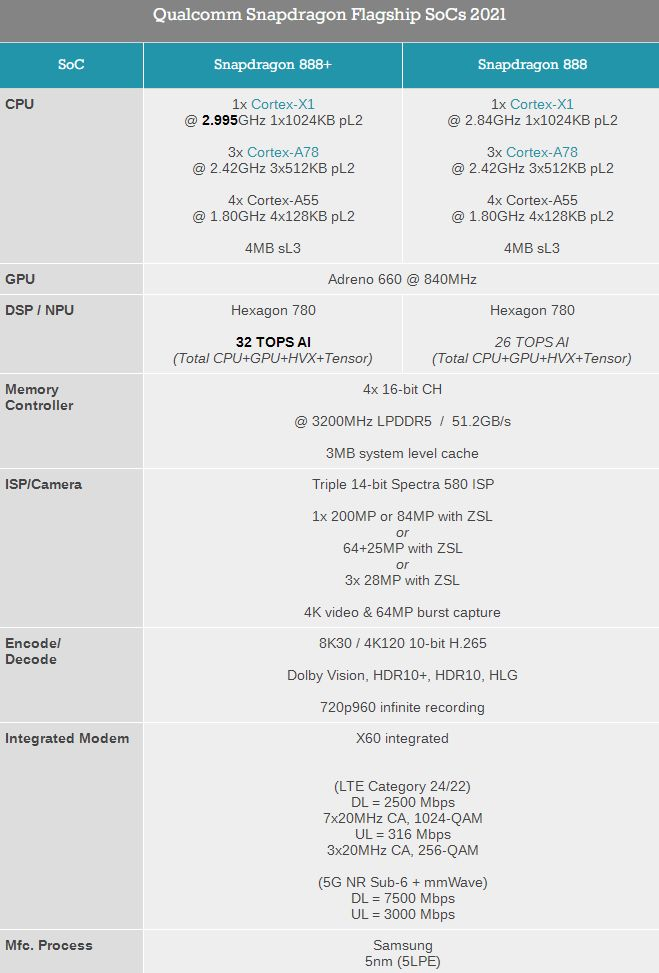
Compared to the non-Plus Snapdragon 888, the Qualcomm Snapdragon 888 Plus’sbig core frequencyhas increased from2.84GHz to 3.0GHz. Additionally, theAI performancehas improved by over20%, reaching320 trillion operations per second (32 TOPS).
And then that was it.
The GPU remains unchanged, and there have been no reports of improvements in the manufacturing process. In other words, the process is still theSamsung 5nm, and unless something unexpected happens, the experience will still beoverheating to the point of throttling.
To be honest, after reading the report on the subway a few days ago, I was completelydisheartened:
When will these so-called chip giants, who pride themselves on occupying the industry’s high ground, finally open their eyes?
Do they really not realize that themonopoly era of stagnation isquietly turning a page?

One
Speaking of the chiptoothpaste squeezing phenomenon, we are all familiar with it.
Let me tell you a story:
At the end of 2015, in anticipation of an upcoming evolution in gaming experience, I spared no expense to build a high-end PC — the specific configuration is not worth detailing today, but just note one component model:
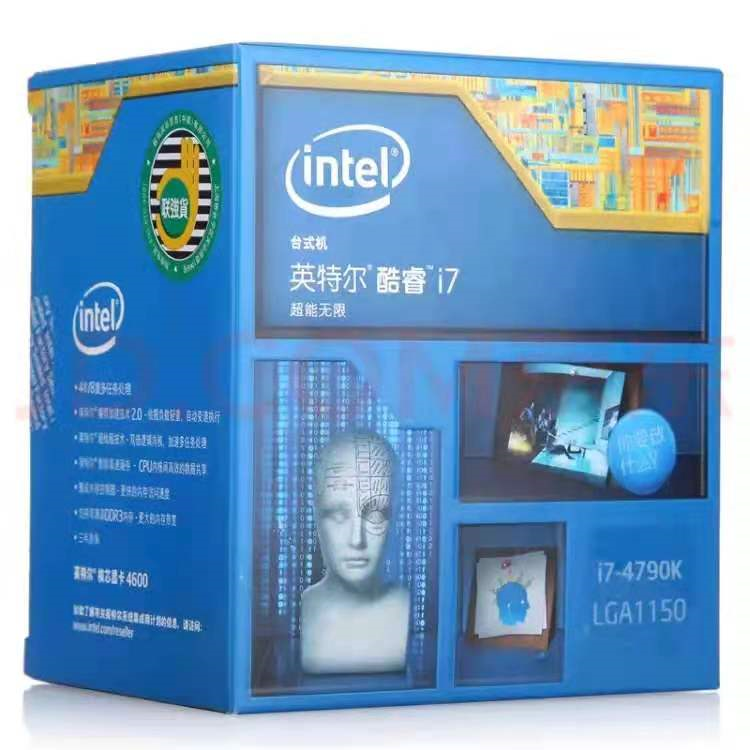
For the CPU, I chose Intel’s4790K.
After assembling it, I stress-tested it for three days and nights without a blue screen, feeling quite good; not long after, I got my hands on the gaming experience evolution device:

This thing, everyone should recognize, right?
At that time, there was a rumor in the IT circle that to smoothly experience this PC VR device, one of the entry requirements was a “15,000 yuan personal computer” —utter nonsense, my configuration list back then, excluding the monitor and peripherals, only cost a little over8,000 yuan, and by the way, the graphics card was970, two in SLI.
Digressing. In short, this not top-tier but cost-effective assembled machine fought valiantly for nearlysix years, during which I only replaced the CPU cooler once and expanded the memory once, without any hardware upgrades; even today, this hardworking old PC is still my main platform for work and entertainment at home.

Of course, as a DIY enthusiast,being fickle is inevitable — sentiment aside, looking at the ever-evolving graphics card iterations, it is completely impossible to remain indifferent to upgrades: not to mention, just this year during the 618 shopping festival, seeing various scalpers and miners jumping around, the graphics card market gradually receding, I was satisfied and planned my DIY upgrades for after this year’s Double Eleven (that’s right) and had a strange thought:
“4790K, can it still hold up?”
With the mindset ofnot seeking value retention but just for fun, I took a stroll on Taobao, and the result wasshocking!

To be honest, I still have quite a bit of confidence in the performance of this five-year-old flagship CPU — after all, it has been pushing performance on the VR platform from the start, and it’s no surprise that it can hold up. But as the saying goes,time waits for no one, after such a long time, even the strongest generation of processors,is bound to age — in my impression, the mainstream fate of such an old processor in today’s DIY market should be this:

But when I looked, the price was this:
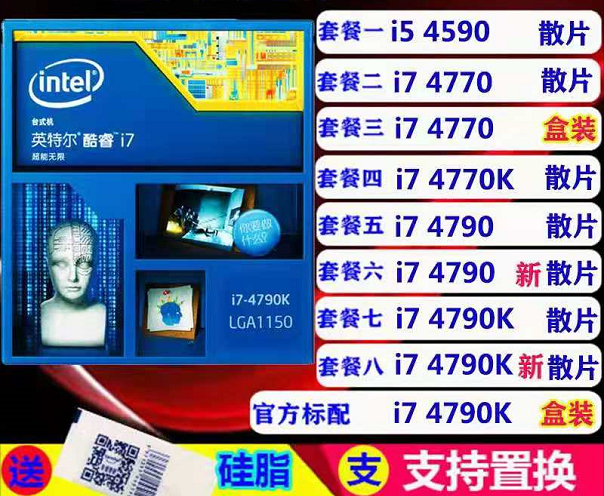
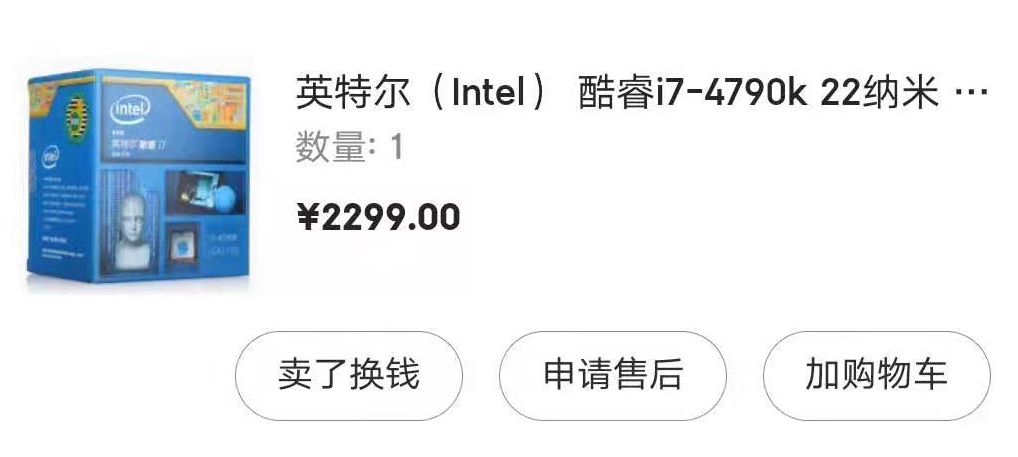
Comparing with the price I ordered back then:
— Alright, I lost.
To be honest, although I have never been a garbage collector in the tech forums, I do have some knowledge about the efficiency of PC hardware obsolescence, having started DIYing my first computer 20 years ago — however, facing the reality that the 4790K, with its22nm process, four cores and eight threads, 8MB L3 cache, and a maximum turbo frequency of 4GHz, still has not been completely phased out of the market after six years, it’s reasonable to be shocked.

Once amonopoly is formed in the consumer electronics industry, it can act with suchimpunity.
Not just PCs, butsmartphones as well.
Two
Compared to Intel, which once dominated the market with impunity, Qualcomm’s toothpaste-squeezing behavior has indeed been relatively restrained in the past — especially in thehigh-end flagship chip sector, the rumor that“Qualcomm dares not slack off” was quite popular.
After all, unlike the PC industry, which has developed for half a century and has a relatively stable pattern, the smartphone industry, which has been around for less than 20 years, still has more“room for latecomers to surpass” — it’s not impossible for former underdogs to suddenly rise: just look at HiSilicon Kirin, MediaTek Dimensity, and Samsung Exynos, which have all thrived due to a decade-long competition among major manufacturers.
Because of this, when we saw the new generation of flagship phones equipped with Snapdragon 888 chips in 2021 turning intohot potatoes, and Qualcomm showed no intention of patching things up in the Plus version, many were surprised:
Wasn’t it said that mid-range chips would be squeezed whileflagships would not be compromised? How did Qualcomm fall so quickly intolying flat?

— However, if we take a longer view and look back at Qualcomm five years ago, this result doesn’t seem so surprising:
The last typicalQualcommtoothpaste squeezing cycle occurred between2013 and 2015;
The representative product was theSnapdragon 800 series;
Familiar names likeXiaomi 4 andXiaomi Note were equipped with chips from this series.
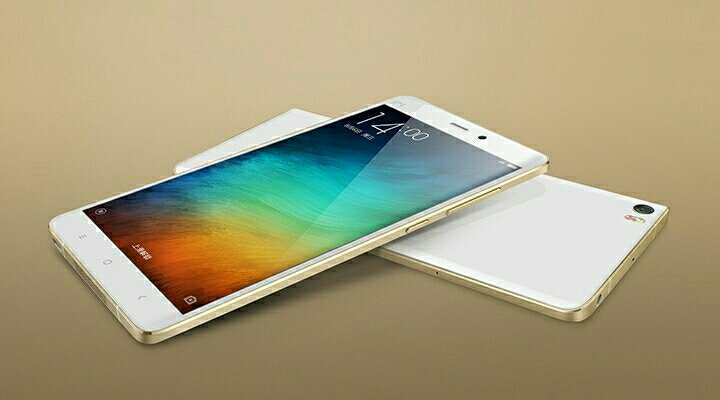
Well-informed friends should remember that, thanks to the big.LITTLE architecture, MediaTek was gradually showing signs of surpassing Qualcomm, and withpressure from Apple, the status of the Snapdragon 800 series was clearly becoming unstable — then, in response, Qualcomm released a product that became famous overnight:
Snapdragon 810.
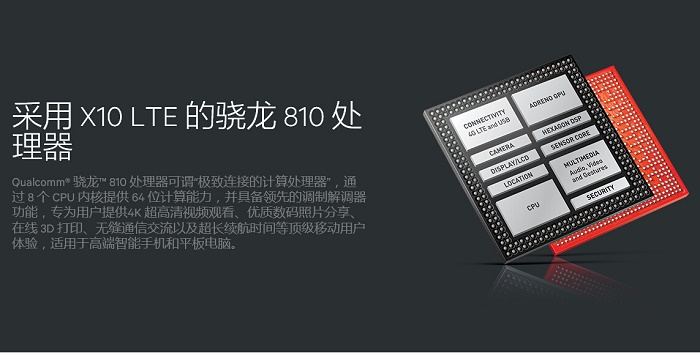
The events that followed need not be elaborated:
Many friends who accessed the internet through their phones learned for the first time the truth that “strong performance does not guarantee market dominance”; after causing failures for brands includingXiaomi, HTC, vivo, and evenSony andSmartisan (…), and forcibly propping up Huawei, the title of “Qualcomm’s most failed flagship chip” became well-deserved.
At that time, just like now:
The reason Qualcomm dared to squeeze toothpaste with impunity around 2014 was mainly due to two important competitors at that time —NVIDIA andTexas Instruments — who had already shown the disadvantages brought bytechnical shortcomings (yes, the baseband) back in2011. Considering that the typical chip development cycle is aboutthree years, it was only natural for Qualcomm to enter thetoothpaste squeezing downturn in2013.
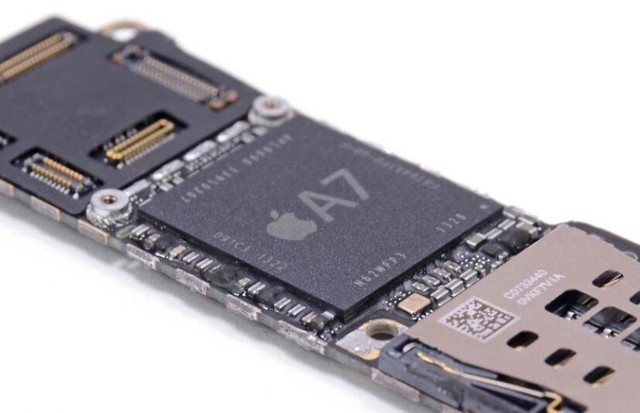
As a result, this squeezing coincided with Apple’s launch of theA7 chip in theiPhone 5S, which jumped from32-bit to64-bit, and anyone with a bit of semiconductor knowledge knows what this means — the emergence of theSnapdragon 810 was one of the important reasons for this.
By2020, Qualcomm’s biggest competitor is now well-known to us all.
If there is still an ecological barrier between Apple and Android, then forSnapdragon andKirin, the direct competition without any buffer zone is clearly on a different level:
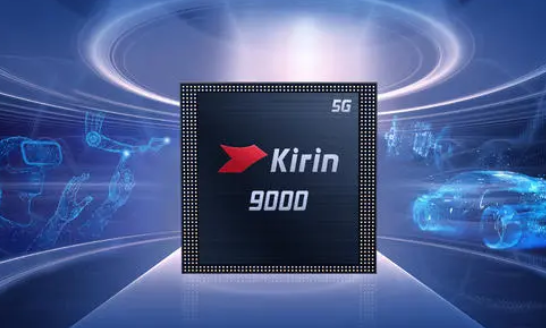
Although HiSilicon can only offer theKirin 9000 as a temporary “final product” due to uncontrollable factors, even though the architecture core is not the latest, as a legitimatefinal showdown product, the Kirin 9000 indeed presents a“no mercy for the opponent” stance in terms of performance — facing such an aggressive move, Qualcomm has no choice but to follow suit, even ifthe new X1 super core architecture is still under development, and even ifSamsung’s 5nm process technology is not yet mature, they have no choice but to stack frequencies and materials on theGPU.
In the end, although the design and process technology are certainly not comparable to the Snapdragon 810 era, many“incomplete” factors combined, along with the astonishing power consumption brought by the necessary frequency stacking, led to the birth of the Snapdragon 888, which has clearly inherited the“fire dragon” name.

As for why the Plus version was not used to patch the hardware design, first, as acompletely new architecture, it is basically impossible to balance energy consumption and performance through minor adjustments; second, considering the contract withSamsung, it is completely impossible to expect to improve the process technology by changing foundries; third, and most importantly, just look at the risingbattery capacity and the stagnantbattery life in recent years, and you will know that the progress in process technology has not curbed the rising curve of smartphone chip power consumption. Even with increasingly improved cooling systems to compensate, facing theever-increasing heat and power consumption, there will inevitably come a day when user experience hits rock bottom.
Given the current situation, the Snapdragon 888 is basically the first victim to hit this wall, and as for the Snapdragon 888+, we can only say thatsurviving through the summer until autumn is a victory.
Ultimately, although the transition from Snapdragon 888 to 888+ seems to resemble Intel’s decade-long “toothpaste squeezing,” the actual situation is that“the architecture and process technology cannot keep up with the pace of product design” is probably a more reasonable explanation.
— However, to be fair, for ARM architecture mobile chips, this situation of “technological development not keeping up with product planning” is indeed not ideal, but for the entire semiconductor industry, the current situation is not as desperate as it seems.
From another perspective, describing the real situation of this industry as“opportunities arising from adversity” is not unreasonable.
Three

This is “A Day in Data,” an infographic released by Raconteur.net last June.
According to this infographic, a new explosion of smart devices is imminent, and by2025, the amount of data generated daily by global internet users will reach463EB — clearly, smartphones, which are gradually entering a development bottleneck, are not the main force behind this increase in information; the industry generally believes that the next core growth points for internet terminals will focus on these two areas:
smart cars, andwearable devices.
In this way, just as the mature X86 architecture created the golden age of personal computers, the rise of ARM has opened a new era for smartphones, the emergence of wearable devices and smart cars will inevitably bring abouta new trend in semiconductor chip processes and architectures — the rise ofRISC-V has clearly indicated that change is near; when this trend meets the“reinventing the wheel” of the Chinese semiconductor industry, what sparks will it ignite?
This is the new goal that deserves ourclose attention.
Cool Play Lab Edited and Compiled Originally published on WeChat Official Account: Cool Play Lab (ID: coollabs) For reprints, please leave a message in the background.Feel free to share with friends or on Moments
Cool Play Lab Video Account Hot Video Recommendations↓↓↓







“Lying flat” is not necessarily the fate of chip giants