You may have experienced: your watch shows you slept for 7 hours, but you feel like you hardly slept at all; or you feel like you slept well, but the watch tells you that you had “insufficient deep sleep.”
Many friends suffering from insomnia ask: “What should I trust? The watch, the app, or my own feelings?”
The fact is—measuring sleep is much more complex than we think. For insomnia patients, choosing the wrong method can even exacerbate anxiety.
This article will explain in the simplest way: why sleep diaries are the “gold standard” for assessing insomnia, while smartwatches should only be used as auxiliary tools.
1. Objective detection is not infallible: Why can high-tech devices also “misjudge”?
We often assume that the more “technological” something is, the more reliable it is, such as polysomnography (PSG).
But reality is not so.
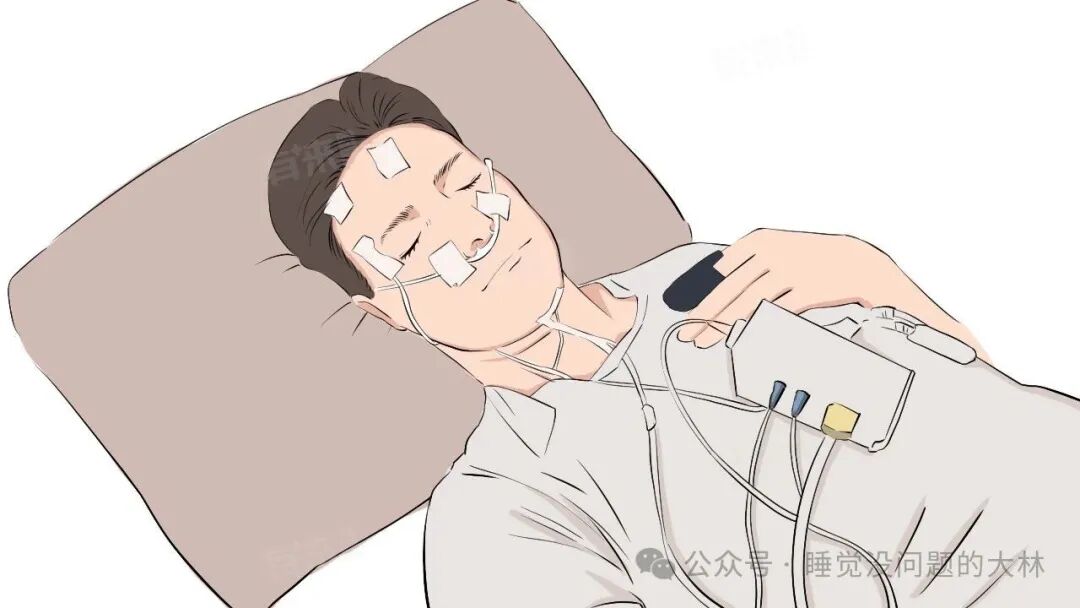
1. Polysomnography (PSG) also has errors
PSG determines “whether you are asleep” by monitoring brain waves. It sounds scientific, but the definition is actually very subjective:
As long as you have more than 50% of brain waves resembling sleep in a 30-second period, the system will classify the entire segment as sleep. In other words: even if you are clearly awake for 14 seconds in those 30 seconds, it will still count as “sleep time.”
This is especially inaccurate for insomnia patients: you know you are awake, but the machine tells you “you are sleeping.”
Then you might doubt: “Am I feeling wrong?” “Am I too sensitive?”
This can actually increase your anxiety.
2. Smartwatches essentially monitor “whether you are moving”
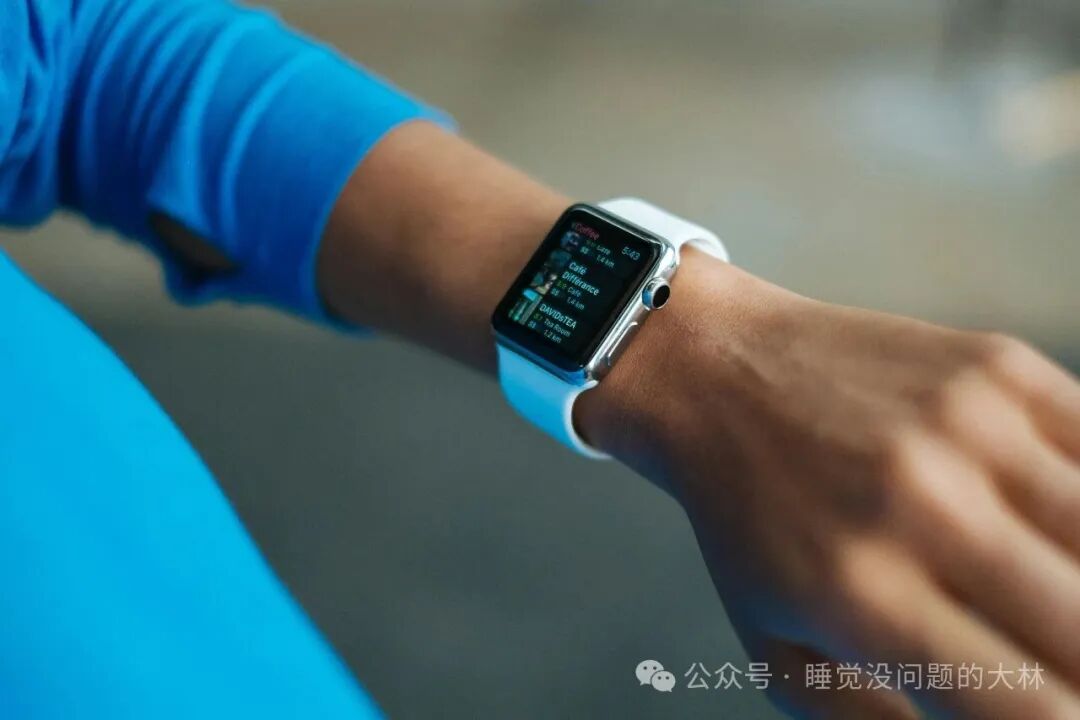
Smartwatches, fitness bands, and apps mostly use accelerometers or gyroscopes. They assume: “Not moving = asleep; moving = awake.”
The problem is: people with insomnia often lie still but cannot fall asleep.
So your watch might give you a very “good-looking” sleep duration, but you know that it is completely untrue.
For insomnia sufferers, this kind of “the machine says you slept well, but you know you didn’t” can lead to a strong sense of frustration and self-doubt.
2. Why is the sleep diary the real key to assessing insomnia?
Insomnia is asubjective experience disorder. Your feeling of not having enough sleep is itself an important basis for insomnia.
So the most effective way is not to measure brain waves or movements— but to record your subjective feelings about your sleep.
This is the significance of a sleep diary.
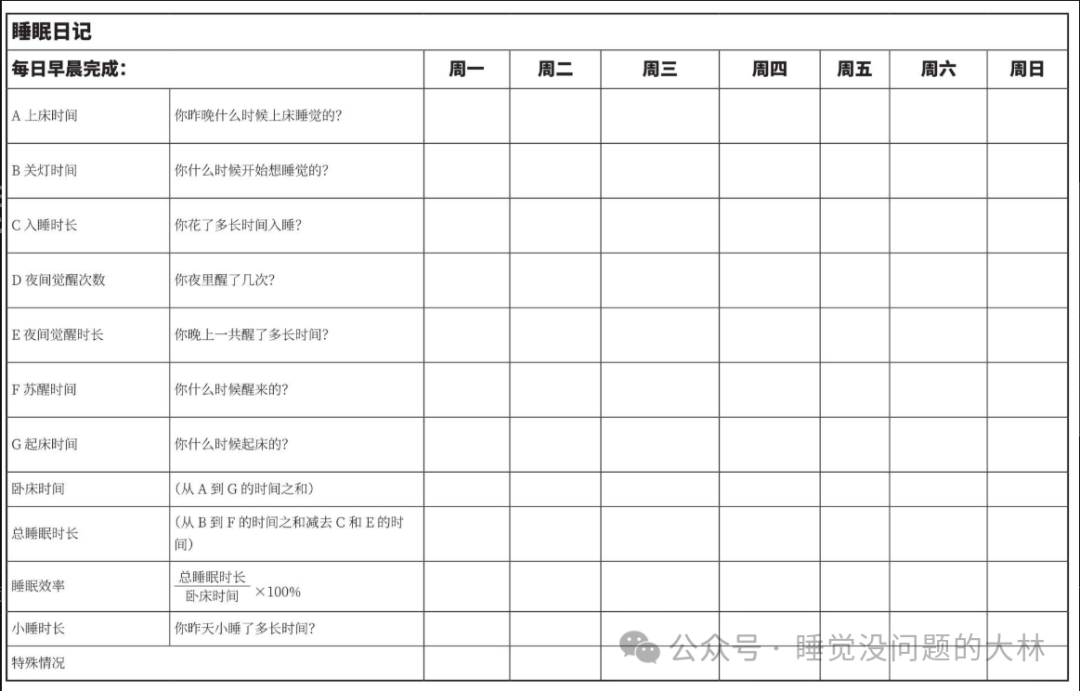
1. The sleep diary can capture your true experience
For example: if you feel it took more than an hour to fall asleep, you can write it down in the diary; if you woke up several times during the night, how long you were awake, and how tired you felt the next day, you can record it accurately.
These are the real information needed for diagnosing insomnia.
2. The sleep diary is a necessary tool for treating insomnia (especially CBT-I)
For example, in “sleep restriction therapy,” doctors must rely on your diary data to help design sleep windows, observe progress, and adjust rhythms.
Without a sleep diary, treatment cannot progress.
3. It can help you gradually correct “sleep perception bias”
Many insomnia sufferers underestimate their sleep time, but as treatment progresses, this perception will gradually become accurate.
This is an important step towards recovery.
3. So, does the smartwatch have any significance?
Of course, it is not to say that smartwatches have no value at all.
The key is— they are not suitable as diagnostic tools, but can assist in understanding the situation.
Smartwatches are suitable for the following two situations:
1. You seriously underestimate your sleep
For example, some patients insist: “I didn’t sleep at all!” But the watch data shows they actually slept for 5-6 hours. This comparison can help them reduce misunderstandings and anxiety.
2. The doctor suspects you have circadian rhythm issues (circadian rhythm disorder)
For example, in cases of delayed sleep phase syndrome, continuous monitoring of activity rhythms over several days is useful.
4. In summary
If you are struggling with insomnia:
You can use the watch, but you cannot rely on it. What is truly worth sticking to is the sleep diary.
Sleep diaries are: the most accurate, sustainable, and helpful tool for gradually restoring your true sleep perception.
Smartwatches, apps, and devices can only serve as supplements, not substitutes.
I am “Dalin, who has no problem sleeping”
Based on evidence-based medicine, I spread knowledge about cognitive behavioral therapy for insomnia and share internationally recognized first-line treatments for insomnia.
Let every person with insomnia regain the freedom to fall asleep peacefully.