
Technical Dispatch
In the operational system of KONE elevators, the LCECPU circuit board plays the core role of the “brain”. It is essentially a miniature industrial computer, responsible for issuing all operational data and commands for the elevator, making it a key component for ensuring stable elevator operation.
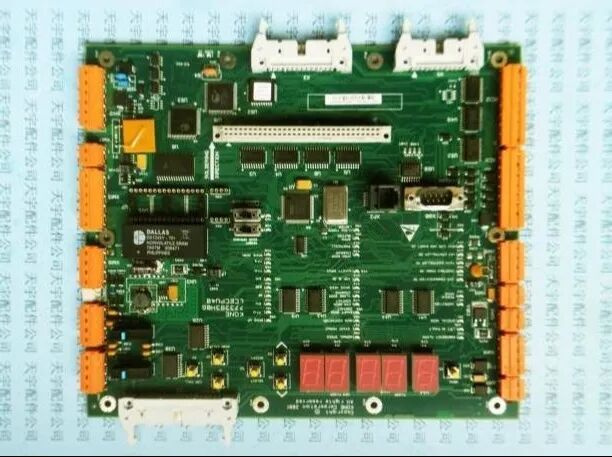
1. Structure and Operating Voltage Characteristics of the LCECPU Circuit Board
From a structural and functional perspective, the LCECPU circuit board serves as the control core of the elevator, undertaking the important tasks of data processing and command transmission. Its operating voltage is divided into two levels: 24V and 5V. Due to its operation in a relatively low voltage environment, the circuit runs relatively stably, and faults are generally rare under normal usage conditions. However, over time or under harsh operating conditions, various faults may still occur on the circuit board (for a detailed explanation of the circuit board structure, please refer to the corresponding illustrations).
2. Brief Overview of Common Faults in the LCECPU Circuit Board
1. Natural Aging of Electronic Components: This type of fault often occurs in elevators that have been in use for a long time. Due to the prolonged operation of certain electronic components on the circuit board, failures may occur, leading to the malfunction of specific functions of the circuit board and subsequently causing elevator faults. Among these, electronic components near heat sources are more likely to age due to their prolonged exposure to relatively high temperatures.
2. Damage to Components Due to Overvoltage, Overcurrent, and Overheating: When overvoltage or overcurrent conditions occur in the circuit, or if the local temperature of the circuit board becomes too high, it can directly damage the electronic components on the circuit board, resulting in overall circuit board failure and ultimately causing elevator operation issues. From the perspective of fault occurrence, this situation is more likely to happen in the power supply section.
3. Damage to Communication Chips: The communication chip is a key component that ensures normal communication between the LCECPU circuit board and other circuit boards of the elevator. If this chip is damaged, it will interrupt communication between the CPU circuit board and other circuit boards, preventing data transmission and command coordination, thus affecting the normal operation of the elevator.
4. Loss of Program or Damage to D7 Chip: The D7 chip stores important programs required for elevator operation. If the program in the chip is lost or the chip itself is damaged, it will directly prevent the elevator from starting and operating normally.
5. Insufficient Battery Power of D8 Chip: The battery of the D8 chip provides power support for the internal program storage. When the battery power is insufficient, it can lead to the loss of internal programs, resulting in the elevator being unable to operate.
6. Printed Circuit Breakage: The printed circuits on the circuit board may break due to prolonged exposure to corrosive environments or vibrations during elevator operation. A break in the printed circuit can interrupt circuit connections on the circuit board, leading to circuit board failure and preventing the elevator from operating normally.
7. Reduced Capacity of Surface-Mount Capacitors: If the capacity of surface-mount capacitors on the circuit board decreases, it can cause intermittent elevator stoppages. Specifically, the elevator may stop running intermittently during operation, and after turning off the power and restoring it, the elevator may return to normal operation, but the stoppage issue will reoccur after some time.
8. Damage to the Crystal Oscillator: The crystal oscillator is an important component for maintaining normal CPU operation. If the crystal oscillator on the circuit board is damaged, the CPU will stop functioning, and it can be observed that the CPU operation indicator light will no longer flash.
[Source] Network
[Disclaimer] The copyright of the article belongs to the original author and source. If there are any copyright issues, please contact us for deletion! If there is any infringement, please contact us immediately for resolution!
[Tibao Bao] Elevator technology IoT service platform, focusing on risk reduction and claims investigation in the elevator industry, collaborating with multiple insurance companies to build an end-to-end product supply chain for the elevator industry.
Click the blue text above to follow us