As the AI computing power race reaches a fever pitch, chip power consumption has surged from hundreds of watts to over a thousand watts, making traditional air cooling and cold plate cooling technologies increasingly inadequate. Cooling efficiency has become a core physical bottleneck restricting breakthroughs in the industry. At this critical moment, Microsoft has dropped a “technological bomb”: On September 23, CEO Satya Nadella publicly announced that the team has developed a “microfluidic cooling” technology within chips, which etches tiny channels inside the chip to allow cooling liquid to directly act on the heat source, significantly elevating cooling efficiency to new heights.
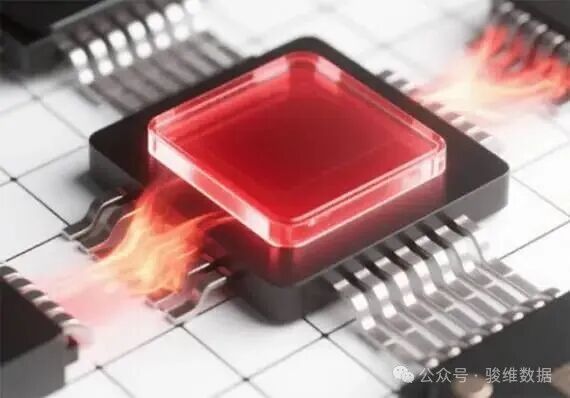
Technological Breakthrough: Cooling Efficiency Tripled, GPU Temperature Rise Reduced by 65%
Unlike the traditional cold plate’s “external cooling” approach, the core of Microsoft’s technology lies in being “close to the source”—it directly etches tiny flow channels within the silicon substrate of the chip, allowing the cooling liquid to flow through the core area where heat is generated, effectively removing heat at its source.
Laboratory data sufficiently demonstrates its disruptive potential: cooling efficiency can reach up to three times that of traditional cold plate technology, reducing the internal temperature rise of GPUs by 65%. What does this mean? For data centers, it allows for safe “overclocking” of chips to handle peak computing demands without the need for additional hardware, thereby reducing hardware costs, enhancing operational reliability, and even decreasing additional energy consumption due to cooling, balancing efficiency and sustainability.
Challenges Ahead: Three Realistic Issues Hindering Commercialization
Despite impressive laboratory performance, Wall Street’s attitude towards this technology is quite cautious. Morgan Stanley’s latest research report bluntly states that the journey from “demonstration” to “industry standard” is still long, with three major realistic challenges holding it back:
First is reliability. Liquid leakage is a longstanding “pain point” of liquid cooling solutions; any leakage in a server rack could lead to short circuits and system failures, resulting in catastrophic consequences—during actual operations, “not failing” is far more important than “high efficiency”.
Second is design integration. The microfluidic system needs to form a complete loop: the liquid channels inside the chip must connect to the server tray manifold, which then connects to the rack manifold. This requires deep adaptation of the technology to existing server architectures, involving a series of adjustments in hardware design, interface standards, and more, with complexity far exceeding expectations.
Finally, serviceability is a concern. Hyperscale data centers (like those of Google and Amazon) pursue extreme operational efficiency, and whether the solution is easy to maintain and replace directly determines its potential for large-scale adoption. Once flow channels are embedded within the chip, the difficulty of maintenance and replacement costs will significantly increase, posing a huge challenge to the operational maintenance system.
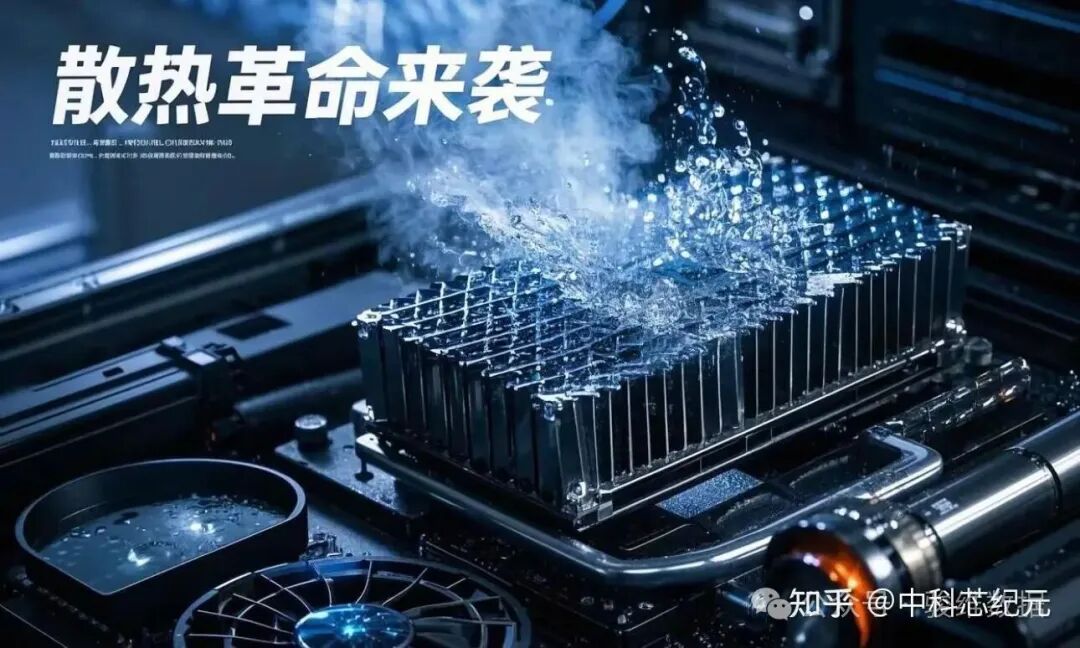
Market Insights: Limited Short-Term Impact, Potential Opportunities in Corrections
For the capital market, Microsoft’s technology announcement initially triggered “emotional fluctuations” in the cooling supply chain—investors worried that traditional cooling manufacturers would be replaced by the new technology. However, Morgan Stanley’s conclusion offers a different perspective: given that the commercialization of the technology will take time, the actual impact on traditional cooling solution suppliers in the short term is limited.
The report even points out that if the stock prices of related supply chain companies experience irrational corrections due to this news, it may present a worthwhile buying opportunity. After all, until the microfluidic technology within chips resolves issues of reliability, integration, and serviceability, traditional cooling solutions will remain a “necessity” for data centers.
From technological breakthroughs to industrial implementation, there is often a gap between the “laboratory” and “reality”. Microsoft’s cooling liquid “chip embedding” technology undoubtedly provides a new direction for addressing cooling challenges in the AI era, but to truly rewrite industry rules, the three major challenges pointed out by Morgan Stanley must first be overcome. The story of this cooling revolution has only just begun.

Scan to follow the latest updates
Focus on us
Scan to stay updated at any time